Which discharge rules apply to a Gadsden-area mine or metals plant?
Mining and metals plants near Gadsden meet sewer pretreatment limits by treating each wastewater stream to the most stringent applicable requirement, then discharging under an industrial user discharge permit from the receiving POTW. Federal rules form the framework: 40 CFR Part 436 addresses qualifying mine drainage, mineral-processing wastewater and stormwater runoff, while 40 CFR Part 403 governs indirect discharges and prohibits POTW interference and pass-through. A defensible design then maps representative stream chemistry to equalization, pH correction, coagulation, clarification, filtration, optional membrane polishing and sludge dewatering. Final acceptance must be based on the current permit, POTW local limits, representative influent testing and documented monitoring—not generic equipment claims or catalog capacities.
The first decision is the receiving destination. A direct discharge goes to surface waters or other waters covered by the NPDES program; an indirect discharge goes through a POTW collection system and pretreatment program (PDH Academy, 2021). For a direct discharge, the facility must determine whether an NPDES permit applies and whether its mining category falls under 40 CFR Part 436. The US EPA states that Part 436 covers wastewater from mine drainage, mineral-processing operations and stormwater runoff, with its mineral-mining requirements incorporated into NPDES permits (US EPA, 2026-02).
For a sewer discharge, Part 436 does not replace the POTW permit. The local control authority issues and enforces the industrial user discharge permit, determines whether the user is categorical or noncategorical, and establishes applicable prohibitions, monitoring and local limits. PDH Academy’s industrial pretreatment standards course identifies the POTW in an approved program as the control authority.
| Item to verify | Direct discharge | Indirect discharge |
|---|---|---|
| Receiving authority | EPA or authorized state NPDES authority | POTW or other authorized local control authority |
| Permit | NPDES permit | Industrial user discharge permit |
| Federal framework | 40 CFR Part 436 where applicable | 40 CFR Part 403 and applicable categorical standards |
| Site-specific requirements | Permit limits and monitoring conditions | POTW local limits, prohibitions, BMPs and monitoring |
| Evidence of compliance | Representative effluent sampling and permit records | Representative final-effluent sampling, monitoring and self-monitoring records |
Before sizing equipment, identify the receiving sewer authority; obtain the current industrial user permit; confirm categorical status; collect applicable local limits, monitoring frequencies and sampling instructions; and verify whether any part of the flow is direct discharge. No Gadsden-specific permit or numeric local limit is established in the supplied research, so none should be assumed. For related treatment concepts, see the comparison of MBR and conventional activated sludge for mining wastewater and the 2026 fabricated-metals pretreatment guide.
How the federal, state and POTW requirements fit together
40 CFR 403.2 establishes three pretreatment objectives: prevent POTW interference, prevent pass-through, and improve opportunities to recycle and reclaim municipal and industrial wastewaters and sludge (PDH Academy, 2021). Those objectives turn equipment selection into a permit-compliance exercise: the train must control the specific pollutants and discharge characteristics that could impair the POTW or pass through its treatment process.
Local limits are technically developed pollutant limits adopted by the POTW to prevent interference, pass-through or violation of general and specific prohibitions (PDH Academy, 2021). A local limit may be concentration-based, load-based, or expressed through another enforceable condition. A plant should therefore not compare a treatment proposal only with a generic federal metals value. It should build a compliance matrix containing every applicable requirement, its source, units, averaging period, monitoring point, sampling method and corrective-action condition.
The practical hierarchy has three layers. First, determine whether 40 CFR Part 436 applies to a direct discharge and whether the relevant subpart is active or reserved. Second, apply 40 CFR Part 403, any categorical pretreatment standard, and the site’s federal prohibitions where applicable. Third, overlay current Alabama requirements, the industrial user discharge permit, POTW local limits, specific prohibitions and BMPs. The POTW’s adopted pretreatment standards collectively include categorical standards, local limits, general and specific prohibitions, and BMPs (PDH Academy, 2021).
| Layer | What it establishes | Procurement consequence |
|---|---|---|
| Federal mining framework | Part 436 applicability for qualifying direct discharges | Identifies federal parameters that may require control |
| Federal pretreatment framework | Part 403 objectives, prohibitions and categorical standards where applicable | Defines POTW protection requirements and possible categorical limits |
| State and local conditions | Permit limits, local limits, monitoring, reporting, BMPs and site-specific restrictions | Supplies the numerical design and acceptance criteria |
When layers overlap, the operator should document which requirement controls each design parameter rather than assume that one federal limit set applies to every facility. A useful workflow is to ask the POTW to confirm the controlling permit conditions, then have the design engineer reconcile them with state and federal requirements. If the plant is considering biological treatment, the Canton pretreatment framework and Orlando sewer-pretreatment framework provide analogous permit-mapping questions, but their locations do not establish Gadsden requirements.
Characterize every wastewater stream before selecting a treatment train
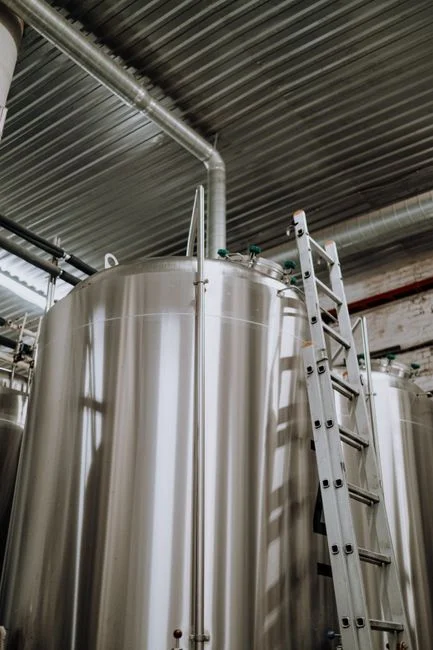
Acid mine drainage, process water, tailings-pond effluent and dewatering discharge must be characterized separately because their chemistry, contaminant loads and treatment endpoints differ. Combining them without representative data can make a nominally capable plant fail under a short-duration slug, dilute a chemical dose or introduce contaminants that the downstream process cannot remove.
Acid mine drainage forms when sulfide minerals in disturbed waste rock and tailings oxidize in the presence of oxygen and water, producing acidic drainage and dissolved metals (AMPAC USA, 2025-09, as reported in HydropureWater, 2026-02). Process water can contain reagents, dissolved ore constituents and high total dissolved solids; depending on the process, it may also contain cyanide, ammonia or chloramines. Tailings-pond effluent commonly contains fine solids, processing chemicals and leached metals. Dewatering discharge varies with geology and may carry substantial metal loading in some settings (AMPAC USA, 2025-09, as reported in HydropureWater, 2026-02).
Request representative sampling from each stream and operating condition. The sampling program should document pH, flow, suspended solids, conductivity, metals and process-specific contaminants. It should also record the sampling time, stream source, production or pumping condition and whether the sample was grab or composite. The supplied research provides no Gadsden sampling values, so placeholders in an equipment request cannot be treated as results or guarantees.
| Stream | Primary concerns to characterize | Segregation decision |
|---|---|---|
| Acid mine drainage | Low pH, acidity, dissolved metals, sulfate and flow variability | Keep separate if its acidity or metal profile would impair another stream’s treatment |
| Process water | Reagents, dissolved ore constituents, TDS, suspended solids and process-specific contaminants | Identify the production circuit and prohibited or controlled substances |
| Tailings-pond effluent | Fine solids, residual chemicals and leached metals | Do not blend with cleaner water before solids and chemistry testing |
| Dewatering discharge | pH, metals, solids and variability by dewatering activity | Retain a separate baseline and verify whether return flows change the composition |
Size equalization and pumping around peak anticipated discharge, not average flow. AMPAC USA’s literature review, reported in HydropureWater (2026-02), advises sizing against the highest anticipated daily discharge because peak flow drives equalization volume and pump selection. That principle is qualitative here: no Gadsden flow range is supplied, and the buyer must provide peak, average and minimum flows with the relevant production and pumping scenario.
Use the DAF versus clarifier guide for mining and metals wastewater to develop the solids-separation comparison, and review MBR versus conventional activated sludge for mining wastewater when biological treatment is technically relevant. Neither guide substitutes for site-specific Gadsden characterization.
Build a pretreatment train that maps to the sewer limit
A compliant treatment train begins with equalization, automatic pH adjustment, coagulation and solids separation, then adds filtration, optional membrane polishing and sludge dewatering according to the permit and influent profile. The final stage must be automatic pH, flow and conductivity monitoring tied to the site’s industrial user discharge permit.
- Equalization. Use a wet well and equalization tank to buffer peak flows and mixed chemistry. Confirm working volume, pumping capacity, level controls, bypass prevention and the sampling location with the design basis.
- pH correction and coagulation. Adjust pH so dissolved metals can precipitate as metal hydroxides, then coagulate and flocculate the resulting particles. A PLC-controlled chemical dosing skid should meter lime, coagulant, flocculant and pH-adjustment chemicals from measured flow and pH feedback. Representative chemistry testing must establish the lime target and reaction sequence; the literature’s stated pH greater than 10 is a reported process condition, not a Gadsden permit limit (PMC review, 2024-02, as reported in HydropureWater, 2026-02).
- Clarification. Match the separator to sludge behavior: DAF for buoyant floc, oil or floating fines; lamella where sludge volume and footprint drive the decision. A supplier’s industrial DAF system for mining wastewater is a candidate package, not proof of hydraulic or analytical performance.
- Filtration. Multimedia filtration removes suspended solids, turbidity and colloids and can protect downstream membranes. Specify the required outlet condition, including target Silt Density Index where reverse osmosis follows; inlet turbidity alone does not define membrane-feed quality. The multimedia-filter engineering guide provides a useful selection reference.
- Membrane polishing. Use ultrafiltration when colloidal and suspended solids must be removed ahead of reverse osmosis. The supplied catalog identifies PVDF membranes with a 0.03-micron nominal pore size, inlet turbidity up to 300 ppm, automatic backwash and air scour. Add reverse osmosis only when dissolved metals or salts remain above the sewer-quality target or when reuse economics justify the added complexity.
- Sludge and controls. Chemical precipitation produces metal-hydroxide sludge. Dewater it with a filter press or another method appropriate to the sludge before disposal. The supplied research identifies dewatering as the final unit operation of precipitation-based mining trains. Integrate dosing, pH, flow, conductivity, filtration and backwash controls with operator records and permit sampling.
| Unit operation | Primary design input | Acceptance evidence |
|---|---|---|
| Equalization and pumping | Peak, average and minimum flow; wet-weather or production scenarios | Level control, pump performance and representative stabilized influent |
| pH and chemical dosing | Acidity, metals, reagents and selected pH sequence | Closed-loop control across varying influent conditions |
| DAF or lamella | Solids, floc behavior, oil, sludge volume and footprint | Verified solids endpoint and stable sludge withdrawal |
| Multimedia filtration | Flow, turbidity, solids and downstream membrane requirements | Outlet turbidity and SDI where applicable |
| UF and RO | Residual colloids, dissolved metals, salts and recovery target | Feed conditioning, flux, recovery and permeate quality data |
| Sludge dewatering | Sludge volume, chemistry and disposal route | Cycle performance, cake condition and handling records |
This sequence separates legal limits from equipment performance. Literature values and catalog specifications can support preliminary feasibility, but only the applicable permit and verified site data can establish acceptance criteria.
Choose DAF or lamella clarification using the wastewater—not a default
DAF is the better starting point when buoyant floc, oil, grease or floating fines are important; lamella is the stronger candidate when heavy floc, sludge volume and footprint are the controlling issues (Genesis Water Technologies, 2025-11, as reported in HydropureWater, 2026-02). No supplied source establishes a universal winner or a Gadsden-specific hydraulic requirement.
HydropureWater’s catalog lists an industrial DAF system for mining wastewater with capacities from 4 to 300 m³/h across 13 standard models. These figures support preliminary supplier screening only; they are not a Gadsden design flow or a guarantee of clarification performance. The lamella comparison lists surface loading rates of 20–40 m/h and up to 30% lower chemical consumption. Those are catalog comparisons to validate against actual influent and sludge behavior, not site-specific acceptance guarantees.
| Decision input | Favors DAF | Favors lamella |
|---|---|---|
| Floc behavior | Buoyant floc that can be floated | Heavy floc that settles |
| Contaminants | Oil, grease or floating fines | No dominant oil loading |
| Solids handling | Floating sludge recovery and suitable discharge method | Sludge volume and underflow withdrawal are limiting |
| Site constraints | Available footprint and access to compressed air | Footprint-sensitive installation |
| Downstream needs | Stable clarified stream with appropriate solids endpoint | Stable clarified stream with lower footprint demand |
| Validation required | Jar and pilot testing of floatability, recovery and residual solids | Jar and pilot testing of settling, loading and sludge properties |
Compare both options using the same criteria: wastewater chemistry, contaminant profile, required solids endpoint, sludge characteristics, footprint, utilities, operator maintenance and downstream filtration demand. Then obtain the mining-wastewater DAF and clarifier comparison and review the 2026 DAF design parameters. The final choice should be supported by representative chemistry, pilot or bench testing and the permitted final-effluent target.
Size the system and verify compliance before sewer discharge
Procurement should begin with a site-specific basis of design, not a generic mining-water package. Request peak and average flow, representative influent pH and metal profile, sewer-authority limits for metals, pH and TSS, and the desired recovery percentage if reuse is in scope. Also provide stream segregation assumptions, production shutdown scenarios, discharge hours, sampling requirements and sludge-disposal constraints.
Literature recovery values are screening assumptions only. The supplied research reports 50–70% reverse-osmosis recovery for AMD feed and 70–85% for the reverse-osmosis stage of a zero-liquid-discharge train. It also reports more than 99% rejection of dissolved metals and salts and 40–60% freshwater-consumption reduction. These are literature claims reported in HydropureWater (2026-02) from AMPAC USA (2025-09), not guaranteed Gadsden performance. Require a site-specific recovery curve and acceptance test.
| Procurement package | Required content | Verification |
|---|---|---|
| Basis of design | Flow, chemistry, permit limits, stream segregation, reuse objective and site constraints | Operator, engineer and POTW review |
| Equipment schedule | Flow, materials, controls, outlets, utilities, redundancy and service access | Supplier compliance review |
| Controls and monitoring | PLC-controlled dosing, pH, flow, conductivity, automatic backwash and HMI integration | Simulated signals and functional tests |
| Commissioning | Hydraulic tests, chemical dosing verification, filtration, membrane and sludge-dewatering inspection | Signed commissioning record |
| Compliance test | Representative influent and final-effluent sampling against the industrial user discharge permit | POTW acceptance where required and retained records |
| Operations plan | Setpoints, sampling, calibration, logkeeping, bypass response and corrective actions | Operator training and handover |
Commissioning should demonstrate the permitted final-effluent parameters, exercise automatic controls across representative flow and chemistry conditions, inspect sludge dewatering, establish operating records and define corrective-action thresholds. Sampling points must represent the final discharge, not intermediate process water. The POTW should confirm its witnessing, monitoring and acceptance requirements before testing.
Do not accept a price based only on equipment nameplate flow. The buyer should request a quotation against the complete basis of design, including chemicals, utilities, controls, membranes, sludge handling, commissioning, monitoring and disposal interfaces. The supplied research contains no defensible complete-system price range for Gadsden, so a site-specific quotation is required. A review of the DAF system design parameters can help identify missing technical information before bids are compared.
Frequently Asked Questions
What permit controls a mining or metals plant’s discharge to a Gadsden-area POTW?
The current industrial user discharge permit issued by the receiving POTW or other authorized local control authority controls the sewer discharge. The permit should identify applicable prohibitions, local limits, monitoring, sampling and reporting requirements. Federal pretreatment rules and any categorical standard must also be checked, but no Gadsden-specific permit, categorical determination or numeric local limit is supplied in the research. Obtain the current permit and written confirmation from the sewer authority before equipment procurement.
How should a buyer compare treatment-system cost without relying on a generic price range?
Request a site-specific quotation against the same bid basis for every supplier. The package should state peak and average flow, representative influent chemistry, applicable sewer limits, stream segregation, required recovery, chemical consumption, utilities, controls, membrane or filtration scope, sludge handling, commissioning and monitoring. The supplied research provides no defensible Gadsden price range, so a generic budget figure would not be a defensible procurement input.
What should a supplier demonstrate for DAF or lamella equipment before selection?
Require a stream-specific comparison using wastewater chemistry, contaminants, solids endpoint, sludge behavior, footprint, utilities, maintenance and downstream filtration demand. For DAF, demonstrate the suitability of floc flotation, oil or fines capture and sludge removal. For lamella, demonstrate settling performance, surface loading, underflow handling and footprint. Catalogs and literature claims establish screening conditions only; representative testing should verify the selected route.
How can an operator verify compliance before connecting the treatment train to the sewer?
Test the complete train under representative flow and chemistry conditions, verify automatic dosing and pH control, confirm filtration or membrane performance, inspect sludge dewatering and sample the final discharge at the permit-specified location and frequency. Retain calibration records, operating logs and analytical results. The mining-wastewater treatment guide for Newburgh provides a broader reference, but the Gadsden-area POTW must confirm the governing monitoring and acceptance protocol.