Which Rules Govern a Beefhide Sewer Discharge?
Sewer discharge is an indirect discharge to a publicly owned treatment works (POTW), where the POTW administers pretreatment requirements through an industrial-user permit or equivalent control mechanism. Mining and metals plants near Beefhide must establish the receiving POTW, its current sewer-use ordinance and permit terms, the applicable categorical industrial-user standard, and any controlling state requirements before designing treatment. EPA guidance organizes pretreatment controls into prohibited discharges, categorical standards, and local limits. A facility should not assume that a generic national limit or an NPDES permit for a separate surface-water outfall establishes its sewer-discharge obligations.
The project team should obtain and reconcile the current POTW ordinance, industrial-user permit, sewer-use manual, applicable state rules, and the categorical subcategory for the actual operation. EPA’s Local Limits Development Guidance, published by the U.S. Environmental Protection Agency in 2021, explains that indirect discharger obligations are determined by permits or equivalent control mechanisms issued to POTW industrial users or by regulatory requirements. The same guidance is nonbinding: where its discussion conflicts with a permit or regulation, the permit or regulation controls.
Local limits should not be treated as unexplained numbers in a vendor specification. EPA’s maximum allowable headworks loading (MAHL) sequence is to determine pollutants of concern, collect and analyze data, calculate MAHLs, designate and implement local limits, and address collection-system concerns. The mining-plant sewer-limit compliance guide provides a useful parallel workflow, but the governing POTW must still be identified for Beefhide.
| Document | Engineering question to resolve |
|---|---|
| POTW sewer-use ordinance and industrial-user permit | Which pollutants, concentration and mass limits, monitoring duties, monitoring locations, sampling methods, and discharge prohibitions apply? |
| Applicable categorical industrial-user standard | Which mining or metals subcategory covers the facility, and does it apply to each discharge point? |
| State requirements and sewer-use manual | Do state rules or administrative procedures add monitoring, reporting, or permit conditions? |
| POTW and collection-system information | What flow and pollutant loads can the receiving system accept without interference, pass through, collection-system problems, or sludge impacts? |
Map Every Wastewater Stream Before Sizing Equipment
A defensible treatment design begins with a measured process map, not a generic equipment list. The map should cover extraction, washing, ore-processing, contact water, laboratory drains, floor washdown, haul-road or equipment washdown, and stormwater entries. Each stream needs an owner, flow regime, seasonal variability, discharge point, and a clear decision on whether it may enter the sewer. Segregating clean drainage from contaminated process water can reduce treatment load, but any bypass still requires POTW authorization.
The monitoring program should prioritize pH, metals, suspended solids, oil and grease, and every pollutant identified by the POTW or categorical-standard review. These are characterization priorities, not assumed Beefhide limits. Minnesota sulfate and mercury figures discussed in the Minnesota Mining Wastewater Permit Challenges reference concern Class 1 waters and mining permits in Minnesota; they are not sewer limits for Beefhide. The project engineer should document that jurisdictional distinction rather than transplant the numbers into the design basis.
The supplied Price-area reference recommends at least 12 months of influent characterization, supported by representative grab and composite samples across operating campaigns. For a Beefhide site, that record should be supplemented by plant knowledge of shutdowns, storm events, mill clean-outs, reagent changes, and unusual ore. Average flow alone is not a sizing basis; document average, peak, and batch-discharge conditions, including dump-leach cycles where relevant.
Jar tests then connect chemistry to equipment selection. They should identify the usable pH window for precipitation, reagent demand, settleability, coagulation or flocculation performance, residual-metal response, and whether filtration is required. If the chemistry changes materially, the design envelope must be revisited rather than protected by unspecified reserve capacity.
| Design-basis category | Required information | Decision supported |
|---|---|---|
| Flow | Continuous flow history, campaign flow, batch dumps, clean-outs, and storm-related entries | Equalization volume, treatment rate, peak handling, and turndown |
| Contaminant mechanism | pH, metals, suspended solids, oil and grease, and POTW-identified analytes | Precipitation, coagulation, flotation, settling, and filtration scope |
| Variability | Seasonal chemistry, operating campaigns, and documented upsets | Equalization, control strategy, and upset-response capacity |
| Test evidence | Representative samples and jar-test results | Chemical dose, reactor performance, solids separation, and treated-water targets |
| Residuals | Expected sludge volume, settleability, filtration behavior, and disposal constraints | Sludge handling, dewatering, filtrate return, and disposal route |
Build a Compliance-First Treatment Train
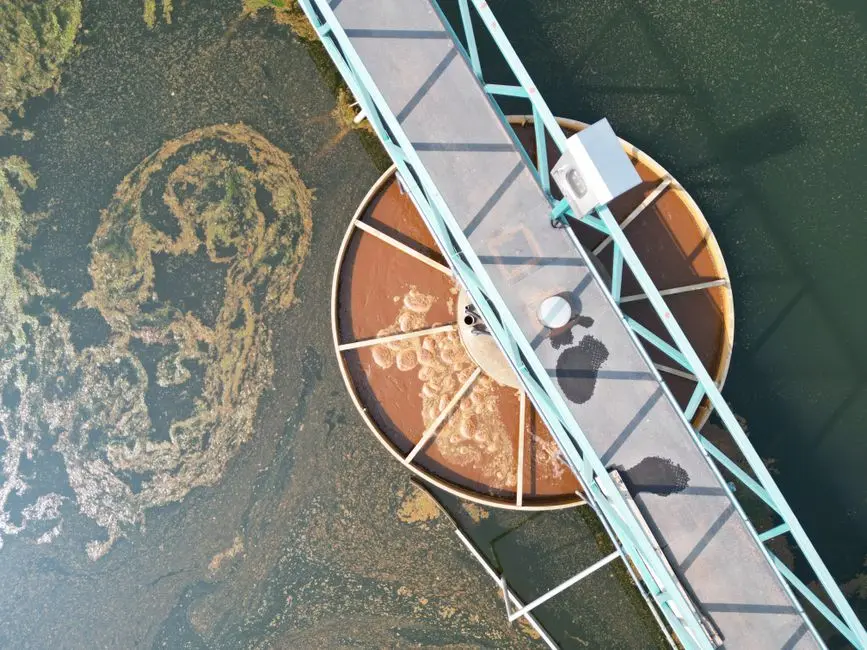
Each treatment step should address a measured contaminant mechanism and create the inlet condition required by the next step. For metal mine drainage or metal-bearing process wastewater, the usual sequence is equalization, pH adjustment, metal hydroxide precipitation, coagulation or flocculation, clarification, filtration, and controlled sludge dewatering. That sequence is a design framework, not proof that every stream needs every unit.
- Equalization: Use an equalization basin to damp measured flow and concentration swings before treatment. Set the operating scenarios from site flow data, including campaign peaks, mill clean-outs, and batch releases. The basin should prevent a routine batch from overwhelming dosing, clarification, or filtration.
- pH and chemical dosing: Apply a PLC-controlled chemical dosing skid for acid or alkali, coagulants, flocculants, or specialty reagents. The control loop, feed range, storage arrangement, and interlocks should follow reagent-demand testing rather than catalog assumptions.
- Precipitation and clarification: Use metal hydroxide precipitation when testing confirms that raising pH converts dissolved metals into removable solids. Jar tests must establish the usable pH window and residual-metal response; vendor claims do not establish site performance.
- Solids separation: Select an industrial DAF system for oily, greasy, or colloidal material that benefits from microbubble flotation. Select lamella clarification when the objective is separating denser metal-bearing flocs in a compact installation. The decision must include sludge withdrawal, float removal, and downstream filter loading.
- Filtration: Use multimedia filtration after clarification when residual suspended solids must be controlled. Evaluate ultrafiltration only for reuse, reverse-osmosis protection, or a verified polishing duty after upstream chemistry and solids are controlled.
- Sludge management: Route metal-bearing sludge to a plate-and-frame press or another justified dewatering method. Define where filtrate returns, how the cake is sampled, and which waste-management route applies.
Disinfection should be added only if the POTW requires it or if another verified project constraint establishes the need. It is not a default substitute for controlling pH, metals, solids, or sludge. Similarly, corrosion inhibitors, ion exchange, biocide, or specialty polymers should be justified by the characterization, material-compatibility review, and operating consequences—not added because they appear on a general mining equipment list.
Choose DAF or Lamella Clarification
The DAF-versus-lamella choice depends on what must be separated and what happens downstream. DAF is the stronger candidate when oil, grease, fine colloids, or slowly settling low-density solids dominate. Lamella clarification is the stronger candidate when metal-bearing flocs are the principal solids and compact installation is important. Neither choice should be made from flow alone.
The supplied general equipment article states that the DAF product range covers 4–300 m³/h across 13 standard models and that the lamella catalog specifies 20–40 m/h surface loading with up to 30% lower chemical consumption. These are catalog specifications, not universal performance guarantees. Final hydraulic loading, chemical dose, and solids capture must be established against site flow, pollutant loading, and bench or pilot results. The DAF versus clarifier comparison provides a broader framework, but its technical figures should not be imported as Beefhide design criteria without verification.
| Selection criterion | Favors DAF | Favors lamella clarification |
|---|---|---|
| Primary contaminant | Oil, grease, colloids, or low-density floc | Dense metal-bearing hydroxide flocs |
| Separation mechanism | Attachment to microbubbles and flotation | Plate-assisted settling |
| Site priority | Effective float capture and contaminant removal | Compact footprint and clarification duty |
| Must be evaluated | Hydraulic surge, float removal, recycle, skid maintenance, and chemical demand | Surface loading, sludge blanket withdrawal, feed distribution, chemical demand, and maintainability |
| Downstream consequence | Residual solids can increase filter loading | Clarification quality affects filter media life and cake volume |
Ask bidders to compare complete clarification packages, not vessel prices alone. The comparison should include chemical storage and dosing, sludge removal, utilities, controls, available footprint, maintainability, downstream filtration, and dewatering. If those items are excluded, apparent DAF or lamella savings may be transferred into higher operating, media, or cake-disposal costs.
Prove Compliance Before the First Sewer Discharge
Commissioning should demonstrate that the installed train satisfies the verified permit envelope at representative flow and chemistry. EPA’s 2021 Local Limits Development Guidance identifies the POTW, collection system, and industrial user as relevant sampling locations for evaluating loading. For a Beefhide site, establish the industrial-user discharge point as the baseline compliance location and add upstream or downstream points where they help distinguish plant performance from collection-system effects.
The control narrative should specify pH and chemical control loops, flow measurement, calibration and calibration checks, chemical inventory, high-high alarms, low-tank alarms, power-failure actions, and corrective-action triggers. Raw sampling data, laboratory results, operator observations, and corrective actions should form one auditable record.
| Commissioning stage | Acceptance evidence | Release decision |
|---|---|---|
| Static checks | Instrument calibration, tank and bund checks, PLC logic, interlocks, alarms, and power-loss response | Correct deficiencies before introducing chemicals or wastewater |
| Hydraulic testing | Measured flow routing, equalization response, level control, recycle, and hydraulic-surge handling | Confirm stable operation across documented operating scenarios |
| Representative chemistry | Samples covering measured pH, metals, solids, oil and grease, and other permit parameters | Confirm treatment response using required analytical methods and averaging basis |
| Performance demonstration | Treated-water results, flow record, dose records, sludge generation, filtrate return, and alarm events | Obtain POTW acceptance or authorization before discharge |
| Readiness review | Operating procedures, training records, laboratory arrangements, spare chemicals, and contingency drill | Authorize routine operation and ongoing monitoring |
Maintain pretreatment monitoring records and coordinate them with the POTW. EPA guidance addresses sampling frequency, analytical methods, flow data, and review of analytical results, but the permit or equivalent control mechanism determines the facility’s obligations. Prepare a written contingency response for pH excursions, elevated metal residuals, hydraulic overload, chemical interruption, analyzer failure, and off-specification sludge. Each contingency should identify the alarm, operator action, hold or diversion decision, notification requirement, and restart criteria.
Turn the Permit Envelope Into a Supplier Bid
A bid becomes comparable only when every bidder receives the same verified design basis. That package should include the current POTW permit and ordinance, applicable categorical standards, wastewater characterization, flow history, jar-test results, monitoring plan, discharge-point drawing, and sludge-disposal information. Require each bidder to state its design flow, pollutant loads, treated-water targets, duty cycle, chemical assumptions, turndown, utilities, controls scope, commissioning tests, and performance-test protocol.
Price the complete train: equalization, chemical storage and dosing, clarification, filtration, controls, sludge dewatering, residuals handling, commissioning, operator training, and required maintenance. A quote based only on generic contaminant values is preliminary. Equipment capacity and guarantees should follow the verified discharge envelope and test data.
For reuse or reverse-osmosis protection, evaluate ultrafiltration only after residual solids and pretreatment chemistry are controlled. The supplied catalog specification for the UF system is 0.03-micron PVDF with automatic backwash and air scour. Those specifications define the assessed product configuration, not proof that UF is required for sewer discharge or capable of correcting deficient upstream treatment.
A practical bid check is to trace every promise back to an input: flow to a flow record, chemical consumption to a test result, treated-water performance to an acceptance protocol, sludge volume to a solids balance, and operating cost to a stated chemical and utility basis. Missing inputs should produce a qualification or hold point, not a confident guarantee.
Frequently Asked Questions
What limit applies to a mining plant near Beefhide?
No defensible numeric limit can be assigned until the receiving POTW and controlling documents are identified. Review the current industrial-user permit or equivalent control mechanism, sewer-use ordinance, sewer-use manual, applicable categorical industrial-user standard, and state requirements. Apply the requirements that actually govern each discharge point. If a local limit is more stringent than another applicable requirement, the treatment target should reflect the stricter result.
How much should a mining wastewater pretreatment system cost?
A defensible price cannot be calculated without verified flow, wastewater chemistry, operating scenarios, treatment objectives, sludge route, utilities, controls, and available footprint. Request a capital and operating-cost breakdown for the complete train, including chemicals, residuals handling, maintenance, commissioning, and operator training. Treat a price based only on generic contaminant values as preliminary and ask the bidder to identify which verified inputs support each capacity and consumption estimate.
Should a Beefhide mining plant choose DAF or a lamella clarifier?
Choose DAF when oil, grease, colloids, or low-density solids are the dominant separation problem; choose lamella clarification when dense metal-bearing flocs are dominant and compact installation is important. Confirm the choice with site chemistry, flow, sludge characteristics, available footprint, chemical demand, and pilot or bench evidence. Include downstream filtration and sludge dewatering in the comparison because clarification affects both media loading and cake volume.
What documents should be required before ordering equipment?
Require the POTW permit and ordinance, applicable categorical standards, wastewater characterization, flow data, jar-test results, monitoring plan, discharge-point drawings, and sludge-disposal information. Also require bidders to identify the design basis, treated-water targets, utilities, controls scope, commissioning tests, and performance-test protocol. Do not release a purchase order while these items remain assumptions.
When is UF needed before sewer discharge?
UF is generally a polishing step for a defined reuse or reverse-osmosis-protection duty, not a substitute for required pH control, solids removal, metals treatment, or sludge management. Consider it only after residual solids and pretreatment chemistry are controlled and the POTW requirement or reuse objective is documented. For routine sewer compliance, filtration and dewatering requirements should follow from the verified effluent and solids limits.