Which Treatment Should an Orange County Factory Choose?
Orange County fabricated metals factories should choose treatment based on the contaminant fraction, not simply because the wastewater contains metals. Use dissolved air flotation when free oil, grease, emulsified coolant, or flocculable suspended solids dominate; use a lamella clarifier when swarf, grit, dense chips, or precipitated metal-bearing solids settle readily and oil is minor. A combined train is justified when both fractions are significant and can be supported by a stage-by-stage mass balance. Neither device automatically removes dissolved metals or establishes permit compliance, so the defensible 2026 decision requires source-separated characterization, peak and batch-flow data, an application-specific pilot, traceable sizing, a residue route, and acceptance criteria tied to the facility’s current discharge authorization.
| Measured wastewater condition | Leading mechanism | Evidence the bidder must provide |
|---|---|---|
| Free oil, grease, emulsified coolant, or flocculable suspended solids dominate | Dissolved air flotation | Floatability test, chemical-conditioning trial, skimmer and bottom-solids design, peak-flow behavior |
| Swarf, grit, dense chips, or precipitated metal-bearing solids settle readily; free oil is minor | Lamella clarifier | Settleability and particle-size data, settling-area calculation, sludge and high-density underflow assessment |
| Both floatable and settleable fractions are significant | Staged DAF and clarification or another justified sequence | Stage-by-stage contaminant, solids, hydraulic, and chemical mass balance |
| Significant dissolved metals remain | Additional precipitation, filtration, dissolved-metal treatment, or polishing | Target species, treatment chemistry, residual loading, and final compliance route |
The mechanism follows the physical fraction being removed. An industrial dissolved air flotation system is the leading candidate when oil or conditioned solids require flotation. A high-efficiency lamella clarifier fits readily settleable material with limited oil. Two units are not automatically better: each added stage introduces hydraulic loss, chemical demand, controls, and another residue stream that must be included in the design basis.
Catalog references provide a comparison starting point, not an Orange County sizing conclusion. HydropureWater’s 2026 fabricated-metals guidance lists 13 DAF models from 4–300 m³/h and lamella surface-loading rates of 20–40 m/h. Require the manufacturer to show how the selected configuration handles the factory’s flow, mass loading, wastewater chemistry, and operating margin.
Map the Wastewater Before Selecting Equipment
One combined sample and a daily average flow cannot expose the floatable fraction, shift-change surges, or short batch dumps that may control separator duty. Map each source before combining any streams.
Separate machining and grinding operations, equipment washdown, floor wash, oily drainage, process cooling or quench water where present, stormwater, and batch discharges. For each stream, obtain average and peak flow, TSS, particle-size distribution, oils and greases, pH, alkalinity, total metals, dissolved metals, temperature, and observations of free oil or emulsion behavior. The timing and duration of washdowns and batch dumps matter as much as their volume.
| Source-controlled record | Required entry | Why it affects the decision |
|---|---|---|
| Source and operating condition | Operation, equipment, shift, product, and production status | Links wastewater chemistry to the generating event |
| Hydraulic record | Average flow, peak flow, batch duration, discharge rate | Identifies sustained duty and concentrated events |
| Pollutant record | TSS, oil and grease, total and dissolved metals, pH, alkalinity, temperature | Defines the fraction and chemical demand |
| Physical observations | Free oil, emulsion, swarf, grit, precipitate, and particle-size observations | Links the contaminant to flotation, settling, screening, or polishing |
| Treatment route | Equalization, screening, conditioning, separator, residue handling | Prevents incompatible streams from being assigned to one unit without evidence |
Build a source-controlled spreadsheet with one row per discharge, linking flow, pollutant mass, timing, chemical observations, and proposed treatment. This becomes the common design record for every bidder. It also shows where equalization is needed and whether a short dump would enter the separator as a concentrated mass load rather than the averaged flow.
Gross chips and swarf require a separate decision. If they could enter pumps, mixers, or the selected separator, evaluate mechanical screening as pretreatment. A rotary mechanical bar screen protects downstream equipment; flotation and gravity clarification should not be assigned to remove oversized material they were not designed to handle.
DAF or Lamella Clarifier: Match the Separation Mechanism
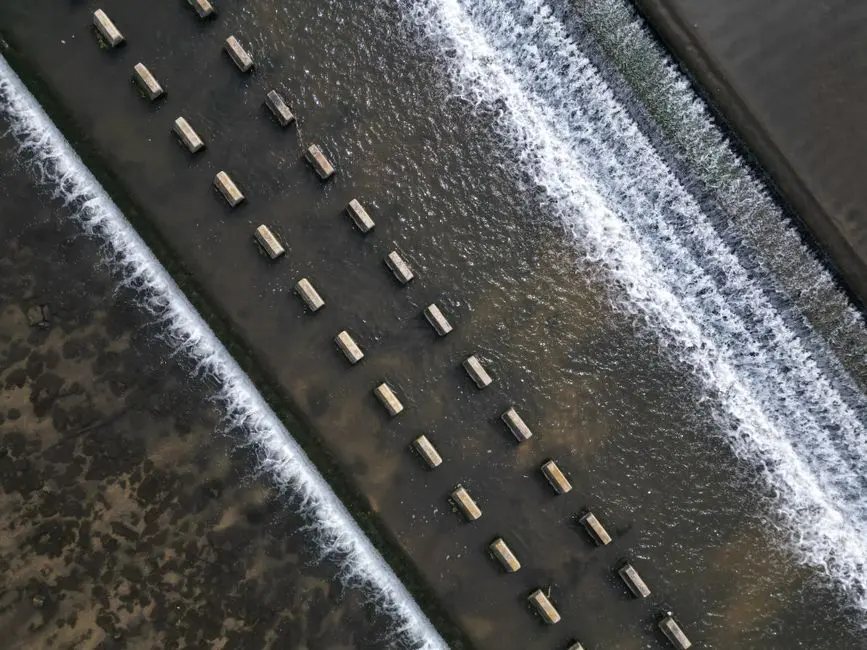
DAF separates by attaching microbubbles to insoluble material; lamella clarification separates by gravity settling along inclined plates. A product labeled “DAF clarifier” remains a flotation device, not a gravity-settling clarifier.
In a DAF unit, pressurized recycle releases microbubbles that attach to suspended solids, oils, greases, and other insoluble material. The float is removed by skimming; heavier solids may fall into a bottom collection zone. Aries describes approximately 100 psi pressurized recycle and approximately 30 µm microbubbles, while Clearwater Industries identifies 30–50 µm microbubbles in its April 27, 2026 DAF specification. These are supplier process descriptions, not Orange County performance guarantees, and bubble size, recycle performance, conditioning, and contact conditions still require confirmation with the actual wastewater.
Conditioning is part of the separation process. DAF bids should address pH control, coagulation, flocculation, mixing sequence, recycle performance, bubble contact, skimmer duty, and removal of bottom solids. A PLC-controlled automatic chemical dosing system should be evaluated against stage-specific chemical requirements, not compared only by pump capacity. For clarification, the scope should cover flocculation, recirculation, settling area, sludge collection, and withdrawal of high-density underflow.
| Design element | DAF scope | Lamella clarifier scope |
|---|---|---|
| Separation principle | Microbubble attachment followed by surface flotation | Gravity settling assisted by inclined plates |
| Target fraction | Floatable oil, grease, coolant-associated material, and conditioned floc | Settleable fines, swarf, grit, floc, and precipitated metal-bearing solids |
| Conditioning | pH, coagulant, flocculant, recycle, bubble contact, and skimmer duty | Flocculation, recirculation, settling area, and sludge withdrawal |
| Residue | Skimmed float plus any bottom solids | Underflow sludge and high-density bottom solids |
| Controls | Flow, level, pH, skimmer, sludge withdrawal, and alarms | Flow, level, pH, sludge withdrawal, and alarms |
Material selection also requires a compatibility review. Clearwater’s April 27, 2026 description identifies 304SS as standard construction, with 316SS and polypropylene available on request. Those are supplier specifications, not universal requirements for Orange County wastewater. Require justification against actual chemistry, temperature, cleaning requirements, and corrosion exposure.
Metals in the Stream Do Not Decide the Separator Alone
Total metals measure the full metal inventory, while dissolved metals identify the fraction remaining in solution; neither result establishes separator selection by itself.
First determine whether the particulate metal is floatable, settleable, or requires precipitation and chemical conditioning. Metal fines associated with oil or floc may be removed with DAF. Dense precipitated solids may be appropriate for clarification. Metals remaining in solution require a treatment mechanism designed for dissolved species, not merely more flotation or settling.
Aries states that chemical pretreatment can lower TSS, oils and greases, BOD, and metal concentrations before flotation, but that it does not make dissolved metals floatable without an appropriate treatment step (Aries, “Dissolved Air Flotation Systems,” accessed 2026). The implication is direct: chemical conditioning may make particulate material separable, but it does not eliminate the need for dissolved-metal treatment when the permit requires it.
Every proposal must identify remaining pretreatment, filtration, dissolved-metal treatment, or polishing after the selected separator. Reject blanket claims that one DAF or clarifier “meets all limits.” Separation performance and permit compliance are separate questions, and a separator can achieve a specified removal while leaving regulated constituents that require another process step.
Require the bidder to distinguish the proposed mechanism from the compliance mechanism. The first removes the target physical fraction. The second establishes what must be achieved at the discharge point under the facility’s current authorization. If the proposal cannot name both, it is not a defensible process basis.
Size the Unit Around Peak, Batch and Solids Duty
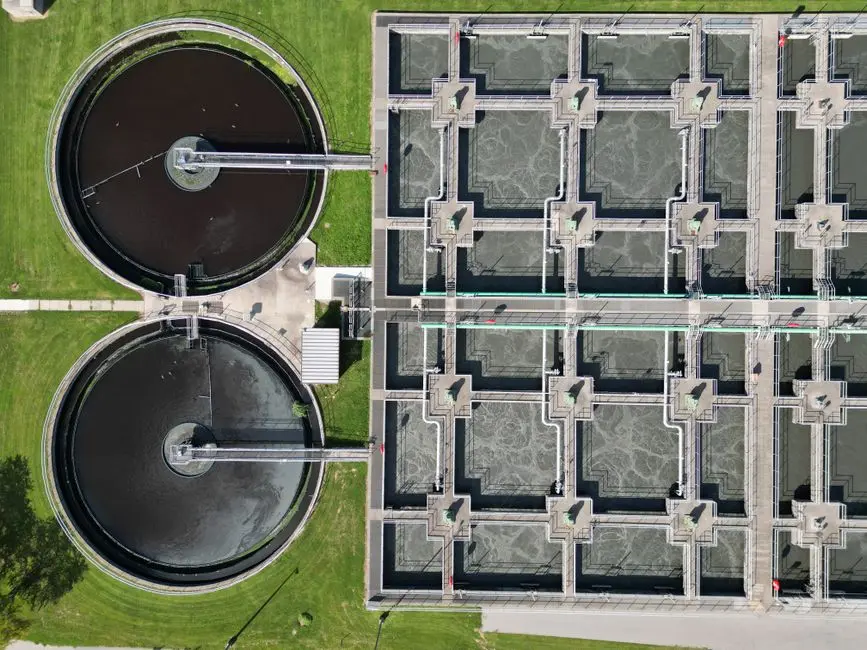
Sizing must follow the factory’s peak, batch, solids, and equalization duty; catalog capacity does not establish adequate treatment.
Require every bid to state design flow, operating scenario, pollutant mass loading, batch-discharge profile, hydraulic profile, wastewater characteristics, chemical assumptions, and equalization basis. Shift changes, washdown surges, batch dumps, and stormwater inflows belong in the design case where applicable. A daily average is not a sizing basis by itself.
| Bid input | Minimum information required | Engineering check |
|---|---|---|
| Design flow and operating scenario | Average flow, peak flow, production period, batch duration and rate | Does the selected equipment handle sustained duty and documented events? |
| Pollutant mass loading | Concentration, flow, and resulting mass rate for floatable, settleable, and bottom solids | Are skimmer, recycle, settling, sludge withdrawal, and chemical demand sized from mass? |
| Equalization basis | Tank detention, mixing, outlet flow, solids condition, and batch attenuation | Is the condition entering the separator defined? |
| Hydraulic profile | Separator flow, recycle flow, peak outlet condition, and treatment sequence | Has hydraulic loading and operating stability been demonstrated? |
| Calculation | Applicable formula, inputs, selected configuration, and operating margin | Can the result be checked independently? |
| Residue duty | Float, underflow, and bottom-solids quantities and withdrawal frequency | Are storage and dewatering routes included? |
State where equalization ends and the flow, solids condition, and recycle flow entering the separator. If equalization attenuates a batch dump, the proposal must still show how the tank, mixer, recycle system, treatment sequence, and residue route handle the discharge as represented by the design basis.
The 4–300 m³/h DAF catalog range and 20–40 m/h lamella surface-loading rate are comparison references only. A bidder must connect them to the measured wastewater and selected configuration through a traceable calculation. Buyers should also read how a DAF system works to understand why recycle, bubble contact, and skimmer capacity affect the installed result.
Confirm the Orange County Discharge and Compliance Boundary
The discharge route and enforceable criteria must be confirmed before the treatment train is finalized; no supplied source establishes Orange County’s governing sewer authority, local limits, or permit pathway.
Obtain the facility’s current Orange County discharge authorization and applicable sewer-use or industrial pretreatment requirements. Identify the authority that receives the discharge, the applicable local limits, monitoring obligations, surcharge provisions, and any federal program governing the facility. Do not transfer assumptions from New Kensington, Alabama, Birmingham, or another county’s publicly owned treatment works.
The supplied research identifies 40 CFR Part 413 for electroplating and 40 CFR Part 433 for metal finishing, but applicability depends on the facility and discharge route. Do not infer coverage from the broad description “fabricated metals.” A fabricator without electroplating or covered metal-finishing operations may fall under a different local or federal pathway, while a covered operation still must confirm its actual standards.
Require each bidder to state its compliance boundary and identify remaining pretreatment, filtration, dissolved-metal treatment, or polishing. Tie award to wastewater-specific acceptance criteria specifying the tested wastewater, operating conditions, test method, sampling point, and criterion. A generic sample or unrepresentative flow profile does not establish site performance.
The broader fabricated-metals sewer-limit guidance illustrates the right structure—permit criteria connected to equipment tests—but it does not establish Orange County requirements. Local authorization remains a required input.
Pilot Both Mechanisms Using the Same Wastewater
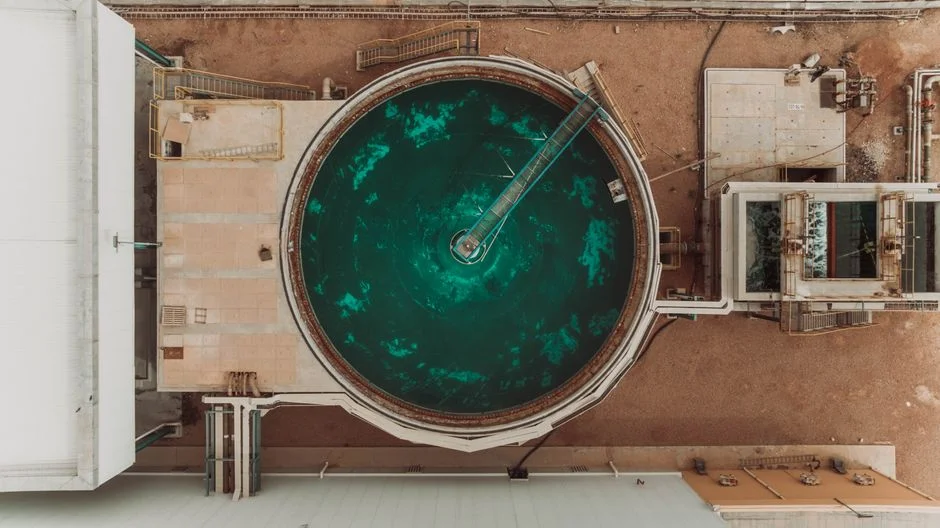
A credible pilot compares DAF and clarification using the same characterized wastewater, hydraulic profile, chemical assumptions, and acceptance criteria; generic removal percentages cannot establish site performance.
The written plan should identify the wastewater source, chemical dose, flow, temperature, test method, sampling location, and effluent criterion. Test steady conditions and relevant peak conditions. Do not let one supplier test a favorable sample or operating condition that the other cannot reproduce.
Document why the selected floc condition supports the chosen mechanism. Flotation and gravity settling can require different floc size, density, shear tolerance, and chemical dose. A pilot report should therefore include the conditioning trials, not only the final removal result.
Confirm that the skimmer or sludge route can handle the resulting residue without carryover or equipment overload. For a two-unit arrangement, document the stage-by-stage mass balance and the chemical, hydraulic, and solids requirements. Complementary stages should follow from characterization, not from an assumption that more equipment is inherently better.
The pilot is also the point to challenge the design basis. If DAF and gravity settling perform similarly under the measured condition, the simpler train may have the stronger operating case. If neither removes the required dissolved metals or residual oil fraction, add or change treatment steps rather than strengthening an unsupported compliance claim.
Compare Bids by Complete Operating and Residue Cost
No reliable Orange County equipment-price range is established by the supplied research, so bids should be compared as complete operating and residue-cost packages rather than by tank price.
A DAF quotation should define coagulant and flocculant feed, mixing sequence, pH control, recycle arrangement, bubble generation, skimmer operation, and sludge withdrawal. A clarification quotation should define flocculation, recirculation, settling area, sludge collection, and withdrawal of high-density bottom solids. Both should include chemical storage and containment, calibration, utilities, controls, commissioning, operator training, maintenance, spares, manufacturer service, residue storage, and disposal.
| Cost element | DAF bid information | Clarifier bid information |
|---|---|---|
| Chemical and control scope | pH control, coagulation, flocculation, recycle, bubble generation, and skimmer controls | pH control, coagulation, flocculation, recirculation, sludge collection, and underflow controls |
| Residue | Skimmed float and any bottom solids, with quantity, moisture, storage, and withdrawal basis | Underflow sludge and dense solids, with quantity, moisture, storage, and withdrawal basis |
| Dewatering and disposal | Compatibility with the specified route and disposal frequency | Compatibility with the specified route and disposal frequency |
| Operations | Commissioning, training, maintenance, spares, utilities, and service | Commissioning, training, maintenance, spares, utilities, and service |
| Commercial basis | Itemized price tied to flow, chemistry, duty, assumptions, and performance commitment | Itemized price tied to flow, chemistry, duty, assumptions, and performance commitment |
DAF float and clarifier underflow are not interchangeable. Compare quantity, moisture, storage, withdrawal frequency, disposal compatibility, and dewatering requirements. The supplied plate-and-frame filter press catalog range of 1–500 m² filtration area is a product-screening reference, not proof that every residue will produce the same cake; see the plate-and-frame sludge filter press specification when defining an actual dewatering route.
The New Kensington guide reports DAF prices of USD 35,000–90,000 at 25–50 gpm, USD 120,000–400,000 at 200+ gpm, and USD 250,000–800,000 for a 100–200 gpm DAF, clarifier, and press train. The same source reports 25–35% solids from its described filter-press route versus 1–3% clarifier underflow. These are New Kensington and other-market figures from HydropureWater’s 2026 guide, not Orange County prices or field commitments. Request current Orange bids and project-specific residue testing.
Bidder Checklist for a Defensible 2026 Purchase
Equal bids start with one wastewater and compliance basis, transparent calculations, complete operating scope, and enforceable performance evidence.
| Evidence required | Question for the bidder | Reason for rejection or clarification |
|---|---|---|
| Design basis | Are design flow, peak flow, batch profile, mass loading, chemistry, and equalization basis traceable to source-controlled records? | A daily average or unspecified peak is not a defensible sizing basis |
| Mechanism selection | Which contaminant fraction is targeted, what screening logic was used, and what alternative was considered? | The mechanism should match measured floatability or settleability |
| Sizing calculation | What formula and inputs produce the selected configuration and operating margin? | The buyer must be able to check the result independently |
| Complete scope | Are controls, chemicals, utilities, installation, commissioning, maintenance, service, and spares included? | Accessory exclusions can make the initial price misleading |
| Residue route | What are the quantity, moisture, storage, withdrawal, dewatering, and disposal assumptions for float and underflow? | Residues have different physical properties and handling costs |
| Acceptance test | What wastewater, operating condition, test method, sampling point, and criterion will govern acceptance? | Generic removal percentages or blanket compliance claims are not enforceable |
| Compliance boundary | Which authorization applies, and what treatment remains after the separator? | Separation performance does not establish permit compliance |
Require disclosure of exclusions and assumptions. If the bidder cannot explain why its mechanism matches the measured fraction, cannot show its sizing calculation, or cannot identify the residue route, the bid is not comparable. Catalog capacity, tank price, and a promise to “meet all limits” do not close those gaps.
Evaluation should then check the three-layer proof chain: the contaminant fraction identifies the separation mechanism; peak and batch mass loading establish hydraulic and solids duty; and an application-specific pilot plus the actual Orange County authorization establish performance acceptance and compliance. A bidder that satisfies only one layer has delivered equipment selection, not a defensible treatment concept.
Frequently Asked Questions
What will DAF or a clarifier for fabricated metals wastewater cost in Orange County?
The supplied research does not establish a reliable Orange County price range. Request current, itemized bids for the complete package: chemical feed, pH control, recycle, skimming or sludge withdrawal, controls, utilities, commissioning, training, maintenance, spares, service, residue storage, and dewatering. Compare each quote against the same wastewater and operating assumptions. The New Kensington price figures are other-market evidence, not an Orange County budget basis.
Which supplier should a factory select for its Orange County treatment train?
Select the bidder that provides traceable sizing calculations, wastewater-specific pilot evidence, a complete scope, and enforceable acceptance criteria—not merely the lowest tank price. Check that the proposal identifies the target fraction, uses the factory’s characterized wastewater, states the operating conditions, names the test method and sampling point, and documents the residue route. Also require disclosure of excluded accessories and unresolved compliance steps.
Can a catalog DAF capacity or lamella loading rate determine the required unit size?
No. The 4–300 m³/h DAF catalog range and 20–40 m/h lamella surface-loading rate are comparison references, not site-sizing conclusions. The bidder must calculate the selected configuration from the factory’s design flow, peak and batch profile, pollutant mass loading, equalization outlet condition, recycle flow, wastewater chemistry, and operating margin.
Does one DAF or clarifier guarantee Orange County permit compliance?
No. Obtain the facility’s current Orange County discharge authorization and identify the applicable sewer-use, industrial pretreatment, and federal requirements. Confirm whether 40 CFR Part 413, 40 CFR Part 433, or another pathway applies based on the facility and discharge route. Then identify any remaining dissolved-metal treatment, filtration, or polishing and tie acceptance to enforceable, wastewater-specific criteria.
Related Equipment
- plate-and-frame sludge filter press — specifications, capacity range, and technical data