Why the DAF-vs-clarifier question matters for New Kensington fabricators in 2026
For New Kensington fabricated metals factories in 2026, a Dissolved Air Flotation (DAF) unit ahead of a lamella clarifier is the default safe choice: DAF strips free and emulsified oils, lubricants, and metal-bearing colloids that would otherwise overload a clarifier, while the lamella clarifier polishes TSS to meet 40 CFR Part 433 metal finishing PSES limits. EPA's Preliminary Study of the Metal Finishing Category (June 2016) still cites clarification as the BAT basis for common-metals hydroxide precipitation, so the clarifier is not optional. Plants without significant oil/FOG load can choose clarifier-only, but most stamping and machining shops will pay back a DAF in 12-24 months through lower sludge hauling and avoided surcharges.
Most New Kensington fabricators (NAICS 332 / SIC 34) discharge to the Allegheny County Sanitary Authority (ALCOSAN) regional POTW system, where 40 CFR Part 433 PSES applies on top of local surcharges for oil & grease, TSS, and metals under the ALCOSAN pretreatment program (per ALCOSAN 2025 Rate Schedule, Chapter 9 — Industrial Waste). The federal category sets Best Practicable Control Technology Currently Available (BPT), Best Available Technology Economically Achievable (BAT), New Source Performance Standards (NSPS), and Pretreatment Standards for Existing and New Sources (PSES/PSNS) for the Metal Finishing point source category — and 40 CFR 433 has not been substantively revised since the 2016 preliminary study.
Two unit operations dominate the front end of a fabricated metals treatment train. A DAF dissolves air into a pressurized recycle stream; when the pressure is released inside the flotation tank, microbubbles (typically 10-80 µm) attach to oil droplets, metal fines, and flocculated colloids, lifting them to the surface for skimming as a 3-8% solids float. A clarifier relies on gravity: a conventional circular clarifier, a rectangular sedimentation basin, or a high-rate lamella plate pack (inclined 55-60°, spacing 50-80 mm) where settling distance is shortened and effective surface loading rises 5-10x over a conventional basin.
Typical fabricated metals wastewater runs 100-2,000 mg/L TSS, 50-500 mg/L oil & grease, pH 3-11, with intermittent cadmium, chromium, lead, nickel, and zinc spikes from surface treatment operations (HydropureWater field data, 2026). That envelope dictates whether you need flotation up front or whether a clarifier alone will hold the line against ALCOSAN's surcharge thresholds.
40 CFR Part 433 categorical limits every New Kensington plant must clear
40 CFR Part 433 sets the floor. Part 433 covers the Metal Finishing point source category and establishes numerical limits for BPT, BAT, NSPS, PSES, and PSNS — and because every New Kensington fabricator discharges to a POTW rather than directly to a receiving stream, PSES is almost always the controlling regulation. ALCOSAN's local sewer-use ordinance layers surcharges and tighter local limits on top, especially for zinc, copper, and FOG, and those local numbers frequently dictate the actual treatment target rather than the federal ceiling (per ALCOSAN 2025 Rate Schedule, Chapter 9).
The regulated pollutant list under Part 433 covers cadmium, total chromium, hexavalent chromium, copper, lead, nickel, silver, zinc, total cyanide, total metals, total suspended solids (TSS), and oil & grease — and any one of these can drive the design. The cadmium limit is asymmetric: PSES allows 0.69 mg/L daily maximum while NSPS/PSNS tighten that to 0.11 mg/L daily maximum. Any plant planning a new or substantially modified plating line in 2026 should size the treatment train to the lower number from day one rather than retrofit in 24 months (per 40 CFR 433.13 and 433.15).
| Pollutant | PSES (existing source, max daily) | NSPS/PSNS (new source, max daily) | Unit |
|---|---|---|---|
| Cadmium | 0.69 | 0.11 | mg/L |
| Chromium (total) | 2.77 | 2.77 | mg/L |
| Chromium (hexavalent) | 0.31 | 0.31 | mg/L |
| Copper | 3.38 | 3.38 | mg/L |
| Lead | 0.69 | 0.69 | mg/L |
| Nickel | 3.98 | 3.98 | mg/L |
| Silver | 0.43 | 0.43 | mg/L |
| Zinc | 2.61 | 2.61 | mg/L |
| Total Cyanide | 1.20 | 1.20 | mg/L |
| Total Metals | 10.42 | 10.42 | mg/L |
| TSS | 60 | 60 | mg/L |
| Oil & Grease | 52 | 52 | mg/L |
These numbers are the federal ceiling, not the design target. Plants should design for at least 50% of the limit at the clarifier outlet so a single upset does not push the daily maximum over the line, and they should confirm the ALCOSAN local limit before locking in a chemical dose. The 2016 EPA Preliminary Study does not raise or lower the Part 433 numbers; it confirms that hydroxide precipitation followed by clarification and sludge dewatering remains the technology basis, with chromium reduction, cyanide oxidation, and oil-removal steps added where the wastewater contains those components.
What fabricated metals wastewater actually looks like in New Kensington
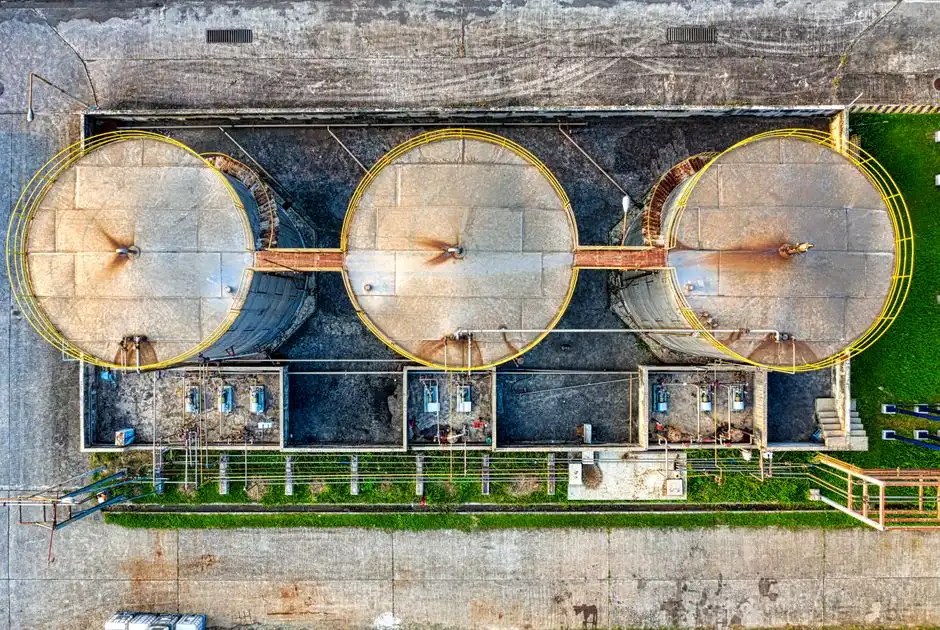
Stamping, drawing, and cold-heading presses leak tramp oils and lubricants at 50-500 mg/L into the floor drain; those oils are partly free (floating), partly emulsified by the surfactant packages in modern drawing compounds. Metal fines from stamping and grinding add 50-400 mg/L of TSS. Both respond to DAF flotation, and both re-suspend in a clarifier when hydraulic loading spikes, which is why a clarifier-only front end is risky in this stream profile.
Machining cells add cutting fluids and parts-washer chemistries. Emulsified oils and synthetic coolants carry a negative surface charge that holds the droplet in suspension; without prior chemical break, the emulsion slips through a clarifier and shows up as FOG exceedances on the discharge monitoring report. A DAF destabilizes the emulsion with polymer and floats the released oil in one step (per FRC Systems DAF performance data), whereas a clarifier would need a dedicated emulsion-breaking tank and additional retention time upstream.
Surface treatment — chrome conversion coating, black oxide, phosphating, and small-batch electroplating — introduces hexavalent chromium, total cyanide, cadmium, and zinc. Both must be pretreated before the stream joins the common-metals train: hex chrome is reduced to trivalent with sodium metabisulfite or ferrous sulfate at pH 2-3 (see the engineering detail in our hexavalent chromium wastewater treatment guide), and cyanide is oxidized by alkaline chlorination at pH 10-11. Complexed metals from chelating cleaners (EDTA, NTA, gluconate) need high-pH precipitation at pH 10-11, which the EPA 2016 study calls out as a separate treatment step that the DAF/clarifier train must accommodate (per Preliminary Study of the Metal Finishing Category, Section 2.3.3).
For a useful cross-region comparison, our Madison Heights fabricated metals DAF-vs-clarifier guide applies the same influent framework to a Michigan shop, and the Winston-Salem fabricated metals pretreatment compliance guide covers the regulatory mechanics for a different POTW context. The New Kensington wrinkle is the ALCOSAN surcharge structure, which penalizes FOG and zinc more aggressively than some neighboring POTWs.
DAF vs clarifier: head-to-head on the parameters that drive capex
DAF is a flotation unit; a clarifier is a settling unit. They look superficially similar — both produce a clarified effluent and a sludge stream — but they behave differently enough that the wrong choice shows up as a daily maximum exceedance in the DMR. The matrix below is the one an engineer should paste into the capex justification memo.
| Parameter | DAF | Lamella Clarifier |
|---|---|---|
| TSS removal | 80-95% (per FRC Systems published ranges) | 50-85% (per HydropureWater lamella specs) |
| FOG removal | 90-98% (per FRC Systems published ranges) | <30% free oil without prior flotation |
| Colloidal metal capture | 50-80% (when coagulated) | 20-40% |
| Hydraulic loading | 5-25 gpm/ft² effective area | 20-40 m/h surface loading (lamella) |
| Footprint, 100 gpm unit | ~10x footprint of equivalent lamella | Compact plate-pack design |
| Sludge consistency | 3-8% float, skimmed | 1-3% underflow, needs thickening |
| Chemical demand | Polymer + coagulant required | Up to 30% less coagulant than conventional clarifier (per HydropureWater DAF data) |
| Capex per gpm | Higher per gpm | 30-50% cheaper on turnkey basis |
| Best-fit stream | Oily, emulsified, colloidal | Precipitated metals, high TSS, low oil |
The clarifier's 5-10x footprint advantage disappears the moment the upstream stream carries emulsified oil, because the emulsion simply does not settle in the available retention time. That is the operational reason EPA's 2016 study still names clarification as the BAT basis but explicitly includes oil-removal (typically DAF) as a pretreatment step for oily wastes.
For New Kensington fabricators, the practical resolution is a HydropureWater DAF system upstream of a HydropureWater high-efficiency lamella clarifier. The DAF removes the oil, FOG, and colloidal metal load; the lamella clarifier polishes the precipitated metals to under the 60 mg/L TSS limit. DAF float and clarifier underflow converge on a dewatering unit, typically a plate-and-frame press (see Section 6), to meet the BAT sludge-dewatering requirement.
When to choose DAF, clarifier, or both in 2026
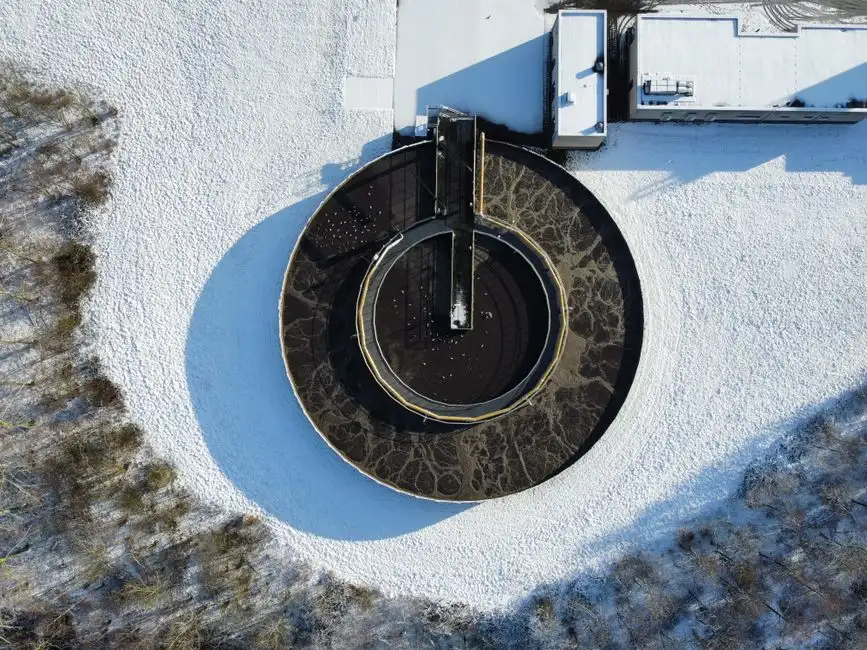
The 2026 decision rule is straightforward. Choose DAF + lamella clarifier when influent FOG exceeds ~50 mg/L, when stamping, drawing, or machining fluids dominate the waste stream, or when hex chrome and cyanide pretreatment is already part of the plant. This is the default for roughly 80% of New Kensington fabricated metals shops based on the influent envelope in Section 3.
Choose lamella clarifier only when the plant has minimal oil input — a clean rack electroplating line with no upstream machining, for example, where FOG stays under 25 mg/L and the clarifier can meet Part 433 limits without flotation. This is the EPA BAT basis when complexed metals and oily wastes are absent, per Section 2.3.1 of the 2016 Preliminary Study.
Choose DAF only when the downstream process is a deep-bed filter or membrane bioreactor rather than a clarifier, or when the receiving POTW applies very low FOG surcharges and a clarifier would be redundant. This is the unusual case in the New Kensington ALCOSAN service area, where FOG and zinc surcharges are both aggressive enough that a clarifier typically pays back even without upstream oil load.
The takeaway for the CFO meeting: EPA still names clarification as the BAT technology basis, so the clarifier is not optional in a Part 433 discharge. DAF is a pretreatment step for oily wastes, not a substitute for clarification. The decision is rarely "DAF or clarifier" — it is "DAF first, clarifier to polish, press to dewater."
2026 cost and payback picture for New Kensington fabricators
Capex ranges in 2026 dollars: a small DAF rated 25-50 gpm runs USD 35,000-90,000 turnkey; a large DAF at 200+ gpm runs USD 120,000-400,000. A lamella clarifier of equal hydraulic capacity is typically 30-50% cheaper on a turnkey basis (per HydropureWater project data, 2025-2026). The full train — DAF + lamella clarifier + dewatering press — sits in the USD 250,000-800,000 band for a 100-200 gpm fabricated metals plant.
OPEX swings on three drivers: polymer and coagulant cost, sludge hauling frequency, and ALCOSAN surcharges for TSS, FOG, and metals above local thresholds. Pairing the DAF with a HydropureWater plate-and-frame filter press and a HydropureWater automatic chemical dosing skid reduces hauled sludge weight by 60-80% versus clarifier underflow alone, because the press pushes cake to 25-35% solids versus 1-3% for the clarifier underflow (HydropureWater field data, 2026).
Illustrative payback at a stamping plant with 200 gpm flow and 200 mg/L FOG influent: a USD 180,000 DAF + clarifier retrofit recovers USD 90,000-150,000 per year in reduced sludge volume and avoided FOG surcharges, for a 12-24 month payback. Actuals depend on influent variability, ALCOSAN tariff tier, and chemistry program cost — but the order of magnitude is consistent across the HydropureWater 2025-2026 project book.
2026 implementation checklist for a DAF + clarifier retrofit
- Jar-test coagulant and flocculant selection on actual plant water before specifying chemistry doses; pilot data is cheaper than a mis-sized dose pump.
- Confirm footprint, ceiling height, and forklift access; DAF skimmers need 8-10 ft of overhead clearance for the drive and flight assembly.
- Size the equalization tank for at least 4-8 hours of peak flow to smooth slug loads from batch dumps; undersized EQ is the most common retrofit cause of clarifier upset.
- Plan for pH/ORP probes and an automatic chemical dosing skid to keep hydroxide precipitation inside the 8.5-9.5 pH window for mixed metals and above pH 10 for complexed metals.
- Verify ALCOSAN discharge limits, sampling protocol, and 40 CFR 433 self-monitoring requirements before startup; commission the analytical lab and the QA/QC chain first.
Frequently Asked Questions
Does a New Kensington fabricator need both a DAF and a clarifier under 40 CFR Part 433?
Yes, in most cases. The EPA 2016 Preliminary Study still names hydroxide precipitation and clarification as the BAT basis, and DAF is treated as a pretreatment step for oily wastes rather than a substitute. A DAF + lamella clarifier train handles the FOG, TSS, and metals envelope typical of New Kensington stamping and machining shops.
What is the Part 433 limit for hexavalent chromium and how do you hit it?
The PSES daily maximum for hexavalent chromium is 0.31 mg/L (per 40 CFR 433.13). The standard treatment train is chrome reduction with sodium metabisulfite or ferrous sulfate at pH 2-3, followed by common-metals precipitation at pH 8.5-9.5, then clarification. See the hexavalent chromium wastewater treatment guide for the full 2026 spec and cost model.
What is the typical payback for a DAF retrofit at a fabricated metals plant?
For a 200 gpm stamping plant with 200 mg/L FOG, a USD 180,000 DAF + clarifier retrofit typically pays back in 12-24 months through lower sludge hauling cost and avoided ALCOSAN FOG surcharges. Actuals depend on influent variability and the local tariff tier (HydropureWater field data, 2026).
Can a fabricated metals plant skip the clarifier and discharge DAF effluent directly?
Generally no. EPA's 2016 study keeps clarification in the BAT technology basis, and Part 433 PSES sets a 60 mg/L TSS daily maximum that a DAF alone rarely meets on a metals-precipitated stream. A clarifier or an equivalent polishing step is required for compliance.