Hexavalent chromium wastewater treatment system cost runs $150,000–$250,000 for a 100 GPM chemical reduction train and up to $1.2M for A-LIX recovery units that return about $2M per year in chromate. Compliance starts with 40 CFR 433, not equipment catalogs.
Why Hexavalent Chromium Treatment Fails: A Plating Shop Case Study
Hexavalent chromium (Cr6+) treatment is a two-stage train: reduce Cr6+ to trivalent chromium, then precipitate chromium hydroxide. SO2 systems reach 99%+ removal in 2 to 7.5 hours on 60 to 95 mg/L influent; anaerobic bio-filters cut 60 mg/L to under 0.5 mg/L in 4 hours at COD near 140 mg/L. Gold ORP electrodes anchor control at pH 2.0 to 3.0.
Failures often trace to redox kinetics that work on paper but stall at plant scale. A Guangzhou hardware plating shop treated 75 mg/L Cr6+ in a chemical reduction pond. Despite sodium bisulfite dosing, effluent spiked to 1.2 mg/L against a 0.5 mg/L local limit, and the shop was fined $120,000. A dead zone let pH rise above 4.0, which stalled reduction and let Cr6+ bypass. Production stopped for 14 days, and unstable sludge disposal cost $800 per ton.
Improper hexavalent chromium control carries outsized risk because Cr6+ is about 1,000 times more toxic than Cr3+. IARC classifies Cr6+ compounds as Group 1 carcinogens, especially inhaled airborne mist from open plating tanks (Wikipedia, Hexavalent chromium). The OSHA permissible exposure limit for airborne Cr6+ is 5 μg/m³, so mist control is regulated separately from effluent. EPA and EU rules, plus local POTW limits, push continuous monitoring into many permits, and plant managers must weigh that compliance risk against reagent spend and hazardous sludge volume.
Hexavalent Chromium Treatment Mechanisms: Reduction, Precipitation, and Recovery Pathways
Chromium treatment moves chromium from the soluble, toxic +6 state to the less soluble, less toxic +3 state. Industrial plants use chemical reduction, microbial reduction, or liquid ion exchange. Each pathway trades reagent cost, sludge volume, and recovery potential differently.
1. Chemical Reduction and Precipitation: This remains the standard for medium-flow streams. Operators lower pH to 2.0 to 3.0, then dose a reductant — sulfur dioxide (SO2), sodium bisulfite (NaHSO3), or ferrous sulfate (FeSO4). The SO2 reaction is 3SO2 + 2H2CrO4 + 3H2O → Cr2(SO4)3 + 5H2O. After ORP confirms reduction, pH is raised to 8.5 to 9.5 with caustic or lime so Cr3+ precipitates as Cr(OH)3. Letting pH drift above 3.0 during reduction slows the reaction sharply and risks Cr6+ breakthrough.
2. Microbial (Anaerobic) Reduction: Anaerobic bio-filters use microbes that take Cr6+ as an electron acceptor. With a carbon source holding COD near 140 mg/L, cells reduce Cr6+ to Cr3+ on their surfaces. Documented runs drop Cr6+ from 60 mg/L to under 0.5 mg/L in about 4 hours when trace metals support enzyme activity (HydropureWater technical data, 2025).
3. A-LIX Ion Exchange (Recovery): Anion Liquid Ion Exchange (A-LIX) uses a chromate-selective amine extractant in a closed loop. Chromate moves into the organic phase, then strips as a high-purity concentrate (up to 20,000 ppm) for plating-bath reuse. The route avoids hazardous sludge and cuts fresh chromate purchases.
| Mechanism | Primary Reaction | Key Reagents | Byproducts |
|---|---|---|---|
| Chemical Reduction | Cr6+ + 3e- → Cr3+ | SO2, NaHSO3, H2SO4 | Cr(OH)3 Sludge |
| Microbial Reduction | Bio-enzymatic Reduction | Carbon Source (Methanol/Acetate) | Biomass-bound Chromium |
| A-LIX Recovery | Liquid-Liquid Extraction | Specific Amine Extractant | Recovered Chromate |
Engineering Specs for Hexavalent Chromium Treatment Systems: Influent, Effluent, and Process Parameters
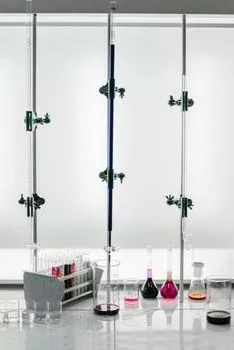
A hexavalent chromium wastewater treatment system must match influent strength to retention time and reagent delivery. In chemical trains, reduction-tank contact time rises with influent Cr6+. A 60 mg/L Cr6+ stream typically needs about 2 hours; 95 mg/L may need up to 7.5 hours for complete reduction.
Reagent dosing follows stoichiometry, then adds a practical safety margin. Theory calls for 3 mg SO2 or 2.8 mg NaHSO3 per 1 mg Cr6+. Ferrous sulfate jumps to about 16 mg per 1 mg Cr6+ because the iron path is less efficient and builds more sludge. Control loops should use PLC-controlled chemical dosing for precise pH/ORP adjustment in chromium reduction to stop under-dosing (permit failure) and over-dosing (TDS and chemical waste).
| Parameter | Anaerobic Bio-Filter | Sulfur Dioxide System | A-LIX System |
|---|---|---|---|
| Influent Cr6+ (mg/L) | 60 – 95 | 50 – 500 | 100 – 5,000 |
| Optimum pH (Reduction) | 6.5 – 7.5 | 2.0 – 3.0 | 3.0 – 5.0 |
| ORP Setpoint (mV) | -200 to -300 | +250 to +300 | N/A |
| Retention Time (hrs) | 4.0 – 7.5 | 2.0 – 4.0 | 0.5 – 1.0 |
| Effluent Cr6+ (mg/L) | < 0.5 | < 0.1 | < 0.1 |
Sensor choice is a common specification failure. Platinum-tip ORP probes poison in high chromium and SO2 service, so specify gold ORP electrodes for long-term accuracy and fewer probe swaps. After precipitation, solids separation usually needs DAF systems for chromium hydroxide sludge separation and thickening ahead of final dewatering. Skipping that thickening step loads the filter press and inflates hauling volume.
Treatment Method Comparison: Anaerobic Bio-Filters vs. Chemical Reduction vs. A-LIX Ion Exchange
Method choice trades flow, Cr6+ concentration, and tolerance for hazardous waste. Chemical reduction stays the most flexible default. Rising sludge disposal cost is pushing high-volume plants toward recovery or biological options. Run the comparison against your own sludge-hauling invoice, not list prices.
Anaerobic bio-filters fit low-flow duties (typically under 50 GPM) when the wastewater already carries high COD. Microbes need that carbon, so mixed electronics or hardware streams with organic cleaners work well. The culture is sensitive to temperature swings and toxic shocks from other metals. For mixed-metal plating lines, use nickel wastewater treatment specs for plating shops with mixed-metal streams so nickel and chromium trains stay compatible.
| Feature | Anaerobic Bio-Filter | Chemical Reduction (SO2) | A-LIX Ion Exchange |
|---|---|---|---|
| CAPEX | Moderate | Low | High |
| OPEX | Low (if COD is present) | High (Sludge + Reagents) | Very Low (Net Positive) |
| Sludge Generation | Minimal | High (Hazardous) | Zero |
| Recovery Potential | None | None | High (20,000 ppm) |
| Footprint | Large | Moderate | Compact |
For flows over 500 GPM or strict zero-sludge mandates, A-LIX is usually the better fit. CAPEX is higher, but dropping filter presses for dewatering chromium hydroxide sludge and hauling fees often returns payback in under 24 months.
Chemical reduction remains the default for small-shop batch treatment where simple equipment outweighs ongoing chemical cost. For recovery-versus-disposal economics, see Hexavalent Chromium Wastewater Treatment Cost: 2026 Engineering Breakdown and hexavalent chromium wastewater treatment cost: 2026 guide.
Hexavalent Chromium Wastewater Treatment System Cost: CAPEX, OPEX, and ROI
Financial review must include hazardous-waste compliance, not only equipment price. In 2025, hazardous sludge disposal under EPA D007 has commonly run $800 to $1,200 per ton, depending on haul distance to a licensed TSDF. Select dewatering chemistry to stay clear of that threshold where the waste profile allows.
100 GPM Hexavalent Chromium Treatment CAPEX OPEX Benchmarks
A chemical reduction train at 100 GPM costs about $150,000 to $250,000 in CAPEX; an A-LIX unit at the same flow runs about $1.2M installed. Annual chemical-train OPEX can exceed $300,000 once sulfuric acid (pH 2), bisulfite, caustic (pH 9), and roughly 300 tons of sludge are included. The A-LIX route can recover up to 175,000 pounds of chromate per year at that flow. The hexavalent chromium wastewater treatment system cost gap closes fast once recovery value is booked.
That recovery is cited at about $2M per year in raw-material savings and can pay the system back in under a year (per Watervliet Army Arsenal data). Sludge at $240,000 per year dominates chemical-train OPEX, while A-LIX runs net positive. Run both columns against your measured chromate dragout before committing capital.
| Cost Category | Chemical System (100 GPM) | A-LIX System (100 GPM) | Anaerobic (100 GPM) |
|---|---|---|---|
| Equipment CAPEX | $180,000 | $1,200,000 | $450,000 |
| Annual Reagents | $110,000 | $15,000 | $40,000 |
| Annual Sludge Cost | $240,000 | $0 | $25,000 |
| Annual Recovery Value | $0 | ($2,000,000) | $0 |
| Net Annual OPEX | $350,000 | ($1,985,000) Profit | $65,000 |
Maintenance also matters. pH and ORP sensors in chromium service need replacement every 6 to 12 months, and quality gold ORP electrodes cost about $1,200 each. Plants that also treat copper should fold these costs into a broader copper wastewater treatment for metal finishing and electronics manufacturing budget before procurement.
Compliance and Discharge Limits: EPA, EU, and Local Regulations for Hexavalent Chromium
Even short Cr6+ excursions can trigger shutdowns, so permit limits drive process selection. Part 433 does not list a separate Cr6+ effluent limitation.
Earlier industry summaries often cited 0.1 mg/L Cr6+ under that part; treat 0.1 mg/L as a common design target only, then confirm the written permit. Many POTWs set stricter Cr6+ local limits, sometimes as low as 0.01 mg/L, to protect biological treatment. On the drinking-water side, the EPA has no Maximum Contaminant Level specific to hexavalent chromium (Wikipedia, Hexavalent chromium), so states and utilities set their own numbers.
| Region/Standard | Cr6+ Limit (mg/L) | Total Cr Limit (mg/L) | Monitoring Frequency |
|---|---|---|---|
| EPA (40 CFR 433) | 0.1 | 2.77 | Daily/Weekly |
| EU (IED Directive) | 0.05 | 0.5 | Continuous/Daily |
| China (GB 21900) | 0.5 | 1.0 | Daily |
| Electronics Industry | 0.01 – 0.05 | 0.1 – 0.2 | Continuous |
Electronics plants that must hit ultra-low Cr6+ often need polishing beyond standard precipitation. High-performance MBR systems for effluent polishing to meet <0.05 mg/L Cr6+ limits catch micro-precipitates that pass clarifiers. For Zero Liquid Discharge (ZLD), RO systems for zero-liquid-discharge compliance in high-risk industries concentrate residual ions for evaporation or reuse.
System architecture detail is covered in the electronics wastewater treatment for high-compliance industries guide. China applies GB 21900 (Emission standard of pollutants for electroplating); confirm the numeric limit on the applicable table in your permit package.
Who This Is For and Next Step
Plant engineers, EPC contractors, and procurement managers are the audience for this sizing guide, which covers trains from under 20 GPM (batch shops) to over 500 GPM (continuous plating). It assumes you already hold a discharge target — EPA 40 CFR 433 Chromium (T), an EU permit limit, GB 21900, or a local POTW Cr6+ limit — and need to choose chemical, biological, or recovery routes. If you are adding a chromate plating or conversion-coating line, start with the A-LIX recovery economics in the cost table, because recovered chromate value often pays the system before the first compliance audit.
If your scope is sulfide precipitation rather than bisulfite or SO2 reduction, review cost for code compliant effluent management systemfor hexlant chromium plant before locking reagents. To request a sized proposal, send influent Cr6+ range, target flow in GPM or m3/d, and the discharge limit via request a quote for a hexavalent chromium treatment system.
Frequently Asked Questions
What is the most cost-effective hexavalent chromium treatment method for a 50 GPM plating shop?
Sulfur dioxide reduction is generally the most cost-effective for 50 GPM systems. It offers low CAPEX ($25K to $50K for the skid) and manageable OPEX ($0.50 to $1.00 per 1,000 gal in chemicals). Anaerobic bio-filters may cost less under 20 GPM if organic loading is steady. A-LIX usually needs flows above 100 GPM or very high Cr6+ to justify CAPEX.
How do I calculate the sulfur dioxide dosage for Cr6+ reduction?
Use 3 mg SO2 per 1 mg Cr6+ as the stoichiometric ratio. Hourly demand is (Influent mg/L × GPM × 0.0005) × 3. Example: 100 mg/L Cr6+ at 50 GPM needs 1.25 lbs SO2 per hour before the ORP safety margin. Sodium bisulfite substitutes at 2.8 mg per 1 mg Cr6+ when gas handling is unwanted.
What ORP and pH levels are required for chromium reduction?
For SO2 or bisulfite reduction, hold pH at 2.0 to 3.0 and ORP at +250 to +300 mV on a gold electrode. If pH rises above 3.0, reaction rate falls sharply and Cr6+ can bypass into the clarifier. Gold-tipped electrodes survive chromium and SO2 service where platinum probes poison within months.
Can hexavalent chromium be recovered for reuse?
Yes. A-LIX liquid ion exchange can recover chromate as a 20,000 ppm concentrate. Large plants cite up to $2M per year in raw-material savings, and a 100 GPM unit can repay its $1.2M CAPEX in under a year (per Watervliet Army Arsenal data). Standard chemical and biological trains destroy Cr6+ and do not recover bath chemical.
What are the sludge disposal requirements for chromium hydroxide?
Chromium hydroxide sludge is hazardous under EPA code D007 once its TCLP extract reaches 5.0 mg/L chromium (40 CFR 261.24, Cornell LII). Dewater it (typically to 30 to 40% solids), track it on a hazardous-waste manifest, and send it to a licensed landfill. Disposal commonly costs $800 to $1,200 per ton.
What EPA limit applies to chromium in metal finishing discharge?
40 CFR Part 433 caps total chromium at 2.77 mg/L for any one day and 1.71 mg/L as a monthly average for existing sources. The part lists no separate Cr6+ effluent limitation, so a 0.1 mg/L Cr6+ design target comes from local POTW limits or internal standards. Confirm the written permit before specifying. Local limits sometimes reach 0.01 mg/L Cr6+.