
Why Munith Fabricated Metals Plants Are Rethinking Clarifiers in 2026
On a typical Munith shop floor the wastewater mix is messy and changing. A 400-ton stamping press leaks way lube into the trench drain, a CNC sump carries 1–5% tramp oil, and a hex-chrome rinse tank overflows at the end of a shift. Each of those streams is a different treatment problem. Stamping draw compounds routinely run 200–2,000 mg/L free oil; machining coolant sumps add emulsified oil that will not break on its own; and finishing rinse water carries 50–500 mg/L TSS along with dissolved chromium, zinc, and nickel (NAICS 332 facility survey, 2025). The discharge target is set by 40 CFR Part 438, which caps oil & grease at 38 mg/L daily maximum and TSS at 60 mg/L daily maximum for indirect discharges from metal finishing (per EPA 40 CFR Part 438). Michigan EGLE enforces these limits through delegated pretreatment programs; the receiving POTW — likely the Waterloo–Grass Lake wastewater plant for most Munith sites — translates them into local sewer use ordinance limits that can be tighter than the federal floor (per Michigan EGLE Part 22 rules). The legacy clarifier designed in the 1990s for 50 GPM of coolant overflow was never sized for a 2026 stamping line running 150 GPM of draw compound, which is why many Jackson County plants are reopening the equipment spec in their 2026 capex cycle.
How a DAF and a Clarifier Actually Treat Metals Wastewater
A dissolved air flotation system works by pressurizing a recycle stream of clarified water to 60–80 psig and saturating it with air; when that stream is released into the flotation tank at atmospheric pressure, 30–50 micron micro-bubbles form and attach to oil droplets, fine floc, and low-density solids, lifting them into a surface blanket that a skimmer scrapes into a sludge trough (per Clearwater Industries). The clarified water exits below the float and above any settled sediment. A high-efficiency lamella clarifier is the opposite: a quiescent tank fitted with inclined plates spaced at 50–80 mm, designed for a surface loading rate of 20–40 m/h. Heavier particles settle onto the plates, slide down to a sludge cone, and clarified water overflows a peripheral launder weir. Most modern DAF designs include a small sediment compartment with a sludge extraction auger, so the two technologies are not strictly mutually exclusive — DAF handles the floatables, the internal sediment zone polishes the heavy fines. One operational difference matters on day one: a DAF must be filled with clean water before the recycle pump can pressurize it, or the saturation vessel and pump cavitate (per Clearwater Industries). A lamella clarifier can be fed raw wastewater from the first minute because it has no pressurization step.
Contaminant-by-Contaminant: Which Unit Wins for Each Stream You Generate
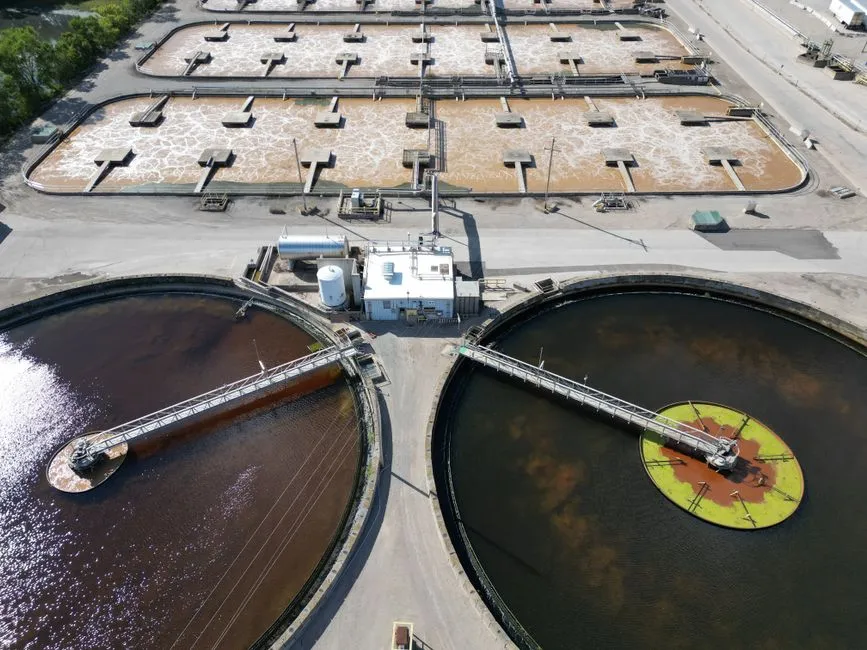
The DAF-vs-clarifier decision is really four decisions stacked on top of each other, because fabricated metals plants do not generate one waste stream — they generate four, and each one has a different winner.
| Contaminant | Typical Influent (mg/L or %) | DAF Removal | Clarifier Removal | Winner |
|---|---|---|---|---|
| Free oils & drawing compounds | 200–2,000 mg/L free oil | 90–98% | 50–70% | DAF |
| Emulsified machining coolants | 1–5% tramp oil, emulsified | 85–95% (with coagulant + flocculant) | 20–40% | DAF |
| Metal fines, swarf, grinding slurry | 200–2,000 ppm TSS | 70–85% (limited by bubble-fines contact) | 85–95% | Lamella clarifier |
| Hexavalent chromium rinse (after precipitation) | 5–50 mg/L Cr(VI) as Cr(OH)₃ floc | 90–95% (floc floats well) | 60–75% (low-density floc resuspends) | DAF |
| Zinc phosphate / nickel rinse precipitate | 10–100 mg/L metal hydroxide floc | 88–94% | 55–70% | DAF |
Free oils and drawing compounds are the headline win for DAF. Stamping plants that switch from a 1990s clarifier to a properly conditioned DAF routinely move O&G from 150–400 mg/L in the effluent to under 30 mg/L — comfortably below the 38 mg/L Part 438 daily max. Emulsified coolant is the case where a clarifier simply cannot do the job: the droplets are stabilized by surfactant and will not settle under gravity in any reasonable retention time, so DAF with a coagulant/polymer conditioning stage fed by an automatic chemical dosing system is the only realistic primary treatment. Metal fines and grinding swarf are the reverse case — they are heavy, they settle in seconds, and a lamella clarifier's inclined plates give you 85–95% TSS removal at 20–40 m/h surface loading, on a smaller footprint and a lower capex than DAF (per HydropureWater lamella specs). For hexavalent chromium, neither DAF nor clarifier removes dissolved metals on its own — you must reduce Cr(VI) to Cr(III) with sodium bisulfite or ferrous sulfate at pH 2, then raise pH to 8.5–9.0 to precipitate chromium hydroxide. Once the floc exists, DAF is the better carrier because the metal hydroxide floc is low-density and tends to slip past a clarifier's launder weir.
2026 Decision Matrix for a Munith Metals Plant
Hand this matrix to a vendor and ask them to score against your jar test data. The weights below are calibrated to the 40 CFR 438 risk profile: oil/FOG and compliance margin carry the most weight because they drive EPA and EGLE enforcement exposure.
| Criterion | Weight | DAF Score (0–5) | Clarifier Score (0–5) | DAF Weighted | Clarifier Weighted |
|---|---|---|---|---|---|
| FOG & free oil removal | 0.20 | 5 | 2 | 1.00 | 0.40 |
| Emulsified coolant removal | 0.15 | 4 | 1 | 0.60 | 0.15 |
| TSS removal (fines) | 0.10 | 3 | 5 | 0.30 | 0.50 |
| Footprint (m² per 100 GPM) | 0.10 | 2 | 4 | 0.20 | 0.40 |
| CAPEX at equivalent flow | 0.10 | 2 | 4 | 0.20 | 0.40 |
| OPEX (chemicals + power + labor) | 0.10 | 3 | 4 | 0.30 | 0.40 |
| Sludge dryness (downstream cost) | 0.10 | 5 (2–4% float) | 2 (0.5–2% underflow) | 0.50 | 0.20 |
| Maintenance hours / month | 0.05 | 3 | 4 | 0.15 | 0.20 |
| Compliance margin to 40 CFR 438 | 0.20 | 5 | 2 | 1.00 | 0.40 |
| Total | 1.00 | 4.25 | 3.05 |
The one-line decision rule, sized against the DAF Corp envelope: if free oil + emulsified coolant exceed 30% of total flow, spec a DAF (FC Maximizer round unit covers 10–11,000 GPM; RC UniMax rectangular covers 10–1,000 GPM per DAF Corp). If fines and swarf exceed 70% of total suspended load, spec a lamella clarifier. Mixed streams — which is the Munith norm — spec DAF primary plus a small lamella polish.
Sizing, Footprint, and Cost Reality for a 50–200 GPM Shop
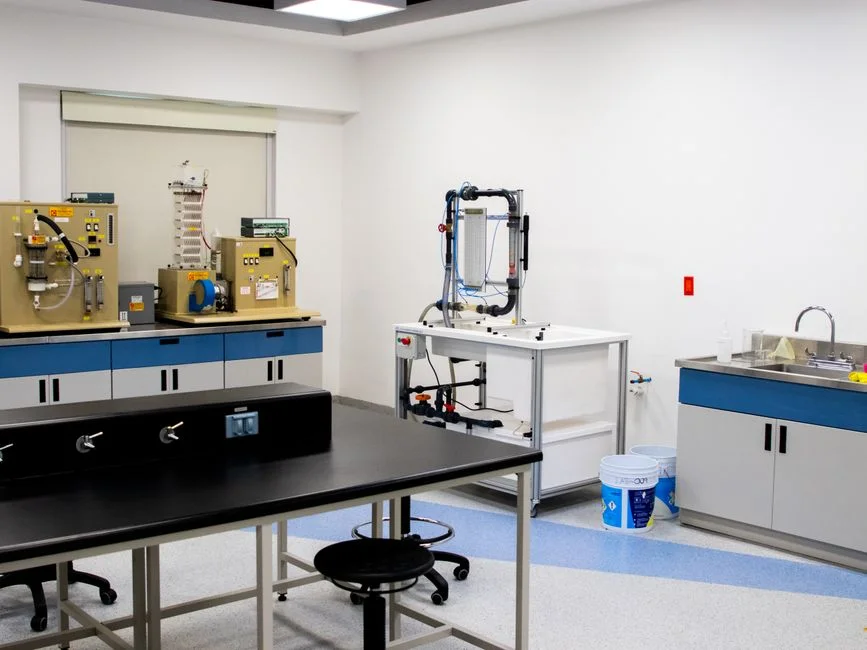
A mid-size Munith shop generating 50–200 GPM of combined wastewater sits in the 11–45 m³/h band, which falls comfortably inside the dissolved air flotation system range of 4–300 m³/h spread across 13 standard models (HydropureWater specs). The compact skid-mounted DAF turnkey system handles flows up to 66 GPM on a single skid; above 66 GPM the standard layout goes to a two-skid modular arrangement, which simplifies rigging through a typical Munith loading dock (per Clearwater Industries COMPACT DAF spec).
| Flow (GPM) | Flow (m³/h) | Skid-Mounted DAF Footprint | Lamella Clarifier Footprint | Relative CAPEX (DAF = 1.0×) |
|---|---|---|---|---|
| 50 | 11 | 8–12 m² | 5–7 m² | 1.0 |
| 100 | 23 | 12–18 m² | 7–10 m² | 1.0 |
| 150 | 34 | 16–22 m² | 9–13 m² | 1.0 |
| 200 | 45 | 20–28 m² (two-skid) | 11–16 m² | 1.0 |
Order-of-magnitude CAPEX: a DAF at the same flow runs 1.5–2.5× the cost of a lamella clarifier once you include the recycle pump, saturation vessel, air compressor, and skimmer drive (HydropureWater field data, 2026). OPEX converges once you price the clarifier's downstream dewatering — DAF float sludge at 2–4% solids feeds a filter press directly, while clarifier underflow at 0.5–2% needs a thickener first (per DAF Corp FC Maximizer performance data). Net of sludge handling, the 5-year OPEX gap is typically under 15%.
Compliance, Sludge Handling, and Where the Filter Press Fits
Compliance is what justifies the spend, and 40 CFR Part 438 sets the daily-maximum ceiling for indirect discharges: oil & grease 38 mg/L, TSS 60 mg/L, plus metals limits for cadmium (0.69 mg/L), chromium (2.77 mg/L total, with tighter Cr(VI) limits under local rules), copper (3.38 mg/L), lead (0.69 mg/L), nickel (3.98 mg/L), silver (0.43 mg/L), and zinc (2.61 mg/L) (per EPA 40 CFR Part 438 Table 1). Michigan EGLE adopts these through the Part 22 rules and may impose local limits stricter than the federal floor; check the Waterloo–Grass Lake sewer use ordinance before you finalize the equipment spec, because local limits are what your pretreatment coordinator will enforce against. DAF float sludge at 2–4% consistency feeds directly into a plate and frame filter press for dewatering to 25–35% cake solids, which is typically below the landfill paint-filter threshold and saves a hauler. Clarifier underflow at 0.5–2% needs a thickener step first or you double your hauling cost. One final point both technologies share: neither DAF nor clarifier removes dissolved metals — chrome, zinc, and nickel compliance still requires precipitation chemistry upstream, dosed by an automatic chemical dosing system, before either clarification stage. For a comparable regulatory and pretreatment framing on the EV/auto side of NAICS 336, see the 2026 pretreatment compliance for EV and auto plants write-up; for a parallel fabricated-metals guide in another Midwest shop context, the Springfield fabricated metals DAF vs clarifier guide applies the same matrix to a different contaminant profile.
Frequently Asked Questions
What free-oil and TSS removal can a DAF realistically hit on a stamping wastewater stream?
A properly conditioned DAF on a stamping draw compound stream will deliver 90–98% FOG removal and 92–98% TSS removal, with effluent oil & grease typically 10–25 mg/L — well under the 40 CFR Part 438 daily max of 38 mg/L (per DAF Corp FC Maximizer performance data and Ecologix case data).
When does a lamella clarifier outperform a DAF on fabricated metals wastewater?
When the dominant contaminant is settleable solids — grinding swarf, metal fines, spent abrasive slurry at 200–2,000 ppm TSS — a lamella clarifier at 20–40 m/h surface loading rate hits 85–95% TSS removal on a smaller footprint and at 40–65% of DAF capex (per HydropureWater lamella specs).
Can a DAF remove hexavalent chromium from a Munith finishing rinse?
No DAF removes dissolved Cr(VI) on its own. You must first reduce Cr(VI) to Cr(III) at pH ~2 and then raise the pH to 8.5–9.0 to precipitate chromium hydroxide; the DAF then floats the floc with 90–95% removal (per standard metal-finishing precipitation chemistry).
How much floor space does a 50 GPM DAF system need in a tight Munith shop?
A skid-mounted DAF at 50 GPM with integral chemical conditioning needs roughly 8–12 m² of floor area including the polymer make-down unit; a lamella clarifier at the same flow fits in 5–7 m² but leaves 2–3× more residual oil in the effluent (HydropureWater field data, 2026).