What an Expanded Copper Mine Actually Discharges
An expanded copper-mine operation does not discharge one wastewater stream — it discharges three, and the design basis fails the moment an engineer treats them as a single combined flow. A greenfield expansion of the scale Freeport-McMoRan and its peers run — Kutch Copper, for reference, ramped to 500,000 t/y cathode in 2025 and is targeting 1,000,000 t/y (2025-08, LinkedIn industry coverage) — generates (1) acid mine drainage / acid rock drainage (AMD/ARD) from waste rock, tailings, and pit walls, (2) process wastewater from SX-EW raffinate, smelter gas-cleaning scrubbers, and electrolyte bleed, and (3) sanitary sewage from the camp and concentrator. Biology alone will not work: pH 2-4, dissolved Cu at 5-200 mg/L, Fe at 10-500 mg/L, and sulfate at 1,000-5,000 mg/L are all acutely toxic to conventional activated sludge. Metals-tolerant biomass and chemistry are non-negotiable.
The combined stream a planning engineer should design against sits in the following envelope. These are typical ranges drawn from published copper-mine characterisations, not Freeport-specific permit values.
| Parameter | AMD/ARD stream | Smelter/SX-EW process stream | Design basis (combined) |
|---|---|---|---|
| pH | 2.0-4.0 | 1.5-6.0 (scrubber blowdown) | 2.0-6.0 after segregation |
| TDS (mg/L) | 2,000-15,000 | 3,000-20,000 | <25,000 to RO |
| Sulfate (mg/L) | 1,000-5,000 | 500-3,000 | <500 after biological polishing |
| Dissolved Cu (mg/L) | 5-200 | 10-500 | <0.5 to receiving water |
| Fe (mg/L) | 10-500 | 5-100 | <2.0 to receiving water |
| Mn (mg/L) | 1-50 | <5 | <1.0 to receiving water |
| Al (mg/L) | 5-100 | <20 | <2.0 to receiving water |
| As (mg/L) | 0.05-5 | 0.1-2 | <0.1 to receiving water |
The two streams behave differently and should be segregated upstream of equalisation. AMD/ARD is flow-driven by storm events and snowmelt, while smelter wastewater is production-schedule-driven and more constant but hotter and more acidic. Mixing them before characterisation is the most common reason a mining ETP underperforms in commissioning.
The Treatment Train a Copper-Mine ETP Needs
The treatment train runs in seven sequential stages, and every stage exists because the previous one cannot do its job. Skipping equalisation is the single most common cause of an unstable copper-mine ETP; equalisation is consistently identified as one of the most important practical components of any ETP (WTE Infra, 2026), and that observation is even more true when storm-driven AMD surges hit a biological stage sized for the average flow.
Stage 1 — Coarse screening and grit removal. A rotary mechanical bar screen on the AMD and combined sewer lines protects pumps and downstream tanks from scale, wood, plastic, and rag debris that routinely enter mine contact-water sumps. Typical aperture: 6-10 mm.
Stage 2 — Flow and load equalisation. Sized for 4-24 hours HRT depending on whether the site has a defined wet-season surge. Mixers run continuously; aeration is avoided at this stage to prevent sulfide oxidation and the release of CO2 that would re-dissolve metals downstream.
Stage 3 — pH correction and staged metal precipitation. Two-stage lime dosing is the workhorse. Stage A raises pH to 4.0-5.0 to drop the bulk of Fe and Al as hydroxide floc; Stage B raises pH to 8.5-9.5 to precipitate Cu, Zn, and most Mn. Where the receiving-water Cu limit is below 0.5 mg/L or Hg is in the feed, sulfide dosing with NaHS or Na2S at pH 7-8 produces CuS and HgS with Ksp values several orders of magnitude below the hydroxide form — the standard tightening step for LME-Grade A cathode sites.
Stage 4 — High-rate clarification. A high-density-sludge lamella clarifier running at 20-40 m/h surface loading (per manufacturer rating) or a DAF system for metal-bearing wastewater in the 4-300 m³/h range (per manufacturer rating) handles the dense metal hydroxide sludge. Recirculating 60-80% of the underflow as seed (the "high-density sludge" or HDS principle) cuts fresh lime demand by roughly 30% and produces a thicker, faster-settling floc — a meaningful OPEX saving at 2,000+ m³/day.
Stage 5 — Biological sulfate reduction. An MBBR or SBR seeded with sulfate-reducing bacteria (SRB) using an ethanol or methanol carbon source reduces residual organics, residual dissolved metals (the biogenic sulfide re-precipitates any Cu, Zn, Cd that slipped past the lime stage), and typically 60-80% of influent sulfate. This stage also buffers the clarifier against shock loads — SRB biomass tolerates the metal and pH swings that would kill a conventional heterotrophic community.
Stage 6 — MBR polishing. An MBR polishing train drops TSS and turbidity to sub-1 μm and protects the downstream RO membranes from fouling. MBR footprints run roughly 60% smaller than the equivalent conventional activated-sludge train (per manufacturer rating), which matters when the ETP pad sits on a constrained mine bench.
Stage 7 — RO or ZLD. In arid Grasberg/Atacama-style operations, RO permeate is reused as gland-service water, heap-leach barren solution make-up, or smelter cooling-tower make-up. ZLD (brine concentrator + crystalliser) is reserved for sites with no receiving-water dilution capacity or where brine disposal costs are prohibitive. Either way, the design reduces raw freshwater draw and protects the mine's social licence to operate in water-stressed catchments. The chemistry decisions upstream of RO — not the membrane area — decide whether a mining RO runs at 85% recovery or spends its life in a CIP cycle.
Sludge, Reagents, and Mass Balance Reality
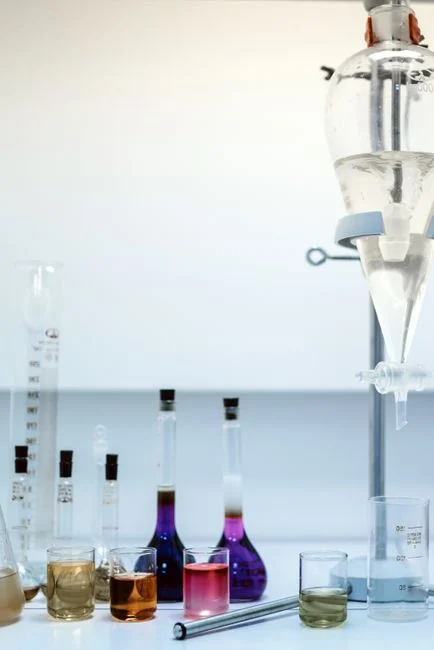
Sludge is where the budget lives. A copper-mine ETP running on lime generates 8-15 kg of dry solids per m³ of treated AMD, dominated by gypsum (CaSO4·2H2O), Fe(OH)3, and Al(OH)3. At 4,000 m³/day, that is 30-60 t/day of dry cake to handle — more mass than the cathode product stream is moving on most days. Dewatering technology is therefore not a side decision; it is a civil and tailings-storage-facility (TSF) decision.
A plate-and-frame filter press for mining sludge in the 1-500 m² filter area range (per manufacturer rating) produces a 35-45% dry cake that can be co-disposed in a lined TSF cell, which is the standard route at most copper operations. Screw presses and decanter centrifuges have lower CAPEX but produce wetter cake (20-30% DS) and higher polymer demand — they earn their place at smaller flow rates or where TSF capacity is not the binding constraint.
Reagent control is the other operating-cost lever. An automatic chemical dosing system with PLC-controlled coagulant, flocculant, lime, and polymer injection tracks the AMD feed's actual pH and flow, not a lab set-point from last month. The WTE Infra guidance is direct on this point: chemicals should be selected by jar test against the actual wastewater, and overdosing does not improve treatment — it raises sludge mass, polymer cost, and downstream RO fouling (WTE Infra, 2026). For a copper-mine ETP, the right jar-test matrix is a full storm-season flow composite, not a single grab sample.
Sizing the ETP for a Real Expansion
The sizing question is the one most often fudged in pre-feasibility. The defensible planning rate for combined process and contact drainage at a copper SX-EW or smelter operation is 0.8-1.5 m³ of wastewater per tonne of copper cathode produced, with the higher end applying to operations with significant contact-water runoff and the lower end to integrated smelters with mostly closed-loop raffinate.
For a 1,000,000 t/y LME Grade A cathode operation, that puts average design flow at 2,200-4,100 m³/day. Wet-season AMD surges push peak hydraulic load to 5,000-7,000 m³/day — equalisation, screening, and the clarifier must be sized to the peak, while the biological stage and RO are sized to the average (RO membranes do not like being cycled on and off, and biomass recovers slowly from a washout). The Indonesian Manyar smelter context (PT Freeport Indonesia) confirms the ETP scope spans mine, concentrator, smelter, and camp — not just one of them.
Apply these design factors explicitly in the basis-of-design document so the EPC contractor cannot trim them out at the bid stage: 1.5-2.0× average flow for hydraulic capacity (pumps, pipes, equalisation, clarifier surface area) and 1.25× for biological capacity (MBBR media volume, MBR tank volume, RO membrane area). Anything tighter and the plant fails its first wet-season stress test.
Compliance Basis: US NPDES, Indonesian AMDAL, and LME-Listed Cathode Reality
The ETP is regulated from three directions at once, and ignoring any one of them creates a project-finance problem even if the river discharge passes.
US operations. NPDES multi-sector effluent limits under 40 CFR 440 cover metal mining and ore dressing, with site-specific pH, total suspended solids, and metal limits negotiated in the permit. Typical NPDES copper-mining permit limits require pH 6.0-9.0, TSS <30 mg/L, Cu <0.1-0.5 mg/L, Fe <2 mg/L, and Mn <1 mg/L (per EPA 40 CFR 440 framework; site-specific values vary). A mine expansion triggers re-permitting and a new antidegradation review — the ETP must be designed to the new, tighter limits, not the legacy ones.
Indonesian operations. The AMDAL environmental impact assessment and the POMIDA/PROPER discharge-rating system apply. PT Freeport Indonesia's Manyar smelter and concentrator scope (S3, LinkedIn profile, 2026) confirms the regulatory stack — AMDAL, PROPER, and the relevant Ministry of Environment and Forestry decrees — is in active use, and the ETP design must be locked before AMDAL approval rather than retrofitted afterwards.
LME-Listed Cathode Reality. LME Grade A approval requires consistent purity control (99.99% Cu) and stable production (2025-08, LinkedIn industry coverage). The ETP is upstream of the cathode quality chain only in the sense that contaminated process water destabilises the electrolyte balance — but the brand and bankability protection is real. A mine that ships cleaner water protects its social licence, its access to project finance, and its LME-registered brand. For a freeport-mcmoran copper mine expansion or an EPC contractor scoping a greenfield smelter, the ETP is not just a compliance line item; it is part of the cathode brand.
CAPEX and OPEX Bands for a 2026 Copper-Mine ETP
A 2026 installed CAPEX for a mining-grade ETP covering equalisation, two-stage lime precipitation, HDS lamella clarification, MBBR sulfate reduction, MBR polishing, and RO runs in the band of USD 1,800-4,500 per m³/day of design flow. That band is project-specific — material selection (rubber-lined CS vs super-duplex SS), automation level, civil works in remote highland terrain, sludge dewatering scope, and whether RO concentrate is sent to ZLD or a solar evaporation pond will move the number substantially. The WTE Infra caution against generic per-KLD pricing applies directly here: a small ETP with concentrated wastewater can cost more per m³/day than a larger plant with dilute effluent (WTE Infra, 2026).
OPEX sits in the band of USD 0.25-0.85 per m³ treated, dominated by lime consumption (typically 2-6 kg Ca(OH)2 per m³ for AMD), polymer, RO energy (3-6 kWh/m³ permeate), and sludge disposal to TSF. The three items that move the band most are: ZLD vs RO brine discharge route, distance to the TSF for cake haulage, and reagent import logistics for a remote high-altitude site. For a closer look at the DAF side of the OPEX split, the 2026 DAF OPEX and ROI data gives the kind of per-m³ reagent and energy breakdown that fits a mining context.
| Cost driver | Lower band | Upper band | What moves it |
|---|---|---|---|
| CAPEX (USD/m³/day installed) | 1,800 | 4,500 | Material of construction, ZLD inclusion, civil works, automation |
| OPEX (USD/m³ treated) | 0.25 | 0.85 | Lime price, RO energy cost, sludge haulage distance |
| Lime consumption (kg/m³) | 2 | 6 | Influent acidity, HDS recirculation ratio |
| RO energy (kWh/m³ permeate) | 3 | 6 | Feed TDS, recovery target, membrane age |
| Sludge yield (kg DS/m³ AMD) | 8 | 15 | Fe/Al influent concentration, lime dose |
For engineers scoping pretreatment compliance in the US, the 2026 mining pretreatment compliance guide for the US is a useful parallel reference. For engineers tracking how non-mining expansion-ETP projects are scoped, the sister expansion-ETP engineering guide for FMCG shows how the same flow-per-tonne logic is built out for a different influent matrix.
Frequently Asked Questions
What is the typical pH and metal load in copper-mine wastewater?
Combined AMD and smelter wastewater typically runs pH 2-4, sulfate 1,000-5,000 mg/L, dissolved Cu 5-200 mg/L, Fe 10-500 mg/L, Mn 1-50 mg/L, and As 0.05-5 mg/L. These ranges make conventional activated sludge ineffective, which is why a copper-mine ETP relies on two-stage lime precipitation, HDS lamella clarification, and metals-tolerant biological polishing rather than a municipal-style train.
How much wastewater does a copper cathode plant generate per tonne of product?
A defensible planning rate is 0.8-1.5 m³ of wastewater per tonne of copper cathode produced, combining process and contact drainage. For a 1,000,000 t/y LME Grade A cathode operation, that yields 2,200-4,100 m³/day average and 5,000-7,000 m³/day peak during wet-season AMD surges — which is why equalisation and design factors of 1.5-2.0× on hydraulics are non-negotiable.
Why does a copper-mine ETP need an MBR before RO instead of a standard clarifier?
An MBR polishing train drops TSS and turbidity to sub-1 μm, which is the fouling threshold for RO membranes. The 60% smaller footprint versus conventional activated sludge (per manufacturer rating) also matters on a constrained mine bench, and the MBR's biomass tolerance for residual metals protects downstream membrane life in a way a standard secondary clarifier cannot.
What CAPEX range should a 2026 copper-mine ETP be budgeted at?
Installed CAPEX runs USD 1,800-4,500 per m³/day of design flow, and OPEX runs USD 0.25-0.85 per m³ treated, dominated by lime, polymer, RO energy, and sludge disposal. The WTE Infra caution against generic per-KLD pricing (WTE Infra, 2026) applies: a project-specific quotation tied to wastewater characterisation is the only defensible budget number for a board memo.