What ETP Does an Expanded Unilever FMCG Plant Actually Need?
An expanded Unilever-style FMCG plant requires a Bio-Effluent Treatment Plant rated for 400 m³/day with an influent Chemical Oxygen Demand (COD) of 12,000 mg/L, matching the configuration commissioned at the expanded Kalurghat facility in Chattogram (source: tbsnews.net, 2024). For procurement engineers sizing a greenfield line, that translates into a four-stage train: rotary bar screening, dissolved air flotation (DAF) for oil and grease, an activated-sludge or membrane bioreactor (MBR) for organics, and reverse osmosis (RO) polishing sized to recover 40% of the treated stream for boiler-feed reuse.
FMCG effluent is aggressive on the biological stage because soap, shampoo, and toothpaste lines discharge high-COD, high-surfactant, high-oil waste in slug flows. Linear alkylbenzene sulfonate (LAS) and sodium lauryl sulfate (SLS)—the dominant surfactants in personal-care lines—strip oxygen transfer and create stable foams in conventional aeration tanks, requiring the head of the train to include a DAF or equivalent oil-removal step before the bioreactor. COD loads in soap plants routinely run 8,000–15,000 mg/L, oil and grease 200–800 mg/L, and pH 6–9 (based on 2026 design ranges drawn from Metcalf & Eddy and CPCB effluent guidelines for soap and detergent sectors). A unit operation designed for a textile ETP will not survive this matrix without a flotation stage in front of it.
Unilever's first wastewater treatment plant at the Kalurghat factory was installed in 1998 (source: unilever.com.bd, 2024-12), and the 2024 expansion serves as the benchmark for EPC engineers in 2026. The project supports a global commitment to implement water-stewardship programs in water-stressed basins by 2030 (source: unilever.com.bd, 2024-12), a policy turning discharge-only systems into reuse-grade trains.
Inside the Kalurghat Expansion: A Real-World Design Basis
The Kalurghat data provides the most defensible 2026 design basis for an expanded FMCG site in South Asia. The headline figures of 400 m³/day and 12,000 mg/L COD are public; the engineering supporting them is what the buyer must derive. The following parameter table can be integrated directly into a P&ID basis-of-design (BOD) document.
| Parameter | Design Value | Source / Basis |
|---|---|---|
| Average daily flow | 400 m³/day (≈ 16.7 m³/h) | Kalurghat ETP expansion, 2024 |
| Peak factor (1.5× for FMCG batch slug flows) | 25 m³/h instantaneous | Metcalf & Eddy, typical FMCG design |
| Influent COD | 12,000 mg/L | Kalurghat published figure, 2024 |
| Influent BOD₅ | 60–70% of COD (≈ 7,200–8,400 mg/L) | Typical 2026 design range, soap/toothpaste lines |
| Oil & grease | 200–800 mg/L | Typical 2026 design range, CPCB soap/detergent sector |
| pH | 6–9 (equalisation tank rated to 5–10) | Typical 2026 design range |
| Temperature | 30–40 °C | Site survey required; verify with jar test |
| Sludge yield (Yobs) | 0.25–0.35 kg MLVSS per kg COD removed | Typical SBR/MBR operating range |
| Reuse target | 40% of treated flow to boiler feed | Unilever Bangladesh, 2024-12 |
| RO unit sizing | 160 m³/day permeate at ≥ 65% recovery | Derived from reuse target |
The BOD₅-to-COD ratio of 0.6–0.7 confirms the waste is largely biodegradable, validating the choice of a Bio-ETP over a purely physical-chemical train. An oil-and-grease range of 200–800 mg/L makes DAF non-negotiable; at 800 mg/L, the oil load is 320 kg/day, which would smother aeration diffusers and crash the MLSS. An observed yield of 0.25–0.35 kg MLVSS/kg COD means the bioreactor will produce roughly 320–450 kg dry sludge per day at 85% COD removal, determining the downstream plate-and-frame filter press size. Finally, the reuse target of 40% for boiler steam feed (source: unilever.com.bd, 2024-12) fixes the RO skid size: 40% of 400 m³/day equals 160 m³/day permeate, requiring a raw-feed RO rated at approximately 245 m³/day at 65% recovery.
Bio-ETP vs Conventional ASP vs MBR: Which Process Train Wins for Soap and Shampoo Lines?
Secondary treatment selection is the most significant capex decision for an FMCG wastewater stream at 12,000 mg/L COD with high surfactant content. The three credible options in 2026 are conventional activated sludge (ASP), sequencing batch reactor (SBR), and membrane bioreactor (MBR). The table below summarizes the operating envelope of each, and the decision rule at the bottom provides guidance for procurement specifications.
| Parameter | Conventional ASP | SBR | MBR |
|---|---|---|---|
| HRT | 18–24 h | 16–20 h | 6–10 h |
| MLSS | 3,000–4,000 mg/L | 3,000–5,000 mg/L | 8,000–12,000 mg/L |
| Effluent SS | 20–50 mg/L | 20–50 mg/L | < 5 mg/L |
| Footprint vs ASP | 1.0× (baseline) | 0.8–0.9× | 0.35–0.45× |
| Surfactant foam tolerance | Poor | Moderate | Good (foam shears in mixed liquor) |
| Direct RO feed? | No — needs clarifier + media filter | No — needs clarifier + media filter | Yes — RO can run on MBR permeate |
| Typical 2026 use case | Legacy retrofits only | Discharge-to-sewer FMCG plants | Reuse-grade FMCG plants (≥ 30% RO) |
Conventional ASP is effectively legacy infrastructure, justifiable only for retrofitting existing tank farms. SBR provides a practical middle ground, utilizing batch operation to absorb FMCG slug flows with a 10–20% smaller footprint than ASP. MBR offers superior performance, with an HRT of 6–10 h and effluent suspended solids below 5 mg/L, allowing the RO skid to operate without intermediate clarification or multimedia filtration (per HydropureWater integrated MBR membrane bioreactor design data). Furthermore, the high MLSS and shear environment in an MBR tank break down surfactant foams that would otherwise accumulate in an ASP aeration basin.
The decision rule is straightforward: choose MBR when the reuse loop targets ≥ 30% of treated flow through RO; choose SBR for discharge to municipal sewers with no reuse obligation; and reserve ASP for legacy retrofits. A detailed comparison of MBR economics, membrane-cleaning intervals, and capex/opex trade-offs is available in the MBR buyer's guide.
Upstream and Downstream Unit Operations: DAF, Polishing, and Sludge Handling
Bioreactor selection is only one component of the design, as headworks undersizing is the primary cause of ETP failure, and sludge management determines compliance with zero-landfill targets. Proper headworks, including a rotary bar screen at 3–5 mm aperture, are required to manage plastic microspheres, PET/HDPE shavings, and agglomerated surfactant solids. A vortex or detritor grit chamber should follow, sized for the 25 m³/h peak flow. The highest-ROI unit operation is the dissolved air flotation unit placed before the bioreactor, where a micro-bubble DAF rated 4–300 m³/h removes 70–90% of oil and grease (per the HydropureWater dissolved air flotation system specification). Avoiding DAF when sending 800 mg/L oil to the aeration tank is a critical design error.
Downstream of the MBR, a multimedia filter protects RO membranes against residual SS spikes, with the RO skid sized for 95% recovery (per the HydropureWater industrial RO system spec). The sludge line utilizes a plate-and-frame filter press to dewater waste activated sludge to 25–35% dry solids, creating a cake suitable for cement kiln or incinerator disposal. Inlet screening is typically managed by a rotary mechanical bar screen rated to the 25 m³/h peak. Further details on polymer dosing and conditioning for detergent-heavy streams are available in the detergent wastewater sludge treatment guide.
2026 Reuse vs Discharge Decision Matrix for an Expanded FMCG Plant
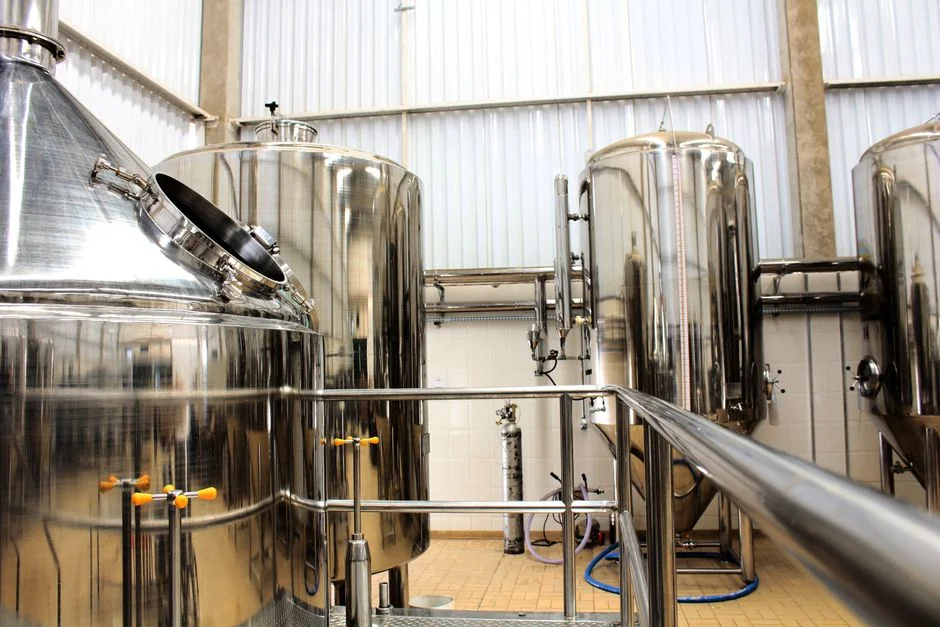
Procurement requires a clear go/no-go framework for the RO loop during capex planning. The matrix below aids in evaluating the investment of a 160 m³/day RO skid alongside the Bio-ETP.
| Site Condition | Reuse Target | RO Required? | Rationale |
|---|---|---|---|
| Water-stressed basin (Bangladesh, much of India, Sahel, North Africa) | ≥ 40% to boiler/cooling | Yes — mandatory | Unilever Bangladesh benchmark at KGF reuses 40% of treated wastewater for boiler steam feed (source: unilever.com.bd, 2024-12); aligns with 2030 water-stewardship commitment |
| Municipal sewer discharge with surcharges | Optimise Bio-ETP only | Defer RO | Sewer tariffs < USD 1.5/m³ typically do not justify RO energy payback |
| Fresh-water purchase price > USD 1.5/m³ | ≥ 30% to process | Yes — strong economic case | RO permeate to boiler feed typically recovers its energy cost in 1.5–2.5 years at this fresh-water price (HydropureWater field data, 2026) |
| Coastal discharge with TDS limit | Match Bio-ETP to consent, no reuse | No | RO is over-engineered if discharge consent is the only driver |
Three rules apply: first, in water-stressed basins, the reuse loop is a mandatory component of corporate water-stewardship programs. Second, RO is economically justified only when the alternative cost of fresh water exceeds USD 1.5/m³. Third, designing MBR permeate quality to be RO-ready (SS < 5 mg/L, turbidity < 1 NTU) is a low-cost measure that maintains the flexibility to add an RO skid during future expansions. This approach aligns with Unilever's 'more with less' philosophy (source: unilever.com.bd, 2024-12), prioritizing infrastructure ready for full reuse capacity.
Frequently Asked Questions
What capacity ETP does an expanded Unilever FMCG plant need?
Unilever's expanded Kalurghat factory in Chattogram operates a 400 m³/day Bio-ETP rated for 12,
Frequently Asked Questions
What capacity ETP does Unilever need for a 400 m³/day FMCG plant?
For a factory processing 400 m³/day, the ETP must be designed for a hydraulic capacity of at least 480 to 500 m³/day to account for a 20-25% safety factor and peak hourly flow variations. This buffer ensures consistent performance during peak production shifts and allows for future operational scaling without immediate infrastructure overhauls.
What influent COD and BOD should I expect from a soap and shampoo factory?
Influent loads in personal care manufacturing are typically high due to surfactants, oils, and fats. You should anticipate a Chemical Oxygen Demand (COD) ranging from 3,000 to 8,000 mg/L and a Biological Oxygen Demand (BOD) between 1,500 and 4,000 mg/L. The BOD/COD ratio often sits near 0.5, indicating good biodegradability, though high pH fluctuations and emulsified fats require specialized pre-treatment.
Is MBR or conventional activated sludge better for Unilever-style FMCG wastewater?
Membrane Bioreactor (MBR) technology is superior for FMCG applications because it produces a consistent, high-quality permeate suitable for direct RO feed and enables a smaller footprint by eliminating the need for secondary clarifiers. While conventional activated sludge systems are cheaper to install, they often struggle with sludge bulking from surfactant-rich wastewater and cannot meet the stringent discharge or reuse standards required by modern multinational sustainability mandates.
How much treated wastewater can a Bio-ETP and RO system realistically reuse for boiler feed?
A well-optimized system integrating MBR and two-stage Reverse Osmosis (RO) can achieve a water recovery rate of 70% to 85%. For a 400 m³/day plant, this results in approximately 280 to 340 m³/day of reclaimed water. This permeate must be further polished via demineralization or electrodeionization to meet the low silica and conductivity requirements essential for high-pressure boiler feed water.
What is the difference between a Bio-ETP and a conventional ETP in FMCG applications?
A conventional ETP primarily relies on physical-chemical processes—such as coagulation, flocculation, and sedimentation—to remove suspended solids and some organics, often resulting in high sludge volumes. A Bio-ETP utilizes biological degradation via aerobic or anaerobic microorganisms to break down complex organic pollutants at the molecular level, significantly reducing the chemical footprint and sludge handling costs while achieving superior removal efficiencies for dissolved organic compounds.