Separate the data center wastewater streams before selecting equipment
A Rasht data center should segregate cooling-tower blowdown (CTBD) from humidification drain, RO reject, generator-scrubber blowdown and sanitary wastewater, then characterize each stream before selecting equipment. CTBD normally contains concentrated salts, silica, calcium carbonate, calcium sulfate, treatment chemicals and pH changes. A practical train commonly uses screening or DAF, UF or multimedia pretreatment, RO and disinfection, with reuse as the preferred route where feasible. Conventional brackish-water RO often reaches only 75–80% recovery before scaling limits operation; a fluidized-bed salt-precipitation and dynamic-RO arrangement can support roughly 95% recovery in suitable applications. Final Rasht equipment sizing and discharge limits must be based on site tests, source-water chemistry and the applicable permit.
The first procurement boundary should follow the origin and destination of each stream, not the equipment vendor’s generic package. CTBD is concentrated cooling-loop purge; humidification drain has a different hydraulic and chemical profile; RO reject and UPW-loop blowdown may have a valuable reuse destination; ammonia-scrubber blowdown requires dedicated ammonia controls; and sanitary flows belong in a separate biological treatment scope. Combining them increases flow, chemical complexity and permit exposure. The mechanical bar-screen option should protect downstream equipment from debris where such protection is justified, while an integrated MBR treatment package may be relevant only after biological and solids requirements are established.
| Stream | Provisional evidence or chemistry | Design action before procurement |
|---|---|---|
| CTBD | Concentrated salts and treatment chemicals; conventional BWRO often plateaus at 75–80% recovery on scaling-prone CTBD, according to IDE 2026. | Measure flow, cycles of concentration, scaling ions, treatment chemicals and reuse or discharge destination. |
| Humidification and process drain | The HydropureWater 2026 Tehran analogue reports TDS 500–1,500 mg/L, silica 5–30 mg/L and suspended solids 10–50 mg/L; these are not Rasht data. | Collect Rasht samples across normal and peak operation and determine whether a biological or physical route is required. |
| RO reject and UPW-loop blowdown | The HydropureWater 2026 Tehran analogue characterizes this as a low-TDS, high-purity stream. | Confirm its actual flow, quality and permitted reuse destination. |
| Generator wet-scrubber blowdown | For ammonia wet scrubbing, the same 2026 analogue reports ammonia-nitrogen at 50–500 mg/L and calls for separate nitrification or air stripping before the main biological train. | Identify the scrubber chemistry and provide a dedicated treatment step if present. |
| Sanitary and cafeteria flows | The Tehran analogue places these flows in a separate buried A/O package plant. | Price them as a distinct scope rather than adding them to industrial CTBD equipment. |
Prepare a stream-by-stream balance with average and peak flow, chemistry, cooling-chemical additions, reuse destination and permitted discharge route. That balance becomes the controlling document for capacity, because it reveals whether CTBD can be partially reused, whether discharge is viable, and which streams should never enter the same pretreatment unit.
Characterize Rasht cooling-tower blowdown before fixing capacity
Cooling-tower blowdown is the concentrated remainder after evaporation, and its chemistry can include elevated salts, heavy metals, biocides, corrosion inhibitors and altered pH, according to Water Utility Report’s 2026 explanation. For a Rasht project, the bid should therefore begin with a site-specific sampling plan rather than transfer a Tehran or Najaf feed assumption into the equipment datasheet.
Request representative samples during normal and peak cooling operation. The test list should include conductivity or TDS, silica, calcium, sulfate, hardness, alkalinity, pH, suspended solids, metals, residual biocide, corrosion inhibitor, chlorine and temperature. Correlate each sample with tower load, makeup-water source, evaporation, drift and chemical-dosing records. These data determine the real treatment flow and whether the concentrate can remain stable in the RO system.
The HydropureWater 2026 Tehran analogue cites CTBD at TDS 1,200–6,000 mg/L on feed at 4 cycles of concentration; this is a preliminary benchmark, not a Rasht site result. The same source states that at 4 cycles of concentration, a data center loses 25–30% of makeup water to blowdown. Its example is a site drawing 10 million gallons per month, corresponding to 2.5–3 million gallons per month of blowdown. That calculation belongs to the stated example and cannot be transferred to Rasht without site flows.
Document cooling-tower cycles of concentration, the makeup-water source, condenser and tower configuration, seasonal load, evaporation, drift and every dosing program. Use the operating records to distinguish a design day from a normal operating day. Bidder chemical-control concepts can then be compared against the actual risk, including whether an automatic chemical-dosing system is required and how it will be controlled. A treatment-parts and media schedule should also distinguish consumables from capital items.
| Design input | Evidence available now | Rasht verification required |
|---|---|---|
| CTBD TDS | HydropureWater 2026 Tehran analogue: 1,200–6,000 mg/L at 4 cycles; analogue only. | Representative CTBD samples at documented tower conditions. |
| Blowdown share | HydropureWater 2026 Tehran analogue: 25–30% of makeup at 4 cycles for its stated example. | Site evaporation, drift, makeup and blowdown records. |
| Humidification and process drain | HydropureWater 2026 Tehran analogue: TDS 500–1,500 mg/L, silica 5–30 mg/L, suspended solids 10–50 mg/L; analogue only. | Average and peak flow, surge profile and chemistry. |
| Scrubber blowdown | HydropureWater 2026 Tehran analogue: ammonia-nitrogen 50–500 mg/L where ammonia wet scrubbing is used. | Confirm scrubber type, frequency, flow and ammonia loading. |
| Cooling-water make-up | The selected reuse plan determines whether permeate is used directly or blended. | Approved blending limits, tower chemistry limits and control rules. |
Build a treatment train that protects both the cooling loop and the membranes
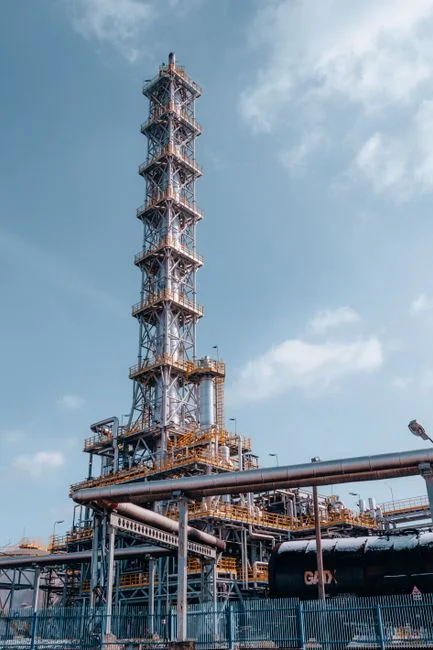
Industrial wastewater pretreatment should begin with source control and solids removal because corrosion products, biofilm fragments and suspended solids can blind downstream membranes. The correct train then depends on whether CTBD is being clarified for biological treatment, desalinated for reuse, or concentrated further for solids recovery. A single RO skid should not be expected to remove construction debris, protect itself from scaling and solve every downstream reuse requirement.
For higher-quality pretreatment, the HydropureWater 2026 Tehran analogue specifies 0.01–0.1 micron PVDF UF at 10–30 psi, 90–95% recovery and chemical cleaning every 1–3 months. These are preliminary design ranges, not guaranteed Rasht performance. Request clean-water recovery, measured feed flux, transmembrane-pressure limits and cleaning acceptance criteria using representative Rasht feed samples. A PVDF ultrafiltration pretreatment system should be specified against those test results rather than treated as a default unit.
The Tehran analogue gives an RO benchmark of 150–400 psi, 50–85% recovery and 95–99% salt rejection, with permeate TDS of 10–50 mg/L. These values are design benchmarks only. IDE 2026 states that conventional brackish-water reverse osmosis often plateaus at 75–80% recovery on CTBD because silica, calcium carbonate and calcium sulfate reach scaling thresholds. The technical question is therefore not merely whether RO can produce permeate; it is whether the Rasht feed can sustain the specified recovery without excessive scaling, cleaning or concentrate volume. The industrial RO blowdown treatment system should be evaluated against feed-specific recovery and concentrate guarantees. A multimedia pretreatment unit may be appropriate where suspended solids and oxidation demand justify it.
Where very high recovery is required, evaluate IDE’s MAXH₂O sequence: conservative local RO, controlled precipitation in a fluidized-bed reactor, pellet withdrawal and dynamic-mode RO. IDE’s 2026 industrial example operated at around 95% recovery and produced permeate silica of about 1 mg/L. That example demonstrates an approach, not a guaranteed result for Rasht. The supplied high-salinity RO design guide should be used to define the feed analysis and acceptance tests required from a crystallizer supplier.
Use automatic antiscalant and biocide dosing only as part of a complete chemical-control strategy. The Tehran analogue warns that scale can develop within hours on its silica- and sulfate-rich feed chemistry; that warning cannot be assumed for Rasht without local testing. Validate membrane compatibility, scaling projections, cleaning frequency and concentrate disposal through pilot work or enforceable vendor guarantees.
| Process stage | Primary function | Preliminary evidence | Acceptance evidence to request |
|---|---|---|---|
| Source control and side-stream solids removal | Remove corrosion products, biofilm fragments and suspended solids before membranes. | HydropureWater 2026 Tehran analogue includes side-stream filtration and warns of membrane fouling risk. | Rasht feed solids, particle distribution, cleaning strategy and protected-flow arrangement. |
| PVDF UF | Provide high-quality pretreatment for RO. | 0.01–0.1 micron, 10–30 psi, 90–95% recovery, cleaning every 1–3 months in the 2026 Tehran analogue. | Feed-specific flux, recovery, cleaning interval and membrane warranty. |
| Conventional RO | Remove dissolved salts for cooling-water make-up or pretreatment. | 150–400 psi, 50–85% recovery and 95–99% rejection in the 2026 Tehran analogue; IDE 2026 reports a 75–80% CTBD plateau. | Guaranteed recovery, permeate quality, scaling calculation, cleaning and concentrate mass balance. |
| Fluidized-bed precipitation plus dynamic RO | Remove sparingly soluble salts as pellets and raise recovery. | IDE 2026 industrial example: around 95% recovery and approximately 1 mg/L permeate silica. | Rasht feed-specific pilot, pellet handling, chemical demand and dynamic-RO performance guarantee. |
Choose reuse or discharge by site risk and operating capability
The discharge option is feasible only when the receiving system can accept the stream and the site has a credible route for sludge and residual chemicals. The reuse option can reduce freshwater demand, but it moves the burden to membrane maintenance, cooling-water chemistry and reliable control of the cooling-tower make-up blend. The decision should therefore compare total operating burden rather than rank discharge and reuse by capital cost alone.
The HydropureWater 2026 Tehran analogue favors reuse when site water intensity exceeds 200 m³/day and recommends a simpler DAF plus MBR plus chlorine-dioxide discharge scope below 200 m³/day where on-site operators are limited. These are regional decision rules, not confirmed Rasht thresholds. The broader data-center CTBD treatment framework can support process mapping, but its site assumptions must not replace Rasht measurements or permissions.
For partial reuse, clarify CTBD first, then blend qualified permeate into cooling-tower make-up under an approved water-control plan. Confirm the resulting conductivity, hardness, alkalinity, silica and biocide demand against the tower’s permitted chemistry envelope. Do not assume that permeate quality from a bench test remains stable through seasonal changes, membrane aging or changing tower concentration.
The cited Tehran cross-walked discharge envelope is BOD₅ at or below 50 mg/L, COD at or below 200 mg/L, TSS at or below 50 mg/L, free chlorine below 1 mg/L and total chromium at or below 0.5 mg/L, with 24-hour composite sampling. These values come from the HydropureWater 2026 Tehran/Najaf regional analogue. They must not be presented as Rasht permit conditions. Obtain the current Rasht permit, receiving-water authorization and sampling protocol before selecting a discharge train.
Where biological treatment is required, assess DAF upstream of MBR for solids and biofilm removal. The 2026 analogue reports MBR effluent below 10 mg/L BOD, below 60 mg/L COD and below 5 mg/L TSS, but those outputs depend on influent and aeration design. Where reuse or final disinfection is in scope, evaluate an on-site chlorine-dioxide system for microbial control. The Tehran analogue links it to a free-chlorine limit below 1 mg/L; verify residual and by-product requirements against the applicable permit and reuse specification.
| Option | When it is defensible | Key exposure | Required buyer check |
|---|---|---|---|
| Discharge after treatment | The permitted route and receiving system accept the final flow and chemistry, and local operating capability supports the train. | Permit noncompliance, sludge disposal and limited reuse benefit. | Current Rasht authorization, receiving-system capacity and composite-sampling plan. |
| Partial reuse | Permeate can be blended into cooling-tower make-up within an approved chemistry envelope. | Cooling-loop scaling, corrosion and microbial-control changes. | Feed-specific permeate quality, blending control and long-term tower chemistry validation. |
| High recovery | Freshwater reduction or concentrate-disposal risk makes conventional recovery insufficient. | Higher CAPEX, pellet handling and more complex operation. | Feed-specific recovery guarantee, chemical demand and final solids fate. |
Plan for Rasht delivery, redundancy and operating continuity
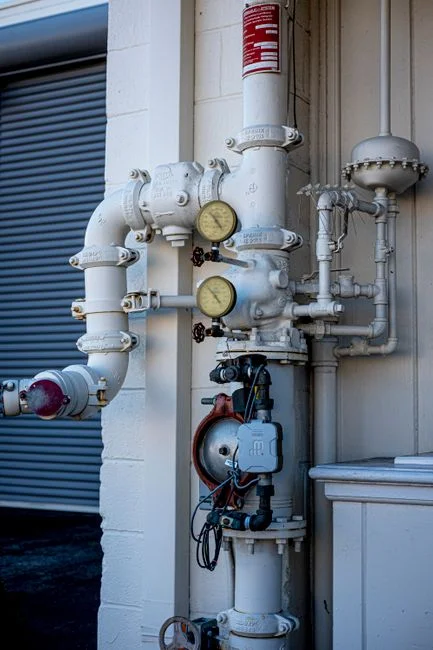
Delivery terms and operating resilience should be procurement deliverables, not assumptions carried over from a Tehran package. The HydropureWater 2026 Tehran analogue reports 7–14 days for containerized-skid port clearance, 3–5 days for overland haul and 10–16 weeks from FOB to commissioned-ready status. Obtain a project-specific Rasht logistics quotation because port, inland haul, customs and site-access conditions may differ.
Require shipping and commissioning dates, customs responsibility, spare-parts availability, local service support, membrane replacement lead time and commissioning boundaries in every bid. Define whether “commissioned-ready” means installed, media-loaded, energized, tested or accepted with a Rasht process guarantee. A membrane and filter-element supply plan should identify lead times and replacement stocks. Where sludge dewatering is included, define the plate-and-frame filter-press scope, cake-disposal route and cleaning arrangements.
The regional analogue specifies dual MBR trains and a seven-day chemical-autonomy buffer for grid-outage resilience. Determine whether those provisions match Rasht power reliability and treatment risk; they are not automatic Rasht requirements. For an MBR-based scope, the same source gives energy use of 0.8–1.6 kWh/m³, compared with 0.4–0.9 kWh/m³ for DAF alone. Request measured or guaranteed specific energy consumption rather than accepting a generic efficiency figure.
The cited 50,000 GPD RO benchmark is USD 250,000–500,000 installed CAPEX and USD 1.50–3.00 per thousand gallons treated in OPEX. Treat these as 2026 Tehran-era planning figures, not current Rasht prices. For a high-recovery extension, the analogue estimates USD 1–3 million above a base RO scope for fluidized-bed crystallization plus dynamic RO. These figures must be replaced by quotations using the confirmed Rasht flow, chemistry, import terms and concentrate route.
| Commercial item | 2026 regional benchmark | Procurement treatment |
|---|---|---|
| 50,000 GPD RO system | USD 250,000–500,000 installed CAPEX; USD 1.50–3.00 per thousand gallons treated in OPEX, per the HydropureWater 2026 Tehran analogue. | Request a Rasht-specific quotation and define the pricing basis. |
| High-recovery extension | USD 1–3 million above a base RO scope for fluidized-bed crystallization plus dynamic RO, per the same 2026 analogue. | Obtain a separate scope, performance guarantee and exclusions. |
| Containerized delivery | 7–14 days port clearance, 3–5 days overland haul and 10–16 weeks FOB to commissioned-ready status in the regional analogue. | Replace with a project-specific Rasht logistics schedule. |
Turn the design brief into a vendor-ready procurement checklist
A Rasht-ready bid should resolve stream segregation, flow and chemistry basis, pretreatment, RO or alternative desalination, disinfection, reuse storage, concentrate handling, sludge dewatering, controls and sampling as one coordinated package. The automatic chemical-dosing skid and treatment-parts and media schedule should identify interfaces with that package rather than sit outside the supplier’s performance guarantee.
Ask every bidder to state design flow, operating flow, feed-water range, product-water quality, recovery definition, concentrate volume and quality, chemical consumption, cleaning frequency and expected membrane life. Require a mass balance showing freshwater reduction, discharge reduction and the final fate of concentrate and sludge. The bid should clarify whether overall recovery excludes or includes recirculation; otherwise two vendors may report different recovery for the same plant.
Also request electrical load, utility demand, backup-power needs, PLC and SCADA scope, alarm response, local-language controls, operator training and two-year critical-spares pricing. Identify which activities are excluded: freight, customs, foundations, electrical works, waste transport, membrane cleaning, major repairs, sampling laboratory services and long-term operator staffing.
Make acceptance conditional on witnessed tests using representative Rasht feed. Specify stable permeate quality, verified recovery, completed training, as-built documents and operating and maintenance procedures. For any high-recovery claim, require confirmation that the test covers the chemistry that drives scaling rather than only a deionized-water test.
| Bid category | Required response | Reason for the check |
|---|---|---|
| Design basis | Average and peak flows, feed range, chemistry envelope and seasonal operating cases. | Prevents equipment from being sized on IT load or an analogue flow. |
| Performance | Product-water quality, system recovery, cleaning frequency and membrane-life basis. | Makes guarantees measurable. |
| Mass balance | Freshwater reduction, discharge reduction, concentrate volume and quality, sludge fate. | Tests the reuse claim and downstream obligations. |
| Operations | Energy, chemicals, controls, alarms, training, spares and service response. | Exposes lifecycle burden and continuity risk. |
| Acceptance | Witnessed Rasht-feed test, stable product quality, verified recovery and complete documentation. | Separates a generic package from a site-verified system. |
Frequently Asked Questions
What treatment capacity does a Rasht data center need?
Determine capacity from measured humidification, process-water, CTBD, scrubber and sanitary flows; do not size from IT load alone. Require average and peak flow for each stream, seasonal cooling conditions, cycles of concentration, storage buffers and the selected reuse or discharge route.
Is conventional RO sufficient for Rasht cooling-tower blowdown?
Conventional RO may be sufficient after adequate pretreatment if Rasht feed chemistry permits the required recovery. IDE 2026 reports that conventional BWRO often plateaus at 75–80% recovery on CTBD. Require the bidder to demonstrate that result with feed-specific scaling calculations and a witnessed performance test rather than transferring the Tehran analogue directly to Rasht.
When is fluidized-bed crystallization or high-recovery treatment justified?
Evaluate it when freshwater reduction, concentrate-disposal risk or permit constraints make conventional RO recovery insufficient. IDE’s 2026 industrial example operated a fluidized-bed and dynamic-RO arrangement at around 95% recovery with approximately 1 mg/L permeate silica, but the Rasht design still requires local feed testing, pilot confirmation and an enforceable recovery guarantee.
How much will the treatment system cost?
Use the 2026 Tehran analogue figures only as initial benchmarks: USD 250,000–500,000 for a 50,000 GPD RO unit, USD 1.50–3.00 per thousand gallons treated in OPEX, and USD 1–3 million for a crystallizer plus dynamic-RO extension. Buyers should request quotations based on the confirmed Rasht flow, feed chemistry, freight, customs, utilities, commissioning, spares and concentrate handling rather than accept those regional figures as a price.
Which discharge limits apply in Rasht, and how should suppliers be selected?
Obtain the current site-specific permit and receiving-water authorization. The research provides only a regional cross-walked analogue, including BOD₅ at or below 50 mg/L, COD at or below 200 mg/L, TSS at or below 50 mg/L, free chlorine below 1 mg/L and total chromium at or below 0.5 mg/L. Select a supplier only after comparing documented Rasht-feed performance, guarantees, local service capability, critical-spares availability, delivery boundaries and acceptance-test obligations for the industrial RO blowdown treatment package.