Why Tehran Forces a Different Data-Center Water Answer in 2026
Tehran sits inside a closed-basin aquifer zone where the Latyan and Lar supplemental reservoirs are already over-allocated against municipal and agricultural demand. A 100 MW hyperscale data hall in this basin can demand up to 2 million litres of water per day — roughly the daily consumption of thousands of households — and that volumetric load collides directly with the Varamin plain aquifer drawdown and the Qom basin allocation debate (IDE 2026). The Iran Department of Environment (DOE) does not publish a single codified hyperscale discharge schedule; the design envelope is anchored to regional benchmarks plus case-by-case permit conditions, which mirrors the precedent set in the 2026 Najaf data-center treatment train and the KRG MoE case-by-case negotiation in the 2026 Erbil hyperscale CTBD envelope.
Climate and grid add two further constraints. Tehran summer ambient runs 35-42°C, which derates biological oxygen transfer and RO membrane performance, so aeration equipment must be oversized 12-18% or specified with high-efficiency disc diffusers carrying a guaranteed SOTE above 6.5 kg O₂/kWh at design temperature — a derate parallel to the 12-18% Najaf ambient envelope (HydropureWater 2026). Iran's industrial grid sees documented planned and unscheduled outage windows, so the design must carry a 7-day chemical autonomy buffer and dual MBR trains to ride through a fault event without a permit excursion. The 2026 Iran DOE ICT-park incentive framework rewards closed-loop cooling and reclaim above 80%, so reuse is policy-aligned, not just a CSR add-on — analogous to the Kurdistan Board of Investment ICT-park incentives documented in the Erbil precedent.
The Three Wastewater Streams a Tehran Data Hall Produces
A single combined train fails on a Tehran site because the data-hall humidification drain and the cooling-tower blowdown (CTBD) carry different chemistries and different downstream fates. Segregating them is the decision rule that defines every downstream choice and the rule validated in the 2026 Najaf data-center treatment train.
Stream 1 is the data-hall humidification drain and ancillary process water: TDS 500-1,500 mg/L, silica 5-30 mg/L, suspended solids 10-50 mg/L, and a hydraulic surge profile driven by humidity-setpoint cycling. This stream contributes 60-70% of total site volume on a per-cubic-metre basis even though its chemistry is far less aggressive than the cooling side (HydropureWater 2026; Genesis Water Technologies 2026). Stream 2 is the CTBD — a brackish concentrate enriched with silica, CaCO₃, and CaSO₄ at TDS 1,200-6,000 mg/L on Tehran feed at 4 cycles of concentration, losing 25-30% of makeup water to blowdown on a typical 10 million gallon-per-month site (Genesis Water Technologies 2026). Stream 3 is the RO reject and UPW-loop blowdown — low-TDS, high-purity, ideal for boiler feed or process wash. If standby generators are ammonia-wet-scrubbed, the scrubber blowdown carries 50-500 mg/L NH₃-N and must be nitrified or air-stripped separately before it enters the main biological train (HydropureWater 2026). Sanitary and cafeteria flows are handled by a buried A/O package plant, not the industrial train, and are outside the scope of this article.
| Stream | Source | TDS (mg/L) | Silica (mg/L) | SS (mg/L) | Site share | Treatment target |
|---|---|---|---|---|---|---|
| S1 Data-hall humidification + process | Humidifier bleed, RO reject, UPW blowdown | 500-1,500 | 5-30 | 10-50 | 60-70% | Cooling-tower makeup or sewer |
| S2 Cooling-tower blowdown (CTBD) | Evaporative cooling purge at 4-8 cycles | 1,200-6,000 | 40-200 | 10-50 | 25-30% of makeup lost as blowdown | Reuse or ZLD finish |
| S3 Generator scrubber (if present) | Ammonia wet-scrubber blowdown | <500 | <10 | 10-30 | <2% | Nitrification or air-strip before S1 |
Iran 2026 Discharge Envelope and Why It Pushes You Toward Reuse
The 2026 cross-walked discharge envelope under Iran DOE oversight sits at BOD₅ ≤50 mg/L, COD ≤200 mg/L, TSS ≤50 mg/L, free Cl <1 mg/L, total Cr ≤0.5 mg/L, verified by 24-hour composite sampling (HydropureWater 2026 Najaf regional analogue). These numbers are not arbitrary. On a USD 5M/yr revenue line at the typical 8-12% industrial margin, a two-week operational stoppage from a failed composite exceeds USD 75,000 in lost contribution margin — and the regulator's first response is operational suspension, not a warning letter (HydropureWater 2026).
Tehran basin sensitivity is the second reason reuse is a permit-driven choice. Even where the numeric envelope is met, large-volume surface discharge to Varamin plain aquifers or Kan river tributaries is a permit liability that the DOE renewal audit will revisit, and Iran DOE 2024-2026 ICT-park incentive framework rewards closed-loop cooling and reclaim above 80% — analogous to the Kurdistan Board of Investment ICT-park incentives in the 2026 Erbil reference. Reuse is policy-aligned and reduces the renewal-audit risk; discharge is a defensible scope only when the site is below the flow threshold where reuse economics are weakest. The compliance anchor therefore drives redundancy at the design stage: dual MBR trains, an on-site ClO₂ generator, a 7-day chemical autonomy buffer for grid-outage periods, and 24-hour composite sampling with refrigerated auto-samplers on the discharge line.
The Data-Hall Train: DAF, Containerized MBR, and Where RO Earns Its Slot
The 2026 data-hall train is a four-stage layout sized to the data-hall load rather than a fab load — the same envelope validated against the Najaf four-stage reference. Stage 1 is a DAF for suspended-solids and biofilm carryover, removing the 10-50 mg/L SS load of corrosion products and biofilm fragments that would otherwise blind the MBR, and buffering the hydraulic surges from humidification drain cycles.
Stage 2 is a containerized MBR for the data-hall biological stage, operating at MLSS 8,000-12,000 mg/L with HRT 8-14 h. The MBR delivers BOD <10 mg/L, COD <60 mg/L, and TSS <5 mg/L in roughly 60% smaller footprint than conventional activated sludge (HydropureWater 2026). Tehran summer ambient of 35-42°C derates biological kinetics, so aeration is oversized 12-18% with high-efficiency disc diffusers carrying a guaranteed SOTE >6.5 kg O₂/kWh at design temperature. Stage 3 is a multi-media filter to hold SDI below 5, protecting the downstream RO from the biocides and corrosion inhibitors that concentrate in the circulating water — relevant only if RO is retained. Stage 4 is an industrial RO system for cooling-tower blowdown polishing at 65-75% recovery, returning polished flow to cooling-tower makeup or UPW makeup. The 2026 design envelope target is 85-90% overall site recovery once CTBD is folded in.
Final disinfection is an on-site ClO₂ generator for the <1 mg/L free-Cl discharge limit, which avoids the THM formation risk of chlorine. The S2 decision rule from the Najaf scope still holds: when total project flow is below 200 m³/day and on-site operators are limited, drop the RO and discharge DAF + MBR + ClO₂ to sewer — the reuse economics are weakest at that scale, and the simpler scope keeps the budget honest. For a stand-alone data hall with no fluoride, TMAH, or HF source, the MBR is optional only if sanitary flows are fully segregated; with any co-mingling, the MBR becomes mandatory.
The CTBD Reuse Ladder: From Side-Stream Filtration to ZLD
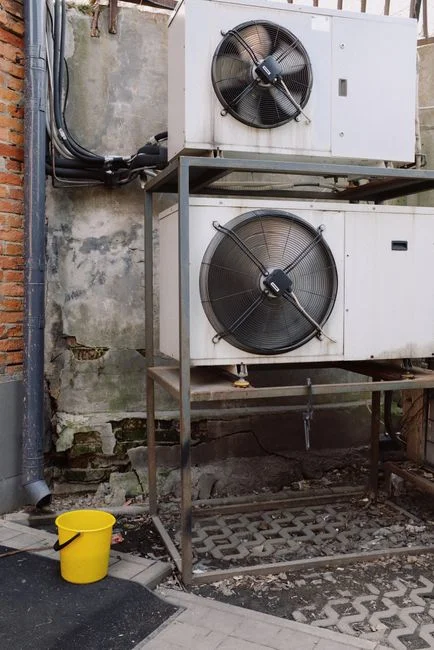
CTBD reuse is a stepped technology ladder, not a single membrane decision. The reader picks the rung that matches their flow and discharge risk, not the whole tower — the same ladder used in the 2026 Najaf data-center treatment train and benchmarked against the Jakarta data-center blowdown treatment 2026 guide for tropical-climate validation.
Step 1 is side-stream filtration: 1-5% of circulation flow through 10-25 micron self-cleaning spiral screens, with CAPEX $50,000-200,000 for typical data-center installations (Genesis Water Technologies 2026). Step 2 is UF pretreatment ahead of the blowdown RO at 0.01-0.1 micron PVDF, 10-30 psi, 90-95% recovery, with chemical cleaning every 1-3 months. Step 3 is the industrial RO at 150-400 psi, 50-85% recovery, 95-99% salt rejection, permeate 10-50 mg/L TDS; a 50,000 GPD unit carries installed CAPEX of $250,000-500,000 and OPEX of $1.50-3.00 per thousand gallons treated (Genesis Water Technologies 2026). A automatic antiscalant and biocide dosing skid on the RO feed is mandatory at this scale — without it the concentrate scales within hours on Tehran feed chemistry.
Step 4 is a fluidized-bed crystallizer plus dynamic-mode RO: the IDE MAXH₂O reference shows silica, CaCO₃, and CaSO₄ precipitating as compact pellets, with the remaining NaCl brine re-RO'd at ~95% overall recovery and permeate silica of about 1 mg/L (IDE 2026). Step 5 is an MVC evaporator for ZLD finish at 95-98% recovery, distillate <10 mg/L TDS, 15-25 kWh per 1,000 USG, with CAPEX $1-3M for 10,000-30,000 GPD; full ZLD runs $3-8M CAPEX and $5-15/kgal OPEX (Genesis Water Technologies 2026). Where partial softening rather than full demineralization is the goal, nanofiltration at 70-85% recovery and 75-150 psi produces permeate at 30-50% of feed TDS at lower cost than full RO (Genesis Water Technologies 2026).
| Step | Technology | Operating envelope | Recovery | CAPEX (installed) | OPEX |
|---|---|---|---|---|---|
| 1 | Side-stream filtration (10-25 µm) | 1-5% of circ flow | Continuous bleed | $50,000-200,000 | Solids disposal only |
| 2 | UF (PVDF, 0.01-0.1 µm) | 10-30 psi | 90-95% | Skid line item | Cleaning 1-3 months |
| 3 | Industrial RO | 150-400 psi | 50-85% | $250,000-500,000 (50,000 GPD) | $1.50-3.00/kgal |
| 3a | Nanofiltration (partial softening) | 75-150 psi | 70-85% | Below RO | Below RO |
| 4 | Fluidized-bed crystallizer + dynamic RO | Brine of step 3 | ~95% overall | Add $1-3M | Seed + cleaning |
| 5 | MVC evaporator (ZLD finish) | 15-25 kWh/1,000 USG | 95-98% on concentrate | $1-3M (10,000-30,000 GPD) | Energy-dominated |
| Full ZLD | RO + MVC + crystallizer | -- | 95-99% overall | $3-8M | $5-15/kgal |
Pushing Cycles from 4 to 6-8: The Largest Water Lever You Have
At 4 cycles of concentration, a data center loses 25-30% of its makeup water to blowdown — 2.5-3 million gallons per month on a facility drawing 10 million gallons per month (Genesis Water Technologies 2026). Pushing the tower to 6-8 cycles cuts makeup water demand 30-50%, but the blowdown TDS climbs from 1,200-6,000 mg/L into a scaling-prone regime that conventional BWRO cannot always handle (Genesis Water Technologies 2026; HydropureWater 2026). On Tehran's silica- and sulfate-rich feed, this is the regime where conventional BWRO plateaus at 75-80% recovery and where the fluidized-bed crystallizer earns its slot.
Cooling-water chemistry is therefore a treatment choice, not just a facility-management detail. Tablet-based programs (Genclean-S analogue) hold biocide and scale inhibitor concentration in the circulating water without concentrating proportionally in the blowdown, which protects downstream membranes and prevents discharge-limit excursions on phosphate and chrome residues (Genesis Water Technologies 2026). Pair the chemistry program with an automatic antiscalant and biocide dosing skid on the RO feed — without it, concentrate scales within hours on Tehran feed chemistry and recovery collapses.
Tehran 2026 CAPEX, OPEX, and the Reuse-vs-Discharge Decision Rule
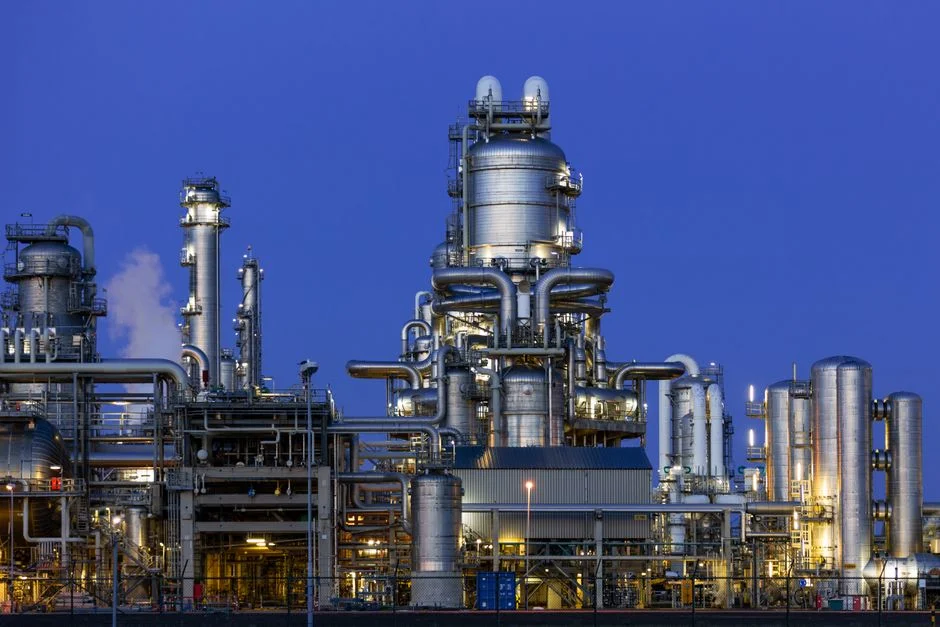
Budgeting a 2026 Tehran data-center WWTP requires more than the membrane CAPEX line. An MBR-equipped plant runs 0.8-1.6 kWh/m³ and a DAF-only scope 0.4-0.9 kWh/m³; at typical Iran industrial tariffs, energy alone runs 1.5-3× the unit cost seen in lower-tariff markets (HydropureWater 2026 Najaf energy multiplier). Sludge dewatering with a plate-and-frame filter press for the 22-28% dry-solids cake reaches 22-28% dry solids, with landfill disposal in Tehran following regional industrial rates. A rotary mechanical bar screen at the head of the train is mandatory to protect the membranes against overland-transport debris on the Bandar Abbas corridor.
Logistics is the second Tehran-specific cost layer. Containerized WWTP skids clear Bandar Abbas in 7-14 days for standard ISO containers, then require 3-5 days for the overland haul to a Tehran industrial park; total FOB-to-commissioned-ready lead time is 10-16 weeks (HydropureWater 2026 Najaf, adapted to Iran port of entry). The decision rule: choose reuse when site water intensity exceeds 200 m³/day or the DOE renewal audit flags non-revenue water; choose discharge (DAF + MBR + ClO₂ to sewer) when project flow is below 200 m³/day and on-site operators are limited (HydropureWater 2026 S2 rule, applied to Tehran). For a data center, the threshold almost always trips because the humidification and CTBD streams together exceed 200 m³/day once the site passes roughly 5 MW of IT load.
| Tier | Scope | Indicative CAPEX envelope (USD) | Indicative OPEX | Site fit |
|---|---|---|---|---|
| Small data hall | DAF + containerized MBR + ClO₂ | $400,000-900,000 | $1.20-2.50/kgal | <200 m³/day, limited operators |
| Mid-scale | DAF + MBR + side-stream filtration + RO | $1.2-2.5M | $1.50-3.00/kgal (RO-dominated) | 200-1,000 m³/day, >5 MW IT |
| Hyperscale | Above + fluidized-bed crystallizer + dynamic RO (or MVC) | $3-8M | $5-15/kgal on ZLD finish | Closed-basin ZLD-mandated, >1,000 m³/day |
Frequently Asked Questions
What is the Iran DOE discharge envelope for a 2026 Tehran data center?
The 2026 cross-walked envelope is BOD₅ ≤50 mg/L, COD ≤200 mg/L, TSS ≤50 mg/L, free Cl <1 mg/L, and total Cr ≤0.5 mg/L, verified by 24-hour composite sampling (HydropureWater 2026 Najaf regional analogue). With a USD 5M/yr revenue line at 8-12% margin, a two-week operational stoppage from a failed composite exceeds USD 75,000 — so dual MBR trains and on-line ClO₂ are design-stage, not retrofit.
When should a Tehran data center choose reuse over discharge?
Choose reuse when site water intensity exceeds 200 m³/day or the DOE renewal audit flags non-revenue water; the 80% reclaim threshold under the 2024-2026 ICT-park incentive framework aligns reuse with policy (HydropureWater 2026). Choose discharge (DAF + MBR + ClO₂ to sewer) when project flow is below 200 m³/day and on-site operators are limited, which keeps CAPEX under USD 1M and reuse economics weakest.
How does Tehran feed chemistry constrain conventional BWRO on CTBD?
Conventional BWRO plateaus at 75-80% recovery on silica- and sulfate-rich Tehran CTBD before CaCO₃, CaSO₄, and silica scaling forces a shutdown (IDE 2026). Pushing to 85-90% site recovery requires a fluidized-bed crystallizer plus dynamic-mode RO, with permeate silica falling to about 1 mg/L and CAPEX adding $1-3M over a base RO scope.
What is the FOB-to-commissioned-ready lead time for a Tehran containerized WWTP?
Standard ISO containerized WWTP skids clear Bandar Abbas in 7-14 days, then require 3-5 days for the overland haul to a Tehran industrial park; total FOB-to-commissioned-ready lead time is 10-16 weeks (HydropureWater 2026 Najaf, adapted to Iran port of entry). A 2-year consumables and critical spares kit should ship in the same logistics window to avoid a 6-10 week replacement-part wait from China or Europe.