
Why Erbil Forces On-Site Treatment in 2026
Erbil's first modern municipal sewerage plant, the 52,500 m³/day ITOCHU–Çalık Enerji facility under the General Directorate of Water and Sewerage (GDWS), is contracted for 2028 completion and is sized for municipal sewage, not industrial effluent (contract date 2025-08-28). Long-term capacity is planned at 840,000 m³/day by 2038, financed by a 34.4 billion yen (~$228M USD) JICA ODA loan agreed in 2015 (per Underground Infrastructure, 2025-10). Until that plant is commissioned, any discharge to a municipal interceptor effectively means untreated discharge to groundwater or Erbil stormwater channels, because interceptor coverage is incomplete and the receiving system was not designed for industrial loads.
No Kurdistan Region-specific industrial effluent standard exists in 2026. Projects default to Iraqi Regulation No. 25 of 1967 (amended) for industrial discharges, with site-specific limits negotiated case by case through the KRG Ministry of Environment. The regulator's risk bar is set by the 2022 Erbil Polytechnic Journal baseline study, which recorded 46.58 mgPb/kg in root tissue and 5.06 mgCd/kg in shoot tissue of edible crops irrigated with Erbil wastewater — levels that rendered the crops unfit for consumption (Rasul, Khalid & Omer, 2022, DOI 10.25156/ptj.v12n1y2022.pp119-125). Heavy metals are therefore restricted to trace mg/L levels in any 2026 permit negotiation, and the defensible move is to design the on-site train as if the 2028 sewer-use ordinance already exists.
For data halls specifically, the Kurdistan Board of Investment incentives for ICT parks push closed-loop cooling and reclaim above 80%, so reuse targets are policy-aligned, not just economic. A stand-alone hyperscale data hall in Erbil in 2026 must self-contain its cooling-tower blowdown (CTBD), with KRG MoE case-by-case limits (F⁻ below 10–15 mg/L if a fab is co-located) as the de facto compliance anchor.
Erbil Data-Hall Cooling Blowdown: Design Water Quality
The 2026 hyperscale data-hall CTBD envelope is well bounded and substantially milder than a co-located fab stream. Designers can copy the parameters below directly into a process datasheet:
| Parameter | Unit | Typical range | Design target |
|---|---|---|---|
| TDS | mg/L | 200–800 | <200 (post-RO) |
| Total hardness as CaCO₃ | mg/L | 50–250 | <50 (post-softener) |
| Silica (SiO₂) | mg/L | 5–30 | <10 (to tower) |
| Suspended solids | mg/L | 10–50 | <5 (post-DAF/MMF) |
| Isothiazolinone biocides (active) | mg/L | 1–10 | Stripped before RO |
| pH | — | 7–9 | 7–8.5 |
| Temperature | °C | 25–40 | <35 to RO |
| Trace metals (Cu, Fe, Zn) | mg/L | 0.1–5 | <1 each |
| Conductivity | µS/cm | 400–1,500 | — |
This stream is fundamentally different from a fab wastewater envelope. There is no F⁻, no TMAH, no HF, no CMP slurry, and no raw pH swing from 1 to 13, so a data-hall train can run milder chemistry than the fab reference in the Erbil semiconductor and data-hall wastewater engineering guide. The 60–80% cooling-tower make-up share of total site water demand means even a 50% improvement on blowdown recovery moves the freshwater needle more than any other stream — that single number is what justifies the train in a Tigris-basin water-stressed region.
Segregate humidification and AHU condensate (typically <50 mg/L TDS) into its own line because glycol from coil leaks needs stripping rather than blending into the main loop. The data-hall-specific metals — Cu, Fe, and trace Zn from corrosion products — still push the DAF plus sulfide polishing step to the front of the train, because even small Cu loads foul RO membranes quickly.
The 2026 Standard Process Train for an Erbil Data Hall
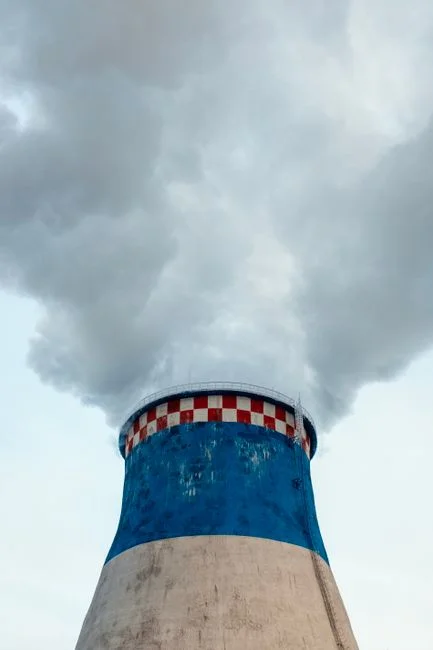
A hyperscale data hall in Erbil with no co-located fab and no F⁻ source runs a six-stage train. Each stage hands off a defined water quality to the next, and the parameters below are what sizes the equipment.
Stage 1 — Segregation and equalization. Dedicated EQ tank with online pH and conductivity, sized for 4–8 hour retention. This damps flow and chemistry swings from 1–5 pH excursions during chiller trips, which are routine on a hyperscale site. Without it, the downstream chemistry stage chases the load.
Stage 2 — DAF and multi-media filtration. A DAF system in the 4–300 m³/h range floats oils, biofilm, and metal-hydroxide floc, followed by a multi-media filter that drops SDI below 3 and protects the RO. This combination is the workhorse for the Cu, Fe, and Zn load in CTBD.
Stage 3 — Softening and antiscalant dosing. A twin-tank water softener (1–45 T/h class) targets hardness below 50 mg/L as CaCO₃ and silica below 10 mg/L to prevent tower scale. A PLC-controlled antiscalant dosing skid tied to the RO feed flow handles the residual scaling potential that softening cannot reach.
Stage 4 — MBR polishing if sanitary side-stream is co-mingled. A submerged MBR with 0.1 µm PVDF membranes delivers <1 NTU and <10 mg/L COD, allowing direct RO feed without media filtration and cutting the train by one stage. For a stand-alone data hall, an MBR is optional; for any site with sanitary co-mingling, it is mandatory.
Stage 5 — Two-pass RO at 80–95% recovery. An industrial RO unit delivers permeate at <50 mg/L TDS. First pass runs at 150–250 psi (10–17 bar) for bulk salts; second pass polishes for cooling-tower make-up at TDS <200 mg/L, hardness <50 mg/L, Cl⁻ <100 mg/L. Recovery tuning is per stream, not a single number.
Stage 6 — ZLD on RO brine only. Mechanical vapor recompression or spray dryer on the NaCl-rich brine, at 25–40 kWh/m³ of brine concentrated. Full-stream ZLD is over-specified for a stand-alone data hall; reserve it for the RO brine when the discharge path is restricted.
Side-Stream Filtration and Biocide Control
Side-stream filtration at 1–5% of total circulation flow, using 10–25 µm self-cleaning spiral units, drops suspended solids in blowdown to levels the RO can handle without pre-coat. This is the cheapest way to push cycles of concentration higher and reduce what the RO train has to do. Self-cleaning spiral units run continuous, with no backwash downtime and no media disposal.
Biocides are the silent killer of RO membranes. If the cooling program uses isothiazolinones at 1–10 mg/L, route blowdown through activated carbon or a chlorine dioxide side-loop before the RO, not through it. A chlorine dioxide generator in the 50–20,000 g/h capacity range is the EPA and World Bank default for reuse loops because ClO₂ tolerates high TDS better than UV and leaves no THM precursors. The standard cooling-water chemistry should be tablet-based where possible so biocides and scale inhibitors don't concentrate in the blowdown proportionally to cycles of concentration. Tablet programs reduce the biocide and scale-inhibitor load on the downstream carbon and RO stages, which directly extends membrane life and stabilizes the recovery rate.
Decision Framework: When to Add ZLD or Stop at RO
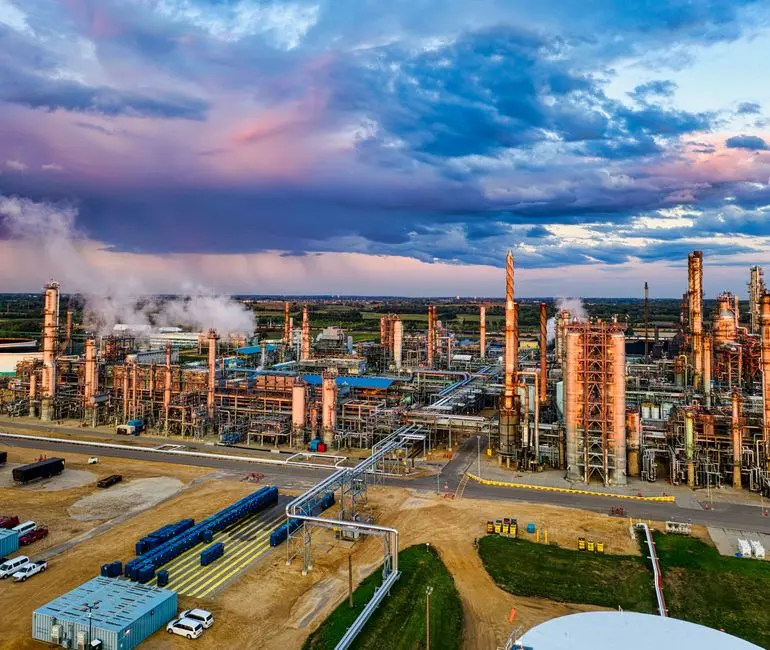
The procurement lead needs a one-page rule so they don't overspend on ZLD they don't need, or underspend and fail the KRG permit. The decision rule below is for a 2026 Erbil site.
| Site profile | Flow (m³/day) | Train scope | Why |
|---|---|---|---|
| Stand-alone data hall, no fab | <300 | MBR + two-pass RO | No F⁻, no HF; ZLD on brine only if discharge restricted |
| Data hall with sanitary co-mingling | 200–500 | MBR + two-pass RO | MBR required to handle BOD load; RO reuses 80–95% |
| Data hall with fab co-load (HF, CMP) | >100 process | Full MBR + RO + ZLD | F⁻ >50 mg/L biocidal to MBR; TMAH >10 mg/L inhibits nitrification |
| Hyperscale, zero-discharge zone | >500 | RO + MVC on brine | Avoided discharge at $5–$15/kgal funds MVC inside 3–5 years |
| Small remote site, no sewer | <50 | Package plant + haul-off | Lowest CAPEX; periodic brine removal to licensed facility |
Cooling-tower make-up quality targets the framework should enforce: TDS <200 mg/L, hardness <50 mg/L, SiO₂ <10 mg/L, Cl⁻ <100 mg/L. The 80–95% recovery band is the operating window — below 80% the avoided-discharge economics fall apart; above 95% silica scaling starts to drive CIP frequency up sharply.
CAPEX and OPEX Bands for an Erbil Data-Hall Train
The numbers below are 2026 engineering estimates suitable for a budget envelope, not a firm quotation. They are anchored to hyperscale flow ranges and the train scopes defined above.
| Site / train | CAPEX (USD per m³/day installed) | OPEX (USD per m³ treated) | Notes |
|---|---|---|---|
| Mid-size data hall, 200–1,000 m³/day, MBR + RO | 800–1,500 | 0.6–1.2 | Standard 2026 train |
| Hyperscale hall with ZLD on brine | 1,800–3,500 | 1.5–3.0 | MVC at 25–40 kWh/m³ of brine |
| Small data hall, package plant + haul-off | 300–700 | 1.0–2.0 | Brine removal cost included |
| Data hall with fab co-load, full ZLD | 2,500–4,500 | 2.5–5.0 | F⁻ precipitation + metal sludge handling |
The discharge-fee math is what makes the train fund itself. At $5–$15/kgal discharge cost, 100 m³/day of untreated blowdown runs USD 130–400 per day, so an 80% recovery RO typically pays back inside 24 months at hyperscale flow. Below ~300 m³/day the OPEX-per-m³ gap between RO-only and RO+ZLD is wide enough that brine haul-off is usually cheaper than MVC, unless the site is in a zero-discharge zone. Hazardous-waste line items — CaF₂ sludge (only if fab co-located) and metal-bearing DAF sludge — go to a plate-and-frame filter press for >60% solids, then to a licensed stabilization facility. They never go to agricultural land, because the Erbil Polytechnic Journal (2022) baseline of 46.58 mgPb/kg and 5.06 mgCd/kg in wastewater-irrigated crops is exactly the failure mode you avoid by routing metal sludge to lined, fenced disposal cells.
For a peer reference on the broader regional picture, the Basra industrial wastewater engineering guide covers the southern Iraq discharge regime under different stress drivers, and the Prague data-center blowdown treatment 2026 guide walks a comparable EU-jurisdiction train for benchmarking against the MBR + two-pass RO scope here.
Frequently Asked Questions
Does a 2026 Erbil data center need on-site wastewater treatment before the municipal plant opens?
Yes. The ITOCHU–Çalık Enerji sewerage plant contracted 2025-08-28 with GDWS is not scheduled to finish until 2028 and is sized for municipal sewage, not industrial effluent. A hyperscale data hall in 2026 must treat cooling-tower blowdown on-site and design to the limits the 2028 ordinance will codify, with KRG MoE case-by-case negotiation under Regulation No. 25 of 1967.
What fluoride limit applies if a fab is co-located with the data hall?
There is no Erbil-specific number; KRG MoE typically negotiates F⁻ below 10–15 mg/L site-by-site, mirroring WHO drinking-water guidance. Precipitation to below 15 mg/L as CaF₂ before any biological step is the practical design target, because F⁻ above 50 mg/L is biocidal to MBR nitrifiers.
Is ZLD required for a stand-alone data hall in Erbil?
Not necessarily. A stand-alone data hall has no fluoride, no TMAH, and no HF, so MBR + two-pass RO at 80–95% recovery is usually sufficient. ZLD is reserved for the RO brine if the discharge path is restricted or the site sits in a zero-discharge zone, with MVC at 25–40 kWh/m³ of brine concentrated.
What cooling-tower make-up recovery rate is realistic at hyperscale flow?
With MBR + two-pass RO, 80–95% recovery is typical, dropping cooling-tower make-up freshwater demand by a corresponding margin in a Tigris-basin water-stressed region. Above 95% the silica scaling on the second-pass membranes drives CIP frequency up sharply, so 80–95% is the practical operating window.