What Determines an Effluent Treatment Plant in Rosario?
An industrial effluent treatment plant in Rosario should be selected based on the measured wastewater profile, required flow, discharge limits, and reuse objective rather than nominal flow alone. HydropureWater’s 2026 Rosario guide cites COD ≤200 mg/L, BOD ≤120 mg/L, TSS ≤100 mg/L and FOG ≤50 mg/L under CONAMA 430/11. For a 50 m³/h package, it estimates ARS 15M–50M for DAF and ARS 30M–120M for MBR. DAF suits FOG- and solids-rich effluent, MBR supports compact reuse-oriented treatment, and A/O can reduce capital cost where land is available. Urban-core facilities may also require tertiary treatment under Ordinance 9245/2023.
The project should be defined as an engineered treatment train: equalization, contaminant removal, solids separation, polishing or disinfection where required, sludge handling, and monitored discharge or reuse. Before selecting equipment, require representative characterization of average and peak flow, wastewater temperature, pH, COD, BOD, TSS, FOG, conductivity and any sector-specific contaminants.
The receiving point must also be fixed. A sewer connection, surface-water discharge and internal reuse impose different treatment, documentation and monitoring obligations. Obtain the applicable permit, trade-waste limits and sampling requirements; the cited CONAMA values are decision inputs, not a substitute for confirming the limits applicable to the intended discharge route.
Nominal plant flow is insufficient because batch discharges, production variability, salinity, dyes, oils or fluoride can change process selection, materials, controls and pretreatment requirements. This makes an industrial ETP in Rosario a site-specific engineering package rather than a catalogue selection.
DAF, MBR or A/O: Which Treatment Train Fits?
Selecting the right technology depends on balancing wastewater composition with footprint and discharge requirements. DAF is the front-end choice when FOG, oil, colloids or suspended solids dominate, particularly in food processing, textiles and metalworking. HydropureWater’s 2026 Rosario guide reports DAF removal of 90–95% for FOG and 80–90% for TSS; these are source-specific performance figures, not guarantees for every wastewater. Its industrial DAF system for FOG and suspended-solids removal should therefore be evaluated against measured samples and the required duty.
MBR is the compact biological option for reuse objectives or sites with limited footprint. HydropureWater’s 2026 guide reports MBR effluent below 10 mg/L TSS and 50 mg/L COD as reuse-territory performance. A project guarantee still needs defined pretreatment, operating conditions, monitoring and acceptance testing. An integrated MBR wastewater treatment system is relevant where these conditions can be demonstrated.
A/O is the lower-capital biological option where land is available. The same 2026 guide estimates A/O at 20–30% less cost than MBR for comparable BOD and TSS removal, but separate anoxic and aerobic tanks plus secondary clarifiers increase the footprint.
| Decision point | Preferred starting point | Why | Buyer must verify |
|---|---|---|---|
| FOG, oil, colloids or high TSS | DAF | Targets floatable oils and suspended solids before downstream biology | Measured FOG, TSS and required removal |
| Reuse objective or constrained footprint | MBR | Compact biological separation with reuse-oriented performance | Site area, pretreatment, controls and acceptance limits |
| Lower biological capital cost with available land | A/O | Separate biological stages and secondary clarification | Land, tankage, clarifier performance and sludge handling |
| Complex industrial profile | Sequenced train | Protects biological and membrane stages from upstream contaminants | Full contaminant profile and reuse or discharge route |
Complex effluent often requires a sequence rather than one technology: chemical dosing and DAF for FOG or TSS, followed by biological treatment, then membrane or disinfection stages when the reuse objective requires them. The University of Twente thesis, Direct nanofiltration of wastewater treatment plant effluent, identifies nanofiltration as a potential polishing method for effluent reclamation. Wageningen University and Research’s 2022 thesis supports constructed wetlands as a research option for micropollutant removal, but local feasibility must be tested against land, climate, loading and permit conditions.
Build a Treatment Train Around the Contaminants
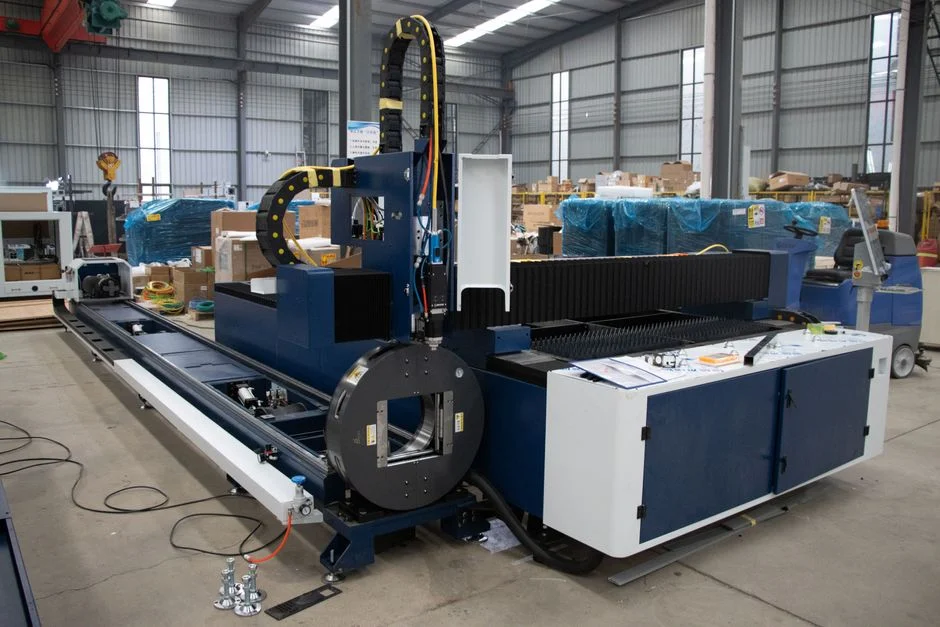
An industrial wastewater treatment train should follow the contaminant logic: incoming wastewater → screening and equalization → pH or chemical conditioning → DAF or primary solids removal → biological treatment → tertiary filtration or membrane polishing → disinfection if required → sludge dewatering → monitored discharge or reuse.
For dye-, salt- and suspended-solids wastewater, HydropureWater’s 2026 Rosario guide recommends chemical coagulation and DAF ahead of biological polishing, with equipment sized from measured effluent rather than catalogue assumptions. A PLC-controlled chemical dosing system can support pH adjustment, coagulation and flocculation, but dosing rates must follow measured water quality rather than generic fixed-dose assumptions.
Fluoride-bearing industrial wastewater requires a specialist process decision. CIE identifies ion exchange and reverse osmosis as removal options and describes systems combining chemical filtration, precipitation and membrane treatment. The appropriate configuration depends on fluoride concentration, water chemistry and the permitted end use.
Membrane pretreatment also needs an explicit residual-coagulant control strategy. Jurnal Teknologi reported that adding ferric chloride ahead of a pilot-scale PCF–RO train improved rejection of TSS, COD, alkalinity and nitrite, but found membrane deposits of approximately 4.29–6.23 µm. The study linked residual ferric chloride to fouling and stability problems, so coagulant dosage, carryover and pretreatment performance must be included in operating procedures.
Define the solids boundary before procurement. One supplier may quote only the liquid treatment train while another includes sludge thickening, storage and dewatering. The industrial sludge dewatering filter press belongs in that scope comparison, together with sludge dryness, transport and disposal. Where advanced filtration is required, a multi-media filtration package should be assessed as part of the complete polishing train rather than as an isolated unit.
What Will an Industrial ETP Cost in Rosario?
Project costs are driven by specific site requirements and local operational factors. HydropureWater’s 2026 Rosario guide estimates a supplied-and-installed 50 m³/h DAF package at ARS 15M–50M and a 50 m³/h MBR at ARS 30M–120M. The same source also gives ARS 15M–25M for a 50 m³/h DAF system, so the published DAF estimate has an internal spread and should be treated as a range, not a single market price.
| Cost item | Published 2026 basis | Scope or uncertainty to resolve |
|---|---|---|
| DAF, 50 m³/h | ARS 15M–50M supplied and installed; the same source also cites ARS 15M–25M | Preserve the source’s spread and confirm civil works, installation, controls and permits |
| MBR, 50 m³/h | ARS 30M–120M | Confirm pretreatment, footprint, reuse duty and acceptance tests |
| DAF, 100 m³/h example | Approximately ARS 28M CAPEX and ARS 8.6M annual direct OPEX | Monitoring and maintenance raise the cited total to ARS 12.4M–13.8M |
| Rosario sludge disposal | Average ARS 8,000 per ton, approximately 40% above the cited national ARS 5,700 per ton | Sludge volume, moisture content and transport frequency remain project inputs |
| Urban-core tertiary treatment | Typically 15–25% added CAPEX for qualifying facilities under Ordinance 9245/2023 | Confirm applicability, required treatment stages and discharge route |
HydropureWater reports Rosario projects at 20–40% above the national average and attributes 20–30% additions from local labour and sludge fees to project totals. These figures describe the cited local market estimate; they do not establish a universal surcharge for every quotation.
Require quotations to separate equipment, civil works, installation, controls, chemical storage, electrical work, commissioning, permits, monitoring, sludge disposal and contingency. Also identify utilities, consumable assumptions, replacement obligations and performance guarantees. This prevents a low equipment price from masking a higher installed or lifecycle cost.
Use a Five-Step Method to Select a Supplier and Treatment Train
Systematic procurement reduces technical and commercial ambiguity before quotations are opened.
- Characterize the effluent. Use representative samples to document average and peak flow, chemistry, contaminants, discharge point and reuse target.
- Size against confirmed demand. Use the confirmed design flow and current variability, while showing future production and expansion requirements to suppliers. A mechanical rotary mechanical bar screen can be evaluated within the front-end works where solids characterization supports it.
- Score the configurations. Compare removal targets, footprint, energy use, chemical demand, sludge generation, automation, maintainability and local service capability.
- Price the complete lifecycle. Include utilities, chemicals, monitoring, maintenance, sludge transport and disposal, then attach a guarantee to each relevant line item.
- Normalize the bids. Request three to five quotations using the same measured inputs and technical scope. Remove exclusions, warranties, commissioning deliverables and acceptance-test differences from direct comparison.
Treat an effluent guarantee as a system obligation. A single test result cannot substitute for the specified duty, chemical balance, pretreatment stage or operating condition. Require bidders to state which assumptions underpin their guarantee and how performance will be demonstrated.
Frequently Asked Questions
What should an industrial ETP budget in Rosario for a 50 m³/h flow?
HydropureWater’s 2026 Rosario guide cites ARS 15M–50M for a supplied-and-installed 50 m³/h DAF package and ARS 30M–120M for an MBR at the same flow; it also presents ARS 15M–25M for DAF. Ask bidders for the same scope: civil works, installation, electrical work, controls, chemicals, permits, commissioning, monitoring and sludge handling. Do not treat any published band as a quotation without measured wastewater data and site details.
Which treatment train should be selected for industrial effluent reuse?
Start with the reuse target and contaminant profile. HydropureWater reports MBR effluent below 10 mg/L TSS and 50 mg/L COD as reuse-territory performance, but this is not a project guarantee. Request pretreatment criteria, controls, monitoring, disinfection requirements and acceptance tests, and confirm the permitted reuse endpoint before selecting the train.
How should DAF and MBR be compared on equal flow?
Compare both at the same confirmed design flow and measured wastewater composition. DAF is a stronger starting point when FOG and TSS are dominant; MBR addresses compact biological treatment and reuse objectives. Request matched estimates for equipment, civil works, utilities, chemicals, sludge removal, footprint, controls, guarantees and commissioning. The published price bands are estimates, not like-for-like quotations.
What should buyers check when selecting an ETP supplier in Rosario?
Request verifiable references for comparable wastewater and flow, local service capability, controls documentation, spare-parts availability, warranties and itemised performance guarantees. Check how each bidder treats permit responsibility, commissioning, acceptance testing and lifecycle costs. The cited local labour and sludge premiums make transparent operating assumptions as important as the initial equipment price.