What Treatment Train Suits Rosario's High-COD Trade Waste?
Manufacturers in Rosario should treat high-COD trade waste with a staged train: characterize and equalize the flow, screen it and remove solids, oil or floatables where present, reduce biodegradable organics biologically, then polish or disinfect only when the discharge or reuse objective requires it. The strongest supplied MBBR study tested influent COD from 1000 to 3500 mg/L, evaluated hydraulic retention times of 3, 5, 8 and 12 hours, and selected 8 hours with COD removal above 80%. The appropriate route ultimately depends on the soluble COD fraction, hydraulic variation, residual contaminants, sludge handling and the final destination.
This sequence differs from a generic municipal treatment assumption because industrial trade waste may combine biodegradable soluble organics with non-biodegradable compounds, suspended material, emulsified oil, colloids or metals. No single technology specification is defensible until representative samples establish those fractions.
- Characterize and equalize. Establish average and peak loads, flow variation, pH, temperature, nutrients, toxicity, suspended solids, oil and grease.
- Protect downstream equipment. Screen debris; use DAF, coagulation or electrocoagulation only where the sampled contaminants justify them.
- Reduce soluble biodegradable COD biologically. Compare aerobic SBR, MBBR and MBR against the required effluent quality and operating constraints.
- Polish for the end use. Apply membranes, disinfection or other barriers according to sewer-discharge, industrial-treatment or reuse requirements.
- Resolve residuals. Include sludge thickening, dewatering, transport and disposal in the same design.
Sewer discharge, direct industrial treatment and internal reuse are different design destinations. A regional high-COD trade-waste treatment framework provides a useful comparison pattern, but Rosario projects still require locally issued limits, the applicable sewer authority requirements and a defined reuse specification.
Start with Characterization and Equalization
Equalization protects biological treatment from concentration and flow shocks only when its design is based on measured production, cleaning and dumping conditions. A representative sampling plan should distinguish average daily load, maximum hourly flow and episodic peaks; otherwise aeration, membrane and pumping capacities may be selected against an unrepresentative average.
Request COD and BOD to distinguish soluble and particulate organic load, together with suspended solids, pH, temperature, oil and grease, nutrients and process-specific toxicity or inhibition tests. Screening can protect pumps and downstream equipment from rags, plastics and fibers; the high-COD trade-waste framework can support the broader selection sequence. A mechanical bar screen for preliminary solids removal is relevant only when the waste contains removable screenings.
Equalization should precede biological treatment so that aeration, an SBR or an integrated MBR wastewater treatment system receives a controlled feed. Chemical correction may also be required, in which case a PLC-controlled chemical dosing system should be evaluated against the actual control sequence rather than included automatically.
| Input or design condition | Information the supplier needs | Decision consequence |
|---|---|---|
| Organic load | COD, BOD and their soluble or particulate split | Determines biological loading and whether physical removal must precede biology |
| Hydraulic variation | Average flow, maximum hourly flow, dumping and cleaning periods | Sets equalization, pumping and peak-treatment capacity |
| Process chemistry | pH, temperature, oil and grease, nutrients and toxicity indicators | Defines pretreatment, chemical correction and biological acclimation needs |
| Destination | Sewer conditions, industrial-treatment criteria or reuse specification | Determines the required final quality and treatment intensity |
Seasonal review is essential. The supplied MBBR study reported COD removal rising from about 70% to about 90% as temperature increased from 20°C to 25°C in that experimental system (Juniper Publishers, 2025). The 1000–3500 mg/L range was the influent band examined in that study, not a universal design limit or a Rosario discharge criterion.
Choose Front-End Separation for the Actual Wastewater

Front-end separation should remove material that would foul aeration equipment, impair settling or pass through the biological process. Screening addresses discrete debris; DAF addresses floatables and part of the suspended-solids load; coagulation, flocculation and clarification address colloids and precipitated contaminants. None should be credited automatically with removing dissolved high-COD load.
DAF is the appropriate pretreatment when sampling confirms suspended solids, oil and grease, floatable material or colloidal matter that can be separated as sludge. The DAF pretreatment for industrial wastewater should be assessed against the waste fractions, chemical demand and residual-handling route. If the objective is broader clarification or solids capture, a high-efficiency sedimentation tank may form part of the front end, but its selection still depends on settleability and particle characteristics.
| Observed waste fraction or risk | Applicable front-end option | Selection evidence required |
|---|---|---|
| Rags, plastics, fibers and other debris | Mechanical screening | Material inventory, screen opening and screenings disposal route |
| Suspended solids, floatables, oil and grease | DAF, potentially with chemical conditioning | Oil content, solids distribution, flotation pilot results and sludge yield |
| Colloids or precipitated contaminants | Coagulation, flocculation and clarification | Jar tests, dose range, settling behavior and chemical consumption |
| Matched mineral-processing wastewater chemistry | Electrocoagulation | Anode material, current density, initial pH, additives and pilot performance |
Electrocoagulation is a conditional option, not a default high-COD solution. The supplied MDPI AG study examined wastewater from a Pb/Zn sulfide flotation plant with initial COD of 424.29 mg/L and evaluated anode material, current density, initial pH and additives (MDPI AG, 2025). That scope limits transferability: Rosario applicability depends on matching the relevant wastewater chemistry and validating performance through pilot testing or a defensible design basis.
Treat the Soluble Organic Load Biologically
Biological treatment is the appropriate core for a substantial biodegradable soluble COD fraction. Aerobic sequencing-batch reactors use a controlled cycle of fill, react, settle and decant, allowing biomass retention, aeration and settling to occur in a defined sequence. MBBR keeps attached biomass on carriers, while MBR combines biological treatment with membrane solids separation; the choice depends on footprint, solids separation, controls, maintenance and the required effluent quality.
The supplied MBBR evidence provides a useful starting point. At an average influent COD of 1000 mg/L, the study evaluated hydraulic retention times of 3, 5, 8 and 12 hours, selected 8 hours as optimal and reported COD removal above 80%. At 12 hours, removal was approximately 86%, a modest increase that the researchers did not consider sufficient to offset the longer process (Juniper Publishers, 2025).
The same study maintained efficiencies above 80% while influent COD ranged from 1000 to 2000 mg/L and also tested a broader continuous increase from 1000 to 3500 mg/L. It reported MBBR COD removal of 80%, compared with 60–70% for activated sludge, and separately recorded a laboratory MBBR result of 94% at 32°C. These are study-specific observations, not universal guarantees. Temperature remained a major design variable: removal increased from about 70% to about 90% between 20°C and 25°C in that system (Juniper Publishers, 2025).
| Biological route | Strongest fit | Principal design question |
|---|---|---|
| Aerobic SBR | Biodegradable soluble COD with cycle-based settling and decanting | Can the cycle, biomass concentration and sludge wasting meet the hydraulic and loading variation? |
| MBBR | Attached-growth treatment where a compact biological stage is appropriate | What carrier loading, mixing, biofilm control and temperature basis support the guarantee? |
| MBR | Compact biological treatment combined with membrane solids separation | Are membrane flux, cleaning, fouling control and sludge handling designed for the actual feed? |
| Activated sludge | Conventional biological reduction where the site can manage mixed-liquor solids | Does the separation and wasting arrangement prevent biomass loss at the selected loading? |
MBR becomes attractive when biological solids separation and footprint are priorities, but it transfers risk to membrane selection, aeration, cleaning and residual handling. The comparison in MBR versus conventional activated sludge is useful for organizing that decision, while the final choice must reflect Rosario’s actual wastewater and operating conditions.
Add Polishing Only When the End Use Requires It

Treatment intensity must follow the destination: conventional trade-waste discharge, higher-quality industrial effluent or production-water reuse each require a different specification. A membrane is not necessary for every high-COD stream, but it may be necessary where the receiving specification limits solids, pathogens or dissolved contaminants.
Ultrafiltration is appropriate after upstream biological or solids-removal stages when the objective is sub-micron solids separation, bacteria removal or protection of a downstream membrane. An ultrafiltration system for wastewater solids separation does not by itself establish dissolved-salt removal or suitability for a specific production process.
Reverse osmosis is relevant where dissolved salts or identified contaminants must be reduced for a defined reuse application. The supplied research does not establish Rosario discharge limits, industrial reuse acceptance criteria or reverse-osmosis performance for these factories. A reverse-osmosis system for industrial reuse therefore requires application-specific pilot evidence and a defined feed-water specification.
Disinfection should be included where pathogen control or the reuse specification requires it, not added automatically. Membrane bids should be tied to the actual influent chemistry, temperature, operating schedule, test method and cleaning assumptions. Otherwise, nominal permeate capacity does not demonstrate reliable performance at the plant.
Manage Sludge Without Moving the Problem Downstream
DAF sludge, chemical precipitates and biological excess sludge are treatment products, not incidental leftovers. Their quantity, solids content, dewaterability, chemical content and destination must be included in the plant footprint, operating cost and disposal plan.
DAF sludge and chemical precipitates may require thickening or dewatering before transport, while biological sludge handling depends on the selected separation route and wasting strategy. Residual moisture affects the mass handled, transportability, disposal cost and the area required for storage and cake handling; those consequences should be compared before selecting equipment.
A plate-and-frame filter press is an available configuration for sludge separation in manual, hydraulic and fully automatic arrangements. The plate-and-frame filter press for industrial sludge dewatering should be selected from batch or pilot results, not from feed COD alone. The broader handling sequence can be reviewed in the industrial sludge-dewatering process guide.
Build a Supplier Brief That Supports a Defensible Decision
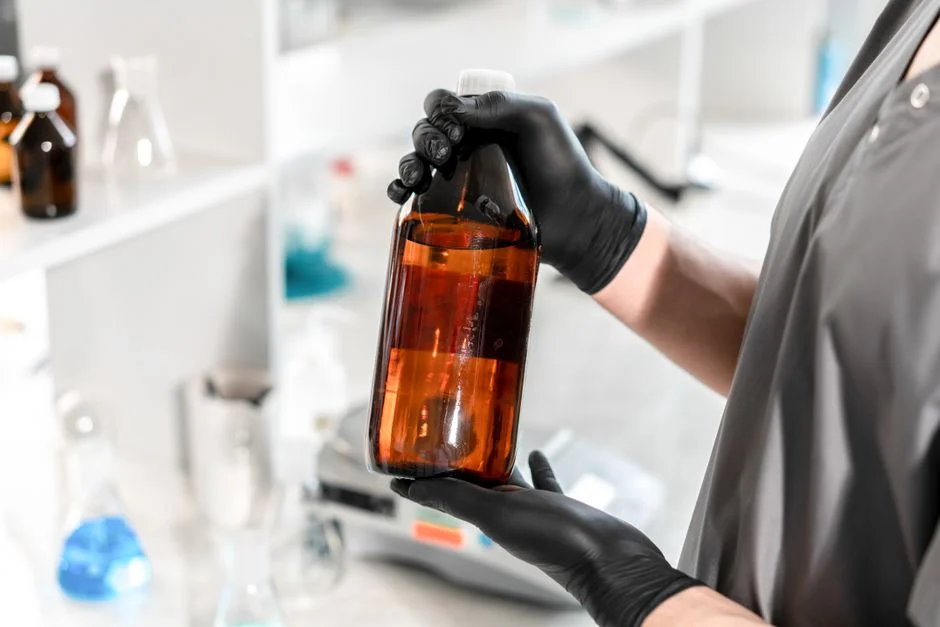
A comparable bid package prevents suppliers from optimizing different parts of the problem. Give every bidder the same characterization results, design flow basis, operating schedule, discharge destination and reuse target, then require a written list of missing assumptions. If a critical input is absent, the proposal should remain conditional rather than convert the gap into an unsupported guarantee.
Each treatment train should state its hydraulic basis, biological loading assumptions, temperature basis, sludge yield, utilities, controls, commissioning tests and acceptance criteria. Performance guarantees should identify the influent range, operating schedule, sampling point and test method. A generic COD-removal percentage without those conditions is not a procurement-grade commitment.
| Bid item | Specific question for each supplier | Evidence expected |
|---|---|---|
| Design basis | Which flow, load and wastewater fractions were used? | Calculation notes, assumptions and identified exclusions |
| Biological treatment | How are loading, retention and temperature effects addressed? | Loading calculation, seasonal review and acceptance test |
| Peak and upset response | How are cleaning, dumping and toxic shocks handled? | Equalization and control strategy, including bypass provisions |
| Sludge handling | Where does every concentrated residual go? | Yield estimate, dewatering basis and disposal route |
| Operations and service | What maintenance, training, spares and support are included? | Documented scope and verifiable local commitments |
Ask bidders to address winter operation, peak production, cleaning cycles, upset response, membrane cleaning, chemical storage, spare parts, operator training and remote or local controls. For biological systems, require the proposal to state how it addresses the supplied MBBR evidence: 8 hours was selected in that study, while the increase from 20°C to 25°C was associated with a sharp improvement in COD removal (Juniper Publishers, 2025).
Installation and service capability should be evaluated as a separate commercial category. Request verifiable commitments for commissioning, response time, spare-parts supply and technical support rather than relying on unsupported geographic claims. The structure in an effluent treatment plant buyer’s guide can help organize that comparison, although local contractual commitments remain essential.
Frequently Asked Questions
Which is best for high-COD wastewater: MBR, MBBR, DAF or electrocoagulation?
Match the technology to the waste fraction and objective. Use DAF or coagulation for removable solids, oil, floatables or colloids; use MBBR or aerobic SBR primarily for biodegradable soluble COD; and use MBR when biological solids separation and a compact footprint justify membrane fouling and maintenance controls. Electrocoagulation is only defensible where matched chemistry and pilot data support it, rather than as a generic COD-removal choice.
What evidence should a supplier provide for sizing and performance guarantees?
Request the complete influent basis, average and peak flow, COD fraction, loading or hydraulic-retention calculation, temperature basis, operating schedule, sludge assumptions and commissioning test method. The guarantee should apply to defined influent ranges and measured operating conditions. For the supplied MBBR study, 8 hours was the selected retention time, but that study result does not transfer directly to Rosario without matching its conditions.
What additional information is needed to evaluate industrial effluent reuse?
Request the intended reuse application, required water-quality specification, source-stream chemistry, production demand, operating variability and treatment objectives. Also identify whether reuse is intermittent, batch or continuous, and what consequences follow from permeate quality or equipment downtime. Without those inputs, neither UF nor RO can be declared suitable.
What risks should buyers check in a low-cost packaged treatment proposal?
Check for unsupported guarantees, omitted sludge handling, unverified peak-load operation and treatment units selected without front-end characterization. Ask whether the quoted flow and COD basis match measured factory data, whether temperature and toxicity were considered, and whether cleaning, controls, utilities, commissioning and residuals are included. A low equipment price can still produce a high total cost if fouling, downtime or disposal requirements are excluded.