Belt Filter Press Process Flow Diagram
A belt filter press process flow diagram normally follows conditioned sludge from polymer preparation and feed distribution through gravity drainage, wedge dewatering, increasing-pressure filtration, cake release and collection. Filtrate leaves the belt during dewatering, while wash water cleans the filter media and may be recycled. The functional schematic should also identify sludge metering, belt drive and tension controls, wash-water supply, filtrate collection, cake discharge and odor-control connections. The US EPA identifies the resulting dewatered material as cake and states that dewatering reduces residual volume and downstream storage, processing, transfer and disposal costs (US EPA, Fact Sheet: Belt Filter Press, September 2000).
Use the following as a functional process-flow schematic rather than a vendor-specific P&ID:
MAIN SLUDGE TRAIN
Polymer preparation → polymer dosing and sludge conditioning → metered sludge feed → moving-belt gravity drainage zone → wedge dewatering zone → increasing-pressure filtration rollers → cake release → cake collection and disposalSEPARATE STREAMS
Filtrate: belt drainage and pressure filtration → filtrate collection → process reuse, dilution-water recycle or further treatment
Wash water: wash-water supply → belt-washing station → wash-water collection → recycle or treatment
Odor control: enclosure or ventilation connection around conditioning, feed and cake-discharge areasCONTROLS AND UTILITIES
Polymer preparation and dose control • sludge metering • belt speed and drive • belt tension • wash-water flow • optional vacuum set point • filtrate and cake collection
This separation is important because sludge, filtrate, wash water and cake have different destinations and control requirements. An automatic chemical dosing system must be specified with the press because conditioning quality affects the feed entering the gravity drainage zone. A plate and frame filter press may instead be the selected dewatering route for a batch duty, but it requires a different flow arrangement.
The schematic establishes functional relationships, not equipment geometry. Detailed design must establish piping routes, valves, drains, containment, instrumentation, access clearances and utility connections. If wash water is recycled, the balance must show where it enters the process and which liquid-quality limits govern that decision.
How Sludge Moves Through the Belt Press
Polymer conditioning controls how sludge enters the belt, while successive mechanical zones control the removal of water from the conditioned solids. Charter Machine Company describes the standard sequence as polymer mixing, gravity drainage, wedge compression, increasing roller pressure, cake discharge and continuous belt washing (Charter Machine Company, What Is a Belt Filter Press? Sludge Dewatering Explained, publication date not stated).
- Conditioning: Polymer binds fine particles into flocs, improving water release and cake formation. The dosing system, polymer dilution, injection point and mixing method must be included upstream of the press.
- Feed and gravity drainage: Conditioned sludge is distributed across the moving belt. Free water drains through the porous medium before the belts converge. Feed uniformity and the solids entering this zone determine how evenly the downstream pressure zones work.
- Wedge dewatering: The two belts converge, applying light pressure while creating a progressively compressed sludge bed. The designer must specify the wedge geometry and the sequence of pressure development.
- Pressure filtration: Successive rollers apply increasing pressure and extract additional water through the belt. The operating controls include belt speed, tension, pressure progression and, for a vacuum-assisted design, the vacuum set point.
- Release and collection: The cake separates from the belt at the discharge end and is collected for transport, storage or further treatment. The US EPA describes this product as a non-liquid cake whose reduced volume improves subsequent storage, processing, transfer and disposal (US EPA, Fact Sheet: Belt Filter Press, September 2000).
The belt-washing system operates as a separate continuous service: wash water enters the wash station, cleans the filter medium and is collected for recycle or further handling. Charter Machine Company identifies a consistent wash-water supply, often recycled within the system, as necessary to prevent blinding and maintain filtration efficiency (Charter Machine Company, publication date not stated). A blockage in the washing circuit may therefore appear as lost filtration performance even though the main sludge feed remains stable.
Operators should distinguish retention time from pressure. Increasing belt speed can reduce the time available for drainage, while slowing it increases retention but also changes throughput and shearing. The correct combination must be established from the selected machine and feed conditions, not transferred from another sludge application.
Filtrate, Wash Water, Cake and Off-Gas Streams
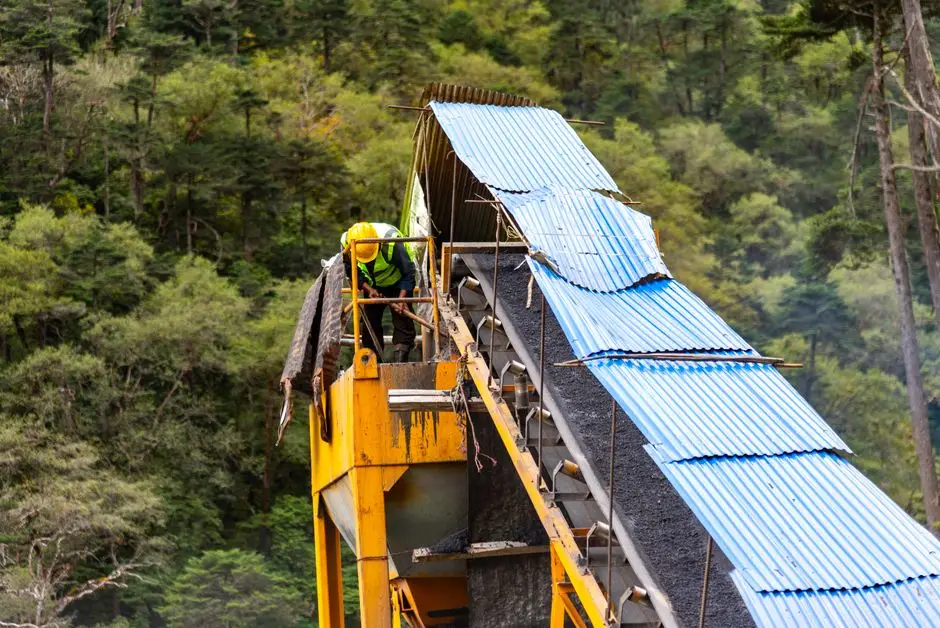
Filtrate and wash water should remain separate in the schematic because their contaminant loads and permitted destinations may differ, even when both streams ultimately enter the same treatment route. Filtrate contains water released from the sludge; wash water is used to clean the belt and may also pick up residual solids and contaminants.
| Stream | Origin | Collection point | Design decision |
|---|---|---|---|
| Conditioned sludge | Sludge plus polymer | Feed distribution | Define mixing, dose and feed consistency |
| Filtrate | Water released through the belt | Filtrate collection system | Define reuse, treatment and discharge route |
| Wash water | External supply and possible recycle | Belt-washing station | Define flow, pressure and contaminants |
| Cake | Separated solids at discharge | Skip, conveyor or downstream process | Define moisture target and handling method |
| Odorous gas | Conditioned sludge and cake handling areas | Enclosure or ventilation connection | Define containment and treatment requirements |
Filtrate collection should occur before any reuse decision. It may be returned to the process as dilution water, used within an allowed recycle loop or sent for further treatment. Wash-water recycle requires its own water balance because recycled liquid affects the polymer dilution and incoming hydraulic load.
Cake discharge must connect to a defined destination. A skip requires a suitable loading and access arrangement; a conveyor must be matched to the expected cake discharge rate; another treatment stage creates another solids-handling interface. The 2024 Processes study reports that alkaline lime conditioning was used in its polymer-sludge application, where it converted sulphides in solution and reduced the formation of volatile hydrogen sulphide (Processes, 28 March 2024).
For every proposed arrangement, ask the supplier to identify where filtrate and wash water are sampled, whether their sample points are separate, whether belt-cleaning chemicals are introduced and how each liquid stream is monitored before reuse or disposal.
Operating Parameters to Put on the Flow Diagram
The 2024 Processes paper identifies chemical conditioning, hydraulic and solids loading rates, belt cleaning, belt speed, belt tension, belt porosity and vacuum set point as variables affecting vacuum-belt dewatering performance (Processes, 28 March 2024). These inputs belong on the selection drawing and control narrative rather than being treated as commissioning adjustments.
| Parameter or measurement | Function in the flow diagram | Information required for selection or acceptance |
|---|---|---|
| Chemical conditioning | Defines sludge quality before feed | Polymer type, dose, dilution, mixing method and feed consistency |
| Hydraulic loading | Sets the liquid duty on the press | Hourly flow, daily operating hours and expected variation |
| Solids loading | Sets the dry-solids duty | Sludge solids concentration and expected variability |
| Belt speed | Controls retention time | Permitted operating range and control method |
| Belt tension | Maintains filter-medium tracking and pressure | Adjustment range, interlocks and tension monitoring |
| Vacuum set point | Controls assisted filtration where applicable | Specified vacuum, equipment suitability and control limits |
| Belt porosity | Sets the filtration medium | Material, pore or mesh specification, compatibility and cleaning limits |
| Filtrate quality | Defines separation performance | Suspended solids and other project-specific discharge or reuse criteria |
| Cake dryness | Defines downstream handling | Target solids content or moisture and test method |
Vacuum-assisted equipment requires an additional control point. The vacuum belt studied in the 2024 Processes paper used approximately −0.3 bar beneath the belt, but that value belongs to that machine and must not be copied into another specification without supplier confirmation (Processes, 28 March 2024).
Commissioning should use traceable measurements of feed consistency, polymer dose, mixing conditions, sludge solids content, filtrate quality and cake dryness. The 2024 study found that laboratory characterization and calculated material-balance results usually differed by around ±5%, which supports reconciliation of field measurements rather than reliance on calculations alone (Processes, 28 March 2024).
The same study’s sludge is not a generic design basis. Its material contained approximately 9% solids on a dry basis, COD above 40,000 mg/L and TSS of 10,500 mg/L; these values were specific to polymer sludge at the studied plant (Processes, 28 March 2024). Site-specific characterization must replace them.
Performance and Cost Lessons from a 2024 Industrial Retrofit
The 2024 Processes study showed that replacing a vacuum belt filter with a filter press materially changed the reported dewatering and cost outcomes for one industrial polymer-sludge operation (Processes, 28 March 2024). It is bounded case evidence, not a guarantee for a conventional belt filter press.
In the reported installation, the original vacuum belt filter produced cake with 19% solids. The replacement filter press produced cake with 35% solids. The study reports that the filtrate met local discharge regulations and was disposed of without further treatment. Annual savings were reported as up to 50%, with a payback period of 1.5 years (Processes, 28 March 2024).
These results reflect the feed, chemistry, equipment arrangement, operating conditions and disposal costs at the studied plant. The study concerned industrial polymer effluent sludge; its outcome cannot be generalized to every belt press, municipal sludge or industrial wastewater stream.
For a comparable project, request side-by-side evidence for:
- Total solids capture and filtrate suspended solids;
- Cake moisture or solids content under comparable feed conditions;
- Polymer demand and mixing requirements;
- Energy consumption and wash-water demand;
- Maintenance attendance and belt or filter-media life;
- Cake handling, final disposal and downstream treatment costs;
- Recirculating-liquid impacts on the upstream process.
The case study supports evaluating the whole dewatering system rather than selecting on equipment purchase price or a single dryness figure. A machine that produces the required cake consistently may justify its cost through reduced downstream handling, but the supplier must substantiate the claim with the applicable feed and operating data.
Belt Filter Press vs Plate and Frame Filter Press
Belt filter presses provide continuous filtration, while plate and frame filter presses process sludge in discrete cycles, according to Charter Machine Company (publication date not stated). The practical choice is therefore not simply “continuous versus batch”; it is whether steady throughput and predictable cake delivery justify the belt system’s larger footprint and maintenance needs, or whether batch operation better fits the project’s dryness and handling targets.
| Selection issue | Belt filter press | Plate and frame filter press |
|---|---|---|
| Operating mode | Continuous filtration and discharge | Discrete filling, filtration and cake-release cycles |
| Priority | Steady sludge flow and continuous solids output | Batch control where higher cake dryness is important |
| Feed presentation | Conditioned sludge distributed onto moving belts | Conditioned sludge introduced into filter chambers |
| Key operating inputs | Polymer dose, belt speed, tension, pressure progression, washing and optional vacuum | Polymer dose, chamber filling, filtration time, pressure and cake release |
| Utilities and services | Wash-water supply, drive power, filtrate collection and belt maintenance | Press power or hydraulics, filtrate collection, cloth washing and cake handling |
| Comparison evidence | 19% solids cake from the vacuum belt filter in the 2024 case study | 35% solids cake from the replacement filter press in that study |
The 2024 figures compare a particular vacuum belt filter with a particular filter press in a polymer-sludge application; the names, feed and equipment arrangement must remain attached to the numbers (Processes, 28 March 2024).
HydropureWater’s plate and frame filter presses are available with filtration areas from 1 m² to 500 m² and manual, hydraulic or fully automatic PLC-controlled operation, according to the verified product catalog (HydropureWater verified product catalog, current product data accessed in 2026). A buyer should compare footprint, labor, cleaning, wash-water demand, filtrate quality, cake handling and plant availability—not rely on one dry-solids result.
How to Specify a Belt Filter Press for an Industrial Project
A defensible belt-press selection begins with the sludge and ends with the disposal route; flow rate alone is not enough. The specification should force the supplier to show how every zone handles the actual feed and how each liquid and solid stream reaches its permitted destination.
- Characterize the sludge. Obtain solids concentration and type, oil and grease where relevant, pH, organic loading and expected variability. Identify fibrous, colloidal or abrasive material that may affect filtration and belt life.
- Define the duty. State hourly flow, daily operating hours, hydraulic loading and solids loading. Ask the supplier to identify the sizing basis and how the selected width, belt length, number of rollers and drive duty respond to feed variation.
- Define the outputs. Set target cake dryness, filtrate-quality criteria, cake-handling method, odor-control requirements and the permitted destination of filtrate and wash water.
- Set the controls. Require the supplier to explain how polymer dose, mixing, feed consistency, belt speed, pressure progression, tension and washing are adjusted when sludge characteristics change.
- Protect the machine. Charter Machine Company identifies screening or preprocessing as necessary to remove debris and sharp objects that can damage belts and reduce equipment life (publication date not stated). Confirm whether a rotary mechanical bar screen or another pretreatment device is required.
- Request the project documents. The functional diagram should be supplemented by a vendor-specific P&ID, equipment layout, controls narrative, wash-water balance, polymer-system duty, utility list and commissioning acceptance criteria.
The hydraulic and solids-loading calculations must use site data rather than the case-study composition. It is also important to define whether conditioned sludge is continuously available or stored before dewatering, because retention time affects conditioning, feed consistency and odor-control requirements.
Ask how the supplier will demonstrate performance. A defensible protocol identifies sample locations and methods for feed, filtrate and cake; confirms polymer preparation and dose; records belt speed, tension, pressure and wash-water conditions; and states acceptance limits for cake dryness, filtrate quality and throughput.
Frequently Asked Questions
How much does an industrial belt filter press cost?
No defensible price can be stated without the equipment scope and site duty. Request a quotation based on sludge characterization, hourly flow, operating hours, hydraulic and solids loading, target cake dryness, filtrate criteria, required controls and site utilities. Separate the press and chemical dosing package from pretreatment, odor control, filtrate and wash-water handling, cake disposal, installation, energy, maintenance and downtime. The 2024 Processes study reported annual savings of up to 50% and a payback period of 1.5 years for its specific retrofit, but those figures are not a quotation or a general savings estimate (Processes, 28 March 2024).
Can the equipment supplier select the press from flow rate alone?
No. A request must include sludge characterization, hydraulic and solids loading, operating hours, target cake and filtrate results, and feed variability. Require the supplier to state its sizing basis, provide a vendor-specific flow diagram and P&ID, identify performance guarantees, define commissioning and acceptance tests, and disclose the complete utility demand. These checks prevent a continuous belt process from being selected without the conditioning, washing, pretreatment and controls needed to sustain performance.
What causes wet cake in a belt press sludge dewatering system?
Start with the gravity drainage zone and trace the symptoms downstream. Unstable feed or incorrect polymer dose can produce poor floc formation; excessive belt speed can reduce retention time; incorrect tension or pressure progression can limit compression; belt blinding can reduce filtration; and inconsistent wash-water supply can progressively obstruct the filter medium. Compare feed consistency, filtrate suspended solids, cake moisture and wash-water operation together. A rising filtrate suspended-solids trend identifies a separation issue; wet cake combined with stable filtrate may require inspection of cake release or downstream sampling.
Why must filtrate and wash water be shown separately?
They originate differently and may carry different contaminant loads. Filtrate is released from the sludge during drainage and pressure filtration; wash water is supplied to clean the belt and may collect residual solids. Keeping them distinct allows separate sampling, treatment decisions and recycle calculations. In the 2024 Processes application, contaminated filtrate and jet-washing water formed a recycle stream because they could not be sent directly to the sewer, illustrating why the wash-water balance cannot be omitted from the process-flow schematic (Processes, 28 March 2024).