What Treatment Train Fits Córdoba High-COD Trade Waste?
Córdoba manufacturers in 2026 generally treat high-COD trade waste with a staged train rather than one universal system: screening and equalization protect the process; DAF removes oil, grease, suspended solids and colloids; pH control and coagulation prepare the wastewater for biological treatment; and aerobic processes such as SBR or MBBR remove biodegradable COD. In one MBBR study, an 8-hour HRT achieved more than 80% COD removal, while 12 hours achieved about 86%. Where near-reuse-quality effluent is required, an MBR can separate biomass from treated water. Electrocoagulation is a possible polishing or pretreatment option, but it must be evaluated using site-specific waste chemistry.
The practical sequence begins with source segregation and characterization, because a discharge from a food, textile, metalworking or petrochemical operation may contain different proportions of soluble organics, suspended material, oil, metals and inhibitory compounds. Screening, grit removal and equalization then control solids and batch-driven hydraulic loading. DAF or coagulation follows where floating material and colloids would impair biological treatment or membrane separation. Biological oxidation handles biodegradable COD, followed by clarification or membrane separation and sludge dewatering. Additional polishing is conditional on the reuse specification.
The supplied Córdoba context concerns pollution in San Roque Lake, but The Wave Org’s account does not establish a direct causal link between that pollution and any factory, nor does it supply industrial discharge limits. It therefore supports source control as part of due diligence, not a numerical design basis. This article follows the same decision logic applied in high-COD trade waste treatment for manufacturers, while keeping Córdoba permit and receiving-route requirements separate from experimental evidence.
| Decision stage | Primary purpose | Inputs required before sizing |
|---|---|---|
| Source segregation and characterization | Identify the actual waste streams and their variability | Representative COD, BOD, TSS, oil and grease, pH, toxicity, temperature and flow |
| Screening, grit removal and equalization | Remove coarse material and smooth hydraulic and load variation | Peak flow, batch profile, solids characteristics and operating strategy |
| DAF and chemical conditioning | Remove suspended solids, oil, grease and colloids; establish pH and floc structure | Oil content, solids, colloid stability, jar-test results and dosing demand |
| SBR or MBBR | Oxidize biodegradable COD | COD/BOD ratio, biodegradability, temperature, loading and inhibition testing |
| Clarification or MBR | Separate biomass and improve effluent consistency | Solids loading, filtration requirements, reuse target and cleaning strategy |
| Sludge treatment and optional polishing | Manage concentrated residuals and meet the intended reuse specification | Sludge yield, dewatering test, contaminant list, concentrate disposal route and end-use standard |
Characterize the Waste Before Choosing Equipment
High-COD effluent must be characterized across operating conditions before equipment is sized, because total COD alone does not reveal whether the load is biodegradable or will foul a biological or membrane system. Request representative samples spanning production, batch dumps and cleaning cycles rather than relying on one grab sample. The sampling plan should identify when each stream enters the common header and whether cleaners, acids, alkalis, oils or metals create short-duration load peaks.
Separate soluble biodegradable COD from particulate and colloidal COD, suspended solids, oil and grease. These fractions determine whether equalization and DAF do most of the preparatory work, whether biological acclimatization is realistic, and whether a polishing stage is necessary. Record flow and temperature alongside COD, BOD, TSS and pH because hydraulic peaks and temperature can change both biological loading and membrane performance.
Additional testing should be triggered by the manufacturing process. Salt and conductivity may affect biological activity and membrane operation; toxicity may require biological inhibition testing; metals may justify precipitation or electrocoagulation; and manufacturing-specific chemicals may require assessment beyond bulk COD and BOD. The ETP due-diligence framework for legacy wastewater systems is useful for identifying what an acquired or inherited plant must document before procurement.
Temperature is a design variable, not a footnote. Juniper Publishers’ lab-scale MBBR study found COD removal increased from approximately 72% to 92% as temperature rose from 20°C to about 25°C, with the highest reported COD removal of 94% at 32°C (Juniper Publishers, source excerpt dated 2025). Those results warn against sizing solely on warm-weather performance. The same study tested influent COD of 1,000–3,500 mg/L, but that range is a laboratory benchmark rather than a Córdoba design value.
| Characterization input | Why it affects equipment selection | Evidence or action required |
|---|---|---|
| COD and BOD | Defines organic load and provides a preliminary biodegradability indication | Test representative composites across production and cleaning cycles |
| TSS and settleability | Determines pretreatment, clarification and sludge-handling requirements | Include solids characterization and, where relevant, sedimentation or filtration testing |
| Oil and grease | Influences DAF, equalization and biological inhibition risk | Measure the actual stream composition rather than relying on sector assumptions |
| pH and temperature | Affects biological activity, chemical dosing and membrane operation | Record pH continuously where feasible and use site temperature ranges in sizing |
| Flow variability | Sets equalization, hydraulic and peak-load requirements | Obtain production schedules, wash-down flows and diurnal or batch profiles |
| Toxicity, salts, metals and micropollutants | Can inhibit biology or determine reuse and pretreatment needs | Test where warranted by the process and reuse route |
Remove Oils, Solids and Colloids Before Biological Treatment?
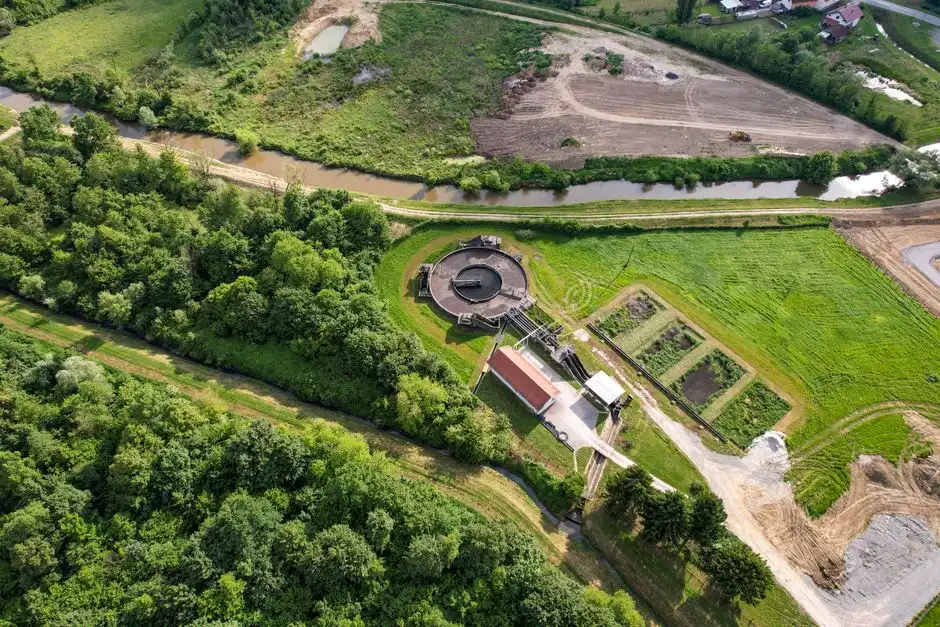
DAF belongs upstream when oil, grease, suspended solids or colloids would interfere with biological treatment or membrane filtration. It concentrates floatable material and settled solids into a sludge stream, but it does not oxidize dissolved COD. In this treatment logic, the industrial DAF pretreatment system is therefore evaluated as load preparation, not as the principal biological treatment stage.
Equalization comes before DAF where production batches cause variable flow or pollutant loads. Its purpose is to damp those peaks, support consistent chemical dosing and protect downstream biological and membrane units. The supplied research does not provide a universal equalization-time target; storage volume must instead be derived from measured flow, batch discharge patterns, operating strategy and the response time required by the selected process.
Screening removes coarse solids that could damage or block pumps, aerators and membranes. An rotary mechanical bar screen can form the upstream solids barrier, while grit removal addresses dense inorganic particles that may otherwise settle in equalization or interfere with later handling.
Chemical conditioning is a controlled process, not a default dosing recipe. An automatic chemical dosing system can meter coagulants, flocculants, pH adjusters and specialty chemicals, but the required dose must be established by jar testing and, where scale-up risk remains, pilot work. Metal hydroxides, pH shifts, polymer interactions and wastewater chemistry can change both DAF capture and sludge dewatering.
A typical sequence is screening and grit removal, equalization, DAF or coagulation where required, pH adjustment, biological treatment and final solids separation. Which steps are justified depends on measured oil and solids fractions rather than the label “high-COD.” See the DAF design for food-processing wastewater for the distinction between food-sector application and industrial treatment generally.
| Upstream issue | Applicable control | Design check |
|---|---|---|
| Coarse solids | Mechanical screening and grit removal | Headloss, solids capture, screen selection and screenings removal route |
| Batch-driven flow and load peaks | Equalization and controlled feed | Measured flow profile, selected operating level and downstream peak capacity |
| Oil, grease, suspended solids and colloids | DAF, with coagulation or flocculation where tested | Float and sludge characteristics, solids capture and chemical consumption |
| Extreme pH or process chemicals | Neutralization and controlled dosing | Target pH, mixing, interlocks and downstream tolerance |
| Excessive biological or membrane loading | Source control and pretreatment | Mass loading after upstream removal, not influent COD alone |
Compare Biological Routes for High-COD Reduction
SBR, MBBR and electrocoagulation solve different problems. A sequencing batch reactor provides a controlled biological cycle with fill, reaction, settling and draw phases. The supplied PubMed record identifies aerobic SBR research for high-COD wastewater, but its excerpt provides no extractable performance value. Accordingly, SBR should be compared using the site’s biodegradability, loading and operating-control requirements rather than a generic removal percentage.
MBBR offers continuous biological treatment on moving carriers. In the Juniper Publishers lab-scale study, the tested influent COD range was 1,000–3,500 mg/L, hydraulic retention times were 3, 5, 8 and 12 hours, and the filling ratio was 50%. More than 80% COD removal was reported at the selected 8-hour HRT, while the 12-hour HRT produced approximately 86% removal (Juniper Publishers, source excerpt dated 2025). These values belong to that experimental system and are not guaranteed Córdoba design values.
Temperature materially changed the study’s performance. COD removal rose from approximately 72% to 92% between 20°C and about 25°C, and reached 94% at 32°C (Juniper Publishers, source excerpt dated 2025). The resulting design lesson is to include the full site temperature range and provide adequate biological volume or seasonal operating controls; the study does not justify transferring its warm-temperature result to a factory year-round.
Electrocoagulation can be relevant where metals-bearing or mineral-processing chemistry requires electrochemical solids generation, or where it is evaluated as a polishing step. MDPI AG tested wastewater with initial COD of 424.29 mg/L from a Pb/Zn sulfide flotation plant. Anode material, current density, initial pH and additives were identified as design variables, but the supplied excerpt reports no universal treatment outcome. Pilot testing is therefore necessary before comparing EC with DAF, coagulation or biological polishing.
| Route | Primary role | Evidence boundary | Key selection question |
|---|---|---|---|
| Aerobic SBR | Controlled-cycle biological COD oxidation and settling | PubMed record supplies no extractable performance figure | Can the cycle accommodate the measured load and required settling behavior? |
| MBBR | Continuous attached-growth biological COD removal | More than 80% at 8-hour HRT and approximately 86% at 12 hours in a lab-scale MBBR study with 1,000–3,500 mg/L influent COD | What volume is needed at the lowest site temperature and highest verified load? |
| Electrocoagulation | Metals-bearing treatment or potential polishing | MDPI AG studied initial COD of 424.29 mg/L from a Pb/Zn sulfide flotation plant; no universal result was supplied | Does pilot testing demonstrate the required removal with manageable sludge and electricity demand? |
| Clarification or MBR | Biomass separation after biological treatment | Performance depends on biological loading, membrane design and feed quality | Is low suspended solids sufficient, or does reuse require additional contaminant control? |
Choose MBR When the Effluent Must Be Reused
MBR combines activated-sludge treatment with submerged PVDF membrane filtration below 1 micrometre, producing effluent separated from suspended biomass rather than relying only on conventional clarification. HydropureWater states that its integrated membrane bioreactor capacities range from 10 to 2,000 m³/day; these are equipment-supply ranges, not evidence of site-specific treatment performance. The integrated MBR wastewater treatment system is most relevant when reliable solids separation, compact footprint or reuse preparation outweighs added capital, aeration and membrane-maintenance requirements.
Low suspended solids do not mean complete contaminant removal. A membrane retains biomass and separates particulate material; it does not by itself establish suitability for drinking water, food contact or a sensitive industrial reuse. The target use must therefore define the required chemical, microbiological and physical quality, followed by a gap assessment against the treated effluent.
That assessment must include relevant micropollutants when the waste or reuse route warrants it. In a PLoS ONE study of on-site wastewater discharges, five wastewater indicators were detected in at least 25% of samples; DEET was detected in 71% and at least once at every facility (PLoS ONE, 2018). The study also reported indicator recovery of 50% to less than 70% for several facilities, and identified anoxic groundwater conditions as relevant to some higher concentrations.
Disposal or infiltration is not automatically a zero-risk endpoint. The same PLoS ONE study reported that large subsurface treatment systems and rapid infiltration basins can deliver pharmaceuticals and other micropollutants to groundwater aquifers used as drinking-water sources (PLoS ONE, 2018). Any reuse proposal should therefore specify the end use, assess the full relevant contaminant list, validate the treatment train and confirm the receiving or infiltration route.
| Reuse decision | What MBR can address | Additional evidence or treatment required |
|---|---|---|
| Industrial water with low suspended solids | Biomass separation and effluent consistency | Confirm the receiving process’s temperature, pH, conductivity, residual COD and other requirements |
| Reuse involving sensitive chemical exposure | Removal of solids and retained biomass | Screen for process-specific contaminants and relevant micropollutants |
| RO or UF pretreatment | Reduces the particulate and colloidal load entering the next membrane stage | Confirm membrane compatibility, recovery, cleaning and concentrate handling |
| Groundwater infiltration or direct reuse | No automatic assurance of contaminant removal | Document hydrogeological and contaminant-transfer risk and obtain applicable authority approval |
Design the Sludge and Reuse Chain
Sludge characterization and dewatering must be included in the process design because DAF, coagulation and biological treatment concentrate solids into residues that require separate handling. The design should estimate sludge yield from measured solids capture and biomass production, then identify the final disposal route before selecting equipment. A plate and frame press may suit batch operation, a compact footprint or high solids capture where its manual, hydraulic or PLC-controlled configurations match plant staffing and operating needs.
The supplied filter-press catalog spans filtration areas from 1 m² to 500 m², while an plate and frame filter press can be configured with manual, hydraulic or PLC-controlled operation. These are catalog specifications, not site performance claims. Cake dry solids, filtrate quality, cycle time, plate life, chemical conditioning and operator workload must be verified through representative testing.
Ultrafiltration can provide clarification or serve as pretreatment for reverse osmosis when suspended solids and colloids must be controlled. The supplied catalog specifies operation up to 300 ppm turbidity, but ultrafiltration does not remove dissolved COD. Membrane compatibility and pretreatment must therefore reflect the actual wastewater rather than feed turbidity alone.
Reverse osmosis is a conditional polishing step for selected reuse applications, not the default biological treatment stage. Its evaluation must address recovery, concentrate disposal, target-water chemistry, pretreatment and membrane cleaning. A reverse-osmosis water purification system should proceed only after the biological and membrane-separation performance is established.
| Residual or reuse stream | Potential treatment | Design evidence required |
|---|---|---|
| DAF float and chemical sludge | Thickening and plate-and-frame dewatering | Solids yield, dewatering test, cake handling and chemical demand |
| Waste biological sludge | Thickening and dewatering | Sludge production rate, settleability and destination |
| Colloids before RO | Ultrafiltration or another validated pretreatment | Turbidity, particle size, flux, fouling tendency and cleaning method |
| Reuse polishing | RO where target chemistry and recovery justify it | Feed analysis, recovery, concentrate route and end-use specification |
Build a Supplier Selection and Commissioning Plan
Supplier selection should begin with the same measured design basis used for process development. Require bidders to state the design influent, treated-effluent basis, treatment objective, hydraulic calculation, equipment sizing method, performance guarantees and operator skill level. A generic COD-removal percentage is not an acceptable substitute for a defined feed concentration, flow, temperature and performance test protocol.
Make jar or pilot testing a condition for EC, chemical dosing and uncertain sludgeability. DAF performance depends on oil and colloid characteristics; biological performance depends on biodegradability and temperature; sludge dewatering depends on conditioning; and membrane systems depend on feed quality. A supplier should demonstrate the variables it controls and identify site utilities, chemicals and operating interventions it assumes.
The commissioning plan should include startup monitoring of COD, BOD, TSS, pH, temperature and flow, together with dissolved oxygen in aerobic stages and every parameter specified by the discharge permit or reuse requirement. Sampling should cover steady operation and representative production or cleaning cycles. The MBBR study’s temperature response is a warning against accepting a design demonstrated only under warm conditions.
Document residuals, sludge yield, chemical consumption, backup-power arrangements, controls, maintenance access, spare-parts strategy and operator training before award. The MBR versus activated sludge for mining wastewater comparison provides a useful structure for evaluating solids separation, while the 2026 trade-waste treatment decision guide supplies a broader procurement framework. Neither substitutes for Córdoba-specific permits and project data.
| Procurement stage | Required supplier deliverable | Buyer check |
|---|---|---|
| Concept design | Mass balance, hydraulic calculation and treatment train | Do all sizing assumptions match measured flow, COD, BOD, TSS and temperature? |
| Performance validation | Jar or pilot results for uncertain unit processes | Was the actual site waste used, and were relevant seasonal conditions represented? |
| Equipment specification | Capacity, materials, controls, utilities and maintenance requirements | Are redundancy, cleaning, access, backup power and spare parts defined? |
| Commissioning | Installation, training, startup and acceptance protocol | Are COD, BOD, TSS, pH, temperature, flow and aerobic dissolved oxygen monitored? |
| Compliance handover | Permit-aligned sampling, operating records and residual management | Have Córdoba and site-specific requirements been confirmed in writing? |
Frequently Asked Questions
Can one DAF or MBR unit handle a Córdoba plant’s high-COD waste?
Not reliably without characterization and pretreatment. DAF removes oil, grease, suspended solids and colloids; it does not provide biological COD oxidation. An integrated MBR wastewater treatment system combines biological treatment with membrane separation, so DAF may still be needed upstream to control membrane-fouling constituents. The required train depends on measured COD, biodegradability, solids, oil, pH, temperature and flow.
How should an MBBR or SBR be sized using the cited MBBR results?
Use representative COD, flow, temperature and biodegradability to calculate mass loading, then size for the least favorable verified seasonal condition. Juniper Publishers’ 2025 study found more than 80% COD removal at an 8-hour HRT and approximately 86% at 12 hours with a 50% filling ratio and influent COD of 1,000–3,500 mg/L. Those are laboratory benchmarks, not Córdoba guarantees or universal sizing rules. A supplier should document how the selected reactor volume responds to the project’s actual loads and temperatures.
What should a buyer request from an equipment supplier before comparing prices?
Request the design influent and treated-effluent basis, flow and temperature ranges, mass-loading calculation, hydraulic calculation, equipment sizing, guarantees, utilities, chemical consumption, sludge yield, controls, maintenance and operator requirements. Also require pilot or jar evidence where chemical dosing, EC or sludgeability remains uncertain. Price comparisons are meaningful only when bidders are solving the same measured wastewater problem with comparable acceptance tests.
Why does COD removal alone not establish industrial water reuse safety?
COD measures oxygen demand associated with oxidizable material, but it does not identify every contaminant relevant to a particular reuse. The reuse process, public exposure and receiving environment may require separate assessment of metals, salts, toxicity, process chemicals and micropollutants. PLoS ONE reported in 2018 that DEET was detected in 71% of samples in its groundwater study, illustrating why bulk COD cannot substitute for contaminant-specific assessment.
What compliance information must be confirmed for discharge or reuse in Córdoba?
Confirm the applicable requirements directly with the Córdoba authority, sewer authority and site-specific permit holder. The supplied research does not establish numerical Córdoba industrial discharge or reuse limits, so neither academic performance results nor manufacturer specifications should be presented as local compliance criteria. The effluent treatment plant buyer’s guide can help structure those questions, but the final design basis must use Córdoba-specific written requirements and the identified receiving route.