Why Johannesburg Trade Waste Needs a Different Treatment Strategy
Johannesburg manufacturers generally treat high-COD trade waste with a staged train: prevent or segregate incompatible discharges, equalise flow and load, remove oil, grease, solids and colloids, then use biological treatment for biodegradable organics. DAF is commonly considered for oil, FOG and suspended-solids removal, while an MBR can provide a compact biological stage with membrane solids separation. Equipment must be selected after sampling and mass-loading analysis. In 2026, this matters because Johannesburg Water’s municipal performance is under pressure: its score was 48.8% in the 2025 Green Drop assessment, with half of the city’s six wastewater treatment works classified as critical.
Trade waste is industrial process wastewater, not diluted domestic sewage. Its flow and composition can change with production, cleaning cycles, batch discharges, pH, oil content, solids and COD load. Designing around a single averaged effluent value can conceal hydraulic shocks, biodegradable and non-biodegradable fractions, substances that inhibit biology and contaminants that must be removed physically.
The municipal constraint does not create a general reason to discharge untreated trade waste. It strengthens the case for source control and pretreatment. AllAfrica’s 2026-04 report on the 2025 Green Drop Report placed Johannesburg Water in the poor-performance category at 48.8%, with three of the six city treatment works classified as critical. Industrial pretreatment protects municipal infrastructure from avoidable load and incompatible discharges; it does not replace a sewer acceptance agreement or the site’s environmental authorisation.
Gauteng’s decentralisation case study also frames local treatment as part of efficient use of scarce water resources. Reducing pollution loads and extending the service value of limited water supports treatment and reuse where technically and legally appropriate. The Holmes Mill case on industrial sewer limits provides a useful site-specific reference for that pretreatment logic.
The 2026 Treatment Train for High-COD Effluent
The treatment train should follow the waste fractions rather than the equipment catalogue. A practical sequence is:
- Segregate and control the source. Keep incompatible production streams, spills, cleaning solutions and concentrated wastes separate. Define prohibited discharges and route concentrated waste to an approved treatment or disposal route.
- Equalise the wastewater. Use buffering for variable flow and COD load before biological treatment. Equalisation limits shock loading, but its working volume must be based on measured production and discharge patterns.
- Remove coarse material. Screening or coarse solids removal protects downstream pumps, valves and membranes.
- Apply physical pretreatment where needed. DAF after equalisation and coarse screening can recover floatable material, oil and grease, FOG, suspended solids and colloidal matter before these fractions interfere with biology.
- Adjust chemistry where required. pH correction and nutrient balancing should be response-based, with the required reagents and control limits established from effluent analysis and the selected biological process.
- Treat biodegradable organics biologically. Activated sludge or another suitable biological process provides the core dissolved-COD treatment. An integrated MBR wastewater treatment system combines biological treatment with membrane solids separation where the wastewater and required effluent quality justify it.
- Polish and disinfect only as required. Additional solids removal or disinfection should follow from the discharge route, reuse application and pathogen-risk assessment.
- Handle sludge as part of the process. Concentrate and dewater separated solids before disposal or reuse. A plate-and-frame filter press can remove further water where the separated sludge requires it.
| Process step | Primary engineering purpose | Decision input |
|---|---|---|
| Source segregation | Concentrates and protects downstream equipment | Production streams, batch discharges and incompatible constituents |
| Equalisation | Controls hydraulic and COD shock loads | Hourly flow and load data across production cycles |
| Screening | Removes coarse solids | Solid characteristics and disposal route |
| DAF or clarification | Separates floatable and settleable fractions | Oil, grease, FOG, TSS and colloid analysis |
| Biological treatment | Removes biodegradable dissolved organics | COD fractions, biodegradability, pH, temperature and nutrients |
| Membrane separation | Combines biological treatment with solids separation | Effluent target, fouling risk and sludge handling |
| Sludge treatment | Reduces sludge water content | Solids yield, dewatering performance and final destination |
Solid capture should be specified from the outset. The Johannesburg East study by Water Practice & Technology, published in 2024, measured total microplastic concentrations of 3,098 MP/L at WWTW A and 3,561 MP/L at WWTW B. Samples were collected from December 2021 to September 2022. Those results do not establish a removal requirement for a factory, but they demonstrate why solids need to be captured within the treatment train rather than allowed to progress downstream.
Match Each Stage to the Contaminant It Removes
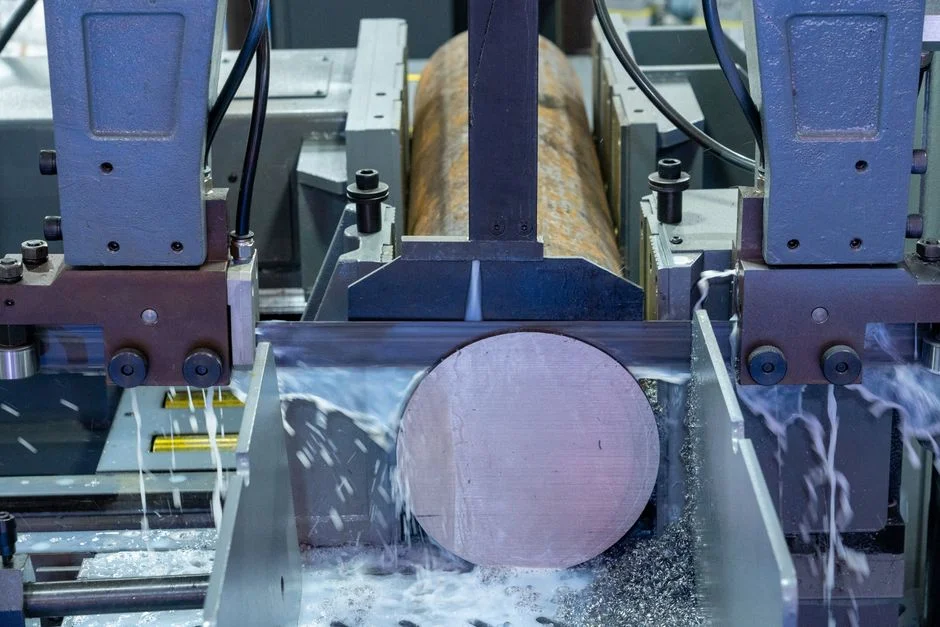
Physical pretreatment, biological treatment and polishing solve different problems. The primary specification error is to assign one technology a general contaminant-removal duty it cannot meet.
| Parameter | Purpose and contaminant | Selection question | Available equipment scope | Evidence required before purchase |
|---|---|---|---|---|
| DAF | Suspended solids, oil and grease, FOG and colloidal matter | Is floatable contamination the immediate pretreatment risk? | Industrial DAF pretreatment system: 4–300 m³/h across 13 standard models, micro-bubble technology and automatic skimming | Representative oil, grease, FOG, TSS and colloid analyses; flow and load variation |
| MBR | Biological treatment with submerged PVDF membrane filtration | Are biological treatment and membrane solids separation both required? | Integrated MBR wastewater treatment system: 10–2,000 m³/day; near-reuse-quality effluent below 1 μm filtration | COD fractions, biodegradability, membrane fouling risk, aeration demand and required permeate quality |
| Chemical dosing | pH adjustment, coagulation, flocculation and other controlled applications | Which chemical response is justified by the water chemistry? | Automatic chemical dosing system | pH range, target reactions, chemical compatibility, dose testing and residual requirements |
| Sludge dewatering | Removes water from separated sludge | What handling and disposal outcome is required? | Plate-and-frame filter press: 1–500 m² filtration area; manual, hydraulic and fully automatic PLC-controlled operation | Sludge characteristics, solids yield, batch frequency and final destination |
| Disinfection | Controls pathogens where the receiving or reuse requirement justifies it | Is disinfection necessary after the specified treatment stages? | On-site chlorine dioxide generator: 50 g/h to 20,000 g/h | Receiving requirement, reuse application, pathogen-risk assessment and residual or dosing criteria |
Chemical dosing cannot compensate for an incorrect flow design, absent equalisation or an inappropriate biological load. Its duty must be defined by the chemistry and confirmed through jar or pilot testing where necessary. Likewise, DAF should not be credited with removing dissolved biodegradable COD; it prepares that load for downstream biological treatment.
For discharge planning, compare the required process route with the industrial wastewater sewer-limit compliance considerations, then obtain the applicable local requirements rather than relying on a generic equipment specification.
Choose Between DAF, MBR and Package Treatment
DAF, MBR and an integrated package plant should be selected against contaminant fractions, flow variability and the required final effluent—not against peak flow or COD alone.
| Option | Suitable conditions | Primary benefit | Limitations to investigate | Capacity basis | Downstream requirement and product scope |
|---|---|---|---|---|---|
| DAF | Floatable material, FOG, oil and suspended solids require physical separation | Recovers floatable fractions before biological treatment | Does not replace biological treatment of dissolved biodegradable COD; verify performance with the actual waste fractions | Hydraulic flow plus contaminant loading and cycle data | Normally followed by biological treatment and sludge handling; 4–300 m³/h catalogue range |
| MBR | Biodegradable organics require biological treatment and high-quality solids separation is also required | Combines biological treatment and membrane separation | Address membrane fouling, aeration, sludge management and required permeate quality | Daily flow and organic loading, with peak and batch conditions | Polishing or disinfection only where justified; 10–2,000 m³/day catalogue range |
| WSZ integrated package | The wastewater fits the package’s A/O contact-oxidation, sedimentation and disinfection configuration | Combines treatment stages within a packaged configuration | Confirm that the process configuration matches the waste profile and required separation performance | Application flow and load, not average flow alone | 1–80 m³/h catalogue capacity; suitability must be demonstrated |
Use DAF when physical fractions are the immediate risk. Use MBR when a biological stage and membrane separation are both needed. Consider the WSZ underground integrated sewage treatment package only where its stated configuration and 1–80 m³/h capacity fit the verified wastewater. Where clarification is the practical alternative, use the supplied DAF versus clarifier selection guide to frame the comparison; the final choice still depends on the actual pollutant fractions.
No-go rule: do not order from peak flow or COD concentration alone. Require hourly flow data, production-cycle variation, pollutant fractions, pH and temperature data, and the applicable sewer or discharge requirements. Peak flow establishes equipment hydraulics; COD mass loading establishes biological and pretreatment duties; the waste profile determines whether the train is technically appropriate.
Build a Qualification Checklist Before Ordering Equipment
A comparable quotation starts with a defined waste and a defined receiving route. The buyer should obtain evidence before discussing a guaranteed process performance or final equipment size.
- Sample the actual operation. Obtain representative samples during normal production, cleaning, batch discharge and peak-flow periods. Request current and historical analytical results rather than relying on one grab sample.
- Define the discharge route. Obtain written sewer-acceptance or environmental discharge requirements, including applicable limits for COD, suspended solids, pH, oil and grease and other regulated constituents. A trade waste discharge permit or sewer acceptance agreement must be site-specific.
- Request a complete mass balance. Cover average and peak flow, COD and COD fraction, TSS, oil and grease, pH, temperature, nutrients, toxicity and batch-discharge events.
- Require a stated design basis. Each supplier should identify pretreatment duty, biological loading assumptions, sludge yield, utilities, controls, footprint, installation requirements, commissioning tests and access for operation and maintenance.
- Compare delivered scope and whole-life cost. Request exclusions, consumables, reagent requirements, sludge-disposal assumptions and energy demand separately so quotations remain comparable.
| Supplier submission | Information to request | Why it affects the decision |
|---|---|---|
| Waste characterisation | Sampling plan, analytical results, variability and hazardous constituents | Establishes whether the proposed process is suitable |
| Mass and hydraulic balance | Average and peak flow, COD fractions, TSS, oil and grease, pH, temperature and nutrients | Defines pretreatment, biological and equalisation duties |
| Compliance basis | Applicable permit, sewer acceptance conditions and proposed compliance monitoring | Connects equipment performance to the lawful discharge route |
| Equipment and controls | Process scope, utilities, controls, footprint and installation requirements | Allows engineering and commercial comparison |
| Commissioning and O&M | Tests, performance criteria, consumables, sludge route, spares and maintenance access | Exposes operating and lifecycle risk |
| Commercial exclusions | Excluded works, taxes, installation items and ongoing costs | Prevents like-for-like price distortion |
Johannesburg’s wider capacity picture still requires direct confirmation for each receiving system. AllAfrica’s 2026-04 report stated that six municipal plants could reliably treat about 945 million litres per day against inflow of about 712 million litres per day, while noting that some plants were operating over capacity and others underutilised because of network conditions. That aggregate does not establish available headroom at a specific factory. For industrial contaminant risks, also review the supplied guides on industrial sulfide removal and industrial heavy-metal removal methods.
Frequently Asked Questions
How much does a high-COD industrial effluent treatment plant cost?
There is no defensible price from flow or COD concentration alone. Request itemised capital costs for source segregation, equalisation, pretreatment, biological treatment, membrane separation if required, sludge handling, controls, installation and commissioning. Ask suppliers to price electricity, aeration, chemicals, membrane maintenance, spare parts and sludge disposal separately, then compare the same scope over the intended operating period. The industrial ETP buyer’s guide provides a structured basis for that comparison.
What information is needed before a supplier can quote a treatment train?
Request representative and historical wastewater analyses, the sampling method, average and peak flow records, production-cycle data, COD fractions, TSS, oil and grease, pH, temperature, nutrients, toxicity and batch-discharge events. Provide the applicable trade waste discharge permit, sewer acceptance agreement or environmental authorisation. These inputs are needed to define pretreatment duty, biological loading, sludge yield, controls and final equipment size; they are not administrative details to add after selection.
Does poor municipal wastewater performance create a discharge allowance?
No. Johannesburg Water’s 2025 Green Drop score of 48.8%, reported by AllAfrica in 2026-04, is a municipal-system performance indicator, not a trade-waste acceptance standard. The manufacturer must confirm the applicable sewer acceptance or environmental discharge requirements for its receiving system and demonstrate that the proposed train meets them.
How should an ETP supplier be selected for equipment fit and delivery?
Evaluate the proposed process against the verified wastewater profile, then ask for the design basis, equipment scope, utilities, controls, installation requirements, commissioning tests and O&M access in writing. Require proposed delivery and commissioning dates against those deliverables, not against a general project-duration promise. Excluded works, consumables, membrane or filter replacements, sludge handling and site-specific testing must be identified before quotations are compared.