What decision determines MBR versus activated sludge for Trapper Creek mining wastewater?
For mining and metals wastewater near Trapper Creek, MBR is usually the stronger option when reliable solids separation, a constrained footprint, or valuable water reuse must be achieved; conventional activated sludge can remain competitive for large dilute flows with inexpensive power and serviceable aeration and clarification assets. Neither MBR nor CAS removes every dissolved metal, so dedicated precipitation or another approved treatment step is usually required. HydropureWater's 2026 screening data estimate 20–40% higher capital cost and 15–30% higher operating cost per m³ for MBR in a 1,000 m³/day comparison. The final choice should be based on the current state NPDES permit, actual influent characterization, discharge or reuse route, existing-equipment condition, and site-specific pilot results.
MBR is activated-sludge biology coupled with submerged membrane separation. CAS is aeration followed by gravity clarification. The practical decision rule is not “membrane versus no membrane.” It is whether the added capital, energy, cleaning, replacement, and pretreatment burden associated with MBR buys a necessary separation performance, footprint reduction, or reuse benefit.
Trapper Creek does not determine the answer by location alone. Confirm the current NPDES permit, discharge pathway, actual wastewater matrix, reuse target, and remaining life of existing equipment before comparing bids. If reuse is not a project objective, an MBR may be difficult to justify on capital cost alone.
Use this sequence:
- Establish the permit and receiving-water or reuse destination.
- Characterize flow, dissolved and particulate metals, organics, sulfate, hardness, TDS, pH, and diurnal variation.
- Define the required effluent and solids-separation performance.
- Validate pretreatment, biological loading, settling, membrane flux, and sludge dewatering with actual wastewater.
- Compare lifecycle cost using the same scope for both alternatives.
The MBR cost per m³ guide is useful for preliminary screening, but it cannot replace site testing or a permit review.
How the two treatment trains differ
CAS separates biological solids by gravity, while MBR separates them with a physical membrane; this difference controls how each train handles poorly settling sludge and variable solids loading. In CAS, microorganisms oxidize biodegradable organics in an aeration basin. Mixed liquor then enters a secondary clarifier, where biological solids settle. Return activated sludge is returned to the reactor, while excess waste activated sludge is removed.
An MBR retains biomass on submerged PVDF hollow-fiber or flat-sheet modules. Effluent solids concentration is therefore not dependent on floc settleability. HydropureWater's 2026 field data report normal MBR operation at 8,000–12,000 mg/L MLSS, compared with 2,000–4,000 mg/L for CAS using the Lamella-clarifier engineering reference. HydropureWater's 2026 comparison cites EPA MBR Fact Sheet effluent values of 0.01–1.31 NTU turbidity and 0.10–0.72 mg/L BOD5 for the referenced facilities.
| Design feature | Conventional activated sludge | MBR |
|---|---|---|
| Biological treatment | Aeration basin | Aeration reactor coupled to submerged membranes |
| Solids separation | Secondary clarification by gravity | Physical membrane barrier |
| Normal MLSS cited | 2,000–4,000 mg/L, Lamella-clarifier engineering reference, 2026 | 8,000–12,000 mg/L, HydropureWater field data, 2026 |
| Referenced effluent values | Not established by the cited EPA MBR Fact Sheet | 0.01–1.31 NTU turbidity and 0.10–0.72 mg/L BOD5, EPA values cited by HydropureWater, 2026 |
| Primary risk | Loss of sludge settleability and particulate-metal carryover | Fouling, transmembrane-pressure increase, cleaning, and membrane replacement |
| Dissolved metals | Requires precipitation or another dedicated step | Requires precipitation or another dedicated step |
A plant-wide comparison published by Elsevier reports that MBR permits higher SRT, lower cell yield, high effluent quality, and footprint reduction, while fouling mitigation, chemical cleaning, and aeration increase energy demand and operating cost relative to CAS. A proposed integrated MBR membrane bioreactor system must therefore be specified around membrane modules, DF-series flat-sheet MBR modules, air scour, permeate equipment, controls, and solids handling—not biology alone.
What mining and metals contaminants defeat either process?
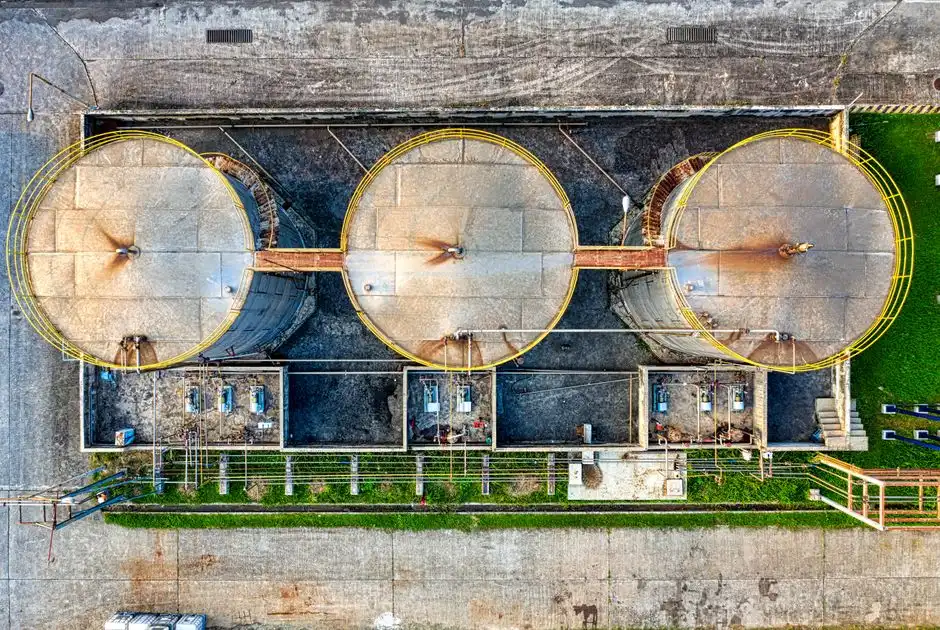
Neither biological treatment nor membrane separation is a substitute for dissolved-metals treatment. Particulate-bound metals can report to sludge when floc is captured. Dissolved metals must first be converted into removable solids through precipitation or another approved process. MBR prevents solids carryover at the membrane barrier, but it does not remove dissolved metals that remain in the permeate.
CAS is particularly vulnerable when sludge bulking or another settleability problem develops. Metal-bearing biological floc can pass through a clarifier even while the aeration basin remains operational. HydropureWater's 2026 field data report that CAS systems lost 30–60% of removal efficiency during a 24–72-hour window after a metal pulse; this is a field observation, not a universal performance claim, but it shows why clarification performance must be tested under actual disturbance conditions.
HydropureWater's 2026 field data identify the following as demanding screening flags, not universal design thresholds:
| Influent characteristic | Screening observation | Engineering consequence |
|---|---|---|
| BOD/COD ratio | Below 0.3 | Limited biodegradable carbon may prevent municipal biological-loading assumptions from applying. |
| Sulfate | Above 1,000 mg/L | Requires chemistry assessment and may affect biological operation or fouling. |
| Hardness | In the thousands of mg/L as CaCO3 | Affects precipitation chemistry, sludge, and fouling validation. |
| TDS | Above 5,000 mg/L | May inhibit nitrifiers and increase osmotic or membrane effects. |
Cyanidation-circuit inputs can introduce cyanide, ammonia, and thiosulfate, producing oxygen-demand swings. Equalization should be sized from measured diurnal flow and load data; it reduces hydraulic and load shocks but does not remove dissolved metals.
Obtain a heavy-metals removal methods comparison, then verify the selected chemistry by jar testing. If controlled reagent feed is required, evaluate an automatic chemical dosing system within the equipment-specific operating envelope.
How Trapper Creek permit conditions shape the treatment train
The current state NPDES permit and the intended discharge or reuse route define the treatment duty before any technology is selected. First confirm whether the facility discharges to surface water, a publicly owned treatment works, an injection well, or a reuse system. Each destination creates different effluent and reporting obligations.
Review the current permit for selenium, sulfate, metals, flow, monitoring, and site-specific limitations. Federal ore-mining and dressing provisions under 40 CFR Part 440 address arsenic, lead, zinc, copper, nickel, and cadmium, but that framework does not replace the current state permit. Neither MBR solids retention nor CAS treatment should be represented as universal metals compliance.
A defensible process sequence is:
- Equalization and source-control pretreatment.
- Dedicated metals precipitation where required by the influent and permit.
- Biological treatment for biodegradable organics.
- CAS clarification or MBR separation for biological solids.
- Application-specific polishing.
- Sludge treatment, dewatering, and disposal.
Do not add UV or reverse osmosis merely because MBR is being considered. Those barriers belong in the scope only when the permit or reuse application requires them. MBR permeate may support some reuse routes, but it is not automatically suitable for boiler feed, cooling water, process water, or zero-liquid-discharge service without further treatment and validation.
The local permit and destination should be resolved before technical screening. A regional mining-plant sewer-limits review provides useful context, but the Trapper Creek facility's current permit and actual receiving pathway remain controlling documents.
When MBR earns its footprint and operating premium
MBR earns a premium when the project needs reliable solids separation, a constrained footprint, or water reuse with quantified value. HydropureWater and the Lamella-clarifier engineering reference, both dated 2026, state that MBR can reduce concrete and civil footprint by approximately 60% relative to conventional activated sludge. That comparison concerns the treatment structure, not the complete site installation.
MBR still needs membrane cassettes, fine screens, permeate pumps, PLC upgrades, air-scour energy, chemical cleaning, membrane replacement, and sludge handling. A smaller aeration and clarification footprint can therefore coexist with a more complex operating plan.
HydropureWater's 2026 guidance identifies make-up water above about $2/m³ or costed brine disposal as a screening condition for an approximately 4–6-year payback. This is not a guaranteed Trapper Creek result. The same guidance identifies electricity below about $0.07/kWh as favorable for CAS, making the local utility tariff a required lifecycle input.
| Screening factor | Evidence supplied | Site input required |
|---|---|---|
| Civil footprint | Approximately 60% reduction, HydropureWater and Lamella-clarifier engineering reference, 2026 | Available area, foundations, access, roads, and constructability |
| Make-up water | Above about $2/m³ associated with an approximately 4–6-year payback screening condition, HydropureWater, 2026 | Actual purchase price, volume, and reuse fraction |
| Brine disposal | Costed disposal can support the same screening condition, HydropureWater, 2026 | Residual volume and disposal or treatment cost |
| Electricity | Below about $0.07/kWh favorable for CAS, HydropureWater, 2026 | Utility tariff and expected operating profile |
| Reuse quality | MBR permeate may support some reuse routes but does not establish application suitability, HydropureWater, 2026 | End-use quality specification and required polishing |
Reuse is an economic benefit only when the destination, quality, volume, and avoided cost are documented. A generic statement that MBR effluent is “reusable” is not enough for procurement. Use the MBR cost per m³ guide to identify the inputs a site-specific model must contain.
How pretreatment protects membrane performance
Fine screening, controlled chemistry, and equalization are the primary defenses against membrane damage and accelerated fouling. HydropureWater's 2026 specification states that MBR systems require 1–3 mm fine screening, with cited cutoffs of 1–2 mm for hollow-fiber modules and 2–3 mm for flat-plate modules.
Size equalization from measured flow, load, pH, and chemistry variation. Hydraulic and load equalization can moderate short-term biological upsets, but it does not substitute for dissolved-metals treatment. For oil, grease, floatables, turbidity, or debris, fine screening, a rotary mechanical bar screen, or DAF may be needed ahead of equalization and membrane separation.
Use controlled automatic pH adjustment and chemical feed within the equipment-specific operating envelope. HydropureWater's comparison gives approximate pH ranges of 8.5–9.5 for a CAS precipitation stage and 6.5–7.5 ahead of MBR membranes, while stating that final targets require process design, jar testing, and permit review. Those are not universal operating instructions.
| Control | Scope | Acceptance evidence |
|---|---|---|
| Fine screening | Module-specific opening, bypass arrangement, and integrity monitoring | Screen specification and verified full-flow performance |
| Equalization | Validated volume from actual diurnal flow and load data | Hydraulic and load-damping record |
| Oil, grease, and floatables removal | Rotary screen or DAF when influent characteristics justify it | Turbidity, oil, and floatables measurements |
| pH and reagent dosing | Automatic control linked to precipitation and membrane operating limits | Jar-test and pilot dosing records |
| Cleaning | Sodium hypochlorite and citric acid cited by HydropureWater, 2026 | Consumption, recovery, frequency, and membrane-condition assessment |
| Membrane performance | Flux and transmembrane-pressure tracking | Normalized-flux trend and recovered performance |
Routine cleaning must be modeled with reagent delivery, recovery, membrane-condition assessment, and eventual replacement. Equipment options can be reviewed through the rotary mechanical bar screen, DAF machine, and automatic chemical dosing system, but the final train should follow actual wastewater characterization.
What lifecycle model should compare both options fairly?
A fair comparison requires equal flow, effluent basis, civil scope, pretreatment, sludge handling, power price, cleaning assumptions, and membrane-replacement basis. For a 1,000 m³/day example, HydropureWater's 2026 field data and the Lamella-clarifier engineering reference place MBR capital cost at 20–40% above equivalent-flow CAS and operating cost at 15–30% higher per m³. These are screening estimates, not a Trapper Creek quotation.
| Cost or performance item | CAS scope | MBR scope | Required comparison basis |
|---|---|---|---|
| Biological treatment | Aeration basin | Aeration reactor | Same flow, load, and effluent basis |
| Solids separation | Secondary clarification | Membrane separation and permeate equipment | Same required solids-removal duty |
| Pretreatment | Included where required | Fine screens, chemistry control, and equalization | Same actual influent and source controls |
| Power | Aeration and auxiliary equipment | Aeration, air scour, and permeate equipment | Same local tariff and operating profile |
| Cleaning | No membrane cleaning | Reagents, recovery, labor, and membrane condition | Supplier-supported cleaning interval and consumption |
| Replacement | Clarifier and equipment renewal | Membrane replacement plus other equipment renewal | Documented replacement basis |
| Sludge | WAS handling and dewatering | MBR waste-sludge handling and dewatering | Same disposal route and measured sludge properties |
| Residuals and reuse | Clarifier sludge and treated-water destination | Cleaning chemicals, membrane residues, and treated-water destination | Same residuals and destination value |
HydropureWater states that MBR waste sludge can have lower settleability and more colloidal particles than CAS waste activated sludge. Evaluate the plate-and-frame sludge filter press against measured sludge properties rather than selecting it from a generic MBR specification.
Use the MBR cost per m³ guide to frame the comparison, then request a quotation with the same scope, exclusions, duty profile, and replacement assumptions. A lower footprint does not establish lifecycle savings by itself.
How to validate the choice with a site pilot
Pilot testing converts generic performance claims into site evidence. HydropureWater's 2026 guidance recommends a 60–90 day cassette pilot using actual wastewater when metal pulses, low BOD/COD, sulfate, hardness, or high TDS could undermine biological performance, settleability, membrane flux, or dewatering.
Before the pilot, define acceptance criteria from the current permit, actual influent matrix, destination, reuse profile, and existing civil condition. Record representative diurnal flow and load conditions, including metal disturbances.
- Establish baseline dissolved and particulate metals, organics, sulfate, hardness, TDS, pH, turbidity, oil, and settleability.
- Operate the selected MBR or CAS configuration on actual wastewater.
- Track the variables specific to each train.
- Measure sludge conditioning and dewatering.
- Update the lifecycle model using measured consumption, cleaning, power, and residual quantities.
| Technology | Pilot measurements | Decision supported |
|---|---|---|
| MBR | Solids separation, dissolved and particulate metals removal, transmembrane pressure, normalized flux, chemical demand, cleaning frequency, recovered performance, and diurnal-load effects | Whether membrane separation remains stable enough to justify its footprint, energy, and replacement burden |
| CAS | Biological stability, mixed-liquor settleability, clarifier performance, and particulate-metal passage during representative pulses | Whether the existing train can reliably protect the discharge or reuse objective |
| Both | Sludge solids, settleability, conditioning demand, filtrate quality, cake handling, and disposal route | Which sludge-dewatering approach is technically supportable |
Close the pilot with an updated lifecycle model and written equipment scope. The integrated MBR membrane bioreactor system and DF-series flat-sheet MBR modules should be selected only after those results are available.
Which treatment option should the buyer select?
The recommended pathway is conditional: permit and destination first, chemistry and upset conditions second, treatment objective third, pilot performance fourth, and lifecycle economics last. MBR is the screening front-runner when reliable solids separation, a constrained site, or meaningful reuse value exists and the budget supports pretreatment, power, cleaning, and membrane replacement.
Retain or upgrade CAS when flows are dilute and large, power is inexpensive, reuse value is low, the aeration basin and clarifier have useful remaining life, and clarifier settleability is demonstrated with actual wastewater. Consider a hybrid when dedicated metals treatment, equalization, biological treatment, and high-quality solids separation can be staged without asking one technology to perform every duty.
| Condition supported by project inputs | Screening recommendation | Next decision |
|---|---|---|
| Reliable solids separation, constrained footprint, or meaningful reuse value | MBR | Validate pretreatment, flux, cleaning, sludge handling, and lifecycle cost |
| Large dilute flow, inexpensive power, low reuse value, and serviceable existing assets | Retain or upgrade CAS | Confirm settleability, particulate-metal passage, and remaining asset life |
| Distinct metals-removal, biological, and solids-separation duties | Hybrid | Define treatment boundaries and polishing requirements |
| Permit, chemistry, destination, or pilot data remain unresolved | No final selection | Complete the verification sequence before procurement |
Do not issue a procurement recommendation from generic performance ranges. Require a current NPDES permit review, actual influent testing, pilot evidence, and a lifecycle quotation. The regional MBR versus activated-sludge mining guide offers another comparison framework, but the Trapper Creek decision remains controlled by local permit conditions and plant data.
Frequently Asked Questions
What will MBR cost compared with conventional activated sludge?
For the supplied 1,000 m³/day screening comparison, HydropureWater's 2026 field data and the Lamella-clarifier engineering reference estimate MBR capital cost at 20–40% above equivalent-flow CAS and operating cost at 15–30% higher per m³. This is not a site quotation. Request a Trapper Creek model with equal flow, effluent duty, civil works, pretreatment, sludge handling, electricity, cleaning, and membrane replacement included.
How should an MBR or activated-sludge system be sized?
Size from required flow, actual influent matrix, pretreatment, permit duty, and reuse profile—not peak nominal flow alone. HydropureWater's 2026 product material states that the integrated system is intended for 10–2,000 m³/day, while the DF-series module is a 0.1 μm PVDF flat-sheet configuration available from 80–225 m² and producing 32–135 m³/day. Those catalog values must be checked against train configuration, redundancy, and actual wastewater suitability in writing.
How should a supplier be selected for mining or metals wastewater?
Require evidence from actual wastewater, not only membrane specifications. Ask for pilot results covering metals separation, normalized flux, transmembrane-pressure trends, cleaning recovery, chemical demand, biological stability, and sludge dewatering. Also request the lifecycle replacement basis, control philosophy, pretreatment boundary, supported cleaning chemicals, and a quotation with stated exclusions.
Does MBR solids retention guarantee compliance with metals limits?
No. MBR physically retains solids but does not remove every dissolved metal. Federal ore-mining and dressing provisions under 40 CFR Part 440 address arsenic, lead, zinc, copper, nickel, and cadmium, and both MBR and CAS generally need dedicated metals removal. Review the current state NPDES permit and demonstrate performance with actual dissolved and particulate metals under site conditions.
Should Trapper Creek choose MBR, CAS, or a hybrid?
Choose MBR when reliable separation, footprint constraint, or valued reuse justifies the additional lifecycle burden. Retain or upgrade CAS when flows are dilute and large, power is inexpensive, reuse value is low, and existing basins and clarifiers remain serviceable. Consider a hybrid where dedicated metals treatment, equalization, biology, and high-quality solids separation are distinct process duties. Make the final selection only after permit review, actual wastewater testing, pilot validation, and a lifecycle comparison.