Which Rules Control a Mine’s Sewer Discharge?
Mining and metals plants near Emery County meet pretreatment limits by controlling wastewater at the source, treating it to applicable permit and sewer-authority requirements, and documenting results through monitoring. Federal rules add context: EPA’s 40 CFR Part 436 covers mine drainage, mineral processing and stormwater runoff, while all mining point-source discharges require NPDES authorization. Sewer discharges are also governed by the receiving POTW’s industrial-user rules. A practical treatment train may combine source control, pH adjustment, precipitation or flotation, clarification, filtration and final disinfection, selected only after flow and pollutant testing.
A mine can face two distinct regulatory pathways. The first is NPDES permitting for mining point-source discharges. The second is the receiving publicly owned treatment works’ industrial user pretreatment program for wastewater sent to its collection system. A mining NPDES permit does not authorize untreated sewer discharge, and sewer acceptance does not replace applicable NPDES obligations.
EPA states that Clean Water Act requirements cover all point-source mining discharges, including discharges from associated impoundments. Its mineral mining and processing effluent guidelines under 40 CFR Part 436 cover mine drainage, mineral processing operations and stormwater runoff; EPA incorporates those requirements into NPDES permits. Mining wastewater can arise from crushing, milling, washing and chemical treatment, as well as drainage and runoff. The regulation dates from 1975 with subsequent amendments, so permit conditions and current agency requirements must be checked rather than assumed from the regulation’s age.
For any sewer discharge, obtain the receiving authority’s current pretreatment rules and industrial-user permit. Those documents establish local discharge limits, prohibited discharges, monitoring frequency, sampling locations, reporting forms and enforcement terms. Federal mining guidelines are not a substitute for those requirements.
Emery County has a separate state oversight layer. ETV News reported on November 3 that Utah’s Division of Oil, Gas and Mining reviews mining water-monitoring data every three months. The same report stated that miners must collect groundwater data before mining begins and monitor water conditions during operations. These mining oversight records may inform background conditions, but they do not establish acceptance criteria for a sewer discharge.
| Requirement layer | What it governs | Decision needed before treatment design |
|---|---|---|
| NPDES authorization | Point-source mining discharges, including discharges from associated impoundments | Confirm permit coverage, discharge points, monitoring and applicable limitations |
| 40 CFR Part 436 | Mine drainage, mineral processing and stormwater runoff requirements incorporated into NPDES permits | Identify the applicable mining category and permit conditions |
| POTW pretreatment program | Industrial-user discharges entering the municipal collection system | Obtain current local limits, prohibited discharges, monitoring and enforcement terms |
| State mining oversight | Permitting and groundwater monitoring in Emery County | Coordinate with the Division of Oil, Gas and Mining; do not treat state records as sewer authorization |
Build a Mine-Wastewater Characterization Plan
Equipment selection should begin with representative wastewater data, not with a generic mine-water treatment diagram. Build a sampling plan that covers normal operations, peak production, storm periods and documented upset conditions. A single grab sample cannot establish flow variability, contaminant concentrations or the operating envelope needed to size equalization, chemical feed, solids-removal equipment and polishing systems.
Ask the sewer authority for its current prohibited-discharge list, local discharge limits, monitoring frequency, compliance-monitoring locations, reporting forms and enforcement provisions. Review the actual industrial-user permit as well as the general rules. For an internal treatment train, also identify which streams are covered by the permit and whether segregation, equalization or remote monitoring is required.
The initial analytical screen should generally address pH, suspended solids, oil and grease, metals, acidity or alkalinity, sulfate and nutrients, while the permit determines the required suite and methods. Use flow records to identify hydraulic peaks and evaluate potential dilution opportunities, but do not assume dilution makes a discharge permissible. If the receiving POTW limits total or constituent flow, the permit controls.
Separate clean stormwater from process water, mine drainage and contaminated washdown. Each stream has a different control and treatment objective. Uncontaminated stormwater may need segregation rather than chemical treatment; process water may need equalization; drainage and washdown may require metals and acidity control. The water-treatment parts, valves and filter-media plan should follow that stream-by-stream classification so the right components are installed.
Mine-drainage chemistry can vary sharply enough to invalidate a single set of design assumptions. In the OSMRE study, raw mine-drainage samples used in research had pH values from 3.13 to 4.58. Those results establish why source-by-source characterization is necessary, but they do not represent every Emery County discharge. Use them as evidence of chemical variability, not as site design parameters.
Choose the Treatment Train by Wastewater Function
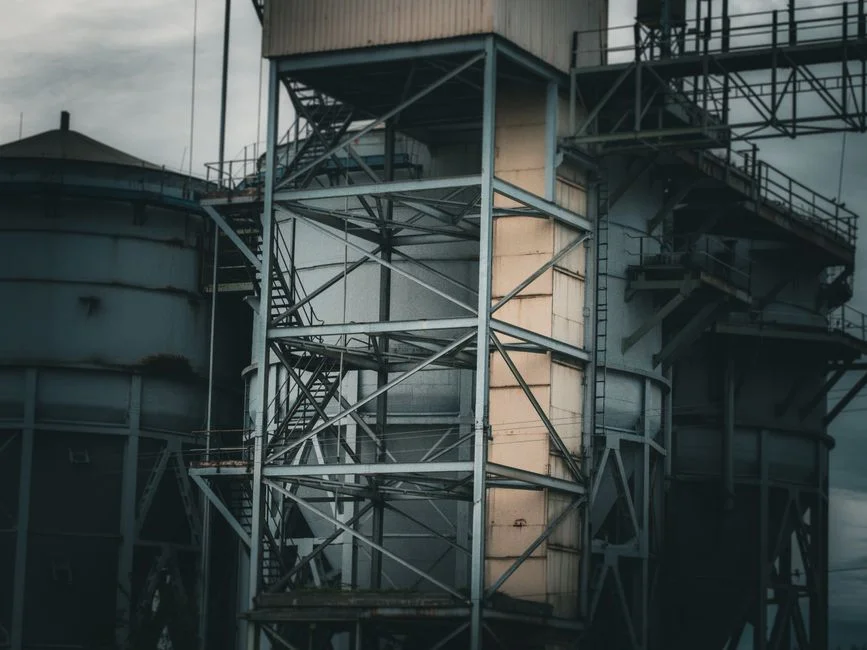
The correct treatment train is determined by the pollutant and physical separation each step must deliver. Source control comes first: segregate uncontaminated stormwater, contain spills, prevent excessive solids from entering the collection system and recover reusable process water where practical. This reduces the mass and hydraulic load that downstream equipment must handle.
When discharge limits are driven by dissolved metals or acidity, use pH adjustment and chemical precipitation as the principal removal mechanism. An automatic chemical dosing system for pH and metal precipitation should be selected around measured influent chemistry, required reagent dose, flow variability, storage constraints, controls and fail-safe response—not around a nominal treatment capacity.
Match physical separation to the dominant contaminant. A DAF system for mining wastewater pretreatment is appropriate when suspended solids, oil and grease or floatable material are primary concerns. Clarification is generally more aligned with settleable solids and metal precipitates. The DAF versus clarifier for mining wastewater comparison should be resolved with pilot testing against the actual wastewater and selected solids-handling route.
| Wastewater function | Treatment approach | Selection boundary |
|---|---|---|
| Reduce the incoming load | Segregation, spill control, solids prevention and process-water recovery | Evaluate before sizing downstream treatment |
| Control acidity and dissolved metals | pH adjustment followed by chemical precipitation | Reagent demand and metal content must come from representative testing |
| Remove floatable material, oil and grease or suspended solids | Dissolved air flotation | Confirm required separation and residuals handling |
| Remove settleable solids and precipitated metals | Clarification | Verify settleability and solids-removal performance |
| Remove residual turbidity, suspended solids or colloids | Integrated purification or filtration train | Use only where final permit limits require further separation |
| Remove submicron solids | Ultrafiltration | UF does not itself remove dissolved metals or correct pH |
| Control pathogens | Disinfection | Apply only when required by the sewer permit or public-health risk assessment |
Use integrated purification or filtration when residual turbidity, suspended solids or colloids must be removed before sewer discharge. Ultrafiltration may provide the required final physical separation, including submicron solids removal, but it does not remove dissolved metals or correct pH. Disinfection is not a substitute for metals, solids or pH control and should be included only where the sewer permit or public-health assessment requires it.
Include sludge and solids handling in the equipment decision. Precipitated metals, clarifier solids and flotation residuals create separate handling, storage and disposal obligations. Their presence can change the selected dewatering method, the facility footprint and the operating cost even when the liquid process performs well.
The process flow is: characterize streams; equalize flow where required; segregate and pretreat; adjust chemistry; remove solids or metals; polish if required; disinfect if required; then sample and discharge under permit controls. This sequence is more defensible than assembling a collection of treatment devices without defined performance duties.
When Municipal Co-Treatment May Be Viable
Municipal co-treatment is a site-specific option that requires acceptance by the POTW and review by the relevant regulators; research results do not constitute authorization to discharge. The question is whether the municipal process can accept the acidity, metals, sulfate and flow of the proposed mine drainage without impairing treatment, sludge handling or permit compliance.
The OSMRE final report, issued June 30, 2023, was research supported by the U.S. Department of the Interior’s Office of Surface Mining Reclamation and Enforcement. It examined batch mixing and continuous sequencing-batch-reactor testing rather than establishing a universally suitable full-scale design.
In batch testing, mixtures containing 10% mine drainage retained pH 7.44–8.27 after two hours, while 40% mixtures retained pH 6.66–7.36. Phosphate removal reached 99% when the iron-plus-aluminum-to-phosphate molar ratio was greater than 2. Continuous sequencing-batch-reactor testing produced more than 90% phosphate removal. These results show treatment potential under the tested conditions, not guaranteed performance for an Emery County mixture.
| Co-treatment observation | Result reported by OSMRE | Decision implication |
|---|---|---|
| Batch pH after two hours | 7.44–8.27 at 10% mine drainage; 6.66–7.36 at 40% | Mixture proportions and source chemistry must be evaluated together |
| Batch phosphate removal | 99% when the iron-plus-aluminum-to-phosphate molar ratio was greater than 2 | Test the relevant metal and phosphate balance |
| Continuous sequencing-batch-reactor performance | More than 90% phosphate removal | Batch results do not replace continuous testing |
| Pathogen inactivation | 1.5-log without added disinfectant chemical | Jurisdiction-specific disinfection requirements still control |
| Adverse or changed process effects | Increased effluent iron loading, approximately 0.5 pH-unit decrease and sludge approximately 25% less volatile | Evaluate effluent, biological process and sludge consequences |
The potential benefits also came with observed effects: increased effluent iron loading, an approximately 0.5 pH-unit decrease and sludge that was approximately 25% less volatile. Co-treatment produced 1.5-log pathogen inactivation without added disinfectant, but that observation does not replace jurisdiction-specific disinfection requirements or establish acceptance by a particular POTW.
The report’s implementation caution is decisive: further experimentation with coal mine drainage was needed before system design, and full-scale co-treatment was most feasible at lower acidity loadings. A mine should therefore obtain written sewer-authority acceptance, complete representative testing and address solids handling before treating co-treatment as a procurement basis.
Turn the Treatment Plan into a Compliance Workflow
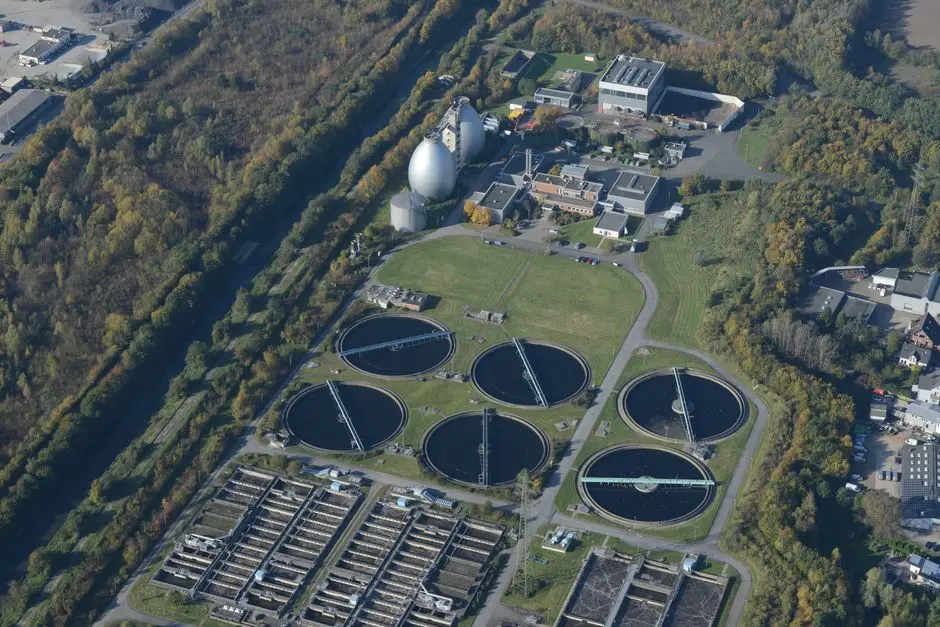
A defensible compliance workflow converts the permit and characterization data into documented operating controls before equipment is ordered. Complete a formal wastewater characterization and obtain written confirmation of applicable sewer requirements. Confirm whether prior mining or discharge approvals affect the proposed route, but keep the NPDES and POTW requirements in separate compliance files.
Establish operating envelopes for flow, pH, metals, suspended solids and every other permit parameter. Define when operators must adjust reagent feed, divert flow, reduce production or stop discharge. Alarms and automatic interlocks are appropriate where they protect the treatment process or prevent an unauthorized discharge, but their logic should be tied to documented permit and operating limits.
Pilot-test the proposed chemistry with representative mine water before full-scale deployment. Evaluate both liquid treatment and the resulting solids. Where DAF or clarification is proposed, confirm the required separation with mining and metals pretreatment compliance guidance adapted to the site’s actual permit and wastewater.
Calibrate online pH and other instruments, then verify final effluent using the analytical methods, sample locations and monitoring schedule required by the permit. Maintain operating records for chemical use, flow, pH, solids, metals, bypasses, alarms and corrective actions. These records should make the treatment narrative traceable from influent condition to control action and final result.
Retain contingency capacity and define response steps for an upset, power failure or chemical-delivery interruption. Solids-handling equipment must fit the selected flow path: a high-efficiency sedimentation tank for solids separation or a plate-and-frame filter press for dewatering is justified only after the waste characteristics and handling destination are defined.
- Characterize each wastewater stream under representative conditions.
- Obtain current sewer requirements and written discharge acceptance conditions.
- Pilot the proposed treatment train and verify solids handling.
- Install integrated controls, monitoring and recording systems.
- Accept performance against permit-based criteria, then operate under a documented response plan.
Select Equipment and a Supplier for Delivering It
Equipment bids should be evaluated on documented performance against representative influent and the applicable sewer permit. Headline capacity does not demonstrate compliance. Require bidders to define the performance basis, operating conditions, treatment objective for each unit and treatment step that will be verified during acceptance testing.
Ask each bidder to state design flow, operating flow, chemical consumption, sludge yield, utilities demand, controls scope, installation requirements and start-up responsibilities. Chemical consumption and sludge yield must be tied to pilot or characterization evidence; otherwise they are assumptions. Also identify whether redundant pumps, mixers, blowers, instruments or dosing pumps are included and how failure affects permit compliance.
Compare total installed cost rather than purchase price alone. The comparison should include foundations, utilities, containment, chemical storage, sludge removal, controls, maintenance, operator training and life-cycle support. Ask what operating labor, consumables and disposal costs the proposed process creates after commissioning.
| Procurement item | Information required from bidder | Acceptance focus |
|---|---|---|
| Performance basis | Guaranteed effluent results tied to representative wastewater and sewer limits | Objective permit-based criteria |
| Process design | Design flow, operating flow, chemical use, sludge yield and utilities demand | Consistency with characterization and pilot results |
| Equipment scope | Treatment units, tanks, pumps, controls, instruments, containment and sludge handling | No omitted interfaces or accessories |
| Integration | Controls philosophy, alarms, interlocks, utility connections and installation requirements | Compatibility with plant operations |
| Commercial scope | Commissioning, start-up, training, acceptance testing, documentation and spares | Named contractual deliverables |
| Support | Service response, parts availability and ongoing technical support | Lifecycle support after handover |
Verify that the proposed duty cycle and redundancy match peak and upset conditions. For a filtration or polishing stage, request an integrated water-purification proposal tied to the required final water quality. Where the final separation calls for submicron solids removal, request an ultrafiltration system proposal with membrane, controls and maintenance requirements defined.
Make acceptance testing, documentation, operator training, spare-parts availability and service support explicit contract terms. For detailed control design, an automated chemical dosing system engineering guide can help define the questions bidders must answer about reagent control and fail-safe operation.
Frequently Asked Questions
What does a mining NPDES permit allow a plant to discharge into a municipal sewer?
It does not replace local industrial-user requirements. EPA states that mining point-source discharges require NPDES authorization, while a discharge into a POTW collection system is also governed by the authority’s pretreatment rules and industrial-user permit. Obtain both sets of requirements and keep them separate in the compliance plan.
How should treatment capacity be sized for a mine or metals facility near Emery County?
Size from representative flow and wastewater-quality data under normal, peak, storm and upset conditions. Regional mine production is not a defensible basis for equipment capacity. The characterization must also establish pH, metals, suspended solids, oil and grease, acidity or alkalinity, sulfate, nutrients and the flow variability that the equalization and treatment systems must handle.
How can a buyer compare treatment suppliers?
Compare guaranteed permit performance, pilot evidence, controls integration, solids handling, duty-cycle suitability and lifecycle support. A bidder should identify design flow, operating flow, chemical consumption, sludge yield, utilities demand, installation and start-up responsibilities. Acceptance testing, documentation, training, spares and service support should be contractual deliverables rather than assumptions.
Can acid mine drainage be sent to a municipal treatment plant instead of being treated on site?
Only after site-specific review, pilot work and written sewer-authority acceptance. The OSMRE report issued June 30, 2023 showed potential benefits in batch and continuous testing, but it also documented increased effluent iron loading, lower pH and changed sludge characteristics. It concluded that further coal-mine-drainage experimentation was needed before system design and that lower acidity loadings were more favorable for full-scale co-treatment.
How should a mine compare the cost of onsite treatment with municipal co-treatment?
Request a site-specific cost comparison based on representative influent, permitted discharge limits and the sewer authority’s written co-treatment conditions. The comparison should include onsite capital and operating costs, chemical use, solids handling, disposal and monitoring, plus any sewer charges or upgrade obligations imposed by the POTW. Do not use the OSMRE research as a procurement price estimate; the supplied research does not provide a comparable mine-site cost or quotation.