
Why the Bonne Terre envelope rewrites the MBR vs CAS question
Bonne Terre sits inside the Southeast Missouri Lead Mining District (the "New Lead Belt"), and the flowsheets that run through that district are not generic concentrator feeds — they are lead-copper-zinc with residual flotation reagents (potassium ethyl xanthate, dithiophosphate collectors, alcohol frothers) carried straight into the biological step. Local influent TDS for sites already recycling process water and drawing brackish groundwater makeup falls inside a 0.5–5% (5,000–50,000 mg/L) envelope that is the design floor any upgrade has to survive (HydropureWater mining MBR field reference, 2026). Discharge routes to the Big River watershed and Old Mines Creek tributaries, which pulls 40 CFR 440 ore mining and dressing limits (40 CFR 440, revised 2025-08) and the Missouri Clean Water Commission effluent standards into the same compliance frame as the biology. On a brownfield Bonne Terre site the binding constraint is almost never cubic metres per day of treatable flow — it is the square metres of civil footprint a 1990s or early-2000s CAS plant leaves behind, with bund walls, cable trenches, and chemical dosing skids that block a second clarifier or a larger aeration tank. The comparison below is built for three local site archetypes: (a) an active lead-copper concentrator with recycle-heavy flows, (b) a legacy tailings reclaim/circumneutral treatment circuit, and (c) a brownfield with a closed clarifier volume already paid for and a 12–24 month decision window. The same pre-treatment logic — a DAF vs clarifier for mining wastewater decision upstream — applies to all three, but the downstream biology decision splits sharply on the four axes below.
The two technologies, stripped to four decision axes
For a Bonne Terre engineer the MBR vs CAS call collapses onto four axes that the rest of the article keeps coming back to. Axis 1 — footprint. MBR runs 8,000–12,000 mg/L MLSS versus 2,000–4,000 mg/L for CAS, and that ratio is the single largest physical difference between the two options. Higher MLSS means a smaller aeration basin for the same F/M ratio and a fully eliminated secondary clarifier, so on a 1,000 m³/day train the integrated MBR occupies roughly 60% of the equivalent CAS footprint, with the savings coming from absent clarifiers and reduced aeration basin volume (HydropureWater mining MBR field reference, 2026). Axis 2 — biology. MBR sustains 30+ day SRT, which retains the slower-growing degraders that break down xanthate and DTP; CAS held at 5–10 day SRT to keep settleability workable washes those organisms out, leaving 2–4 day half-life residuals in the effluent (HydropureWater mining MBR field reference, 2026). Axis 3 — energy and OPEX. Aeration accounts for 36–68% of MBR OPEX, dominated by coarse-bubble scour across flat-sheet modules, which is 10–20× lower than external cross-flow membrane aeration (Global NEST pilot, 2022-05, DOI 10.30955/gnj.004278). Axis 4 — effluent quality. MBR permeate is <1 mg/L TSS from an absolute physical barrier; a well-run secondary clarifier with polymer aid still discharges 5–15 mg/L TSS, and 10–30 mg/L under normal conditions when polymer is not perfectly tuned (lamella-clarifier reference, 2025-11). The unit operations are simple to draw: CAS is an aeration tank, a secondary clarifier, and a sludge return line; MBR is an aeration tank plus submerged PVDF UF membrane modules — see a deeper walkthrough of how a membrane bioreactor actually works on industrial duty. Membrane replacement at 7–12 years is a planning input, not a first-year OPEX line, and that horizon matters more for the sinking-fund reserve than for the operating budget.
Bonne Terre influent envelope and the biology that has to survive it
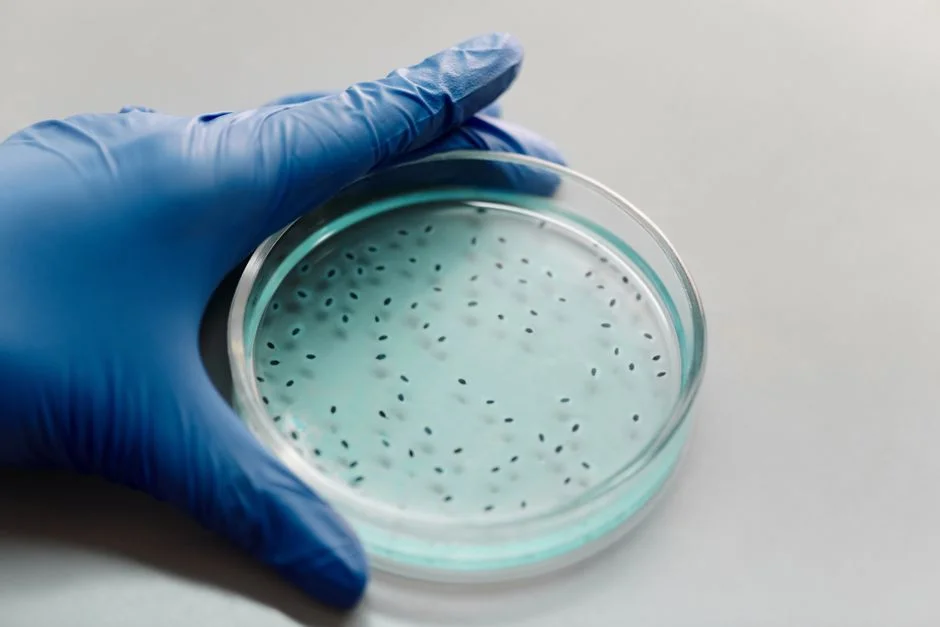
The numbers below are the design envelope a Bonne Terre engineer should be reading their weekly data against before signing a pilot scope. A typical Bonne Terre feed to the biological step carries TDS 5,000–50,000 mg/L on recycle-heavy sites, TSS 500–5,000 mg/L pre-DAF, residual KEX 5–20 mg/L, DTP 1–10 mg/L, dissolved Pb/Zn/Cu/Cd at site-specific mg/L levels, and pH 6.5–7.5 after upstream neutralization (HydropureWater mining MBR field reference, 2026). A DAF unit upstream removes 60–80% of influent oil and 30–50% of TSS, which extends MBR cleaning intervals from weekly to monthly and cuts CIP chemical consumption 50–70%. Flat-sheet PVDF MBR is the default module for 500–5,000 mg/L TSS feeds because the abrasive solids load chokes hollow-fiber UF unless the feed is pre-filtered under 100 mg/L TSS. On the metals side, MBR total heavy-metal removal sits at 70–95% for Pb/Zn/Cu/Cd, with biosorption on the membrane cake layer contributing 30–60% of the total and bioaccumulation inside cells taking the rest, at pH 6.5–7.5. CAS delivers only 30–60% heavy-metal removal via biosorption onto wasted activated sludge, and dissolved xanthate, DTP, and frothers pass through largely untouched. Upstream chemical precipitation on a CAS train can hit the metals target but generates 3–8 kg of dry hazardous solids per m³ treated and does not remove dissolved reagent load at all.
| Parameter | Typical Bonne Terre feed to biology | Source / design implication |
|---|---|---|
| TDS | 5,000–50,000 mg/L (recycle-heavy sites) | Sets aeration and RO feed strength envelope (HydropureWater, 2026) |
| TSS pre-DAF | 500–5,000 mg/L | Forces flat-sheet MBR, not hollow-fiber (HydropureWater, 2026) |
| Residual KEX (xanthate) | 5–20 mg/L | Needs 30+ day SRT to break down (HydropureWater, 2026) |
| Residual DTP | 1–10 mg/L | Same SRT argument as KEX (HydropureWater, 2026) |
| pH after neutralization | 6.5–7.5 | Optimum for biosorption band (HydropureWater, 2026) |
| DAF oil removal | 60–80% | Cuts MBR CIP chemical use 50–70% (HydropureWater, 2026) |
| DAF TSS removal | 30–50% | Extends CIP interval weekly → monthly (HydropureWater, 2026) |
MBR vs CAS at the same 1,000 m³/day Bonne Terre flow — head-to-head
The table below is the one to put in front of plant management, because it lines up the four axes on the same rows at a single flow rate. MLSS for the MBR sits at 8,000–12,000 mg/L versus 2,000–4,000 mg/L for CAS, which collapses the aeration basin and eliminates the clarifier. SRT of 30+ days for MBR versus 5–10 days for CAS is the single biggest driver of reagent and metals removal. MBR permeate is <1 mg/L TSS — an absolute barrier — while CAS clarifier effluent runs 5–15 mg/L with polymer, and needs a tertiary media filter before any RO to keep SDI inside membrane protection limits. Xanthate and DTP removal is 85–95% on MBR versus 2–4 day half-life residuals on CAS because the slower-growing degraders wash out of a short-SRT clarifier. Total nitrogen with supplemental carbon (methanol or waste-process glycerol) can exceed 75% on either train, but the MBR holds the long SRT without paying for clarifier stability. Pb/Zn/Cu/Cd removal is 70–95% on MBR versus 30–60% on CAS without precipitation, climbing toward 95% with chemical precipitation at the cost of 3–8 kg dry solids per m³. Membrane area for a 1,000 m³/day MBR is 1,800–3,200 m² of DF series cassettes at 15–25 L/m²·h flux. Aeration is 36–68% of MBR OPEX (Global NEST 2022) but flat-sheet scour is 10–20× lower than cross-flow, which keeps MBR kWh/m³ within 10–20% of CAS when the right module is specified. Membrane replacement is a 7–12 year horizon — the same window the CAS side spends on rake refurbishment, polymer, and media filter media. A packaged integrated MBR for 500–10,000 m³/day flotation tail water is the default skid that delivers those numbers on a brownfield Bonne Terre site.
| Process parameter (1,000 m³/day) | CAS | Integrated MBR | Source |
|---|---|---|---|
| MLSS (mg/L) | 2,000–4,000 | 8,000–12,000 | HydropureWater, 2026 |
| SRT (days) | 5–10 | 30+ | HydropureWater, 2026 |
| Effluent TSS (mg/L) | 5–15 (10–30 normal) | <1 | HydropureWater, 2026; lamella-clarifier, 2025-11 |
| Xanthate / DTP removal | Residuals at 2–4 day half-life | 85–95% | HydropureWater, 2026 |
| Total N removal (supplemental C) | Comparable at long SRT, clarifier risk | Up to >75% | HydropureWater, 2026 |
| Pb / Zn / Cu / Cd removal | 30–60% (up to ~95% with precipitation) | 70–95% | HydropureWater, 2026 |
| Membrane area | n/a | 1,800–3,200 m² (DF cassettes) | HydropureWater, 2026 |
| Aeration share of OPEX | Comparable kWh, smaller blower | 36–68% | Global NEST 2022 |
| Replacement / refurb interval | Rake, polymer, media | 7–12 years (membranes) | lamella-clarifier, 2025-11 |
CAPEX and OPEX on a Bonne Terre retrofit, line by line
The 2026 installed CAPEX for a 500–10,000 m³/day mining-grade integrated MBR runs USD 800–2,500 per m³/day of capacity, with the wide range driven by influent variability, seismic class, automation scope, and whether the build is containerized or skid (HydropureWater mining MBR field reference, 2026). A membrane-free CAS CAPEX line is 30–50% lower than the MBR number on its face, and the lamella-clarifier reference puts MBR 20–50% above CAS on initial investment (lamella-clarifier, 2025-11). What that headline number skips are the add-back lines a Bonne Terre brownfield actually pays: clarifier civil refurbishment, a polymer dosing skid, a fine-bubble diffuser retrofit, and a sand or media filter ahead of any RO. Once those are priced in, the headline CAPEX gap closes by roughly half (HydropureWater mining MBR field reference, 2026). Aeration energy is the second-largest cost on either side, and the flat-sheet MBR design keeps kWh/m³ within 10–20% of CAS because coarse-bubble scour is 10–20× lower than external cross-flow (Global NEST 2022). Membrane replacement is a 7–12 year event, and the right way to budget it is as a sinking fund of roughly USD 25–60 per m² of installed membrane area over the asset life (lamella-clarifier, 2025-11). The hidden cost no brochure prices is the operator skill premium: a site without disciplined membrane CIP spends the savings back on unplanned replacements, and that is the single most common reason an MBR retrofit underperforms financially. DF series flat-sheet MBR cassettes at 32–135 m³/day per cassette are the right building block for 500–10,000 m³/day mining duty.
| Line item | CAS retrofit (USD per m³/day, 2026) | Integrated MBR (USD per m³/day, 2026) | Notes |
|---|---|---|---|
| Base biological equipment | Reference | +30 to +50% | lamella-clarifier, 2025-11 |
| Clarifier civil refurb | +150–400 (often required) | 0 (no clarifier) | HydropureWater, 2026 |
| Polymer dosing skid | +20–60 | 0–20 | HydropureWater, 2026 |
| Fine-bubble diffuser retrofit | +30–80 | included | HydropureWater, 2026 |
| Media filter ahead of RO | +80–150 | 0 (permeate already <1 mg/L TSS) | HydropureWater, 2026 |
| Membrane sinking fund (life-cycle) | n/a | USD 25–60 / m² over 7–12 yr | lamella-clarifier, 2025-11 |
| Total installed (typical envelope) | USD 400–1,400 | USD 800–2,500 | HydropureWater, 2026 |
Downstream of biology: the part that actually decides the technology choice
For most Bonne Terre sites the MBR vs CAS decision is really a "what comes after biology" decision, and the answer usually sits in the polishing chain. MBR permeate at 5,000–20,000 mg/L TDS is the correct feed strength for a brackish-water RO running at 70–85% recovery, sending permeate below 500 mg/L TDS to grinding dilution water or heap-leach makeup (HydropureWater mining MBR field reference, 2026). CAS effluent at 5–15 mg/L TSS typically needs a sand or multi-media filter before the RO to keep SDI inside RO membrane protection limits, and that filter partially erodes the CAS footprint advantage (HydropureWater, 2026). For ZLD finishing, RO concentrate at 30,000–60,000 mg/L TDS feeds an evaporator or crystallizer, and that final stage is technology-agnostic between MBR and CAS. Hardness, manganese, and iron carryover from Bonne Terre groundwater makeup is a downstream RO/NF problem on either train, not a biological-step differentiator. The gating constraint is the MDNR operating permit and 40 CFR 440 effluent limits, so pick biology to hit the biological step's effluent target, not to win a process argument in isolation. An industrial BWRO system downstream is the reference kit that turns an MBR permeate into grinding dilution water, and the same logic is documented for RO polishing for metal-bearing reuse streams on similar feeds.
When CAS is still the right call on a Bonne Terre site
An honest 2026 guide has to name the four scenarios where the engineer should walk away from the MBR pitch. Scenario 1: the existing clarifier volume has 20+ years of remaining service life and there is no flow increase — re-rastering the aeration basin to an MBR is hard to justify on CAPEX alone (HydropureWater, 2026). Scenario 2: influent TDS stays under 5,000 mg/L and the plant does not run a closed-loop reuse target — the heavy-metal and reagent removal advantages of MBR are not yet needed. Scenario 3: the operator pool has no membrane CIP training — the 36–68% MBR aeration share is dwarfed by unplanned membrane replacement when CIP discipline is poor (HydropureWater, 2026; MDPI 2022 review of MBRs for produced water). Scenario 4: there is no RO polishing downstream — the <1 mg/L MBR TSS advantage is wasted because the effluent goes to a polishing pond or controlled discharge rather than back into the process. In any of these four, upgrading the existing CAS with a selector zone, fine-bubble diffusers, and a polymer dosing skid delivers more value per dollar than a greenfield MBR, and an upgraded high-efficiency sedimentation tank is the right vessel to put in front of the polishing chain.
Monday-morning screening checklist for a Bonne Terre engineer
Five questions to run against your own influent and OPEX data this week, in order:
- Will the site re-use ≥50% of the treated flow? If no, the MBR TSS advantage is not paying back — lean CAS upgrade.
- Is the existing clarifier volume ≤20 years from end of service life? If yes, the CAPEX case for a packaged MBR skid strengthens.
- Does the influent already carry ≥10 mg/L residual KEX or visible frother breakthrough? If yes, the 30+ day SRT argument for MBR starts to dominate.
- Is the operator pool CIP-capable, or is contract operations on the table? If neither, the MBR aeration share will be overrun by membrane replacement events.
- Is there a downstream RO at design or in the next capex window? If yes, MBR permeate feeds it directly; if no, CAS plus media filter is the more economic chain.
Frequently Asked Questions
What is the realistic 2026 installed CAPEX for an MBR at a Bonne Terre mining site?
USD 800–2,500 per m³/day of capacity for a 500–10,000 m³/day integrated MBR, with the range driven by influent variability, seismic class, automation scope, and containerized versus skid build (HydropureWater mining MBR field reference, 2026). A CAS retrofit is 30–50% lower on the membrane-free line, but clarifier civil refurb, polymer dosing, fine-bubble diffusers, and a media filter ahead of any RO close roughly half the headline gap.
How much xanthate and DTP does a properly sized MBR actually remove?
An MBR at 10,000 mg/L MLSS and 30+ day SRT removes 85–95% of residual xanthate and DTP, dropping potassium ethyl xanthate from 5–20 mg/L in the feed to below 1 mg/L in the permeate (HydropureWater mining MBR field reference, 2026). CAS at 5–10 day SRT cannot retain the slower-growing degraders and leaves 2–4 day half-life residuals in the effluent.
When does CAS still win on a Bonne Terre lead/copper site?
CAS is the right call when the existing clarifier volume has 20+ years of service life remaining, influent TDS stays under 5,000 mg/L, there is no closed-loop reuse target, there is no downstream RO polishing, and the operator pool has no membrane-CIP training (HydropureWater, 2026). In any of those conditions, a CAS upgrade with a selector zone, fine-bubble diffusers, and a polymer skid beats a greenfield MBR on both CAPEX and life-cycle OPEX.
Do Bonne Terre discharges have to meet 40 CFR 440 ore mining limits, and does biology change that?
Yes. Active lead-copper-zinc sites discharging to the Big River watershed fall under 40 CFR 440 ore mining and dressing effluent guidelines (revised 2025-08) and the Missouri Clean Water Commission effluent standards. The biological step is sized to hit those metals and residual-reagent targets, with downstream RO and ZLD finishing as needed; the choice between MBR and CAS changes how reliably the biology hits those numbers, not which permit limits apply.