Why high-COD trade waste needs an engineered treatment train
Manufacturers around Algiers cannot select treatment equipment from a single COD result because the same oxygen-demand value can describe soluble biodegradable organics, suspended solids, oil, or process inhibitors that require different removal steps. The usual sequence is source control, characterization, equalization, physical pretreatment, biological COD reduction, polishing where required, and verified sludge handling. Algeria’s framework includes Law No. 12-05 and Executive Decrees No. 06-141 and No. 164-93; the 2025 Algeria review states that the latter requires plant reductions of 90% for BOD5 and COD and more than 95% for suspended solids. Factory compliance still depends on the site permit, sewer-entry conditions, discharge route, and actual wastewater.
Trade waste is industrial wastewater discharged to a sewer or receiving environment rather than a stream with a reliably uniform municipal composition. COD measures the oxygen demand associated with oxidizable material, but it does not identify what must be removed. A factory stream may also contain suspended solids, oil and grease, color, salts, surfactants, nutrients, metals, or cleaning chemicals. These fractions affect pumping, clarification, aeration, membrane operation, sludge characteristics, and the possibility of reuse.
The 2020 Ain Temouchent case study examined an Algerian wastewater treatment plant from January 2014 to October 2015 and used parameter correlations and Principal Component Analysis to identify control zones and areas at risk of requiring improvement. Although the study concerned a municipal plant, its method is relevant to factories: use multivariate monitoring to identify process relationships rather than making equipment decisions from COD alone.
Design must first fix the destination: direct environmental discharge, controlled sewer discharge subject to acceptance conditions, or treated-water reuse. Each route imposes a different quality and monitoring case. A supplier’s nominal removal rate is not evidence of whole-plant compliance because performance also depends on incoming variability, retention time, biological health, pretreatment reliability, controls, and final-water verification. A defensible 2026 design basis therefore combines robust pretreatment, maintainable equipment, locally supportable operation, and an acceptance test based on the factory’s wastewater. The high-COD trade-waste treatment workflow and regional high-COD wastewater treatment approach illustrate the sequence, but the Algerian site conditions must determine the final selection.
The Algerian regulatory and permitting context
Law No. 12-05 provides Algeria’s national framework for integrated water-resource management, including wastewater treatment and reuse, while Executive Decree No. 06-141 specifies how wastewater may be disposed of and the pollutant quantities permitted in environmental discharges. These instruments establish the legal structure, but they do not by themselves determine whether a particular factory may discharge to a sewer, what its pretreatment obligations are, or what quality is acceptable for a proposed reuse.
The 2025 Algeria review, Wastewater treatment technologies and challenges in Algeria, summarizes Executive Decree No. 164-93 of 1993 as requiring treatment plants to achieve 90% reduction in BOD5 and COD and more than 95% reduction in suspended solids. The same review reports that approximately 40% of Algerian plants did not meet technical discharge standards, attributing the problem to poor management, technical defects, maintenance shortcomings, and insufficient employee experience. That evidence makes operating discipline as important as equipment selection.
The factory must keep four documents distinct: the applicable national rule, its own environmental authorization, the receiving sewer’s industrial-entry conditions, and the quality specification for the intended reuse. The supplied research does not establish a current Algiers-specific industrial sewer tariff, permit fee, or factory reuse specification. Those items must be obtained from the competent Algiers authorities and the receiving-system operator before equipment sizing or budget approval.
| Compliance layer | What the buyer must establish | Evidence to obtain |
|---|---|---|
| National regulation | Applicable discharge and reuse obligations | Current text of the relevant law or executive decree and guidance from the competent authority |
| Factory authorization | Approved route, capacity, parameters, monitoring, and reporting duties | Current permit and conditions of operation |
| Sewer acceptance | Industrial entry limits, prohibited materials, sampling, and pretreatment duty | Written requirements from the sewer or receiving-system operator |
| Reuse endpoint | Quality required for the specific application and responsible authority | Approved reuse specification and site-specific approval |
Build a permit-compliance register before tender. For every regulated parameter, record its approved limit, monitoring frequency, analytical method, responsible operator, instrument, alarm threshold, reporting destination, and corrective-action trigger. This is also the practical response to the enforcement and coordination weaknesses reported in the 2025 review, which cites inadequate monitoring and coordination among responsible agencies.
Characterize the waste before selecting the process

A representative wastewater profile, rather than one laboratory COD value, is the defensible basis for equipment selection. Sampling should cover production cycles and include documented flow, operating hour, production batch, source, cleaning operation, and dump events. This is necessary because equalization, DAF, activated sludge, and MBR equipment respond differently to intermittent loads, and because a single clean-production sample can conceal the waste that determines plant performance.
The analytical program should normally include COD, BOD5, suspended solids, oil and grease, pH, temperature, flow, and conductivity or salinity. Nutrient concentrations and industry-specific contaminants should be added where they affect biological treatment or reuse. Toxicity or inhibition testing is warranted where cleaners, heavy metals, disinfectants, or other process chemicals may impair microorganisms. The 2025 Algeria review’s finding that approximately 40% of plants did not meet technical discharge standards reinforces the need to connect sampling, maintenance, operator competence, and corrective action rather than treating compliance as a laboratory exercise.
| Design input | Minimum description needed | Decision affected |
|---|---|---|
| Hydraulic profile | Daily flow, production schedule, peak flow, and cleaning or dump events | Equalization, pumping, pretreatment, biological retention, and polishing capacity |
| Organic load | COD and BOD5 across representative operating conditions | Whether biological treatment is required and its process loading |
| Physical load | Suspended solids, oil and grease, floatables, screenings, and grit observations | Screen, DAF, clarification, sludge handling, and pump protection |
| Process conditions | pH, temperature, conductivity or salinity | Equalization, dosing, biological suitability, and corrosion controls |
| Risk characterization | Nutrients, metals, inhibitors, toxicity, and industry-specific contaminants | Pre-treatment, biological inhibition control, monitoring, and disposal restrictions |
Equalization should buffer hydraulic and concentration peaks, support stable pH dosing, and protect biological and polishing equipment. The designer must state the design flow, peak factor, production schedule, retention-time requirement, and worst-case contaminant load. The supplied evidence does not support a universal peak factor or retention time for Algiers factories, so those values must be derived from site data rather than copied from generic design charts.
The Ain Temouchent study’s January 2014–October 2015 monitoring period and multivariate approach demonstrate how correlations can expose control zones and intervention areas. For a factory, retain the same discipline by linking each laboratory result to the associated production condition. The PLC-controlled chemical dosing system can support controlled reagent addition, but its specification depends on the required chemical, dosing duty, and control strategy. A rotary mechanical bar screen may be appropriate when fibrous material and plastics are demonstrated risks, but screening should not be used to solve an unresolved suspended-solids or oil load.
Physical pretreatment protects the biological stage
The purpose of physical pretreatment is to protect pumps, aeration equipment, membranes, clarifiers, and downstream polishing from material that should not enter the biological process. Equipment selection follows the measured waste profile: screenings and grit require a different response from oil, floatables, colloids, or high suspended-solids loads. A factory should not install every unit by default; it should specify the function, duty, operating mode, sludge outlet, maintenance access, and failure response for each stage.
| Measured problem | Potential pretreatment | Selection condition | Handover evidence |
|---|---|---|---|
| Rags, plastics, fibrous debris | Mechanical screening | Material is present and can overload downstream equipment | Screen type, extracted-material handling, and recorded performance |
| Oil, grease, floatables, colloids | DAF with chemical conditioning where justified | Measured load justifies the equipment and downstream biology can receive the separated stream | Oil-and-grease and solids results before and after DAF |
| pH or nutrient imbalance | Controlled chemical dosing | Batch or continuous testing identifies the required correction | Stable pH, dose response, tank levels, and alarms |
| Particulate-heavy discharge | Suitable solids removal before biology | Suspended-solids profile demonstrates the required removal function | Clarifier or flotation performance and sludge characterization |
The GX Series rotary mechanical bar screen is designed for continuous municipal and industrial wastewater headworks and can remove fibrous or plastic debris that would otherwise burden downstream systems. Its relevance must be confirmed by a waste inspection and screening analysis.
The industrial DAF pretreatment system covers 4–300 m³/h across 13 models and uses automatic skimming, according to the supplied product data. DAF is appropriate where suspended solids, oil and grease, free oil, FOG, or colloidal material must be removed before biological treatment. It is not a stand-alone COD-compliance guarantee: a high dissolved biodegradable COD load still requires biological treatment, and performance must be demonstrated against the factory’s actual wastewater.
For pH correction, nutrient balancing, coagulants, flocculants, or specialty chemicals, the automatic chemical dosing system can be evaluated as part of the control package. A dosing system does not remove the need for chemical selection, storage design, or an inhibitor assessment. High-solids or particulate-heavy streams also require an engineered solids route that protects pumps and clarifiers; the appropriate choice depends on measured suspended-solids behavior and the resulting sludge.
Define a handover test before biology. The incoming stream should have stable flow and pH, controlled oil and grease, manageable solids, acceptable temperature, and documented inhibitor results. This handover is more defensible than relying on a manufacturer’s nominal removal percentage.
Choose biological treatment for the soluble COD load
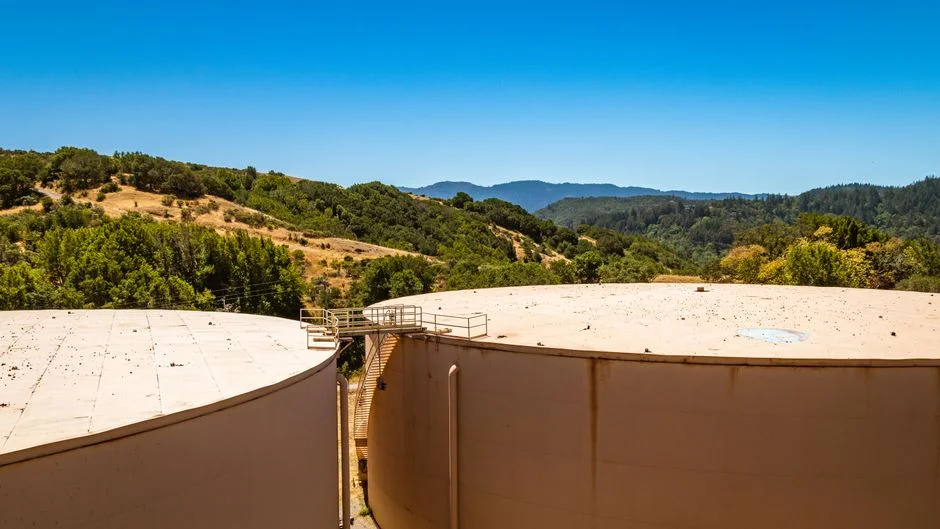
Biological treatment is the principal route for biodegradable dissolved organics after harmful or obstructive material has been removed. Activated sludge, biofilters, and membrane bioreactors use microorganisms to oxidize organic matter, but they differ in footprint, solids separation, operator burden, energy demand, sludge behavior, and suitability for reuse. DAF is complementary: it removes floatables and solids before biology rather than replacing biological COD reduction.
The 2025 Algeria review reports that more than 100 plants use activated sludge and cites BOD5 reductions of up to 85–90%. It also warns that activated sludge consumes substantial energy and is sensitive to changes in pollutant load. Those findings make aeration control, nutrient balance, sludge wasting, equalization, and operator competence central acceptance requirements. An MBR versus activated-sludge comparison provides a useful process-level reference, but industrial waste variability and local operating capability remain decisive.
| Route | Primary function | Advantages for this application | Main issues to evaluate |
|---|---|---|---|
| Activated sludge | Biodegradable dissolved-organics reduction with a separate solids-separation stage | Established biological route with broad operating experience | Energy demand, aeration and nutrient control, sludge wasting, sensitivity to load variation |
| Biofilter | Fixed-film biological treatment | Potentially compact biological option without a suspended-growth system | Filter media management, biofilm condition, solids capture, redundancy |
| MBR | Biological treatment combined with membrane solids separation | Compact train, low-turbidity permeate, and separation from biological solids | Membrane cleaning, fouling control, skilled operation, energy use, replacement strategy |
An integrated MBR wastewater treatment system combines biological treatment and membrane separation in one package. The supplied catalog range is 10–2,000 m³/day, and it specifies near-reuse-quality effluent with filtration below 1 μm. Those are catalogue attributes, not a guarantee for a factory; the actual permeate quality and operating stability must be demonstrated under the specified waste and acceptance protocol.
The North Western Sahara Aquifer System study, published by Environmental Research Letters, modeled intermittent sand filters, rotating biological contractors, and extended aeration as least-cost domestic treatment technologies under its capacity assumptions. It also reported best-case reductions of about 49% in groundwater abstractions and about 15% in total energy requirements when treated wastewater and tailwater were reused for irrigation. These results provide regional technology and resource context, not proof that the same process or economics will suit an Algiers factory.
For smaller or decentralized duties, the WSZ underground integrated treatment package combines anoxic and aerobic contact oxidation, sedimentation, and disinfection. The supplied range is 1–80 m³/h for factories and other non-residential applications, but its suitability still depends on waste biodegradability, required treatment, installation constraints, and authorization.
Before award, compare footprint, energy demand, sludge yield, operator requirements, membrane maintenance, redundancy, reuse potential, utilities, and lifecycle cost. COD removal percentage alone cannot support that comparison.
Polish, disinfect and route the treated water
The final treatment unit follows the authorized destination: environmental discharge, sewer acceptance, industrial process reuse, cooling or washing, landscape irrigation, or another specified application. The effluent-treatment plant buyer’s guide describes the wider sequencing, but the factory must apply the requirements of its Algerian authorization and receiving system.
The water-scarcity review identifies agricultural irrigation and industrial cooling, washing, and process water as potential Algerian reuse applications. It estimates that less than 10% of treated effluent is reused, while the 2025 Algeria review states that less than 15% is reused. These are separate published estimates with different scopes and should not be combined into a single national percentage. The same reviews note that tertiary treatment, institutional coordination, monitoring, and inconsistent enforcement limit reuse.
| Polishing objective | Potential barrier | Acceptance question |
|---|---|---|
| Remove residual solids | Clarification, ultrafiltration, or membrane separation | Does the selected method control the measured solids and turbidity burden? |
| Control residual organics or odor | Activated carbon or another validated polishing step | Which compounds cause the issue, and is there a representative challenge test? |
| Control microorganisms | UV disinfection or another approved process | What microbial limit applies to the authorized destination? |
| Control dissolved salts for reuse | RO, usually after adequate solids and membrane pretreatment | Is the reuse application sensitive to conductivity or specific dissolved constituents? |
The supplied ultrafiltration system uses 0.03 μm PVDF membranes, accepts turbidity up to 300 ppm, and provides automatic backwash and air scour without chemicals. Ultrafiltration is a solids-removal barrier, not a substitute for the biological removal of biodegradable COD.
For applications requiring dissolved-solids control, the industrial reverse-osmosis system can reach recovery rates up to 95% under its specified operating conditions. RO should follow suitable solids and membrane pretreatment and is not the default for every trade-waste stream. Where microbial control is required, the UV sterilizer is an available final barrier, subject to dose, transmittance, fouling, and site approval.
Require pilot testing or a validated performance guarantee using the actual factory wastewater. A polished sample produced from clean water is not evidence that the full train will meet the reuse endpoint during production and cleaning cycles.
Manage sludge and protect long-term performance
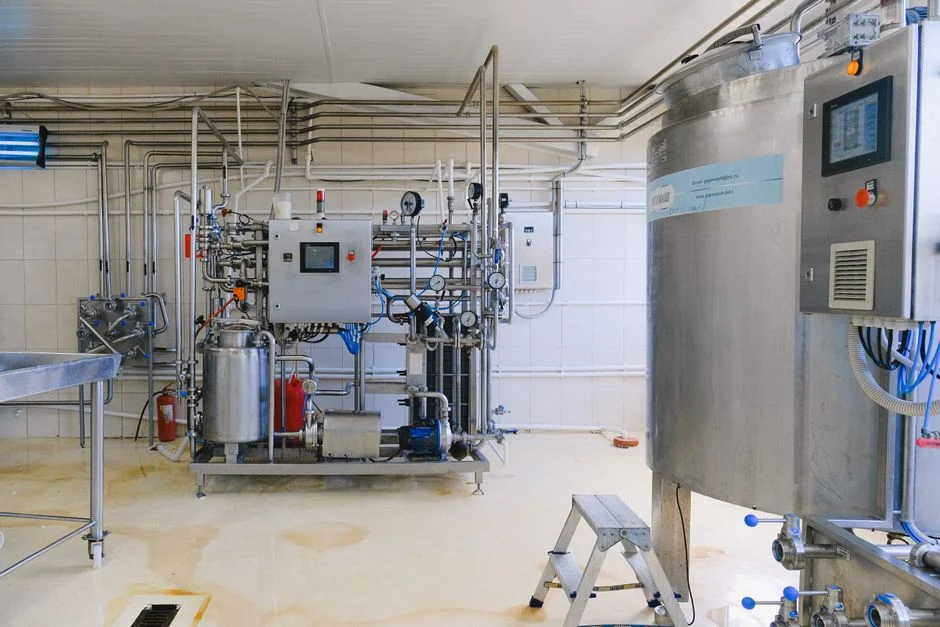
Sludge handling belongs in the initial treatment-plant scope because residual solids can determine whether a compliant process remains operable. The 2025 Algeria review reports inefficient sludge management and a recycling rate not exceeding 40%. It also identifies weak legal frameworks, infrastructure deterioration, technical failures, and shortages of skilled workers as constraints on Algerian wastewater treatment performance.
Physical pretreatment changes the solids inventory. Screenings and grit require separate handling; DAF sludge can contain oil-bearing floatables; biological sludge reflects the process and wasting regime; and chemical sludge contains the coagulants or flocculants used before separation. Each should be characterized for solids, contaminants, conditioning requirements, odor, and compatibility with the proposed dewatering and transport route.
The plate-and-frame filter press is available with filtration areas from 1 m² to 500 m² and manual, hydraulic, or automatic PLC operation. Selection should follow feed characteristics, batch frequency, desired cake dryness, filtrate handling, cleaning requirements, and operator availability. The broader belt-filter-press process guide is useful when comparing continuous solids-dewatering arrangements.
- Remove screenings, grit, oil and grease, DAF sludge, and chemical sludge through defined collection points.
- Control biological wasting, membrane cleaning, chemical dosing, and laboratory analysis through written procedures.
- Provide redundancy for critical pumps, aeration, dosing, and control systems.
- Route bypasses to a contained, authorized response arrangement that prevents untreated discharge during maintenance or upset.
- Use calibrated instruments, preventive maintenance, operator training, and documented alarm-and-response procedures.
No sludge-disposal route should be promised before local handling, transport, treatment, and end-use requirements are confirmed. The treatment objective remains unsatisfied if a compliant effluent is produced but the resulting solids cannot be managed safely and lawfully.
Build an Algiers treatment and procurement plan
The procurement should proceed in stages, beginning with regulatory and waste-characterization evidence rather than equipment pricing. The mandatory due-diligence package should contain the current permit, sewer or receiving-system acceptance conditions, selected discharge route, production and cleaning schedules, representative analytical results, and the intended reuse endpoint. Missing site-specific information should remain an explicit commercial assumption, not a figure invented in a quotation.
Ask bidders to submit a complete process flow, mass balance, hydraulic and contaminant-loading basis, equipment-sizing calculations, utilities demand, control philosophy, O&M plan, spares list, commissioning protocol, and training scope. Require guaranteed acceptance parameters and the method for demonstrating them. Comparing bids by nominal COD removal percentage ignores pretreatment reliability, biological health, solids handling, controls, and whole-plant compliance.
| Procurement gate | Required submission | Reason for the gate |
|---|---|---|
| 1. Site and regulatory basis | Permit, sewer acceptance conditions, discharge route, site constraints, and intended reuse endpoint | Prevents treatment from being designed for the wrong destination |
| 2. Waste characterization | Representative analyses linked to flow, production, cleaning, and toxicity data | Establishes pretreatment and biological design loads |
| 3. Technical offer | Process flow, mass balance, sizing, utilities, controls, redundancy, O&M, commissioning, and spares | Allows comparable evaluation of complete systems |
| 4. Commercial offer | Capital cost, utilities, chemicals, membranes, sludge handling, maintenance, training, support, and lifecycle assumptions | Separates purchase price from operating obligations |
| 5. Performance acceptance | Agreed test waste, test duration, sampling method, acceptance criteria, and remedy for failure | Links payment or acceptance to demonstrated whole-plant performance |
Site constraints must include available footprint, electrical supply, drain routes, odor control, noise, access for sludge removal, groundwater conditions, and flood exposure. Permitting discussions can draw on the National Sanitation Office and Ministry of Water Resources material identified by the 2025 review, while site-specific rules must come from the competent Algiers authorities.
DAF and MBR should be evaluated against their respective functions. They are complementary when floatables and solids must be removed before membrane biology. A staged reuse strategy is usually more defensible: establish compliant treatment first, then add polishing and distribution only where a defined non-potable demand and approval justify the capital and operating expense.
The North Western Sahara Aquifer System’s best-case reductions of about 49% in groundwater abstractions and about 15% in total energy requirements show the regional resource value of reuse. They are not a project ROI promise for an individual Algiers factory. The buyer should price reuse using the factory’s own water demand, disposal route, approved quality, and lifecycle costs.
Frequently Asked Questions
How much does a high-COD wastewater treatment plant cost in Algiers?
A defensible price cannot be derived from COD alone. Request a quote based on representative wastewater, daily and peak flow, discharge or reuse target, pretreatment, biological process, sludge handling, utilities, controls, commissioning, permits, and local support. The supplied research contains no Algiers-specific trade-waste quotation or tariff. Require bidders to state exclusions, utility assumptions, chemical consumption, membrane replacement, sludge-disposal cost, and performance conditions.
Should an Algiers factory choose DAF, activated sludge or MBR for high-COD effluent?
DAF is principally a physical pretreatment option for oil, floatables, and suspended solids; activated sludge reduces biodegradable dissolved organics biologically; MBR combines biological treatment with membrane solids separation. Choose the train from the measured waste profile, required removal functions, footprint, operating capability, and authorized effluent quality. DAF and MBR are often complementary rather than direct substitutes.
What size treatment system does a high-COD factory need?
Provide the daily flow, peak-flow profile, COD, BOD5, suspended solids, pH, temperature, nutrients, contaminants, production schedule, and reuse requirement. The designer must then define design flow, contaminant loading, retention requirements, equalization, and worst-case conditions. The supplied research contains no universal Algiers sizing rule, so equipment should not be selected from an average COD value.
How do I select a wastewater equipment supplier in Algeria?
Request a compliant process basis, factory-specific references or trial data, guaranteed acceptance criteria, utility estimates, O&M capability, local spares and service access, training, response time, and transparent lifecycle-cost data. Verify that guarantees apply to the complete train under the factory’s actual waste, rather than relying on catalogue removal claims or laboratory results from clean water.
Can treated high-COD effluent be reused in Algiers?
It may support industrial cooling, washing, or process water where the permitted quality and site conditions allow. The factory must obtain site-specific approval, identify the reuse endpoint, and demonstrate the required treatment performance with its actual wastewater. Because the supplied research does not establish an Algiers reuse specification, treat polishing and distribution as a staged investment pending written regulatory and operational confirmation.