What Makes Myanmar Textile Effluent Difficult to Treat
Textile wastewater treatment in Myanmar generally requires a staged train rather than one universal machine: equalization, chemical conditioning, solids separation, biological treatment, and polishing where the discharge or reuse objective demands it. Dyeing wastewater, printing and finishing effluent, and high-COD industrial wastewater can combine intense color, elevated organic load, fluctuating pH, synthetic chemicals and heavy metals. Equipment selection should therefore begin with measured wastewater characteristics and the intended endpoint, not a generic process name.
For engineering purposes, textile wastewater means the combined liquid effluent generated by dyeing, printing and finishing activities. It is not the same stream as discarded fabric, cutting waste or textile-recycling residues. Those solid-waste markets must not be used to infer wastewater-treatment requirements. For example, 6Wresearch estimated the Myanmar textile-waste market at USD 257 million in 2025 and projected USD 340 million by 2032, with its forecast validated using industry datasets as of June 2026. Those figures concern solid textile waste and recycling, so they are not evidence for an ETP budget, equipment price or liquid-wastewater market size.
Batch dyeing and changing recipes can produce flow and concentration swings, although the supplied research does not quantify those swings for Myanmar mills. The minimum characterization package should separate process streams and identify:
- production batch profile, average flow and peak flow;
- COD, BOD, TSS, pH, color, temperature, salinity and conductivity;
- residual process chemicals and relevant metals; and
- the required discharge, sewer, river or reuse endpoint.
These parameters determine whether equalization and chemical conditioning are adequate, whether primary clarification or dissolved air flotation is appropriate, and whether biological treatment needs downstream membrane or advanced polishing. The equipment and supplier questions described in this DAF equipment and supplier checklist provide a useful structure for that assessment.
Build a Treatment Train Around the Effluent
The practical process sequence begins with equalization and screening, followed by coagulation and flocculation, primary sedimentation or dissolved air flotation, biological treatment, and advanced oxidation or activated-carbon filtration where required (SJZ-ZZTC, 2026). Each stage should solve a defined problem; otherwise the train becomes harder to operate and maintain.
- Equalization and screening: blend variable flows and concentrations, remove obvious solids and provide stable downstream hydraulic and chemical conditions.
- Coagulation and flocculation: destabilize suspended and colloidal material and assist color removal before clarification. An automatic chemical dosing system should meter coagulants, flocculants, pH adjusters or specialty chemicals according to the selected chemistry; the supplied research does not support a universal recipe.
- Solids separation: use primary sedimentation or a textile wastewater DAF system before biological treatment. SJZ-ZZTC identifies DAF as suitable pretreatment for textile projects, including removal of suspended solids, oil and grease and colloidal material.
- Biological treatment: reduce biodegradable organics remaining after pretreatment. The duty and process form depend on COD, BOD, temperature, hydraulic retention requirements and the downstream endpoint.
- Polishing: add advanced oxidation or activated-carbon filtration only where color, residual organics, trace contaminants or reuse quality justify the added chemical, energy and media requirements.
DAF and lamella clarification should be compared by treatment objective, hydraulic and contaminant loading, footprint, operating controls and sludge handling—not by a generic claim that one is always better. The available high-efficiency sedimentation tank represents the lamella route, while DAF uses flotation rather than sedimentation.
If the endpoint requires membrane solids separation or reuse, an MBR wastewater treatment system is an option. The catalog describes filtration below 1 μm and configurations from 10 to 2,000 m³/day; those are product specifications, not guaranteed effluent results.
| Stage | Primary purpose | Selection check |
|---|---|---|
| Equalization and screening | Flow and load stabilization; coarse solids removal | Batch profile, peak flow and residence-time requirements |
| Coagulation and flocculation | Destabilization and floc formation | Jar tests, chemical inventory, mixing and dosing control |
| DAF or clarification | Suspended and colloidal solids separation | Loading, footprint, sludge removal and flotation or settling performance |
| Biological treatment | Biodegradable organic removal | COD, BOD, temperature and hydraulic loading |
| MBR, AOP or activated carbon | Endpoint-specific solids, color or organic polishing | Required final quality, reuse criteria, energy and media or oxidant demand |
Use Adsorption Evidence Carefully in the Design
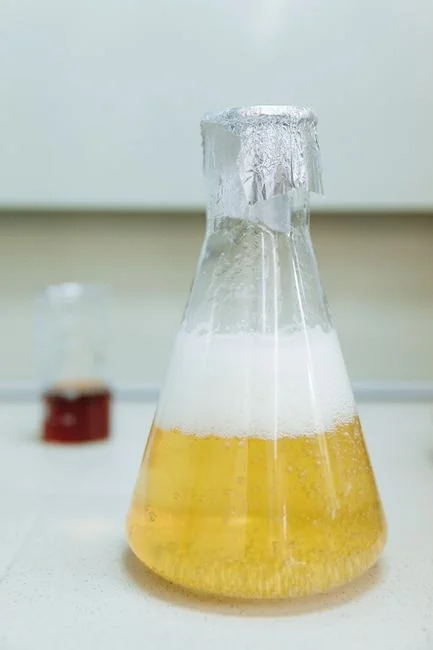
Rice husk thermally treated at 75 °C showed higher adsorption capacity for the assessed cationic dyes than rice husk treated at 300–700 °C under the conditions examined by Applied Sciences in 2020. This is a comparative laboratory finding, not a recommendation that one treatment temperature will deliver the same result in a mixed textile stream.
The same study suggested different kinetic descriptions for its two dyes: a pseudo-first-order model was suggested for methylene blue, while a pseudo-second-order model was suggested for crystal violet. The Langmuir isotherm model fit the assessed methylene-blue and crystal-violet data better than the Freundlich model. These distinctions show why a generic “rice-husk adsorbent” specification is technically inadequate.
Both methylene blue and crystal violet are cationic dyes, and the study used a specific rice-husk adsorbent. It does not establish full-scale capacity, dose, contact time, competitive adsorption, regeneration, solids handling or performance for mixed dyeing and finishing effluent in Myanmar. Those gaps are material because salts, auxiliary chemicals, pH variation and other dyes can change adsorption behavior.
Before adsorption or activated-carbon polishing is selected, run a site-specific jar test using mill effluent, then confirm the result in a pilot trial across representative batches. Test the actual proposed media or adsorbent, competing ions and chemicals, selected pH, residual COD and color, and the proposed dose and contact time. Use the findings to size the contactor, media inventory, regeneration or disposal route and residual-sludge handling; do not scale from the study’s laboratory result alone.
Size Equipment from Plant Data, Not a Generic Flow Rate
Equipment sizing begins with average and peak flow, the production-batch profile, COD, BOD, TSS, pH, color, temperature, salinity, chemical uses, target endpoint and the applicable discharge or reuse constraints. These inputs determine hydraulic loading, chemical demand, biological loading, membrane or polishing duty and the consequences of an off-design batch.
Available catalog data should be used only for preliminary screening. The DAF range covers 4–300 m³/h across 13 models. The MBR range is 10–2,000 m³/day, while the available ultrafiltration system range is 2,000–40,000 L/h. These envelopes identify which routes deserve further engineering review; they do not identify the correct capacity for a Myanmar mill. Final selection requires hydraulic calculations, contaminant-loading checks and, for membrane systems, membrane-loading and operating-mode information.
Catalog claims also require duty-specific validation. The lamella clarifier’s published surface-loading rate is 20–40 m/h, and its catalog states that chemical consumption can be reduced by up to 30%. Those values are preliminary design claims, not applicable guarantees without confirmation against the mill’s flow, solids, mixing and sludge-handling conditions.
| Selection stage | Required information | Permitted use of catalog data |
|---|---|---|
| Route screening | Wastewater characterization, batch profile and endpoint | Use DAF, MBR and UF envelopes to identify plausible configurations |
| Detailed design | Hydraulic, contaminant, chemical, solids and utility calculations | Check selected geometry against verified duty; do not accept catalog wording as a guarantee |
| Commercial evaluation | Guaranteed flow and quality basis, utilities, controls, footprint and maintenance | Compare complete bids on a common duty table |
Use a two-stage procurement method. First, ask bidders to screen feasible process routes. Second, request a guaranteed-flow, guaranteed-quality duty table supported by utilities, controls, footprint, chemical consumption, sludge yield and maintenance requirements. A plate-and-frame filter press may be relevant where dewatering the selected solids-handling route requires it, but its duty must be based on the actual sludge characteristics generated by the proposed process.
Match Equipment to Myanmar Site Constraints
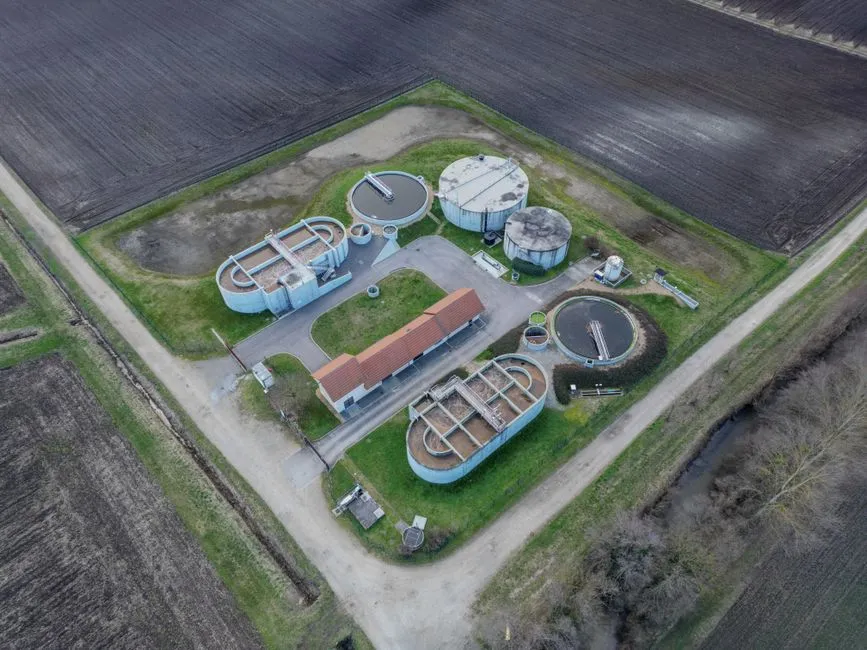
Myanmar’s textile production is concentrated in industrial areas including Hlaing Thar Yar and Thilawa SEZ, according to SJZ-ZZTC’s 2026 industry context. Equipment assessment must therefore address the route from factory gate to installed plant, not just nominal process performance.
- Corrosion and coatings: request material and coating compatibility with the measured pH, salts, alkalis, dyes and cleaning chemicals. SJZ-ZZTC identifies salts, alkalis, dyes and high temperatures as relevant to textile effluent.
- Humidity and monsoon exposure: assess corrosion protection, electrical enclosure suitability, access for installation, drainage and above-ground or outdoor components.
- Logistics and installation: ask how each tank, skid and membrane module will be transported, positioned and assembled within an established industrial zone. SJZ-ZZTC presents modular, container-transportable construction as a response to Myanmar logistics constraints.
- Standards and evidence: where the proposed tank system falls within the relevant certification scopes, request documentation against AWWA D103-09, ISO 28765 and NSF 61; SJZ-ZZTC lists these identifiers for its tank products.
- Serviceability: compare local service capability, spare-parts availability, operator training, access for maintenance and documented failure-response arrangements.
Use the site-specific climate, access and service issues discussed under Myanmar wastewater equipment considerations as prompts, but do not transfer a sewage treatment design basis to industrial textile effluent. The receiving stream, process chemistry and reuse requirements differ.
Footprint should be checked against the selected treatment route, sludge storage, drainage and maintenance clearances. A compact arrangement that removes access or leaves no room for sludge withdrawal may create a larger operating risk than a less compact layout. Ask each bidder to show equipment envelopes, lifting requirements, operator routes, drainage provisions and utility connections on the same drawing basis.
Use a Supplier and Tendering Checklist
A comparable tender requires one process narrative from every bidder, supported by calculations and a defined performance boundary. A stack of product names is not enough.
| Tender request | Information the buyer should require | Reason for the check |
|---|---|---|
| Process narrative | Purpose, treatment mechanism and expected output of every unit process | Exposes gaps, duplicated stages and missing objectives |
| Design basis | Design flow, batch profile, hydraulic calculations, contaminant loading and chemical consumption | Separates a verified design from a generic equipment offer |
| Performance boundary | Guaranteed parameters, sampling point, test method, operating conditions and resolution of non-compliance | Prevents ambiguity over what the supplier guarantees |
| Operations and maintenance | Controls, alarms, redundancy, sludge yield, maintenance access and utilities | Exposes lifecycle and operability constraints |
| Delivery and commissioning | FAT, SAT, commissioning milestones, training, documentation, spares and quantified warranty scope | Links equipment acceptance to operational readiness |
| Site risk register | Transport, monsoon installation, power variation, chemical supply, local service and waste disposal | Identifies dependencies that may interrupt operation |
Ask each supplier to identify which parameters are guaranteed, which are design values, where samples will be taken and who resolves non-compliance. This is especially important where the final endpoint concerns color, COD, metals or reuse. A separate chromium wastewater treatment process should be reviewed only if chromium analysis identifies a relevant source stream and a confirmed treatment requirement.
Require a site-specific risk register covering transport access, installation during monsoon conditions, drainage, power variation, chemical supply, local technicians, operator competence, waste-disposal arrangements and response times for critical spares. Also ask bidders to state exclusions. A comparable price is meaningful only when the proposed scope, guarantees, commissioning responsibilities and long-term service obligations are aligned.
Frequently Asked Questions
How should textile wastewater treatment in Myanmar be sized?
Size the plant from the mill’s average and peak flow, batch profile, COD, BOD, TSS, pH, color, temperature, salinity, chemical use and final discharge or reuse requirement. Use the DAF envelope of 4–300 m³/h across 13 models and the MBR envelope of 10–2,000 m³/day for preliminary screening only. Final sizing requires hydraulic and contaminant-loading calculations, followed by a guaranteed-flow and guaranteed-quality duty table.
How should a textile ETP supplier be selected?
Select on wastewater-specific design evidence rather than equipment price or generic capacity. Require a process narrative, design calculations, sampling and guarantees, controls, utilities, sludge handling, transport and installation method, FAT and SAT milestones, operator training, local service capability, spares and warranty scope. A process involving chromium should also require source-specific treatment evidence.
What will a textile wastewater treatment plant cost in Myanmar?
The supplied research contains no Myanmar ETP price, so a defensible quotation cannot be stated from the available evidence. Ask each bidder to price the same scope and resolve average and peak flow, wastewater characterization, treatment objectives, tank and equipment sizing, civil works, chemical systems, sludge handling, controls, utilities, installation, commissioning, training, spares, performance guarantees and warranty. Compare lifecycle inputs, including chemical use, sludge disposal, energy and service, rather than comparing headline equipment prices.
What compliance evidence should the supplier provide?
Define the receiving authority and the applicable sewer, river-discharge or reuse requirement before selecting equipment. Then require the supplier to identify which parameters it guarantees, the applicable sampling and test methods, the operating conditions needed to achieve them and the contractual process for resolving non-compliance. This is especially important for color, COD and metals, where generic treatment claims do not establish compliance.
Does thermally treated rice husk guarantee effective dye removal?
No. Applied Sciences reported in 2020 that rice husk treated at 75 °C had higher adsorption capacity than material treated at 300–700 °C under its assessed conditions. That finding concerned cationic methylene blue and crystal violet on a specific adsorbent. Before procurement, test the proposed adsorbent with mixed site effluent across representative batches to determine dose, contact time, competing-chemical effects, residual solids and full-scale performance.
Related Equipment
- MBR wastewater treatment system — specifications, capacity range, and technical data