Why Yangon Needs Decentralized Domestic Sewage Treatment
Yangon’s wastewater infrastructure cannot support immediate centralized sewer connections for many new developments. The 2023 MDPI Yangon case study found that YCDC’s centralized system handles only 7% of city wastewater and serves seven townships: Dagon, Latha, Lanmadaw, Pabedan, Pazundaung, Botahtaung and Kyauktada. A 2023 assessment also found decentralized wastewater treatment scored higher than the centralized alternative across the evaluated environmental, social, economic and technical criteria. For estates, hotels, hospitals and remote facilities, the practical response is an on-site treatment plant designed for verified site conditions, with a future sewer tie-in preserved.
The infrastructure constraint is substantial. The Greater Yangon Project described in the 2023 MDPI study includes 14 centralized plants with a daily peak wastewater volume of 3 million m³/day, a 49% interim population-coverage target and an 80% service-coverage goal by 2040. Until that network reaches a site, an owner should not assume that a trunk sewer will provide treatment or discharge approval.
That does not make a permanent standalone decision. Specify accessible connection or diversion points, retain hydraulic capacity and plan the plant layout so it can operate independently until a trunk sewer becomes available. The same MDPI study reports that a centralized sewer network may cost five times as much as the treatment plant, so treatment procurement and sewer-extension infrastructure should be assessed as separate investments. A broader 2026 decentralized wastewater treatment buyer guide provides useful context for this separation.
| Yangon infrastructure fact | Scope | Project implication |
|---|---|---|
| 7% of city wastewater handled | YCDC centralized system, 2023 MDPI study | Most off-network sites cannot rely on immediate centralized collection. |
| Seven townships served | Dagon, Latha, Lanmadaw, Pabedan, Pazundaung, Botahtaung and Kyauktada | Confirm the actual service boundary and connection status at the site. |
| 14 proposed centralized plants | Greater Yangon Project described in the 2023 MDPI study | Preserve a future tie-in without assuming a connection timetable. |
| 3 million m³/day peak volume | Greater Yangon Project described in the 2023 MDPI study | Central infrastructure is planned, but it is not yet equivalent to site-level service coverage. |
Build the Design Basis Before Choosing Equipment
A credible domestic sewage treatment plant selection starts with measured wastewater characteristics, not a population-derived flow estimate. The 2026 residential methodology supplied for this guide requires a 10-day composite sampling campaign before aeration tankage and process design are finalized. The campaign should characterize the wastewater that the plant will actually receive, including variation across occupancy conditions.
Build the design basis in this order:
- Record current flow, average demand, peak demand, occupancy, fixture count and process-water additions.
- Identify kitchen, food-court, laundry, clinical and other sources that may change the organic load or introduce fats, oils and grease.
- Identify the final discharge point and receiving-water sensitivity.
- Obtain the current applicable discharge guideline or permit values; exact numerical NEQEG limits were not present in the supplied research, so they must be obtained for the project rather than inferred.
- Confirm land availability, groundwater conditions, electrical supply, access for maintenance and sludge removal, odour-control requirements and the intended wastewater reuse.
Monsoon inflow and access must also be explicit design inputs. Equalization and headworks should be checked against the site’s wet-weather basis, while buried equipment must be checked for flotation risk where groundwater permits uplift. For mixed-use sites, do not average high-strength kitchen wastewater into ordinary domestic flow and hope the biology will absorb it.
Screening is a useful upstream control where rags, plastics and solid waste could reach the treatment train. A rotary mechanical bar screen can be evaluated where the influent survey and access arrangements justify it. The selection should follow from the data, not precede it.
| Design-basis input | Evidence or information required | Equipment effect |
|---|---|---|
| Flow and organic load | Current flow, occupancy, fixture count and 10-day composite characterization | Sets biological loading, tankage and equalization requirements. |
| Discharge criteria | Current project-specific permit or applicable guideline | Defines the required treatment and disinfection performance. |
| Reuse destination | Intended use, receiving-water sensitivity and recipient requirements | Influences filtration, disinfection and monitoring. |
| Site constraints | Land, groundwater, power, access, odour and monsoon drainage | Determines layout, anchoring, pumping and pretreatment needs. |
Compare WSZ, MBR and Decentralized Alternatives
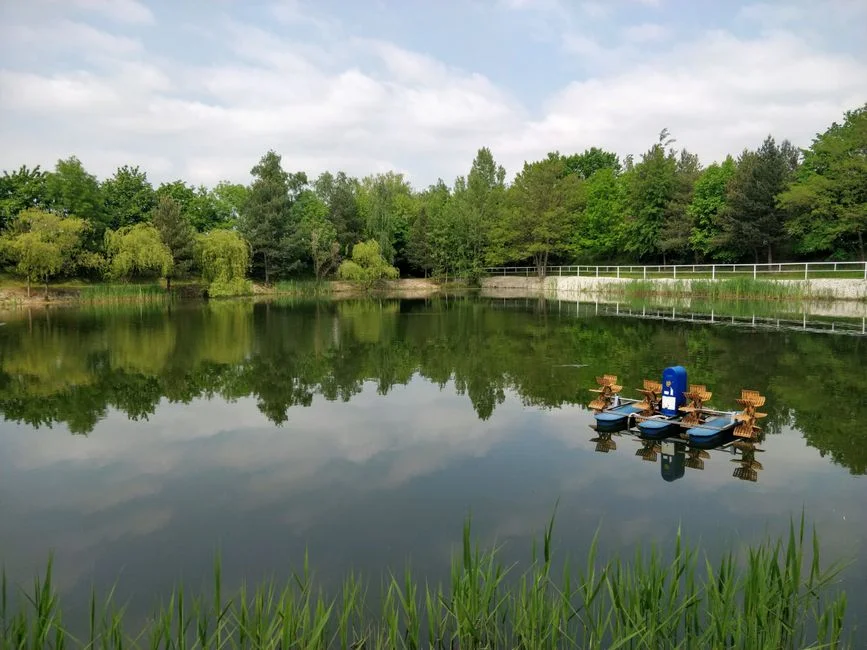
WSZ and MBR should be selected against verified duty and site constraints, not against a general claim that one technology is “better.” For an underground WSZ A/O package sewage treatment plant, the verified HydropureWater catalog capacity is 1–80 m³/h, with anoxic/aerobic contact oxidation, sedimentation and disinfection integrated in a buried package unit and fully automated operation. For an MBR membrane bioreactor wastewater system, the verified catalog capacity is 10–2,000 m³/day; the manufacturer states that its footprint is 60% smaller than conventional systems.
The process choice can then be expressed as a decision framework:
- If the project needs automated underground deployment, has moderate land pressure and does not require reuse-grade irrigation, investigate WSZ.
- If footprint is tightly constrained or the required reuse standard justifies membrane treatment and blowers, investigate MBR.
- If the flow is small and the receiving environment is suitable, compare a septic-based system as a baseline, subject to the current permit.
- If kitchen or food-court flows contain substantial FOG, assess dissolved air flotation before the biological stage.
The septic comparison must be evidence-led. The 2023 MDPI Yangon study reports that septic-tank effluent quality did not meet the required standards in its assessment. That finding does not establish a universal threshold for every site, but it prevents a septic tank from being presented as an automatic compliance solution.
Neither WSZ nor MBR should be described as automatically compliant. The supplier must demonstrate performance against the current project-specific discharge criteria, and the process drawing must show how pretreatment, biological treatment, solids separation and disinfection fit together. The underground WSZ A/O package sewage treatment plant and MBR membrane bioreactor wastewater system provide the product-specific information that should then be checked against that design basis.
| Selection criterion | WSZ | MBR | Verification question |
|---|---|---|---|
| Verified catalog capacity | 1–80 m³/h | 10–2,000 m³/day | Does the quoted unit cover measured average and peak duties? |
| Treatment configuration | Anoxic/aerobic contact oxidation, sedimentation and disinfection in one buried unit | Activated sludge treatment with submerged PVDF membrane filtration below 1 μm | Does the process train match the sampled wastewater and permit? |
| Footprint | Buried configuration | Manufacturer states 60% smaller footprint than conventional systems | What is the installed footprint after equalization, access and sludge handling? |
| Primary attraction | Automated underground deployment | Compact installation and reuse-oriented treatment | Which condition is actually binding at this site? |
| Compliance | Requires project-specific demonstration | Requires project-specific demonstration | What current permit criteria and test data support the claim? |
Compare Capital Cost and Operating Burden
The supplied 2026 market indications put a turnkey residential WSZ package plant at USD 350–650 per m³/day and a turnkey residential MBR package plant at USD 600–1,100 per m³/day. These are market indications, not quotations, and they are not guaranteed project prices. Treatment standard, site works, power infrastructure, automation, commissioning scope and local installation conditions can change the total.
Indicative energy demand also differs: the supplied 2026 comparison uses 0.2–0.4 kWh/m³ for WSZ and 0.4–0.8 kWh/m³ for MBR. Do not convert those indications into a project guarantee. Request the supplier’s guaranteed consumption at the agreed design flow and load, then price it using the applicable electricity tariff.
The operating assessment should include membrane replacement for MBR, biological-media or other consumable maintenance, chemical use for disinfection, sludge hauling and disposal, insurance, operator training, backup power and remote monitoring. Where the process creates a sludge stream requiring stabilization or volume reduction, evaluate appropriate dewatering equipment rather than adding it by default. A plate-and-frame filter press is relevant only where the selected process and residual-handling route justify volume reduction.
Request quotations in the contract currency and with a defined scope. Do not reuse older MMK conversions from the source material: exchange-rate movements affect the comparison, so the price and currency must be refreshed at quotation date.
| Cost or operating item | WSZ | MBR | Procurement action |
|---|---|---|---|
| 2026 turnkey market indication | USD 350–650 per m³/day | USD 600–1,100 per m³/day | Obtain a current site-specific quotation. |
| Indicative energy demand | 0.2–0.4 kWh/m³ | 0.4–0.8 kWh/m³ | Use the supplier’s guaranteed consumption and the applicable tariff. |
| Major lifecycle items | Media or consumables, chemicals, sludge hauling, power and training | Membrane replacement, blowers, chemicals, sludge hauling, power and training | Price the full handover-to-replacement cycle. |
Design for Monsoon, Power and Sludge Risks
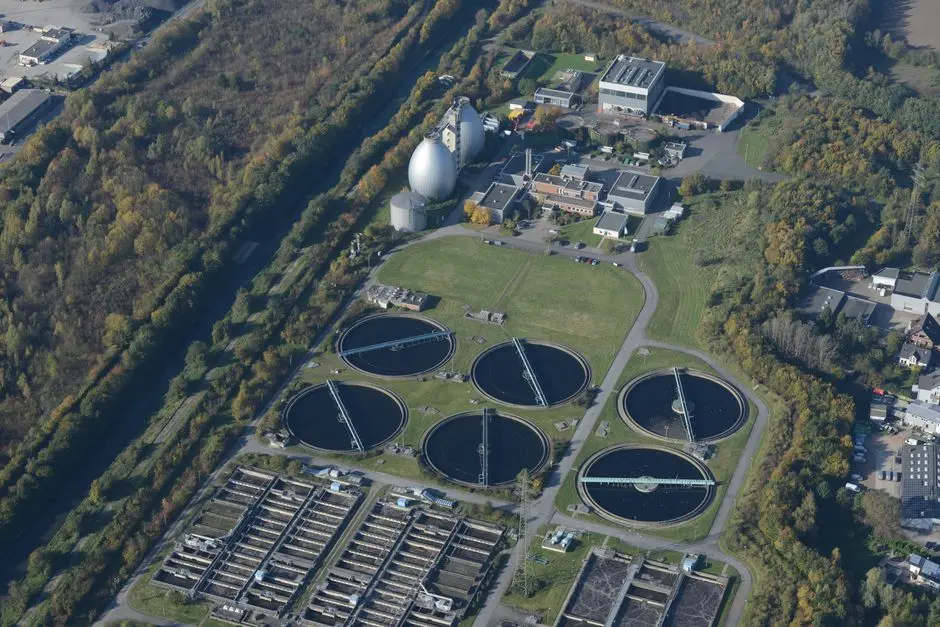
The supplied 2026 guide reports that peak wet-weather flow can reach 3× average, so the hydraulic design should be checked against a project-specific wet-weather basis rather than dry-weather flow alone. The same guide identifies a high groundwater table in the Yangon delta and calls for anti-buoyancy anchoring or concrete ballast for buried units where flotation is possible. These are design checks, not reasons to omit site investigation.
Protect the biological stage, pumps and membranes from rags, plastics and monsoon debris with an appropriate screening and solids-control arrangement. If power interruptions are credible, define the required standby arrangement, blackout response and automatic restart sequence. A buried package can reduce the operating footprint, but it does not remove maintenance, inspection or sludge-removal obligations.
Operationally, responsibility must be explicit. The 2023 MDPI Yangon study identifies reliable operation, operator skill, affordability and community acceptance as important dimensions of decentralized treatment performance. Assign named parties to inspect the plant, perform desludging, transport residuals, monitor effluent and respond to alarms. Include the applicable sludge-handling route in the approval package.
Use a high-efficiency sedimentation tank or mechanical dewatering only where the selected process generates a sludge stream that requires clarification, stabilization or volume reduction. The plate-and-frame filter press should be justified by residue characteristics and the disposal route.
| Risk | Design response | Handover evidence |
|---|---|---|
| Wet-weather overload | Check equalization and headworks against the project wet-weather basis | Hydraulic calculations and alarm set points |
| Groundwater uplift | Specify anchoring or ballast where flotation is possible | Structural drawing and installation inspection record |
| Debris and rags | Provide suitable upstream screening and solids control | Screen specification and maintenance procedure |
| Power interruption | Define standby power, blackout response and restart logic | Functional test and operating instruction |
| Sludge accumulation | Assign inspection, removal, transport and disposal responsibilities | Sludge-management plan and contract records |
Plan Approval, Commissioning and Handover
A 2026 YCDC submission should be assembled as five traceable documents: the design basis; a process flow diagram with mass balance; the O&M manual; the effluent-compliance plan; and a 10-day monitoring report. These are the five core submittals identified in the supplied 2026 residential methodology. The design basis must separate sampled facts, engineering assumptions and values still awaiting confirmation.
Confirm responsibilities with YCDC before submission. The supplied 2026 source describes the Pollution Control & Cleansing Department as reviewing operational and discharge compliance, and the Engineering Department as reviewing process design, hydraulic loading and structural drawings. Treat that as the documented review framework, then obtain written confirmation of the current route for the specific project.
Commissioning should progress through controlled stages:
- Verify installation, pipework, electrical supply, alarms, protection and ancillary equipment.
- Acclimate the biological system with seed sludge and establish stable operation before applying the design duty.
- For MBR, verify membrane integrity and the supplier’s prescribed cleaning procedure.
- Run the performance test at design load for 30 days, as recommended by the supplied 2026 methodology.
- Test acceptance against the current permit, approved design flow, power-failure response, alarm function, sludge handling and operating documentation.
The handover package should record baseline operating costs, training delivered to staff, monitoring frequency, maintenance schedule, spare-parts availability, escalation contacts and responsibility for future sewer tie-in. For disinfection equipment, the suitability of a chlorine dioxide generator or an automatic chemical dosing system must be tied to the approved process, safety requirements and permit—not selected independently.
| Project stage | Required evidence | Release condition |
|---|---|---|
| Design | Design basis, sampling report, process flow diagram and mass balance | Inputs and assumptions are traceable. |
| Approval | Structural and hydraulic drawings, permit basis and O&M manual | Current review responsibilities are confirmed. |
| Commissioning | Installation checks, acclimation records, membrane tests where applicable | System is ready for performance testing. |
| Performance run | 30-day test at design load with monitoring records | Acceptance criteria are demonstrated. |
| Handover | Training, costs, spares, maintenance schedule and escalation contacts | Operations ownership is transferred in writing. |
Frequently Asked Questions
What is the indicative cost of domestic sewage treatment in Myanmar?
The supplied 2026 market indications are USD 350–650 per m³/day for a turnkey residential WSZ package plant and USD 600–1,100 per m³/day for a turnkey residential MBR package plant. These are market indications rather than quotations. Request a current quotation in the contract currency, with civil works, equalization, headworks, power, commissioning, controls, sludge handling and training shown separately. A regional domestic sewage treatment guide is useful for checking the commercial structure, but it does not replace a project quotation.
How should an on-site sewage treatment plant be sized?
Begin with the 10-day composite sampling campaign and measured flow, then assess the equipment’s hydraulic and process criteria against the average, peak and organic loading. WSZ and MBR have different catalog duties and process requirements. The selected unit must match sampled wastewater, the approved design flow, available footprint, power conditions, discharge criteria and intended reuse.
How should a supplier be selected?
Request verified capacity data, a process flow diagram, membrane specifications where applicable, performance guarantees, commissioning scope, warranty terms and reference projects. Also check local service capability, spare-parts availability and operator training. A supplier’s general statement that a system is automated or compliant is not evidence of project acceptance; ask for test data and contractual guarantees tied to the approved duty.
Does a packaged treatment plant guarantee YCDC approval?
No. Approval depends on the current project-specific discharge criteria, site conditions and the selected process demonstration. The 2026 source identifies the Pollution Control & Cleansing Department for operational and discharge-compliance review and the Engineering Department for process, hydraulic and structural review. Submit the five required documents, complete commissioning and the 30-day performance run, then secure written confirmation of acceptance.