What a containerized MBR STP actually is
A containerized MBR sewage treatment plant packages an activated-sludge bioreactor and submerged ultrafiltration membranes inside a 20- or 40-foot ISO high-cube (HC) container, with the UF stage performing the solid–liquid separation that a conventional clarifier would normally handle. According to Pure Aqua's MBR-C product page, the membranes are hollow-fiber PVDF manufactured by thermally induced phase separation (TIPS) with a nominal pore size of 0.04 µm, and they retain bacterial flocs, suspended solids, colloids, and viruses in a single step (Pure Aqua, MBR-C product page).
Upstream of the membranes, Pure Aqua specifies a 1.5 mm-perforation drum screen to strip hair, lint, and coarse solids before they reach the membrane surface — a critical protection step for any MBR (Pure Aqua, MBR-C product page). Inside the bioreactor, an anoxic zone handles denitrification, and coarse-bubble diffusers mounted under the membrane modules provide continuous air-scour cleaning of the fibers, which is what suppresses fouling between recovery cleans (Pure Aqua, MBR-C product page).
MENA-Water documents the same architecture in ISO containers with stainless-steel internal tanks and reports a 99.9999% reduction of bacteria and viruses at the UF stage, plus a maintenance interval of one to two membrane clearings per year (MENA-Water, Containerized MBR product page). The relevant product to compare against is a containerized integrated MBR system in the 20' or 40' HC envelope, and the membrane cassettes themselves are typically built around PVDF flat-sheet or hollow-fiber module cassettes sized to the design flow. For comparison, the working principle and a deeper design criteria background are laid out in the MBR system for sewage design criteria: 2026 engineering guide.
Step 1 — Estimate the population and per-capita demand
The first number in any defensible containerized MBR sizing is the design population. For residential work, count dwelling units and apply the statutory occupancy from the BC Building Code; for a camp, count the peak daily head count plus staff rather than beds, because a 200-bed camp that never runs at full occupancy is not a 200-person design case. Pure Aqua's MBR-C sizing table uses 50 US gallons per day per capita as a published reference benchmark for "approximate population" calculations (Pure Aqua, MBR-C product page).
To convert that benchmark to metric, the IDA Water Security Handbook gives 1 m³ = 264.2 US gallons, which puts Pure Aqua's 50 gpd per capita at roughly 0.19 m³/day per person, or about 190 litres per capita per day (IDA Water Security Handbook 2019, unit-conversion table). The supplied research does not publish a BC- or Metro Vancouver-specific per-capita figure, so the local jurisdiction's design guideline should be requested and substituted in place of the 50 gpd assumption before the bid goes out.
At this stage the engineer is calculating two flow numbers. The average dry weather flow (ADWF) is the design baseline for biological capacity, and the peak daily or peak instantaneous flow is the hydraulic load the membrane tank and feed pumps must pass without surging. Splitting these two numbers up front prevents the common error of sizing the biological reactor to peak flow and starving the membranes, or sizing the membrane hydraulic capacity to average flow and overloading it on a Monday-morning shower peak.
Step 2 — Apply a peaking factor for residential and camp loading
The peaking factor multiplies ADWF to give the peak flow the hydraulic train — feed pumps, equalization, membrane tank — must handle. For residential communities, a peaking factor of 2.0–3.0× average dry weather flow is the standard practice band for sewage-treatment-plant hydraulic design. For seasonal camps, the band is wider, typically 3.0–4.0×, because morning and evening shower peaks, kitchen discharge, and a compressed occupancy window all stack into a few hours. Neither band is published for BC in the supplied research, so the receiving municipality or the local sewer design guideline should be checked before the peaking factor is locked into a bid.
Working through the math against Pure Aqua's 50 gpd per capita benchmark (Pure Aqua, MBR-C product page) and the IDA Handbook conversion factor (IDA Water Security Handbook 2019, unit-conversion table), a 100-person camp produces roughly 19 m³/day on average. Applying the 3.0–4.0× camp peaking band gives an indicative peak range of 57–76 m³/day that the membrane tank must pass, but this number is a sizing estimate only and should be rechecked against any BC-specific guideline before submission. Residential peaking is less severe but still real: a 300-person community at the same 50 gpd per capita benchmark sits near 57 m³/day ADWF and roughly 114–171 m³/day peak across the 2.0–3.0× band.
For camps with kitchen flows, laundry, or a swimming-pool backwash, the engineer should also confirm that the peaking factor has been derived from a flow-recording study rather than a rule of thumb, because the camp peak is often a single two-hour window, not a full day, and that ratio drives the size of any equalization tank ahead of the MBR. Where the supplied research gives no Vancouver-specific peaking number, the buyer must obtain it from the local authority before sizing is final.
Step 3 — Select the container size and count
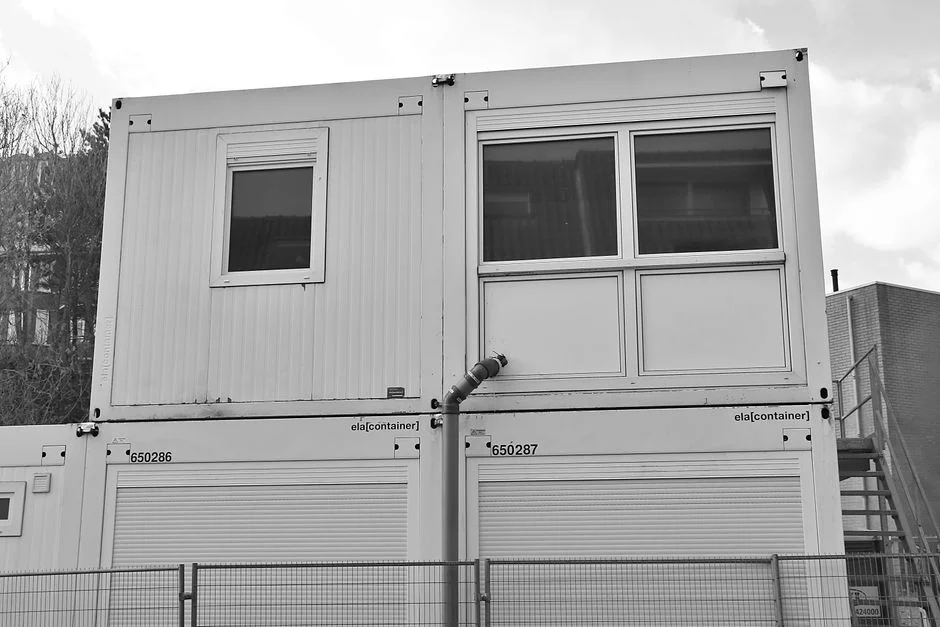
Once ADWF and peak flow are fixed, the hydraulic envelope can be matched to a 20' or 40' HC container. Pure Aqua ships the MBR-C platform in both 20' and 40' HC containers depending on capacity, with insulated walls, enhanced structure, and a stated zero-water-leakage envelope (Pure Aqua, MBR-C product page). MENA-Water documents that more than 1,200 m³/day of MBR capacity can be packed into a single 40-foot ISO container with stainless-steel internal tanks, which is the upper bound for a one-container train on a small camp or a sub-1,000-person community (MENA-Water, Containerized MBR product page).
For flows that exceed a single 40' HC container, or for trains that need polishing, the practical split is one container for the bioreactor plus membrane tank, a second container for anoxic or post-treatment, and a third for UV or chlorine-dioxide polishing if a non-potable reuse target is set. Pure Aqua lists "additional pre- and/or post-treatment processes to meet effluent quality requirements" as part of the standard MBR-C scope, and standby pumps and remote monitoring as optional add-ons (Pure Aqua, MBR-C product page). Membrane service is light: MENA-Water specifies one or two maintenance clearings per year for the UF modules (MENA-Water, Containerized MBR product page), which is a useful number to write into an operations contract. The membrane cassettes themselves are usually specified against the integrated MBR membrane bioreactor system platform and the PVDF flat-sheet MBR module line.
For a Vancouver camp in the 50–200-person band, the math almost always lands on a single 40' HC container at the average-flow end, with a second equalization or polishing container only if the peaking band drives it. The sizing workflow for a different climate (La Paz, 2026 guide) applies the same container logic but with different boundary conditions, which is a useful cross-check when a supplier proposes a non-standard train.
Step 4 — Confirm site, electrical, and environmental boundary conditions
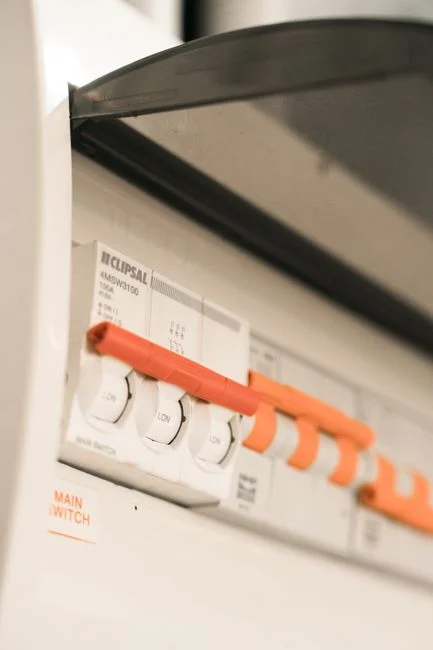
A container that cannot be commissioned on a Vancouver site is not a delivered plant. Pure Aqua's standard supply is 460V/3Ph/60Hz at a design temperature of 20 °C with an operating range of 20–30 °C (Pure Aqua, MBR-C product page), and both points need a written confirmation from the supplier before the bid is awarded. BC grid power is 120/208 V or 347/600 V at 60 Hz, so a 460 V motor centre is not directly compatible and a step-down transformer is required; the supplier must price that transformer and any harmonic filtering inside the container, not as a site extra.
Temperature is the second common failure mode. Vancouver winter influent can sit well below Pure Aqua's 20 °C design point, and biological activity, as well as membrane permeability, drops with temperature. The supplier must state whether the quoted container is insulated only, or whether heat tracing, a heated enclosure, or a building heat-recovery loop is included. The drum screen is a Pure Aqua standard at 1.5 mm perforation, but in a camp with high hair and laundry fiber the engineer may want to drop the screen to 1.0 mm — that change should be confirmed in writing because it changes the headloss and the screening-solids disposal schedule.
For sites where the same container may be moved between seasons, the relevant comparison is a mobile or skid-mounted MBR versus an underground package plant such as the WSZ underground package sewage treatment plant, which is documented for mobile deployment and is the right reference when a camp operator wants to relocate the unit. For the regulatory side, the supplied research does not publish the numeric effluent limits in Metro Vancouver Sewer Use Bylaw No. 299, so the bid must include a line item for the supplier to confirm the design against that bylaw and against the receiving municipality's downstream sewer use rules before fabrication starts.
Step 5 — Indicative sizing matrix for Vancouver residential and camp projects
The matrix below rolls the five-step workflow into one screen. Per-capita demand follows Pure Aqua's 50 gpd per capita reference benchmark (Pure Aqua, MBR-C product page), converted to cubic metres per day using the IDA Handbook factor of 1 m³ = 264.2 US gallons (IDA Water Security Handbook 2019, unit-conversion table). Container count is sized against MENA-Water's published bound of more than 1,200 m³/day of MBR capacity in a single 40-foot ISO container (MENA-Water, Containerized MBR product page). The discharge-target column is left blank because the supplied research does not publish Metro Vancouver Sewer Use Bylaw No. 299 numeric limits; those values must be confirmed with the receiving municipality before the bid is finalized.
| Scenario | Population | ADWF (m³/day) | Peak factor | Peak flow (m³/day) | Container count (40' HC) |
|---|---|---|---|---|---|
| Remote camp, off-season low | 50 | ~9.5 | 3.0–4.0× | ~28–38 | 1 (membrane + bioreactor) |
| Seasonal camp, full session | 100 | ~19 | 3.0–4.0× | ~57–76 | 1 (membrane + bioreactor) |
| Large seasonal camp | 200 | ~38 | 3.0–4.0× | ~114–152 | 1–2 (membrane + equalization) |
| Residential community, ~100 units | ~300 | ~57 | 2.0–3.0× | ~114–171 | 1–2 (membrane + polishing) |
| Residential community, ~300 units | ~900 | ~170 | 2.0–3.0× | ~340–510 | 1–2 (split train, MBR + UV or ClO₂) |
Membrane specification common to every row: 0.04 µm PVDF hollow-fiber, 460V/3Ph/60Hz supply, design temperature 20 °C with an operating range of 20–30 °C, and a 1.5 mm-perforation drum screen upstream (Pure Aqua, MBR-C product page). Expected membrane service is one to two maintenance clearings per year (MENA-Water, Containerized MBR product page). Discharge limits and any additional polishing step (UV or chlorine dioxide) must be confirmed against Metro Vancouver Sewer Use Bylaw No. 299 and the receiving municipality before the train is fixed. The product reference for the train is the HydropureWater integrated MBR membrane bioreactor system, and the membrane cassettes are typically drawn from the same manufacturer's MBR module line.
Frequently Asked Questions
How many containers do I need for a 100-person camp?
Using Pure Aqua's 50 gpd per capita reference (Pure Aqua, MBR-C product page) and the IDA Handbook conversion of 1 m³ = 264.2 US gallons (IDA Water Security Handbook 2019, unit-conversion table), a 100-person camp generates roughly 19 m³/day on average. With a 3.0–4.0× camp peaking band, the peak hydraulic load is in the 57–76 m³/day range. That is well below MENA-Water's documented 1,200 m³/day single 40-foot ISO container ceiling (MENA-Water, Containerized MBR product page), so a single 40' HC container carrying the bioreactor and membrane tank is the indicative answer. A second container is only needed if a polishing or equalization step is added once the discharge target is confirmed against Metro Vancouver Sewer Use Bylaw No. 299. The exact bid quantity must come from the supplier once the BC peaking factor and the bylaw limits are confirmed.
What is the lead time for a containerized MBR STP?
The supplied research does not give a lead time, so a numeric answer cannot be quoted. The variables that drive the schedule are engineering drawing approval, container fabrication, membrane-module supply, electrical panel build, factory acceptance testing, and shipping into British Columbia plus site installation. The actionable check is to request a written lead time from each bidder, broken into engineering, fabrication, FAT, and shipping milestones, with a penalty or relief clause tied to the longest pole — usually the membrane-module supply. A membrane cleaning procedure reference is also worth requesting with the bid so the operations scope is locked at the same time.
Can a containerized MBR meet Metro Vancouver Sewer Use Bylaw No. 299?
Metro Vancouver Sewer Use Bylaw No. 299 applies to any discharge to a sanitary sewer in the region, and a containerized MBR is typically capable of meeting the BOD, TSS, and total nitrogen limits the bylaw sets, but the supplied research does not publish the bylaw's numeric limits, so the answer cannot quote a specific value here. The actionable check is to ask the supplier to confirm in writing that the proposed MBR plus any polishing train (UV or chlorine dioxide) meets the current revision of Bylaw No. 299 for the receiving municipality. If a non-potable reuse target is set, polishing with a UV sterilizer is the usual selection; for higher-redundancy disinfection, a chlorine dioxide generator is the alternative.
What does a containerized MBR cost in 2026?
The supplied research gives no price, and quoting a number here would not be defensible. The cost drivers that a fixed-scope bid should isolate are container count, membrane area and module count, polishing step, electrical works including the 460V step-down transformer, BC freight and duty, site civil works, and commissioning. The actionable check is to ask each bidder for a fixed-scope price on the same flow band, with a separate priced options list for the polishing train, standby pumps, and remote monitoring, so the comparison is apples-to-apples. The right comparison product line for a smaller or budget-driven camp is the HydropureWater WSZ underground package sewage treatment plant, which uses conventional activated-sludge biology rather than membranes and trades a larger footprint for a lower membrane-replacement cost over the asset life.