What Treatment Route Fits a Kuala Lumpur Site?
Domestic sewage treatment in Kuala Lumpur generally follows three routes: connection to the public sewer, an on-site package sewage treatment plant, or an MBR membrane bioreactor system. The correct route depends on available sewer infrastructure, site footprint, design flow, discharge point, reuse requirements and maintenance access. The underground package sewage treatment plant offers a compact biological treatment route, while an MBR sewage treatment system is indicated where finer solids separation is required.
Start with the site rather than the catalogue. Confirm whether a public sewer is physically accessible and whether connection approval is feasible. If it is not, establish the land available for treatment, the depth required for buried equipment, access for lifting and maintenance, the wastewater flow profile and the intended effluent destination. Water reuse or tighter solids separation can change the selection materially.
Malaysia’s institutional framework is established in the Sewerage Services Act 1993, which gave the Federal Government responsibility for sewage management. IWK began operating as the national sewerage company on April 2, 1994, according to IWK’s Sewerage Systems history. This is institutional context, not confirmation that a particular site can connect to public infrastructure.
Academic analysis in Chemical Engineering Transactions examined final treated wastewater from urban plants in Johor, Kuala Lumpur and Penang against Malaysian Standard A and Standard B effluent conditions. That study does not establish a project’s permit conditions. The designer must obtain the governing requirements for the exact discharge route and receiving authority.
Package Plant or MBR for Kuala Lumpur Projects?
The WSZ package plant and the MBR system use different process boundaries: WSZ combines biological treatment, clarification and disinfection in a compact unit, while MBR retains activated sludge treatment and adds submerged membrane filtration for finer solids separation.
| Procurement item | WSZ package plant | MBR system |
|---|---|---|
| Process configuration | Anoxic/aerobic biological contact oxidation, sedimentation and disinfection | Activated sludge treatment with submerged PVDF membrane filtration |
| Verified catalogue capacity | 1–80 m³/h | 10–2,000 m³/day |
| Installation arrangement | Can be buried below grade or mounted on a trailer for mobile deployment | Requires project-specific integration of the membrane, aeration, controls and civil works |
| Separation feature | Clarification by sedimentation | Filtration stated as below 1 μm |
| Principal selection basis | Compact, integrated deployment | Finer solids separation and a wider catalogue capacity range |
| Footprint claim | No comparative footprint claim supplied | Catalogue claims 60% footprint reduction versus conventional systems |
The HydropureWater product catalogue describes the WSZ unit as fully automated with no operator required. That positioning does not establish zero staffing, zero maintenance or a guaranteed lifetime cost. The buyer should define which inspections, sampling, controls checks, chemicals, sludge removal and corrective actions remain with the owner.
The MBR catalogue states a filtration scale below 1 μm, a capacity of 10–2,000 m³/day and a 60% footprint reduction compared with conventional systems. Compare both systems against the same verified flow, organic load, footprint, effluent route and operating responsibilities.
How the Treatment Process Protects the Discharge Route
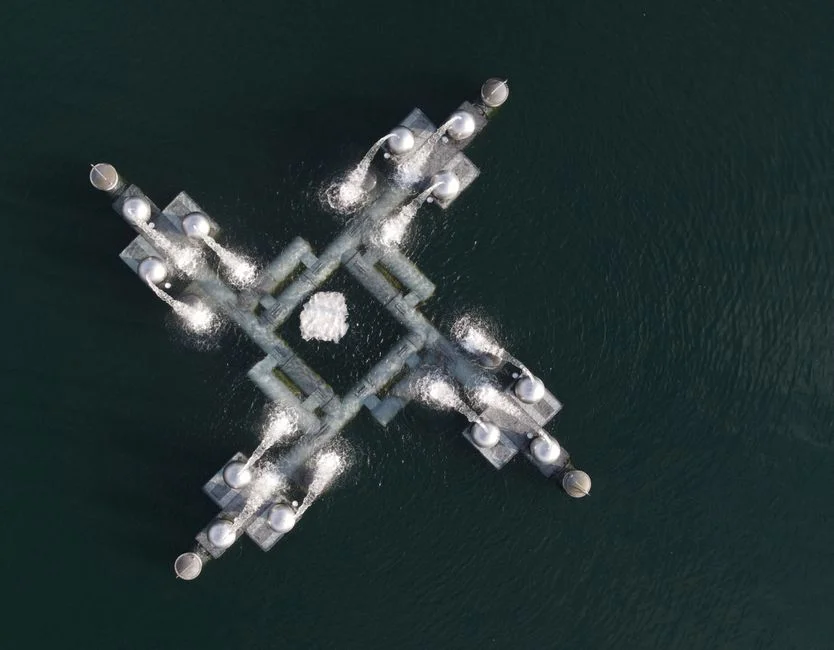
A domestic sewage treatment plant functions as a sequence where each stage has a defined role, ensuring the final discharge remains compatible with the treatment provided.
- Incoming domestic sewage: confirm flow, wastewater characteristics and any high-strength or trade streams entering the works.
- Biological treatment: the WSZ anoxic and aerobic stages provide the biological treatment section; MBR uses activated sludge treatment.
- Solids separation: WSZ uses sedimentation for clarification, while the MBR process uses submerged PVDF membrane filtration stated as below 1 μm.
- Disinfection: evaluate the unit’s disinfection arrangement or an on-site wastewater disinfection system against the project requirement.
- Effluent management: confirm the permitted discharge point, reuse constraints, monitoring and any controls required after treatment.
The anoxic and aerobic stages provide different biological conditions, while sedimentation separates settleable solids from treated liquid. Supplier performance claims should be tied to the proposed equipment, influent basis and required effluent conditions.
The Chemical Engineering Transactions study analysed final treated wastewater from Malaysian urban plants in Johor, Kuala Lumpur and Penang and compared the results with Malaysian Standard A and Standard B conditions. The project designer must confirm the applicable requirement, receiving point and any pretreatment conditions for the specific site.
A separate 2017 study in the International Journal of Environmental Research and Public Health collected influent wastewater from two Kuala Lumpur treatment plants for wastewater-based epidemiology. It confirms that domestic wastewater was sampled at two plants, but it is not evidence of treatment performance. A UV sterilizer for water treatment should be selected against the receiving route and disinfection requirement.
Inputs Needed to Size the Correct Treatment System
A quoted treatment capacity requires documentation of the project’s flow profile, wastewater characteristics and discharge route before it serves as a sizing basis.
| Required input | What the buyer should provide or verify |
|---|---|
| Flow basis | Daily flow profile, peak-flow assumptions and the operating basis used for equipment selection |
| Wastewater characteristics | Representative composition and the treatment implications of kitchen, laundry, laboratory or other high-strength streams |
| Site and installation | Land availability, burial depth, maintenance access, utilities and whether mobile deployment is required |
| Effluent route | Intended reuse or discharge point, discharge classification and governing authority requirements |
| Residual handling | Sludge generation, downstream solids handling and access to spare parts |
| Performance basis | Required effluent quality and a project-specific demonstration for the submitted equipment |
Require a daily flow profile and documented peak assumptions rather than relying on a catalogue maximum. Ask the team to confirm available footprint, burial conditions, access for maintenance, power supply, odour controls and whether mobile deployment is necessary. These constraints determine whether a buried package arrangement is practical.
Identify the proposed discharge classification and receiving authority, then request the governing site-specific conditions. Confirm how kitchens, laundries, laboratories and other high-strength streams will be treated or diverted.
The WSZ catalogue identifies residential communities, hotels, hospitals, factories and rural areas as possible applications, but application labels do not establish loading capacity. Review sludge generation and downstream solids handling; where dewatering is required, the buyer should separately evaluate a plate-and-frame filter press and screen incoming flows with an appropriate rotary mechanical bar screen.
Use the academic urban-study scope as a prompt to analyse representative local effluent, not as a substitute for a project-specific wastewater assessment.
Installation, Operation and Procurement Risks?
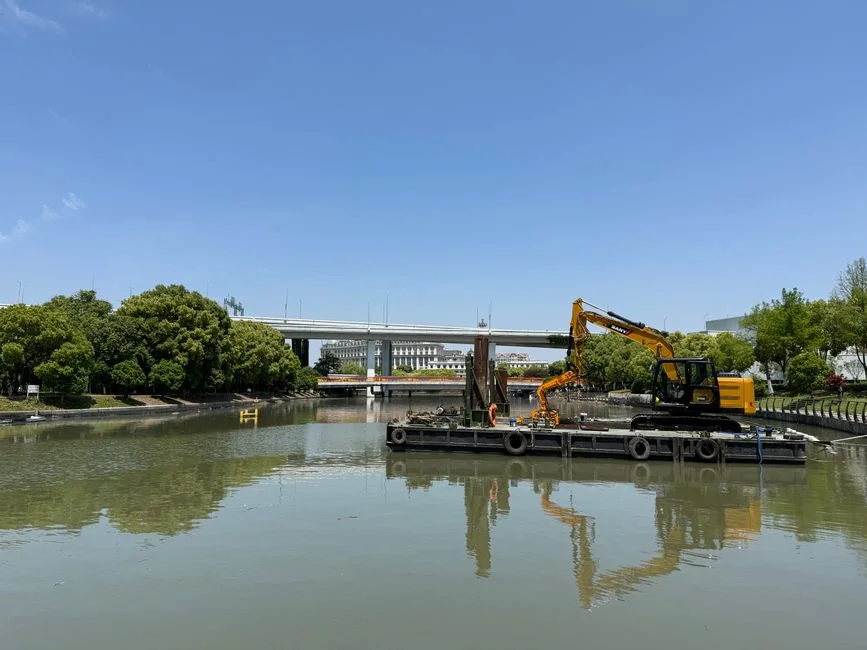
For a below-grade WSZ installation, the quotation should identify excavation and civil works, burial conditions, access arrangements, required utilities and commissioning responsibilities. The equipment catalogue permits installation below grade or mounting on a trailer for mobile deployment, but the project scope must state which arrangement is being priced.
For MBR procurement, request the complete membrane-system boundary: aeration, controls, cleaning provisions, replacement strategy, technical support and responsibilities at the equipment-to-civil-work interface. The stated filtration scale and footprint reduction should be presented against the specific proposed configuration.
The WSZ description as fully automated and operator-free should be converted into an operational allocation schedule. Identify the owner’s responsibilities for routine inspection, monitoring, chemicals, sludge removal and call-out response. Ask suppliers to supply treatment parts, valves and media with documented compatibility and recommended replenishment arrangements.
Require installation evidence relevant to comparable domestic sewage duty: references, approved drawing packages, local permit support, commissioning protocols and a clearly defined warranty. These documents should match the project’s flow basis and proposed treatment route.
Compare quotations on one design basis, including treatment capacity, civil works, installation, commissioning, controls, chemicals, maintenance, sludge handling and exclusions. IWK’s sewerage-system history reinforces the need to confirm which public infrastructure and approvals apply at the exact site.
Build a Supplier Request for Proposal
A comparable RFP requires every bidder to answer the same site, flow, treatment and responsibility questions.
| RFP section | Mandatory supplier response |
|---|---|
| Project basis | Design flow, site area, intended reuse or discharge route, applicable effluent classification and operating conditions |
| Proposed treatment | Nominated treatment train, confirmed usable capacity, process flow diagram and equipment list |
| Civil and utilities | Excavation, foundations or supports, access, power, drainage, odour control and utility connections |
| Controls and commissioning | Control narrative, alarm provisions, testing, training and commissioning protocol |
| Operations and support | O&M scope, sludge handling, chemicals, spare parts, local technical support and response arrangements |
| Commercial exclusions | Every exclusion, warranty boundary, validity period and third-party cost stated separately |
| Performance evidence | Demonstration appropriate to the submitted equipment and the same project flow and operating basis |
State the required flow basis, site area, intended reuse or discharge route, applicable effluent classification and operating conditions in the brief. Ask each bidder to nominate the treatment train, confirm usable capacity and identify every civil, utility and commercial exclusion.
Request the process flow diagram, equipment list, control narrative, commissioning plan, O&M scope, spare-parts list, warranty and local technical support. Ask for a performance demonstration appropriate to the submitted equipment; evidence from another treatment technology does not close the verification gap. The domestic sewage COD removal methods guide can support the removal-effort discussion, but all supplier capacity and process claims must be checked against the same project basis.
Frequently Asked Questions
How much does a domestic sewage treatment plant cost in Kuala Lumpur?
There is no supported project quotation in the available research, so a buyer should not rely on an invented price. Request itemised quotations covering treatment capacity, civil works, excavation or supports, installation, utilities, controls, commissioning, chemicals, maintenance, sludge handling, spare parts, warranty and exclusions. Separating capital equipment from whole-project scope allows bids to be compared on the same basis.
Which treatment system fits a site with limited footprint and no public sewer?
Start with the WSZ package treatment route if the project values a compact, integrated biological treatment unit that can be installed below grade. The verified catalogue range is 1–80 m³/h. If the discharge route requires finer solids separation, evaluate the MBR sewage treatment system, whose catalogue range is 10–2,000 m³/day. Neither catalogue range replaces project-specific flow and loading checks.
How should a buyer select and verify a sewage treatment supplier?
Request comparable domestic-sewage references, approved drawing packages, a commissioning protocol, local technical support, a spare-parts list and a clear warranty boundary. Ask how the proposed equipment was demonstrated on the same flow and operating basis submitted in the quotation. The decentralised domestic sewage treatment comparison can support route selection, but supplier evidence must relate to the proposed Kuala Lumpur installation.
What compliance conditions should be confirmed before ordering?
Confirm the exact receiving authority, discharge point, effluent classification and applicable Standard A or Standard B conditions with the project’s authority. The academic study comparing treated wastewater from Johor, Kuala Lumpur and Penang plants is useful context, but it cannot determine the permit conditions for an individual site. Record the approved route, pretreatment requirements