What Domestic Sewage Treatment Means for Chilean Projects
Domestic sewage treatment in Chile should be selected around the site’s wastewater flow and load, required discharge or reuse quality, available footprint, pretreatment needs and local approval requirements. Packaged A/O systems are a practical option for decentralized residential, hotel, hospital and small-community projects; MBR systems are more appropriate where compactness or reuse-quality separation is important. In Chile, the buyer should also request evidence covering treatment-plant capacity, sewer coverage, effluent quality, sludge handling and the authority responsible for the applicable permit. No single flow or limit can be assumed without site-specific data.
Domestic sewage treatment means treating wastewater generated by residential, hospitality, healthcare and similar occupancies before it is discharged or reused. It is not drinking-water production. Potable-water treatment, bottling and distribution systems address a different source and quality objective, so they should not be specified as the primary domestic sewage process.
The relevant treatment train commonly includes biological treatment, solids separation, disinfection, reuse polishing where required, and sewage-sludge management. The process boundary must state which functions are included. A biological reactor does not automatically provide every control needed for reuse, and a packaged treatment plant does not remove the need to manage separated solids.
Application-specific data determine the appropriate configuration. A residential community has a different flow profile from a hotel; a healthcare facility may have stricter operational and monitoring obligations; and a rural or off-grid site may have limited access to routine maintenance. Academic literature also confirms that domestic sewage treatment includes conventional centralized arrangements and alternatives such as constructed wetlands integrated with microbial fuel cells and decentralized vermifiltration (IntechOpen, Treatment of Sewage and Electricity Production by Integrating Constructed Wetland with Microbial Fuel Cell) and vermifiltration for domestic sewage (IntechOpen, Application of Vermifiltration for Domestic Sewage Treatment).
For preliminary equipment scoping, the underground package sewage treatment plant and the architecture described in the regional domestic sewage treatment equipment guide provide useful reference points, but neither replaces a Chilean site-specific design basis.
Chile's Wastewater Governance and Data Context
Chile’s 2015 official wastewater statistics describe a distributed institutional system in which INE coordinates environmental information, while SISS, DGA and DIRECTEMAR hold different water, discharge and monitoring responsibilities (INE, Wastewater Generation and Treatment Statistics in Chile, published 2015-04-30). That publication is useful for mapping institutions and identifying evidence categories; it is not evidence of current treatment capacity, sewer coverage or current permit requirements.
INE identifies SISS as controlling drinking-water quality information reported by service companies, DGA as measuring water quantities in rivers, reservoirs and dams, and DIRECTEMAR as measuring emissions and water quality in lakes and coastal borders (INE, 2015-04-30). INE coordinates collection and presentation through the System of Environmental Statistics, consulting the agencies responsible for the underlying information (INE, 2015-04-30).
The procurement team should obtain current evidence for the affected commune and basin rather than treating national statistics as project approval. The decentralized sewage treatment comparison offers useful cross-market context, but the authority, discharge point and applicable conditions must be confirmed in Chile.
| Evidence area | Current information to request | Decision supported |
|---|---|---|
| Sewer and service coverage | Connected population, collection-system coverage and whether the proposed effluent can enter the receiving sewer | Whether a decentralized package is required and who owns the downstream connection |
| Treatment capacity | Existing plant numbers, regional design capacity and the available treatment train at the receiving facility | Whether sewer discharge is technically and institutionally available |
| Discharge and quality | Discharge point, characterization data, applicable permit and monitoring requirements | Whether the proposed treatment objective and sampling plan are sufficient |
| Sludge | Generated solids, removal route, transport and disposal responsibility | Completeness of the operating and compliance scope |
INE’s source lists sewer coverage, connected population, number and regional capacity of domestic residual-water treatment plants, discharge volumes and water-quality variables among the information sought (INE, 2015-04-30). It also identifies inconsistent definitions, units, reporting periods and geographic coverage, limited metadata, incomplete breakdowns by treatment degree, missing detail on biological and tertiary processing, unavailable treatment-capacity information, absent total discharge-volume data and missing sewage-sludge volumes (INE, 2015-04-30). Those gaps should become explicit information requests in the tender rather than being concealed behind a generic compliance statement.
Compare Packaged A/O, MBR and Decentralized Systems
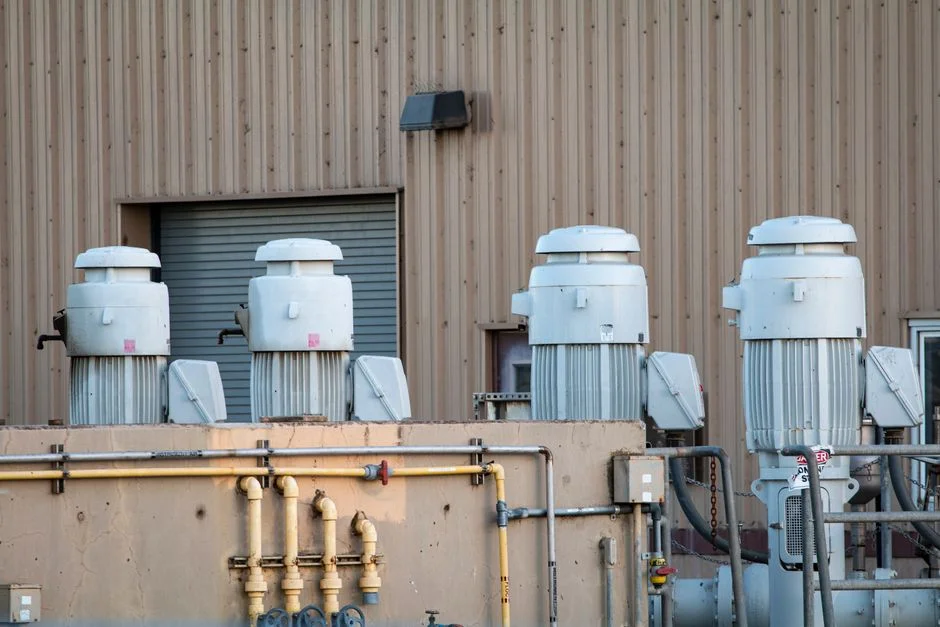
The WSZ process sequence is anoxic/aerobic biological contact oxidation, followed by sedimentation and disinfection within one buried package unit (HydropureWater verified product catalog, Underground Package Sewage Treatment Plant). The MBR alternative combines biological treatment with submerged PVDF membrane filtration below 1 μm and is presented as reducing footprint by 60% relative to conventional systems (HydropureWater verified product catalog, MBR Membrane Bioreactor Wastewater Treatment System). These are equipment-specific claims, not a Chile-wide performance comparison.
| Selection issue | Packaged A/O: WSZ | MBR | Decentralized biological route |
|---|---|---|---|
| Treatment architecture | Anoxic/aerobic biological contact oxidation, sedimentation and disinfection in a single buried package | Biological treatment with submerged PVDF membrane filtration below 1 μm | Vermifiltration combines filtration with earthworms; constructed wetlands can be integrated with microbial fuel cells |
| Stated capacity | 1–80 m³/h | 10–2,000 m³/day | No common equipment-capacity range was supplied |
| Listed or described applications | Residential communities, hotels, hospitals, factories and rural areas | Compact installations and membrane-based solids separation | Domestic sewage treatment, including septic-tank sewage in the vermifiltration study |
| Installation and footprint evidence | Can be installed below grade with landscaping above or mounted on a trailer for mobile deployment | Catalog claim of 60% footprint reduction versus conventional systems | Academic literature presents vermifiltration as capable of decentralization |
| Main buyer question | Can the package meet the site flow, access, sludge-removal and local approval requirements? | Are compactness and membrane separation worth the lifecycle obligations for this project? | Is the route supported by sufficient site, operator and performance evidence? |
The WSZ is described as fully automated and requiring no operator, with listed capacity of 1–80 m³/h and applications spanning residential communities, hotels, hospitals, factories and rural areas (HydropureWater verified product catalog, Underground Package Sewage Treatment Plant). It can be buried below grade with landscaping above or mounted on a trailer for mobile deployment. Because no land-requirement figure was supplied, the buyer should request the proposed dimensions rather than infer a footprint.
The MBR membrane bioreactor system has a stated capacity of 10–2,000 m³/day, submerged PVDF membrane filtration below 1 μm and a 60% footprint reduction compared with conventional systems (HydropureWater verified product catalog, MBR Membrane Bioreactor Wastewater Treatment System). It is therefore the stronger candidate to evaluate where compactness or membrane-based solids separation is central, subject to site flow, pretreatment, reuse objective and maintenance capability.
Vermifiltration is described as efficient, viable, less expertise-intensive and suitable for decentralization, and has been applied to domestic septic-tank sewage (IntechOpen, Application of Vermifiltration for Domestic Sewage Treatment). No supplied source establishes that any one technology has universally superior effluent quality under Chilean conditions.
Build a Site-Specific Sizing Basis
Equipment sizing must begin with measured or credibly calculated wastewater flow and load, not occupancy labels or catalog capacity alone. The tender should define average flow, peak flow, seasonal variation, wastewater temperature and organic loading, and identify any industrial contribution before comparing treatment trains.
Separate sanitary sewage from stormwater, kitchen wastewater, laundry discharge, laboratory wastewater and other streams. A discharge destination must also be fixed early: sewer, surface water, infiltration or reuse. The buyer should obtain the corresponding current local requirements rather than inserting an unsupported national effluent limit.
| Sizing input | Minimum evidence in the tender | Why it changes selection |
|---|---|---|
| Hydraulic load | Daily flow, peak flow, seasonal variation and peak factor basis | Defines hydraulic treatment duty and equalization requirements |
| Organic and solids load | Biodegradable organic load, suspended solids and relevant industrial contaminants | Determines biological capacity and solids separation duties |
| Wastewater temperature | Site temperature range affecting biological treatment | Provides the operating basis for the biological stage |
| Pretreatment | Separate streams, screening, grease and grit requirements | Protects biological and membrane stages |
| Destination and reuse objective | Discharge point, receiving requirements or intended reuse | Defines treatment stages and monitoring |
| Operations | Access, utilities, controls, sludge route and attendance | Tests whether the proposed train is operable at the site |
The supplied capacity ranges are equipment-selection boundaries, not automatic design selections: WSZ at 1–80 m³/h and MBR at 10–2,000 m³/day (HydropureWater verified product catalogs, Underground Package Sewage Treatment Plant and MBR Membrane Bioreactor Wastewater Treatment System). Both average and peak site flows must fit the proposed configuration, with the supplier stating its design basis.
Each bid should identify design flow, treatment stages, standby or redundancy, footprint, utilities, sludge handling and expected operating attendance. If tertiary reuse is required, evaluate the wastewater train first and then decide whether additional polishing is justified. The academic source on tertiary domestic-wastewater reuse supports that treatment stage but does not supply a universal reuse standard (PubMed, Tertiary treatment of domestic wastewater for reuse). Where justified, ultrafiltration equipment and UV disinfection equipment should be evaluated only against the confirmed reuse objective.
Choose Equipment and Plan for Operation
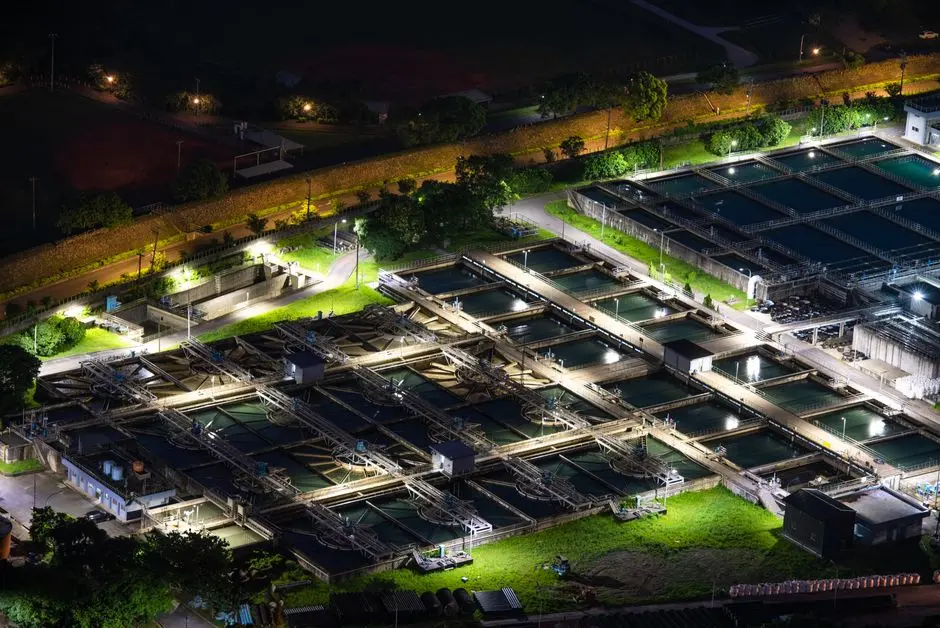
A defensible equipment selection follows four stages: characterize the wastewater, define the required outcome, compare technically compliant treatment trains, and verify the supplier’s proposed duty envelope. The commercial comparison comes after those technical checks.
- Characterize: establish average and peak flow, load, wastewater temperature, solids, contaminant contributions and pretreatment needs.
- Define: specify the discharge or reuse destination, required evidence, monitoring arrangement, footprint, utilities and operating model.
- Compare: evaluate packaged A/O, MBR and other decentralized routes against the same site inputs.
- Verify: require each supplier to demonstrate that its proposed configuration covers the stated flows, loads and operating conditions.
Ask whether quoted capacity represents average flow, peak flow or both. The supplied WSZ and MBR information gives equipment ranges but does not define sizing margins or redundancy rules (HydropureWater verified product catalogs, Underground Package Sewage Treatment Plant and MBR Membrane Bioreactor Wastewater Treatment System). A catalog limit is not a substitute for a site-specific design flow.
Confirm civil works, maintenance access, electrical supply, controls, odor control, effluent conveyance and any above-ground access or control enclosure required for a buried installation. For an MBR proposal, include aeration, membrane cleaning, membrane-replacement planning and solids handling in the lifecycle review. For a packaged A/O proposal, include inspection access, sludge removal, disinfection service items and the operational consequences of the stated no-operator concept at a remote site.
Compare automatic controls, installation flexibility, maintenance scope, reuse readiness, supplier documentation and local service support using verifiable proposals rather than unsupported cost or payback claims. Sewage-sludge handling belongs in the procurement scope because INE reported incomplete sludge-volume data in Chile’s environmental statistics (INE, 2015-04-30). Where solids dewatering becomes necessary, the plate-frame filter press should be evaluated as a defined solids-management component rather than an assumed addition.
A Practical Procurement and Compliance Checklist
A complete bid should let the evaluator trace the project from wastewater characterization to discharge, reuse, operation and sludge disposal. Partial quotations should be returned for clarification where the process boundary or approval responsibility cannot be established.
- Request a site-specific process basis covering flow, load, treatment objective, discharge or reuse destination and operating assumptions.
- Require an equipment schedule listing treatment stages, capacities, dimensions, utilities, controls, materials, accessories, commissioning tasks and maintenance intervals.
- Require suppliers to distinguish catalog capacity from the proposed site design flow and disclose operating limitations.
- Request supporting documentation only for processes included in the quotation: biological treatment, solids separation, disinfection and any reuse-polishing stage.
- Confirm permit, sewer-acceptance, sampling, monitoring and sludge-disposal responsibilities with the competent authority and service provider.
- Include startup training, remote-control support, spare parts, routine service and emergency-response obligations in the commercial comparison.
- Verify that the underground package sewage treatment plant or MBR membrane bioreactor system has been proposed against the same complete checklist, rather than allowing incomparable scopes.
No supplied source provides current Chilean equipment prices, installation costs or standard project payback periods. Obtain vendor-specific quotations that separate equipment, civil works, commissioning, utilities, service, consumables and solids management, then request lifecycle-cost evidence based on the stated operating assumptions.
The official source used for institutional context was published by INE on 2015-04-30 and contains explicit statistical gaps. Every permit, sewer-capacity and monitoring item therefore requires current confirmation with the relevant authority; the historical publication cannot establish present compliance.
Frequently Asked Questions
Which treatment technology is best for domestic sewage treatment in Chile?
No technology is universally best. Compare packaged A/O, MBR and decentralized biological routes against confirmed flow and load, reuse objective, footprint, pretreatment, automation and operator availability. Packaged A/O is listed for residential communities, hotels, hospitals, factories and rural areas at 1–80 m³/h, while the MBR is stated at 10–2,000 m³/day; neither capacity range proves suitability without a site design basis.
How much should domestic sewage treatment equipment cost for a Chilean project?
The supplied research provides no current Chilean equipment price, installation cost or standard project payback period. Request itemized quotations covering the treatment train, civil works, utilities, commissioning, maintenance, consumables, controls and sludge handling. Compare offers only after normalizing the scope and operating assumptions.
How should a supplier be selected for a packaged sewage treatment plant in Chile?
Require verifiable process design, a site-specific proposal, dimensions, treatment capacities, utilities, operating limits, commissioning tasks, documentation and local service support. Confirm that the supplier addresses sludge removal, monitoring and the project’s current permit conditions. A lowest-price offer is not acceptable if these elements are missing.
Can hotel wastewater flow be calculated from guest occupancy alone?
No. A hotel wastewater treatment sizing guide illustrates why application-specific inputs matter, but occupancy alone cannot establish average flow, peak flow, organic load or reuse demand. Obtain measured or defensibly calculated flow data and confirm the applicable discharge and reuse requirements locally.