What Makes High-COD Trade Waste a Problem for Mandan?
In 2026, Mandan-area manufacturers should not send high-COD trade waste directly to the City of Mandan’s wastewater treatment plant. The practical approach is to characterize and reduce the source load; equalize flow; remove floatables, oil and suspended solids; use biological treatment for biodegradable organics; and provide additional polishing only when the reuse or discharge objective requires it. The local POTW uses extended aeration with selector and alternating aerobic-anaerobic zones, followed by clarification and UV disinfection. Its permit also includes industrial pretreatment requirements, making an approved local pretreatment program essential.
COD is an aggregate measure of oxidizable material, but it does not identify how much oxygen demand will be exerted through biological oxidation or how much of the load consists of suspended material. BOD5, by contrast, measures the biochemical oxygen demand associated with biological treatment. The distinction matters because the City reports about an 87% reduction of organics, expressed as BOD, in its selector basin, where influent is mixed with return activated sludge for approximately 4.3 hours (City of Mandan, Treatment Process).
The receiving plant has finite process capacity. The North Dakota Department of Environmental Quality’s NDPDES fact sheet, dated July 1, 2021, reports an average flow of 1.5 million gallons per day and a design capacity of 2.2 MGD for the City’s extended aeration activated-sludge facility. That is plant context, not available industrial pretreatment capacity. A manufacturer must therefore demonstrate that its discharge will not create an excessive hydraulic or organic burden relative to the permitted system and its local limits.
Concentration alone is not the governing criterion. Calculate COD mass load from measured flow and COD concentration, then evaluate variability across production, cleaning and dumping cycles. Industrial slug loading can create short-lived oxygen demand and solids shocks; oil and grease can interfere with biological treatment or separation; suspended solids can burden clarifiers; and pH, toxicity, salinity or incompatible chemistry can inhibit activated sludge. The historical influent BOD5 range of 153–405 mg/L, reported in the July 1, 2021 NDPDES fact sheet, shows that an industrial contribution must be assessed against the POTW’s broader organic-loading range.
Before selecting an automatic chemical dosing system, define whether chemical addition is actually needed. Source control, segregation and equalization may remove more risk than adding a chemical that does not address the dominant contaminant.
Characterize the Waste Before Choosing Equipment
A defensible treatment train begins with representative sampling and continuous flow measurement, not with a catalog selection. Develop a sampling plan that covers normal production, cleaning, batch dumps and other material-generating cycles. Obtain flow measurements independently from each discharged stream because a COD concentration without corresponding flow cannot establish COD mass loading or equipment capacity.
The analytical package should include COD, BOD5, pH, TSS, oil and grease, flow and temperature. Identify possible toxic or inhibitory compounds, and include whole effluent toxicity testing where required by the receiving authority. The July 1, 2021 NDPDES fact sheet identifies whole effluent toxicity as a regulated parameter and lists oil and grease at a 10 mg/L daily maximum in its historical permit table.
Use the permit context to frame the pH envelope. The fact sheet lists a technology-based range of 6.0–9.0 standard units and a Missouri River water-quality range of 6.5–9.0 standard units. These figures come from a permit fact sheet with a September 30, 2026 expiration date; they are not a substitute for the City’s current signed permit, local pretreatment limits or written discharge authorization.
| Characterization input | Decision supported | Information required before design |
|---|---|---|
| COD and BOD5 | Organic-load removal and biological feasibility | Representative composite results with flow correlation |
| Flow profile | Equalization, hydraulic capacity and slug control | Production, cleaning and dumping-cycle records |
| TSS and oil and grease | Solids, FOG and DAF pretreatment need | Particulate and soluble fractions |
| pH and temperature | Chemical correction and biological operating conditions | Range during discharge, not only a grab sample |
| Toxic, saline or incompatible constituents | Toxicity testing, source control or specialized treatment | Process inventory and analytical identification |
Classify the dominant problem as biodegradable soluble organics, particulate or colloidal material, oily waste, toxicity, salinity or high pH. This classification determines whether biological treatment, solids removal, chemical control or specialized treatment belongs in the train. The Murdoch University dissertation on vertical-flow constructed wetlands concerns inorganic industrial wastewater, while the OSTI study addresses high-salt, high-pH wastewater using crystalline silicotitanate resin; neither is direct evidence that either approach suits every Mandan manufacturer.
Obtain the City’s current pretreatment limits, sampling requirements and permit status before ordering equipment. The July 1, 2021 NDPDES fact sheet identifies industrial pretreatment requirements and a September 30, 2026 permit expiration date. A 2026 sewer-limit implementation framework and a separate plastics and rubber plant pretreatment example can help structure those permit questions, but neither replaces Mandan-specific requirements.
Build a Pretreatment Train That Protects the Municipal System
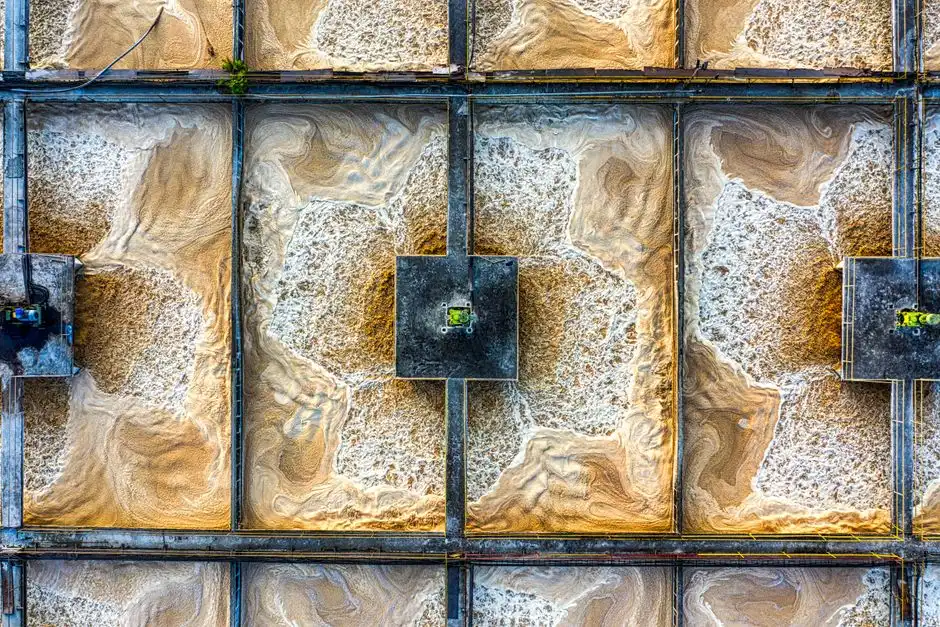
Start with source control and equalization: eliminate concentrated dumps where practical, segregate incompatible streams, balance discharge flow and return accumulated product to production. These measures reduce both the peak mass load and the chance that a slug will overwhelm the biological process. Mandan’s selector basin mixes influent with return activated sludge for approximately 4.3 hours, followed by an aeration basin with alternating aerobic and anaerobic zones (City of Mandan, Treatment Process). The manufacturer’s treatment train should protect that downstream buffer rather than depend on it to absorb unmanaged industrial peaks.
Screen the waste only when rags, plastics or fibrous material can reach the sewer. Mandan’s headworks includes an automatic rotary fine screen and micro-strainer before grit removal. A rotary mechanical bar screen can address defined debris, but it does not remove dissolved biodegradable COD.
Use dissolved air flotation when suspended solids, colloids, FOG, oil and grease are important targets. The industrial DAF pretreatment system is published in a range of 4–300 m³/h across 13 models and uses automatic skimming. DAF can recover floatable material and reduce solids entering biological treatment, but it is not a substitute for biological treatment when the residual COD remains soluble and biodegradable. The cavitation air flotation process flow provides a separate technical reference for flotation-system configuration.
Use biological treatment when the remaining high load is biodegradable and compatible with the activated-sludge process. Mandan’s WaveOx system alternates aerobic and anaerobic zones, with nitrification occurring when dissolved oxygen is between 1–2 mg/L; operators manage denitrification by changing the sequence of operating zones (City of Mandan, Treatment Process).
| Process stage | Primary function | Design condition |
|---|---|---|
| Source control and equalization | Reduces mass-loading peaks and incompatible discharges | Measured flow profile and production records |
| Screening or solids removal | Removes rags, plastics and excessive solids | Confirmed debris or particulate loading |
| DAF | Removes floatables, FOG and part of the solids load | Representative oil, grease and solids data |
| Biological treatment | Reduces biodegradable soluble COD | BOD, COD, inhibition and equalization results |
| Chemical dosing | Controls pH, coagulation or flocculation | A defined chemical objective and reaction demand |
| Polishing or disinfection | Meets reuse or microbial-control requirements | Final effluent specification and receiving-site requirements |
Treat high-salt or high-pH wastewater as a specialized design problem. The OSTI study documents resin-based treatment for high-salt, high-pH wastewater associated with radionuclide removal; it does not establish biological compatibility for general industrial effluent. Reserve constructed wetlands for sites with suitable land and hydraulic conditions. The 2011 Murdoch University dissertation identifies COD, BOD, hydraulic loading rate, hydraulic retention time and dissolved oxygen as key wetland-design parameters.
Add chemical dosing only for a defined objective. An automatic chemical dosing system may provide repeatable pH control, coagulation or flocculation, but the chemical, dose, residual and downstream compatibility must be established from the waste characterization.
Select Biological Treatment or MBR for the Remaining Organics
Choose conventional extended-aeration or packaged biological treatment when the objective is compliant discharge and the waste is predominantly domestic-compatible or readily biodegradable. Choose an integrated MBR wastewater treatment system when compact equipment, integrated solids separation or near-reuse-quality effluent justifies the additional process and maintenance requirements.
Mandan’s operating pattern provides a useful biological reference. The WaveOx process alternates aerobic and anaerobic zones, with nitrification at a dissolved oxygen of 1–2 mg/L. This sequencing allows nitrification and denitrification to be managed through zone operation rather than treating nitrogen removal as an unrelated add-on (City of Mandan, Treatment Process).
The published MBR configuration uses submerged PVDF membranes, filtration below 1 μm, a footprint 60% smaller than conventional systems and capacity from 10 to 2,000 m³/day. Those specifications make MBR a credible option for a space-constrained installation with a defined effluent objective, but they are not blanket guarantees for every high-COD feed. Equalization, biodegradability, membrane compatibility, biological inhibition and sludge handling remain design prerequisites.
| Decision factor | Conventional activated sludge | MBR |
|---|---|---|
| Primary role | Biodegradable organic removal | Biodegradable organic removal plus membrane solids separation |
| Space | Typically requires a larger process footprint | Published configuration states a 60% smaller footprint than conventional systems |
| Published capacity | Project-specific from hydraulic and organic loading | 10–2,000 m³/day |
| Separation | Clarification or external solids separation | Submerged PVDF membranes; filtration below 1 μm |
| Principal concern | Activated-sludge process control and sludge handling | Membrane compatibility, fouling control and biological inhibition |
Do not treat MBR as a universal high-COD solution. A high COD result may contain inert, toxic, saline or slowly biodegradable material that does not translate into useful biological treatment. Test the actual waste or a representative pilot stream before fixing the biological duty and membrane area. The MBR versus conventional activated sludge comparison is useful for structuring that decision, although semiconductor wastewater is not evidence of performance for every Mandan stream.
Plan sludge removal and dewatering after biological treatment. Excess solids, return activated sludge and waste activated sludge require a defined handling route. A plate and frame filter press is one separation option for reducing sludge volume before disposal. For smaller flows, the published WSZ package combines anoxic or aerobic contact oxidation, sedimentation and disinfection within a stated 1–80 m³/h range, but that range must fit the measured discharge and process conditions.
Match the System to the Waste and Discharge Objective
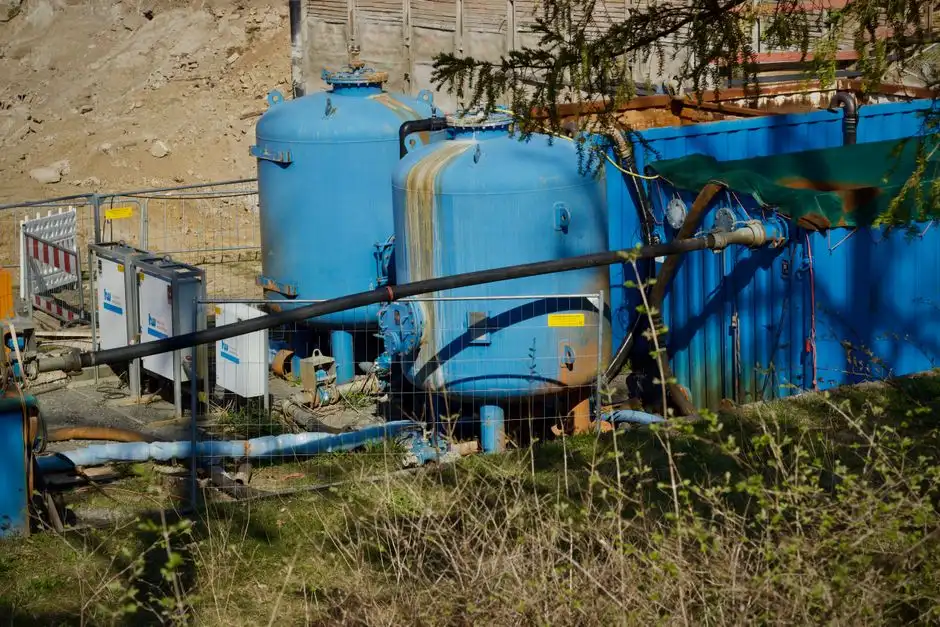
Match equipment to the contaminant and objective that dominate the design, then verify that every proposed stage has a defined duty. A high COD concentration does not determine whether DAF, activated sludge, MBR, a constructed wetland or chemical pretreatment is correct; the waste’s physical, chemical and biological characteristics do.
| Candidate | Target or hydraulic role | Principal output | Main concern |
|---|---|---|---|
| DAF | Suspended solids, colloids, FOG and floatables | Float and separated solids | Residual soluble biodegradable COD |
| Activated sludge | Biodegradable soluble COD | Biologically treated mixed liquor and waste sludge | Process control and sludge handling |
| MBR | Biological treatment and solids separation | Low-solids effluent | Membrane fouling and feed compatibility |
| Constructed wetland | Land-based biological and physical treatment | Treated effluent | Loading, retention time and dissolved oxygen |
| Chemical pretreatment | pH control, coagulation or flocculation | Adjusted or flocculated wastewater | Chemical demand and downstream effects |
Treat DAF as pretreatment rather than as a substitute for biological treatment when soluble biodegradable COD remains. Treat MBR as a combined biological and membrane-separation option for industrial process water or reuse objectives, subject to feed characterization. The WSZ package is published for flows from 1–80 m³/h and is relevant to smaller discharges, but it must be matched to the measured flow and treatment objective.
Use sludge dewatering and final disinfection only after the liquid-treatment train is defined. A plate and frame filter press addresses sludge-volume reduction, not COD removal. A UV water-treatment system addresses microbial control, not soluble organics. Adding either upstream of an unresolved treatment problem increases capital and operating complexity without correcting the core load.
Require each supplier to define the specified feed range, hydraulic duty, final effluent objective, test method and acceptance test before comparing capital cost or lead time. Ask for guarantees tied to the characterized waste, not a generic high-COD performance statement. Request the inputs needed to calculate chemical use, sludge production, utility demand, maintenance frequency and disposal cost.
Test, Commission and Document Compliance in 2026
Verify the selected process with the actual waste or a representative pilot campaign before full installation. A supplier’s laboratory results do not establish performance with production cleaning chemicals, food residues, oils, metals, salinity or fluctuating dumps. The pilot should test the selected hydraulic and organic duty, record effluent quality, identify sludge and chemical requirements, and demonstrate response to the expected slug loads.
Confirm the City’s current industrial pretreatment permit, local limits, monitoring points, self-monitoring requirements and sampling instructions. The July 1, 2021 NDPDES fact sheet explicitly includes industrial pretreatment requirements and identifies a September 30, 2026 permit expiration date. Obtain the current signed permit and City determinations rather than relying on the older fact sheet.
| Compliance item | Reported permit fact | Manufacturer action |
|---|---|---|
| BOD5 and TSS | 30 mg/L monthly average and 45 mg/L weekly average in the July 1, 2021 fact sheet | Confirm current limits and demonstrate treatment performance |
| pH | Technology-based range of 6.0–9.0 standard units in the fact sheet | Set continuous control, alarms and shutdown response |
| Oil and grease | 10 mg/L daily maximum in the historical permit table | Provide pretreatment, monitoring and an inspection trail |
| Whole effluent toxicity | Included among regulated parameters in the fact sheet | Obtain the current testing requirement and characterize toxicity |
| Upset or slug loading | Mandan can route flow to cells two or three during an untreatable slug, hydraulic overload or maintenance | Provide off-line storage or an approved diversion plan |
Track BOD5 and TSS against the fact sheet’s reported limits, while treating those values as historical permit information rather than a substitute for the current signed permit. Monitor pH, oil and grease and whole effluent toxicity as applicable. Include off-line storage or diversion for upset conditions; the City reports that flow may be routed to cells two or three during an untreatable slug load, hydraulic overload or plant maintenance.
Prepare an operations plan covering sludge removal, chemical inventory, membrane or media maintenance, calibration, alarms, sampling frequency and contingency response. The plate and frame filter press option requires a defined cake-disposal route, while available valves and filter media must be supported by critical spares, inspection intervals and fail-safe operating states. Record every operating change against the permit and pretreatment authorization.
Frequently Asked Questions
What pretreatment capacity does a Mandan manufacturer need for a high-COD discharge?
Size pretreatment from the measured flow range and COD mass load, not a concentration alone. Provide representative composite results, production and dumping-cycle flow records, and the current City pretreatment limits to the equipment supplier. The supplier should then state its design flow, feed range and performance basis in the quotation.
Should a Mandan manufacturer choose DAF, activated sludge or MBR for high-COD trade waste?
Choose DAF when floatables, FOG and suspended solids dominate; choose activated sludge when the residual load is biodegradable and discharge to the POTW is the objective; consider MBR when compact biological treatment, integrated solids separation or reuse-quality effluent is required. Confirm the decision with COD, BOD5, TSS, oil and grease, flow and inhibition testing.
How much does industrial wastewater pretreatment cost in Mandan, and which costs drive the budget?
The supplied research provides no Mandan pretreatment price, so any budget would be unsupported without a project-specific quotation. Request itemized pricing for equalization, screening, DAF or biological equipment, sludge dewatering, controls, installation, utilities, chemicals, maintenance and permit-support work. Include the characterized feed duty and final effluent objective with the request.
Which information should a wastewater equipment supplier request before quoting a treatment system?
Require the representative waste analysis, flow profile, process origins, target discharge or reuse quality, current local limits, operating schedule and sludge-disposal constraints. The supplier should identify proposed equipment, guarantees, test methods, utility demand, consumables, spare parts, commissioning responsibilities and delivery schedule. These inputs are necessary for an apples-to-apples comparison.
What should be done if the City’s pretreatment limits or NDPDES permit terms change during a 2026 project?
Place permit-conforming design as a contractual requirement and obtain written confirmation from the City. The July 1, 2021 NDPDES fact sheet identifies a September 30, 2026 expiration date, so the project must not assume that its cited limits remain unchanged. If terms change before award, revise the basis of design and quotation; if they change afterward, evaluate the delta through a documented change order and permit-compliance review.
Related Equipment
- integrated MBR wastewater treatment system — specifications, capacity range, and technical data