Determine Which Rules Control the Sewer Discharge
Mining and metals plants near Rockholds meet sewer pretreatment requirements by treating wastewater before the point of connection to a POTW and proving compliance with current sewer rules and applicable categorical standards. EPA confirms that POTW local limits apply at the industrial user’s end-of-pipe discharge. The facility must identify its waste streams, test representative flows and contaminants, and confirm the controlling POTW rules, state authorization, and industrial-user permit. No Rockholds-specific numerical limit can be inferred from the supplied research.
The first engineering task is therefore records work, not equipment selection. A sewer discharge is an indirect discharge governed by the Clean Water Act pretreatment framework at 40 CFR Part 403. NPDES permitting remains relevant to qualifying direct discharges to surface waters, but it is a separate pathway from industrial discharges to a POTW collection system (US EPA, Industrial Wastewater, 2017-01-19 snapshot; US EPA, “Pretreatment Standards and Requirements—Local Limits,” accessed 2026).
Next, determine whether the operation is a categorical industrial user and which federal category actually applies. The supplied research identifies 40 CFR Part 436 for specified mining and mineral-processing wastewater and notes that Part 433 may apply to metal-finishing operations. A reserved Part 436 subpart does not establish that no requirement applies; the operator must verify the mineral category and subpart against current federal and state records (HydropureWater, “How Mining and Metals Plants Near Odds Meet Sewer Limits,” 2026-02).
Request the current POTW sewer-use ordinance, written local limits, prohibited discharges, monitoring rules, acceptance conditions, and industrial-user permit. EPA identifies 40 CFR Part 403.5(c) as the provision governing POTW development of local limits. The records review should also compare the industrial-user permit with state authorization, reuse rights, and any separate NPDES coverage. Use the resulting permit conditions—not a location-swapped article—as the numerical design basis.
| Record to obtain | Engineering or compliance question answered |
|---|---|
| Current POTW sewer-use ordinance and written local limits | What pollutants, pH conditions, monitoring duties, discharge prohibitions, and acceptance conditions control at the point of connection? |
| Industrial-user permit and state authorization | Which unit operations, sampling frequencies, reporting requirements, bypass controls, and corrective actions are enforceable? |
| Federal category and subpart determination | Does a categorical pretreatment standard apply to this mining or metals operation, and which parameters does it cover? |
| NPDES coverage, if applicable | Which separate discharges go directly to surface water rather than to the POTW? |
| Rockholds POTW confirmation | Who receives the discharge, and are its current local rules accessible in writing? No POTW, authorization, or local numerical limit is established by the supplied research. |
Related site frameworks for mining and metals discharge controls near Holmes Mill and mining sewer-limit compliance near Emery County can support the records-review method, but their locations and limits must not be substituted for Rockholds requirements.
Characterize Each Wastewater Stream Before Sizing Equipment
Mine drainage, mineral-processing water, tailings-pond effluent, and dewatering discharge should remain separate streams until representative testing shows they can be combined without increasing peak mass loading or changing the required treatment. Combining them may dilute concentration while preserving pollutant mass, producing a discharge that looks acceptable in a grab sample but exceeds the limit during a short high-flow event. A defensible design is based on measured flow, concentration, and the operating condition that controls treatment demand (AMPAC USA, 2025-09, as cited in HydropureWater, 2026-02).
Build the sampling program around flow, pH, metals, TSS, oil and grease, process-reagent residuals, conductivity or TDS, and seasonal or storm-event variation. Sampling must represent normal production, peak discharge, startup, shutdown, rainfall, and other material operating conditions before equipment sizing. Record both peak hydraulic flow and maximum contaminant mass loading using representative concentration and flow; nameplate capacity alone does not demonstrate performance during the controlling event (HydropureWater, 2026-02).
Stream chemistry determines the treatment objective. Acid mine drainage can carry dissolved iron, manganese, copper, zinc, arsenic, and cadmium. Mineral-processing water may contain cyanide, ammonia, or chloramines depending on the process. Tailings-pond effluent can add fine solids, process chemicals, and leached metals, while dewatering discharge varies with local geology. These are screening parameters, not proof that any one constituent is present at the facility; laboratory results must establish the actual profile.
Equalization can buffer variation, but it does not erase peak mass loading. If a batch discharge creates the controlling metal or solids load, the clarifier, chemical system, filters, and sludge route must be able to treat that event. The sampling plan should therefore connect flow records to process conditions and operating logs rather than relying on a single average daily flow.
| Stream | Data to establish | Treatment objective before equipment selection |
|---|---|---|
| Mine drainage | Flow, pH, acidity, dissolved metals, TSS, conductivity or TDS, storm response | Determine whether equalization and controlled pH adjustment plus precipitation are required and how much precipitation capacity is needed. |
| Mineral-processing water | Metals, process-reagent residuals, pH, flow variation, relevant oil and grease or process-specific contaminants | Identify the required removal mechanism and whether any stream requires separate treatment. |
| Tailings-pond effluent | TSS, fine solids, metals, pH, flow and storm-event variation | Set solids capture, clarification, filtration, and sludge-generation requirements. |
| Dewatering discharge | Flow, pH, metals, TSS, geology-dependent composition | Determine whether it can join another stream after equalization and characterization. |
Chemical-use data, electrical demand, available footprint, operator capability, and the residual-sludge destination belong in the design basis before quotation. A heavy metals removal methods comparison for industrial wastewater can help frame technology choices, but jar or pilot results and representative site data must determine chemical dose, separation performance, and downstream polishing needs.
Build a Treatment Train Around the Controlling Discharge Condition
A treatment train should be assembled as a sequence of assigned barriers, not as a list of sophisticated equipment. Start with equalization to buffer batch, production, and storm-event variability. Apply controlled pH adjustment where hydroxide precipitation is the selected metals-removal mechanism, then use coagulation and flocculation to aggregate suspended solids and fine metal-bearing particles before clarification. Chemical choice and dose must come from representative testing and jar or pilot results rather than generic claims (Genesis Water Technologies and PMC review, 2024-02, as cited in HydropureWater, 2026-02).
DAF and lamella clarification solve different problems. Use DAF where buoyant floc, oil, grease, floatable fines, or suitable colloidal material must be removed. A DAF system for mining solids and floatable contaminants is available in the supplied catalog across 13 models and 4–300 m³/h; that is equipment-selection capacity, not guaranteed treatment performance (HydropureWater product catalog, 2026).
Use lamella clarification where compact separation of metal-bearing sludge is the controlling design factor. The supplied catalog states surface-loading rates of 20–40 m/h and up to 30% lower chemical consumption; both remain subject to project-specific verification. Multimedia filtration then provides a residual-solids and colloid barrier and protects downstream membranes where used.
UF is appropriate for fine colloids and suspended solids when chemical addition is not required. The specified system uses 0.03-micron PVDF membranes, accepts up to 300 ppm turbidity, and is offered from 2,000 to 40,000 L/h. Reserve RO for dissolved metals or salts that remain above the confirmed sewer requirement or a reuse target. The supplied research reports greater than 99% rejection of dissolved metals and salts, while an RO-enabled internal reuse arrangement is associated with a 40–60% reduction in freshwater intake (AMPAC USA, 2025-09, as cited in HydropureWater, 2026-02).
| Unit operation | Use it when | Required design evidence |
|---|---|---|
| Equalization basin | Hydraulic or batch variation could overload downstream treatment | Peak-flow record, equalization model, operating envelope, isolation and permitted-storage provisions |
| pH adjustment and precipitation | Dissolved metals require hydroxide precipitation | Representative chemistry, selected reagent, pH setpoint, jar or pilot dose, sludge estimate |
| Coagulation and flocculation | Fine solids and metal-bearing particles need aggregation | Polymer or coagulant testing, mixing conditions, settled or floated sludge characteristics |
| DAF | Floatable material, oil, grease, or suitable colloidal contaminants are present | Feed characteristics, flotation performance, hydraulic load, sludge handling |
| Lamella clarification | Metal-bearing sludge separation or footprint is the constraint | Solids loading, chemical demand, underflow performance and sludge route |
| Multimedia filtration | Residual solids or colloids must be removed | Turbidity or SDI at the control point, differential-pressure trend, backwash requirements |
| UF | Fine colloids or suspended solids remain before RO | Acceptable feed turbidity, flux, differential pressure, backwash and recovery |
| RO | Dissolved metals or salts exceed the sewer limit or reuse target | Site mass balance, recovery, concentrate management, permeate quality and membrane compatibility |
The DAF versus clarifier selection guide provides a useful mechanical comparison, but the final selection must follow the Rockholds permit, confirmed POTW limits, and representative tests. If reuse is in scope, validate recovery through a site-specific mass balance that accounts for water leaving with sludge, membrane concentrate, and other discharge streams.
Turn Treatment Residuals into a Managed Waste Stream
Treatment does not end at the final discharge; precipitation, DAF, and lamella units generate solids that must have a feasible destination. Characterize expected volume, measured cake characteristics, chemical residuals, and the receiving site’s acceptance criteria. A treatment train whose water meets the sewer limit but whose sludge cannot be dewatered, transported, or accepted does not provide an operable compliance solution.
A plate-and-frame filter press is a candidate where precipitated mining sludge requires dewatering. The supplied catalog covers filtration areas from 1 m² to 500 m² and offers manual, hydraulic, and fully automatic PLC-controlled configurations (HydropureWater product catalog, 2026). These configurations do not establish cycle time or final cake dryness. Specify the press against measured cake volume, target dryness, cycle time, filtrate destination, operating labor, and disposal-site acceptance criteria.
Include chemical storage and handling, residual-sludge destination, controls, redundancy, and stream segregation in the quotation package. Return filtrate to the process only after its quality and treatment implications have been evaluated; the filtrate can still contain constituents that affect pH, chemical demand, or downstream solids loading. A comparison of screw press and belt press dewatering options can support the mechanical review, but the site-specific sludge tests and receiving-site criteria must control press selection.
Verify Compliance with Monitoring and Operating Controls
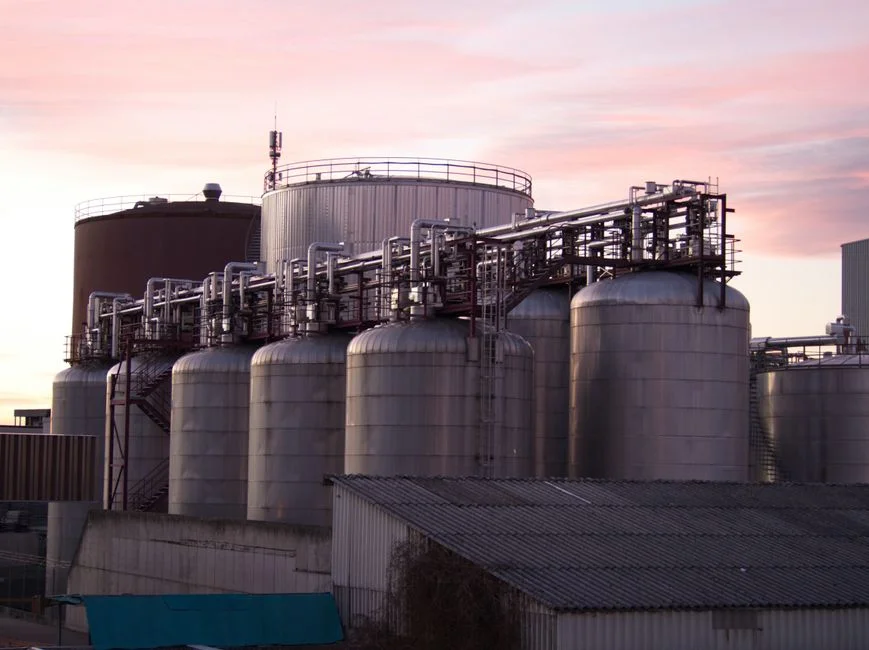
Compliance monitoring should be designed to locate an excursion, not merely produce a final-discharge number. Define sample points for untreated streams, equalization, chemical treatment, clarification, filtrate, and final discharge. That sequence lets operators distinguish source chemistry, dosing, solids separation, filtration, or membrane-treatment failure and supports corrective action.
Verify pH setpoints, chemical dosing trends, solids-removal performance, filter or membrane differential pressure, RO recovery where applicable, and sludge-generation records. Continuous pH, flow, and conductivity monitoring should feed PLC/HMI records and support POTW self-monitoring requirements. Final monitoring frequencies and numerical compliance triggers must come from the current industrial-user permit and POTW requirements; they cannot be inferred from general guidance (HydropureWater, 2026-02).
Create written alarm, bypass, upset, and high-flow procedures. Each procedure should identify isolation points, permitted storage, sampling requirements, notification responsibilities, and restart criteria. It should also establish how a failed pump, depleted chemical supply, high-level basin, or membrane upset is contained so an equipment failure does not become an unpermitted discharge.
Control logic is part of the evidence package, not an accessory. A PLC-controlled chemical dosing system for pH and reagent addition can record operating trends, but the accepted performance depends on calibration, control logic, maintenance, and verified sample results. The current permit, written local limits, and site test results remain the controlling evidence; no general industry figure should be converted into a Rockholds compliance guarantee.
Issue a Procurement Package That Exposes Design Assumptions
A defensible procurement package lets bidders show how the proposed system handles the controlling Rockholds discharge condition. State peak and average flow in m³/h, representative influent pH and metal results, POTW limits for metals, pH, and TSS, and the desired recovery percentage when reuse is in scope. Include the permit or local-limit basis, sampling results, chemical-use data, footprint constraints, electrical-service information, and the residual-sludge route (HydropureWater, 2026-02).
Require each bidder to model average and peak flow, chemical consumption, sludge generation, membrane recovery, concentrate management, and redundancy. Request a detailed process flow diagram, mass balance, and guaranteed-effluent-quality basis. A supplier quoting equipment nameplate capacity without stating its operating assumptions has not demonstrated that the train will meet the controlling condition.
Also request expected chemical consumption, electrical load, footprint, instrumentation and control logic, redundancy, chemical handling, startup requirements, maintenance assumptions, and the residual-sludge route. The DAF and clarifier comparison for metals wastewater can frame the mechanical response, but the final bid should demonstrate compliance performance rather than equipment selection alone.
| Bid item | Acceptable response | Buyer check |
|---|---|---|
| Process basis | Average and peak flows, representative chemistry, permit conditions and controlling operating event | Does the design address the actual discharge envelope? |
| Performance basis | Process flow diagram, mass balance and guaranteed-effluent-quality calculation | Are sampling points, limits, and assumptions traceable? |
| Operating burden | Chemical consumption, electrical load, controls, redundancy and maintenance requirements | Can the facility operate and verify the system as proposed? |
| Residuals | Sludge volume, cake characteristics, filtrate route and disposal-site basis | Is the solids route real and permitted? |
| Price | Itemized capital scope and stated exclusions | Does the quote cover the complete compliant train? |
The supplied research gives a broad $250,000 to over $2 million range for a complete industrial-scale mining or metals pretreatment system. Actual cost depends on influent chemistry, required flow, and local discharge limits, so this range is a preliminary planning figure rather than a quotation (HydropureWater, “How Mining and Metals Plants Near Odds Meet Sewer Limits,” 2026-02).
Frequently Asked Questions
How much does a mining wastewater pretreatment system cost?
The supplied research places a complete industrial-scale mining or metals pretreatment system between $250,000 and over $2 million. That is a broad planning range, not a Rockholds quotation. Ask bidders for an itemized scope after reviewing influent chemistry, peak and average flow, confirmed POTW limits, chemical consumption, sludge handling, controls, and reuse requirements. A credible price should identify exclusions and tie each major item to the same process-flow and mass-balance basis used for compliance.
Should a Rockholds mine use DAF, a lamella clarifier, or both?
Use DAF when representative testing shows buoyant floc, oil, grease, floatable fines, or suitable colloidal material that must be removed. Use lamella clarification when compact separation of metal-bearing sludge is the priority. Both may be justified if the wastewater contains distinct floatable and settleable fractions, but the confirmation should come from wastewater testing and the POTW limits. Do not select either unit from nameplate capacity alone.
How should pretreatment equipment be sized for variable-flow mining operations?
Size around measured peak flow and maximum contaminant mass loading, not average daily flow alone. The sampling program must cover normal production, peak discharge, startup, shutdown, rainfall, and other material operating conditions. Equalization sizing must then reflect the selected operating strategy and storage requirements, while chemical, clarification, filtration, and sludge systems must handle the controlling event. Ask each bidder to state those assumptions explicitly.
What should a supplier provide to demonstrate that compliance risk is controlled?
Require the industrial-user permit and local-limit basis, representative sampling plan, process flow diagram, mass balance, equipment-sizing assumptions, controls, monitoring points, upset procedures, and residual-sludge route. Also request the guaranteed-effluent-quality basis and the operating records that will demonstrate performance. A statement that equipment “meets pretreatment limits” is not a substitute for showing the applicable condition and how it will be verified. If sulfur-bearing process chemistry may be present, use the sulfide removal treatment guide to assess whether separate treatment or polishing is required.
Is RO required before sewer discharge near Rockholds?
RO should be considered only when confirmed sewer limits or reuse objectives require removal of dissolved metals, salts, conductivity, or another dissolved constituent that conventional treatment cannot meet. No Rockholds numerical limit is established by the supplied research, so the current POTW rules and industrial-user permit must be obtained first. If RO is selected, validate recovery and concentrate management through a site-specific mass balance rather than relying on generic rejection or reuse claims.
Related Equipment
- DAF system for mining solids and floatable contaminants — specifications, capacity range, and technical data