Which Equipment Fits Holly Springs Fabricated Metals Wastewater?
Choose DAF for fabricated metals wastewater in Holly Springs when oil, grease, free oil, or buoyant solids are primary targets; choose a conventional or lamella clarifier when the stream is dominated by heavy, settleable solids and simpler operation is the priority. The decision depends on flow variability, TSS, oil and grease, pH, metal-bearing streams, chemical demand, sludge handling, and discharge limits. DAF Corp reports 92%–98% TSS removal for its FC Maximizer and 85%–90% for its RC UniMax, but those are model-specific figures. Treat them as screening information—not guarantees—and base the purchase on wastewater characterization, jar testing, and an onsite pilot.
Do not treat fabricated metals wastewater as one uniform stream. Stamping and roll oils, machining and grinding coolant, paint wash water, welding washdown, pickling effluent, and plating effluent require different treatment objectives. A plant that fabricates sheet metal and operates machining, painting, or finishing lines may need source segregation before selecting a primary treatment unit.
Use DAF as the leading option when free oil, emulsified oil, grease, or sufficiently buoyant solids are important targets. A conventional clarifier may be more suitable when heavy solids settle readily, while a lamella clarifier deserves consideration when compact solids separation is the main objective. An industrial DAF system remains part of a treatment train—not a substitute for source control, pH adjustment, dissolved-metal treatment, or biological treatment where required.
DAF Corp states that considerable study must be analyzed before choosing a wastewater solution and that a comprehensive wastewater study is often warranted. The supplied research does not establish Holly Springs discharge limits, sewer conditions, or pretreatment requirements. Confirm the applicable requirements for the actual facility with the receiving authority before defining performance guarantees or final equipment capacity.
How DAF and Clarifiers Remove Different Contaminants
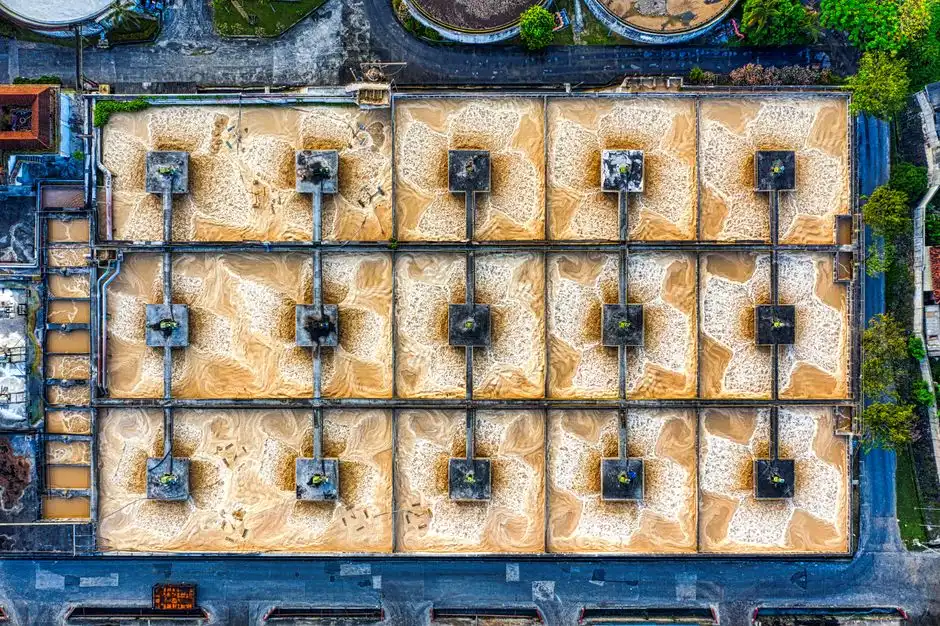
DAF separates impurities by flotation: recirculated clarified water is pressurized and mixed with air, then released into the flotation tank, where microbubbles attach to impurities and flocculated particles that are skimmed from the surface. Conventional clarification depends primarily on gravity settling, while lamella clarification uses inclined plates to improve the separation of settleable solids within a compact footprint. These distinct mechanical approaches dictate how different waste streams react to treatment.
Clearwater Industries states that its DAF process uses 30–50 micron micro-air bubbles, which attach to impurities and flocculated particles and carry them to the surface for skimming. That mechanism is materially different from sedimentation: it can recover buoyant material and flocculated particles that may not settle effectively on their own. DAF systems can also handle settled sludge; most systems include a sediment compartment or basin with sludge extraction, according to Clearwater Industries.
Coagulant and flocculant dosing, pH adjustment, and mixing affect attachment, flotation performance, sludge consistency, and downstream handling. Clearwater Industries describes flocculation tubes with 15–45 seconds of flash-mixing contact and notes that actual mixing time and chemical requirements should be established through jar testing. An automatic chemical dosing system therefore belongs in the process evaluation, not merely in an equipment-price comparison.
HydropureWater states that its lamella clarifiers use 20–40 m/h surface loading rates and can consume up to 30% less chemical than conventional clarification, but actual performance remains dependent on the selected equipment and wastewater. Those supplier figures are not project guarantees. A flotation skid may also need coarse screening upstream; Kemco Systems identifies coarse filtration, physical-chemical treatment, and sludge dewatering as typical elements of a DAF-based treatment arrangement.
Match the Wastewater Profile to the Treatment Objective
Source-specific characterization must determine the treatment train because the same fabricated metals facility can generate waste streams with opposite physical separation behavior. For stamping and roll-oil systems, test whether the oil is free or emulsified and whether upstream oil recovery or emulsion breaking is needed. For machining coolants, characterize suspended fines, particle size, settleability, and coolant chemistry before comparing DAF with conventional or lamella clarification.
Paint wash water requires separate evaluation of coating solids, pH, and chemical conditioning. Capturing those solids does not establish that the resulting sludge is disposable. Pickling and plating streams can contain dissolved metals, which physical clarification does not automatically remove; those streams may require chemical precipitation, ion exchange, or another dedicated process after segregation.
| Fabricated metals source | Procurement focus | Initial equipment direction |
|---|---|---|
| Stamping and fabrication lines | Free oil versus emulsified oil; oil and grease analysis; upstream recovery | Evaluate DAF with oil and grease removal |
| Machining and grinding | TSS, particle-size distribution, settleability, coolant chemistry | Compare DAF and clarifiers using representative samples |
| Paint wash water | Coating solids, chemical conditioning, pH, sludge characteristics | Evaluate physical removal only with a defined sludge route |
| Welding washdown | Suspended welding solids, metals, flow generation | Characterize solids behavior before assigning the unit |
| Pickling and plating | Dissolved metals, pH, source segregation | Clarification plus separate dissolved-metal treatment where required |
The defensible sequence is to map source streams; collect flow and analytical data; identify the required treatment objective; jar-test candidate chemistry; compare particle-removal behavior; pilot the shortlisted equipment; and scale from verified results. For solids disposal planning, evaluate a sludge dewatering filter press against the actual sludge rather than assuming either clarification process produces the same residue.
Compare DAF and Clarifiers Before Ordering
DAF and clarifiers differ in separation mechanism and feed fit, but the procurement comparison must extend to chemistry, residuals, installation, and reliability. A DAF unit is not automatically cheaper to operate, and a compact clarifier is not automatically simpler if the wastewater requires intensive chemical conditioning. Evaluating these variables side-by-side prevents costly oversizing or performance gaps.
| Procurement variable | DAF | Conventional or lamella clarification |
|---|---|---|
| Separation mechanism | Bubbles attach to buoyant or flocculated particles for surface skimming | Gravity settling, with inclined plates in a lamella unit |
| Best-aligned feed | Oils, greases, free oil, and buoyant solids | Heavier settleable solids, subject to actual settleability |
| Chemical evaluation | Compare coagulant, flocculant, pH adjustment, mixing, sludge stability, and labor | Compare the same variables against the installed process |
| Solids handling | Skimmed float plus settled sludge removal | Concentrated settled sludge removal |
| Installation and operations | Assess recirculation, air-saturation equipment, controls, maintenance access, staffing, noise, and standby duty | Assess footprint, sludge withdrawal, controls, maintenance access, staffing, and standby duty |
| Final proof | Representative-water pilot with measured oil, grease, and TSS response | Representative-water pilot with measured TSS and settleability response |
Compare total chemical use, pH adjustment, mixing time, sludge concentration, storage, dewatering, and disposal route—not equipment purchase price alone. For installation, confirm utilities, available footprint, access for maintenance, controls, noise constraints, and whether production continuity requires standby capacity or an offline bypass.
DAF Corp reports a product line spanning 48 GPM to 11,000 GPM, with skid-mounted FC Maximizer units described from 48 GPM to 450 GPM. Those are catalog capabilities, not a Holly Springs plant design. Required capacity must come from the facility’s flow profile and production schedule. The more detailed DAF versus clarifier comparison for metals-related wastewater provides a useful secondary framework, but local waste chemistry remains controlling.
Size, Pilot, and Specify the Production System
Equipment capacity must be based on the complete hydraulic profile because a daily average can hide production-driven peaks, batch dumps, washdown surges, or clean-water demand. Capture average flow, peak flow, variability, batch events, operating schedule, and future production changes. Do not size from a single daily average or from a manufacturer’s maximum catalog flow.
Split representative samples by waste source and request analysis for TSS, oil and grease, pH, relevant metals, COD or BOD where applicable, and settleability or flotation behavior. Add particle-size distribution where machining fines or coating solids are material. DAF Corp states that it conducts laboratory feasibility testing and onsite pilot feasibility studies, while Kemco Systems describes onsite visits, testing, and pilot studies as the means for determining plant-specific requirements.
- Map each wastewater source and its contribution to flow and pollutant load.
- Build a production-linked flow and pollutant profile.
- Use jar testing to establish chemical type, dose, pH adjustment, mixing requirements, and sludge behavior.
- Pilot the shortlisted DAF or clarifier with actual process water and representative variability.
- Define acceptance criteria, then scale from verified results.
Clearwater Industries states that a DAF system should start with clean water; filling it directly with wastewater can discharge dirty, non-clarified water for an extended period and may damage the recirculation pump and air-saturation system. Make startup sequence, controls, materials, drawings, installation boundary, commissioning, training, and sludge route part of the purchase specification. Coarse screening may also be required; evaluate a mechanical bar screen where the characterization identifies removable coarse material.
| Required purchase input | Evidence the buyer should require |
|---|---|
| Hydraulic basis | Average flow, peak flow, batch discharges, operating schedule, and clean-water demand |
| Wastewater basis | Source-separated analytical results and settleability or flotation testing |
| Chemical basis | Jar-test results, pH requirements, mixing conditions, and expected sludge behavior |
| Performance basis | Pilot results, acceptance criteria, and a clear distinction between supplier claims and guaranteed project performance |
| Scope and cost basis | Itemized quotations separating equipment, pretreatment, controls, installation, commissioning, training, and sludge handling |
Do not infer a purchase price from the supplied evidence. Request site-specific quotations and compare like-for-like scope. For compliance planning, treat equipment selection and discharge authorization as separate decisions; confirm applicable local sewer, discharge, and pretreatment conditions with the relevant authority.
Frequently Asked Questions
What will a DAF or clarifier cost for a fabricated metals facility?
The supplied research contains no defensible price range for Holly Springs, so a generic figure would not support a budget decision. Request separate quotations for the main unit, chemical equipment, pretreatment, controls, utilities, installation, commissioning, training, and sludge handling. Also price the operating inputs—coagulant, flocculant, pH chemicals, labor, maintenance, dewatering, and disposal—so the comparison reflects whole-system cost.
How should a supplier be selected for a metal-fabrication wastewater system?
Select a supplier that demonstrates application engineering for the actual source streams, reviews representative analytical data, and participates in pilot validation. Require drawings, controls narratives, material specifications, commissioning scope, training provisions, startup steps, and written warranty terms. Ask how supplier performance claims will be converted into project acceptance criteria; that is the point where a generic catalog result becomes a defensible guarantee.
How do we size DAF or clarification capacity for fluctuating factory wastewater?
Size the system from the production-linked flow profile and wastewater characterization, not a single average or a catalog maximum. Include peak flow, batch dumps, clean-water demand, pollutant loading, operating schedule, and future production changes. DAF Corp’s stated 48 GPM to 11,000 GPM line establishes catalog breadth, while its FC Maximizer and RC UniMax TSS-removal figures remain model-specific rather than plant-design guarantees.
Does selecting DAF or a clarifier resolve discharge and sewer compliance?
No. Equipment selection and discharge authorization are separate decisions, and the supplied research provides no Holly Springs site-specific limits. Obtain the applicable sewer, discharge, and pretreatment conditions, identify whether individual source streams require segregation or additional treatment, and confirm the required analytical basis with the receiving authority. A permitted or accepted treatment train may still need specific sampling, operating records, and residual-management controls.