Which Rules Control a Plastics or Rubber Discharge Near Anderson?
Plastics and rubber plants near Anderson meet sewer pretreatment limits by identifying the receiving Control Authority, confirming the current individual permit, segregating each wastewater stream, and demonstrating treatment compliance at the designated sampling point. The governing framework is 40 CFR Part 403, with categorical standards under 40 CFR Part 414 for plastics and synthetic resins or 40 CFR Part 463 for applicable rubber-manufacturing activities. The Control Authority’s permit sets enforceable site-specific limits, monitoring requirements, and reporting deadlines. Treatment must also avoid pass through and interference, even when numerical limits are met.
Begin with the permit, not a generic equipment catalog. A POTW with an EPA-approved pretreatment program—or an authorized state pretreatment authority—normally issues the industrial user pretreatment permit, conducts compliance sampling, reviews discharge monitoring reports, and may enforce permit conditions. The current permit should establish the exact sampling point, local limits, monitoring frequency, and reporting calendar.
Federal categorical standards must be evaluated alongside those permit conditions, and the more stringent applicable requirement governs. This distinction is important: a categorical standard does not displace a tighter local limit, while a categorical prohibition can still apply where the individual permit does not reproduce it. EPA’s plastics molding and forming guidance also distinguishes operations by regulatory coverage; see the pretreatment-limit guide for chemical plants for a permit-focused review sequence.
| Document or requirement | What it establishes | Engineer’s action |
|---|---|---|
| 40 CFR Part 403 | General indirect-discharger framework, including pass through and interference provisions | Test whether the discharge could impair the POTW or sludge system |
| 40 CFR Part 414 | Categorical standards for applicable plastics, resins, and synthetic-resin operations | Identify the precise subcategory from production activity and process wastewater |
| 40 CFR Part 463 | Categorical standards for relevant rubber-manufacturing activities | Determine whether tire, latex, or general rubber-product treatment applies |
| Current individual permit | Site-specific enforceable limits, monitoring, sampling point, and reporting requirements | Use the permit as the controlling design and compliance document |
EPA counted 1,145 indirect plastics molding and forming facilities subject to the General Pretreatment Regulation when it promulgated the plastics molding and forming effluent guidelines in 1984. That historical count establishes the regulated industrial population at that rulemaking; it is not an Anderson facility count or a current permitting statistic (U.S. EPA, Plastics Molding and Forming Effluent Guidelines, 1984).
Pass through means pollutants pass through the POTW at concentrations that cause a treatment or sludge problem. Interference means the industrial discharge causes or contributes to POTW interference. Either issue can create a violation even if every numerical permit limit is satisfied, so hydraulic and toxic loading must remain part of the design basis.
Map Every Waste Stream Before Choosing Equipment
EPA identifies extrusion, molding, coating and laminating, thermoforming, calendering, casting, foaming, cleaning, and finishing as recognized plastics molding and forming processes, so each operation should be mapped separately rather than combined into one generic “process wastewater” stream (U.S. EPA, Plastics Molding and Forming Effluent Guidelines, 1984). The equipment decision depends on what each stream contains and whether it is continuous, batch-driven, or excluded from categorical coverage.
- Separate contact cooling, process water, cleaning solutions, coating residues, finishing residues, floor wash, and sanitary wastewater.
- Identify direct batch discharges from rubber molding, polymer kettle cleaning, latex finishing, and changeover cleaning.
- Measure the actual discharge rather than infer flow from production area or machine count.
- Assign each stream to treatment, segregation, or justified permit treatment.
Non-contact cooling water is outside EPA’s plastics molding and forming regulation, but EPA states that it may still be addressed case by case in an individual permit (U.S. EPA, Plastics Molding and Forming Effluent Guidelines, 1984). Treat that statement as a classification issue, not permission to discharge the stream without permit review.
Continuous and intermittent streams should not be combined until their loads are known. Rubber-molding wash water and kettle-cleaning releases can produce short hydraulic and pollutant spikes. Current flow, TSS, oil and grease, BOD, COD, pH, and applicable priority-pollutant data are required before final equipment sizing.
| Waste stream | Design-relevant characteristic | Before equipment selection |
|---|---|---|
| Molding and extrusion | Cooling-water contact, suspended solids, release residues | Map contact status and obtain constituent data |
| Coating, laminating, calendering, casting, and foaming | Process-specific residues and variable production operations | Confirm the correct categorical subcategory |
| Cleaning and finishing | Batch cleaning chemicals, polymers, oils, and surfactants | Record batch volume, frequency, chemistry, and discharge timing |
| Rubber molding, latex, and general rubber products | Intermittent loads and operation-specific contaminants | Determine whether tire, latex, or general rubber-product standards apply |
| Non-contact cooling water | Not covered by EPA’s PM&F regulation, but potentially addressed locally | Confirm status in the individual permit |
Use the industrial stream-mapping framework as a reference for building a source-by-source inventory. For plastics and synthetic resins, confirm the applicable Part 414 subcategory. For rubber operations, establish whether the activity falls within tire, latex, or general rubber-product treatment under Part 463.
Build a Treatment Train for Polymer-Contaminated Wastewater
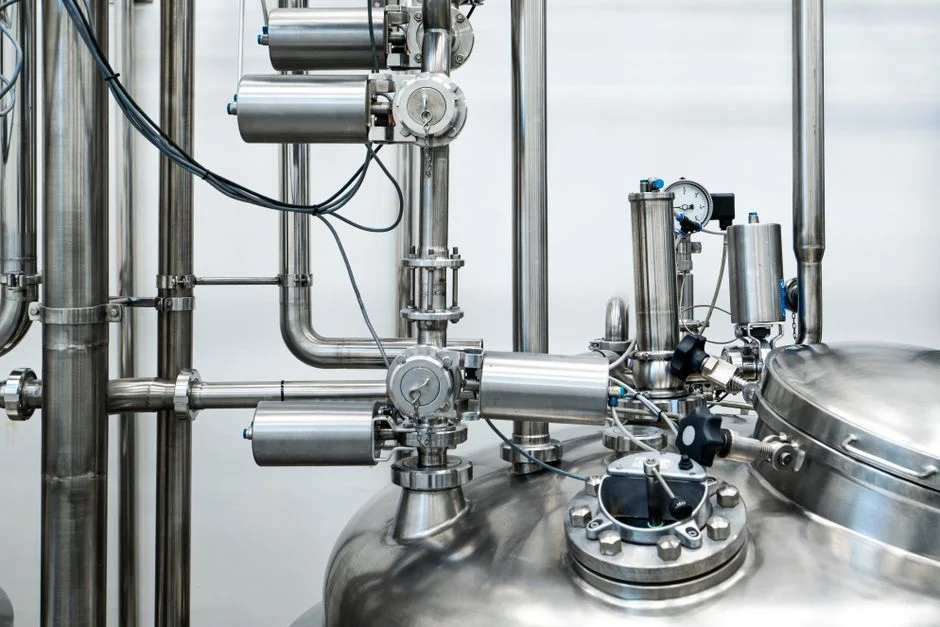
A defensible treatment train normally follows the process sequence of equalization and flow measurement, dissolved air flotation, biological treatment where BOD and COD reduction is required, optional polishing, and final monitoring at the permit-designated sampling point. Each stage must have a defined contaminant-removal duty rather than being selected because it is common in industrial pretreatment systems.
Polymer-coagulant emulsions, mold-release agents, and latex residues can be both mechanically and chemically stabilized. Surfactants can keep oily material dispersed, while mechanical processing can create fine particles. A conventional gravity separator may therefore leave enough oil, grease, and solids in the stream to compromise downstream biological treatment or a local limit. The treatment train for this problem should be reviewed in the context of a hybrid DAF-MBR design for plastics manufacturing.
DAF is normally used where floating oil, grease, colloids, or polymer-bearing solids require removal. Coagulant dosing destabilizes the dispersed phase, recycle-water pressurization produces microbubbles, and the floated material is skimmed into sludge handling. A commercial 2026 treatment reference reports DAF removal of 60–90% for oil and grease and 50–80% for TSS on polymer-bearing streams; these are reported performance figures, not guaranteed results for an unspecified Anderson wastewater (HydropureWater, How Plastics & Rubber Plants Meet U.S. Pretreatment Limits, 2026-02).
| Process step | Primary function | Decision condition |
|---|---|---|
| Equalization and flow measurement | Blend batch discharges and record flow | Required where intermittent releases could overload treatment |
| DAF | Remove oil, grease, colloids, and floatable solids | Include when wastewater testing confirms floatable or emulsified load |
| Biological treatment | Reduce biodegradable organics | Use where BOD or COD removal is required |
| UF or another polishing process | Remove residual solids or meet a tighter reuse or permit objective | Define the residual contaminant and required endpoint first |
| Final monitoring | Verify the regulated discharge | Locate at the permit-designated sampling point |
Intermittent rubber-molding and kettle-cleaning discharges should be equalized and batched into the treatment train. An unmanaged batch can wash accumulated solids and chemicals through the DAF, upset biological treatment, and create a compliance excursion before the next composite sample captures the condition.
Candidate equipment includes an industrial DAF system for polymer wastewater and a PLC-controlled chemical dosing system. Neither guarantees compliance: chemical selection, dose, flotation performance, equalization, biological loading, and final monitoring must be verified against site wastewater and permit conditions.
Size Treatment Capacity from Measured Wastewater Data
Treatment capacity must be sized from measured peak and average wastewater flows and constituent loads, not production capacity or plant floor area. The design package should include batch-discharge profiles, temperature, pH, TSS, oil and grease, BOD, COD, and applicable priority pollutants. Missing measurements should be identified as pre-design gaps rather than replaced with unsupported assumptions.
The supplied commercial catalog states that DAF systems cover 4–300 m³/h across 13 standard models, MBR systems cover 10–2,000 m³/day, and UF systems cover 2,000–40,000 L/h using 0.03-micron PVDF membranes (HydropureWater product catalog, retrieved 2026-02). These are catalog scopes, not treatment guarantees or recommendations for a specific facility.
| Sizing input | Why it controls | Information to request |
|---|---|---|
| Peak and average flow | Sets hydraulic and equalization requirements | Continuous flow history plus timed batch-release data |
| TSS, oil and grease, BOD, and COD | Sets contaminant-loading requirements | Representative laboratory results by stream and production condition |
| Batch timing and variability | Exposes short-term load spikes | Cleaning, changeover, molding, and kettle-cleaning schedule |
| Design endpoint | Defines treatment and polishing scope | Current permit limits and any reuse objective |
Hydraulic and contaminant sizing are separate checks. A unit adequate for average flow can still fail when polymer solids, oil, grease, or batch peaks determine the load. Use the DAF-versus-clarifier performance comparison to frame the selection, but require a wastewater-specific test protocol before accepting a proposed removal rate.
Supplier comparisons should include redundant pumping, equalization volume, chemical storage, sludge handling, controls, alarms, and utility integration. Require each bidder to state its design basis, guaranteed performance point, accepted wastewater variability, test method, and boundary conditions. A purchased separator is not a complete treatment capability if downstream polishing or equalization is omitted.
Prove Compliance at the Designated Sampling Point
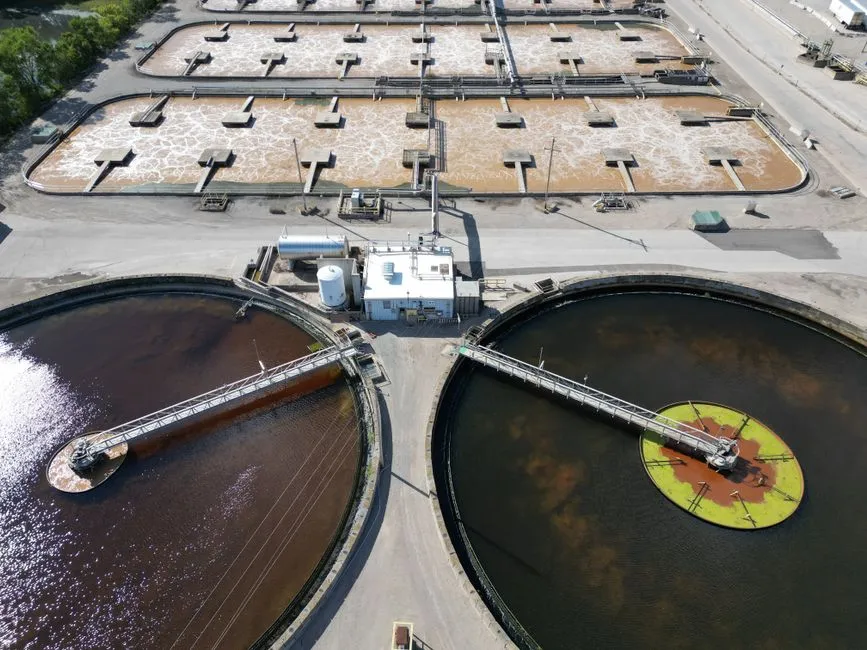
The designated sampling point must represent the discharge to the POTW and is generally downstream of in-plant treatment but upstream of recycle or zero-discharge return flows. Its physical location and accessibility should be verified in the current permit, then matched to the process drawing and monitoring plan. A sample taken before treatment or after a dilute recycle stream may not be representative of the regulated discharge.
The supplied 2026 pretreatment reference states that categorical industrial users typically submit 24-hour flow-proportional composite samples, with routine frequencies commonly ranging from twice per year to quarterly; the individual permit controls the actual requirement (HydropureWater, How Plastics & Rubber Plants Meet U.S. Pretreatment Limits, 2026-02). Intermittent discharges must be represented in the sampling plan rather than sampled only during convenient production periods.
| Compliance element | Required operating control | Record to retain |
|---|---|---|
| Representative sampling | Use the permit-designated point and required composite method | Sampling-point diagram and field sampling record |
| Batch-discharge control | Equalize or otherwise manage intermittent loads | Batch log, tank level, and discharge chronology |
| Priority pollutants | Test relevant styrene, acrylonitrile, vinyl chloride, benzene, ethylbenzene, and applicable catalyst or stabilizer metals | Accredited laboratory report and analyte list |
| Chain of custody | Document each transfer and possession | Signed chain-of-custody form |
| Operational trending | Trend pH, TSS, and conductivity where feasible and reconcile results | SCADA trend, calibration records, and excursion log |
| Reporting | Submit DMRs by the permit deadline | Signed DMR and supporting calculations |
Use an appropriately accredited laboratory for priority-pollutant analysis. Document collection time, sample condition, preservation, split samples, and custody. The commercial reference specifically identifies state or NELAP accreditation for priority-pollutant scans (HydropureWater, How Plastics & Rubber Plants Meet U.S. Pretreatment Limits, 2026-02).
PFAS and 1,4-dioxane require separate review where fluoropolymers, fluoroelastomers, PFAS-treated feedstocks, or applicable state rules are involved. The same source states that no federal categorical PFAS limit existed under Parts 414 or 463 as of 2026. Facilities should therefore use PFAS treatment options for fluoropolymer plants to evaluate monitoring and treatment needs, while relying on the current permit and applicable state requirements for enforceable limits.
Control Cost and Compliance Risk
Compare treatment proposals on complete life-cycle scope: equipment, installation, controls, chemicals, sludge handling, maintenance, monitoring, operator training, and contingency capacity. Purchase price alone hides equalization, redundancy, residuals, and compliance risk that may arise during batch discharges.
The supplied commercial comparison states that membrane-based MBR plus UF was 20–40% higher in capital cost than activated sludge plus multi-media filtration but 15–25% lower in annual operating cost (HydropureWater, How Plastics & Rubber Plants Meet U.S. Pretreatment Limits, 2026-02). These figures describe the source’s comparison scope; they are not an Anderson estimate. Ask each bidder to provide comparable boundaries, equipment quantities, site assumptions, and cost year.
Water reuse should be evaluated as an operating option, not assumed to produce savings. The source reports reuse offsets of 50–80% and a roughly 2–4-year membrane-upgrade payback in its described 50 m³/h example (HydropureWater, How Plastics & Rubber Plants Meet U.S. Pretreatment Limits, 2026-02). A buyer should request the underlying water tariff, reuse fraction, membrane replacement assumptions, and financing basis before using those figures.
The compliance-risk review should address equipment redundancy, prevention of uncontrolled bypasses, chemical availability, spare parts, operator response time, and excursion alarms. Use a plate-and-frame filter press only when the selected treatment train generates sludge that requires dewatering; it is a sludge-handling step, not a substitute for wastewater treatment.
Frequently Asked Questions
Which document controls the wastewater limits at an Anderson plastics or rubber plant?
The current individual pretreatment permit is the first document to verify. It identifies the Control Authority’s enforceable site-specific limits, sampling point, monitoring frequency, and reporting requirements. Apply 40 CFR Part 414 or 40 CFR Part 463 when the operation falls within the relevant categorical subcategory, evaluate pass through and interference, and apply the most stringent applicable requirement.
How should intermittent rubber-molding and kettle-cleaning discharges be treated?
Route them through controlled equalization or another documented load-management arrangement before DAF and biological treatment. Record batch volume, timing, constituent data, and treatment status. The objective is to prevent an unmanaged hydraulic or pollutant spike from reaching the treatment train or designated sampling point.
What cost information should a buyer request before selecting treatment equipment?
Request a complete capital and operating comparison covering equipment, installation, controls, chemicals, sludge handling, maintenance, monitoring, training, and contingency. Preserve the source’s 20–40% higher capital cost and 15–25% lower annual operating cost only within its described MBR-plus-UF versus activated-sludge-plus-multi-media comparison. For reuse economics, request the inputs behind the reported 50–80% reuse offsets and roughly 2–4-year payback in the source’s 50 m³/h example; do not transfer those figures directly to another site.
How should a supplier be screened for capacity and compliance?
Require a site-specific design basis covering peak and average flow, batch profiles, TSS, oil and grease, BOD, COD, pH, and relevant priority pollutants. Ask the supplier to state the guaranteed performance point, accepted wastewater variability, test protocol, controls, redundancy, sludge handling, and treatment boundaries. The supplied catalog lists DAF capacities of 4–300 m³/h, MBR capacities of 10–2,000 m³/day, and UF capacities of 2,000–40,000 L/h, but catalog capacity is not proof that a unit will meet the permit. Use the DAF-versus-clarifier buying guide to structure that comparison.