Why Conventional Wastewater Treatment Fails on PFAS
Per- and polyfluoroalkyl substances, universally shortened to PFAS and nicknamed "forever chemicals," are a broad class of fluorinated organics used across cosmetics, food packaging, nonstick coatings, and aqueous film-forming foams (AFFF). Exposure has been linked to cancers, liver toxicity, immune suppression, and reproductive effects, and the U.S. EPA's drinking-water guidance of roughly 10 parts per trillion has become the benchmark industrial plants are being asked to meet in their effluent (Eos, AGU; ScienceDirect, 2023).
Conventional plants look compliant on BOD, TSS, and ammonia because those are the parameters they were designed for, yet PFAS are not biodegradable in the activated-sludge step, do not bind to coagulants and polymers, and largely stay dissolved through primary clarification. Physical barriers such as screens and sedimentation let PFAS pass because the molecules are water-soluble at typical effluent concentrations. The carbon–fluorine bond, one of the strongest single bonds in organic chemistry, is what makes them persistent, and that same bond is the engineering problem.
Biological treatment (activated sludge) can sorb some PFAS onto biosolids, but that simply relocates liability. A municipal plant sending PFAS-laden biosolids to land application has not solved the problem; it has moved it to a different permit envelope and a different public. The EPA's roughly 10 ppt benchmark is a driver: any treatment train that only concentrates PFAS into a solid or a regenerant stream will eventually need a destruction step downstream, or the waste ledger keeps growing. This is why the conventional BOD/TSS/ammonia plant, even when operating well, is structurally non-compliant on PFAS without an add-on train.
How Modern PFAS Technologies Are Categorized
Every PFAS unit operation in 2026 falls into one of two buckets: separation, which transfers PFAS from the effluent to a concentrate, spent media, or biosolids; and destruction, which mineralizes the carbon–fluorine bond into fluoride, CO2, and water. Separation technologies include MBR membrane bioreactor systems, granular activated carbon (GAC), ion exchange (IX), and mixed matrix membranes (MMM). Destruction options include advanced oxidation processes (AOPs), supercritical water oxidation (SCWO), and photocatalysis with polymers of intrinsic microporosity (PIMs). The distinction matters because a separation-only design still has a PFAS mass-balance problem; the molecules are just on a different truck.
Design teams must select a strategy based on whether the goal is to hit an effluent number or to eliminate PFAS from the waste ledger entirely. The former can be done with a single separation stage if the discharge permit allows the spent media to be landfilled or incinerated elsewhere; the latter requires a destruction step on the concentrate, which changes the operating-cost calculus. Most 2026-compliant plants run a separation train first to drop load and protect downstream units, then route the concentrate, regenerant brine, or spent carbon to a destruction or thermal step. Membrane system design is covered in the RO membrane design criteria guide for industrial wastewater, which is useful background for sizing the polish step.
Separation Technologies: GAC, Ion Exchange, MBR, and Mixed Matrix Membranes
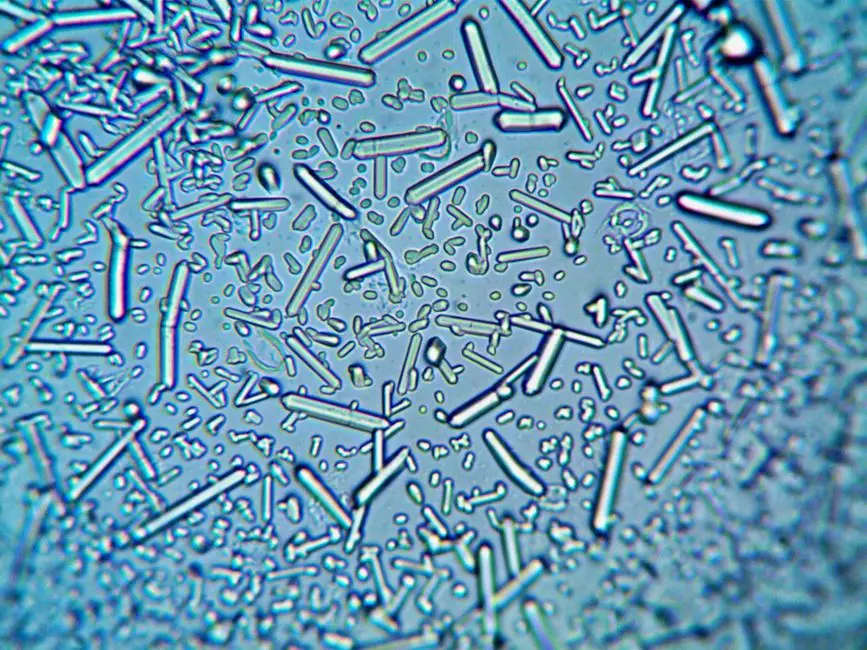
GAC is a highly porous adsorbent with a long track record across drinking-water and industrial plants. It is effective on long-chain PFAS, easy to procure, and integrates into existing clearwell designs; the trade-off is poor performance on short-chain PFAS, the largest contactor footprint of the four options here, and longer empty-bed contact times than ion-exchange resin (SL Environmental Law Group, 2026). MBR is a submerged PVDF membrane that physically excludes PFAS with the bulk solids, producing near-reuse-quality permeate and reducing the clarifier footprint. The catch is that MBR concentrates PFAS into biosolids, which still need downstream handling. Pre-filtering feed with ultrafiltration pretreatment ahead of an MBR protects the membrane from fouling by oil and TSS.
Mixed matrix membranes (MMM) are a 2023-vintage review subject. A 2023 review in Science of the Total Environment reports that MMMs frequently eliminate more than 99% of PFAS from wastewater, with nanomaterial- and carbon-nanotube-filled variants the most effective; the concentrate remains the liability, but the separation efficiency is in the same band as the best GAC and IX options. Ion-exchange resins capture both short- and long-chain PFAS more efficiently than GAC in many feeds and regenerate into a small brine or regenerant volume, which is then sent to destruction. A side-by-side parameter comparison is below.
| Parameter | GAC | Ion exchange resin | MBR | MMM |
|---|---|---|---|---|
| Typical removal class (peer-reviewed evidence) | >95% on many trace organics with long-chain PFAS bias (McGraw-Hill, 2020) | Captures short- and long-chain; regenerant concentrate is the waste stream (SL Environmental, 2026) | PFAS-free permeate; sorption into biosolids (SL Environmental, 2026) | >99% PFAS removal reported in 2023 review (ScienceDirect, 2023) |
| Chain-length sensitivity | Struggles on short-chain PFAS | Better short-chain capture than GAC | Physical exclusion regardless of chain length | Nanomaterial-filled variants improve broad-spectrum capture |
| Footprint proxy | Largest of the four | Smaller than GAC, faster kinetics | Replaces secondary clarifier; compact | Compact membrane skid |
| Concentrate / waste stream | Spent carbon to reactivation or disposal | Small brine/regenerant volume, easier to destroy | PFAS-laden biosolids | Membrane concentrate |
Destruction and Oxidation Technologies: AOP, SCWO, and Photocatalysis
Advanced Oxidation Processes (AOPs) combine hydrogen peroxide with ozone or UV to generate hydroxyl radicals, which dismantle PFAS and other trace organics. The 2020 study summarized by McGraw-Hill reports that advanced treatment using ozonation and GAC removed more than 95% of the pharmaceuticals tested, though not all compounds respond to ozonation and hazardous byproducts are possible. AOPs offer the chance to destroy PFAS on site, but consumption of H2O2 and ozone generation is costly and case-specific, so a vendor's H2O2:PFAS ratio on your fingerprint is the figure that matters, not a generic removal curve. Plants already running ozone-based AOP skids can pilot PFAS duty on the same hardware with chemistry adjustments.
Supercritical water oxidation (SCWO) is the strongest current destruction option in the evidence base. SCWO operates above 374 °C and 22.1 MPa, a state where organic solubility rises and oxidation reactions accelerate, and a Journal of Environmental Engineering study reports that three independent SCWO providers all achieved greater than 99% reduction of total PFAS from dilute AFFF solutions (J. Environ. Eng., 2020). That is the only multi-provider, peer-reviewed destruction result in the supplied research, and it is the figure to anchor a vendor conversation around. Photocatalysis is at an earlier stage; in the RSC Advances work reported by Eos, immobilizing a photocatalyst on PIM-1 produced a degradation yield nearly 3× higher than the catalyst alone, by pre-concentrating PFAS at the catalyst site before sunlight-driven breakdown. The trade-off across the three: AOP and photocatalysis are still pilot-scale on full PFAS matrices, while SCWO is the only destruction option with multi-provider >99% evidence in the supplied research.
Matching the Technology to Your Influent: A 2026 Decision Framework
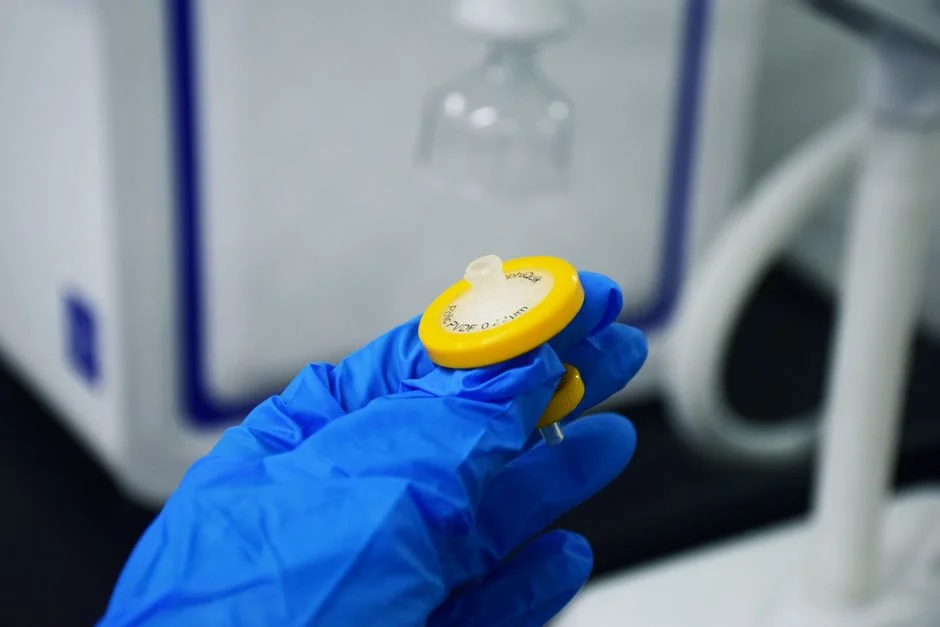
Choosing a treatment train by technology brand, rather than by influent characteristics, is how plants end up with the wrong unit operation. The decision framework below maps the most common influent profiles encountered in 2026 to a recommended train, and it is organized by what your plant is actually receiving, not by what a vendor sells. For long-chain PFAS at moderate load and tight footprint, GAC with adequate empty-bed contact time is the default, backed up with an MBR upstream if TSS swings. For mixed short- and long-chain PFAS in the low-ppb range, ion exchange resin is the primary removal, with an AOP polish on the regenerant brine; this combination addresses the short-chain bias that GAC alone misses. For AFFF-impacted streams or high-total-PFAS concentrates, route to SCWO; it is the only option in the supplied evidence with greater than 99% destruction across multiple providers. For drinking-water or process-water reuse targets at stringent ppt limits, pair MBR pretreatment with MMM or RO polishing and an AOP or UV step for residual destruction. A summary of these trains is below.
| Influent profile | Recommended train | Evidence anchor |
|---|---|---|
| Long-chain PFAS, moderate load, tight footprint | MBR upstream (TSS control) → GAC contactors | SL Environmental, 2026; McGraw-Hill, 2020 |
| Mixed short- and long-chain, low ppb | Ion exchange resin → AOP polish on regenerant | SL Environmental, 2026; McGraw-Hill, 2020 |
| AFFF-impacted or high-total-PFAS concentrate | Concentrate routed to SCWO | J. Environ. Eng., 2020 (three providers, >99%) |
| Reuse target at stringent ppt limits | MBR → MMM or RO → AOP/UV polish | ScienceDirect, 2023; McGraw-Hill, 2020 |
Design teams should gather six inputs: a full PFAS fingerprint with chain-length distribution, the target effluent number (typically expressed against the EPA's ~10 ppt benchmark), the disposal route for any concentrate or spent media, the available footprint, the energy budget, and any downstream discharge or reuse limits. Without those, vendor proposals become generic and unrankable. A practical view on PFAS removal technologies is given in the AI process control for industrial wastewater engineering guide, which covers how online PFAS analyzers and process control change the operating picture.
Selecting a PFAS Treatment Equipment Provider in 2026
Once the influent-to-train map is set, supplier selection is where most projects lose defensibility. The shortlist should be built around five checks, each tied to the supplied research.
- Pilot data on the actual PFAS fingerprint. Reject generic removal curves. Chain-length and matrix effects dominate performance; a vendor who has not piloted on your fingerprint is selling a brochure, not a unit operation.
- Concentrate, spent carbon, and spent resin disposition. Ask the vendor to disclose the end route. Separation-only designs that do not address where the PFAS mass goes should be flagged in the evaluation matrix.
- Regulatory readiness against the EPA's ~10 ppt benchmark. The supplier's quoted performance must be tied to a specific discharge or reuse limit, not a technology brochure. Cross-check against the EPA Clean Water Act compliance guide.
- Automation, PLC, and chemical-dosing interfaces. A new unit operation that becomes a manual operations burden is a six-month problem waiting to happen. Specify PLC-controlled chemical dosing and confirm the SCADA tag list before PO.
- Membrane and consumable supply chain. Confirm lead times on RO membrane elements and replacement cartridges, including regional stocking.
For SCWO, require documented >99% destruction on a feed matrix similar to yours (the J. Environ. Eng., 2020 paper is the benchmark), plus mass balance on fluoride and total organic fluorine in the effluent. For GAC and IX, require empty-bed contact time and bed-life projections, plus the cost of media changeout and reactivation. For MBR and MMM, require membrane replacement intervals under your TSS and oil/grease profile. A vendor that cannot answer all five on paper is not yet a shortlist candidate.
Frequently Asked Questions
What is the best technology to remove PFAS from industrial wastewater in 2026?
There is no single unit operation; the best outcome comes from a train chosen by influent matrix. GAC and mixed matrix membranes both deliver >99% removal in peer-reviewed evidence (ScienceDirect, 2023; McGraw-Hill, 2020), while SCWO is the only option with >99% destruction across three independent provider demonstrations on dilute AFFF (J. Environ. Eng., 2020). The next step is to map your PFAS fingerprint, chain-length distribution, and target effluent number to a separation-plus-destruction train before vendor talks.
How much does a PFAS treatment system cost for an industrial plant?
The supplied research does not include a numeric cost figure, and any quoted number without an influent PFAS fingerprint, chain-length distribution, and target effluent limit is unreliable. The buyer should request a vendor proposal that itemizes equipment, media changeout, chemical consumables, and concentrate or spent-media disposal, then request the same line items on at least two competing process trains so the comparison is apples-to-apples.