
Why PFAS Demand a Separate Treatment Train in 2026
Per- and polyfluoroalkyl substances (PFAS) are a class of roughly 12,000 synthetic organofluorine compounds defined by carbon–fluorine bonds so stable they earn the label "forever chemicals." The U.S. EPA links exposure to kidney and testicular cancers, liver toxicity, and reduced fertility, and the agency's health-based drinking water guidance sits in the 4–10 parts-per-trillion range for PFOA and PFOS (per EPA PFAS NPDWR, 2024). At those concentrations, even a small industrial discharge to a waterway can push a downstream drinking-water plant past its limit, and any plant sending effluent to a reuse system is now liable for the same benchmark.
Conventional wastewater infrastructure was not designed for this problem. The 2020 McGraw-Hill editorial briefing of multi-plant monitoring data (L. F. Angeles et al., Environ. Sci.: Water Res. Technol., 6:62–77) found that primary treatment "did not significantly remove any of the pharmaceuticals" and that secondary biological treatment "resulted in the removal of most, but not all, of the pharmaceuticals monitored." PFAS behave even worse than the trace organics in that study because most long-chain species are non-biodegradable and are largely non-sorbing to activated sludge. A dissolved-air flotation unit ahead of a bioreactor will not move the needle on PFAS mass balance; an existing DAF/activated-sludge train delivers essentially the same PFAS load to the headworks outlet as it received at the inlet. Industrial facilities therefore need a dedicated tertiary stage, sized for ng/L targets rather than mg/L BOD/COD, before any reuse or direct/indirect potable discharge.
The Precursor Paradox: Why Treatment Can Create More PFAS
A 2023 study of a mega-city wastewater network (H. T. Duong et al., Sci. Total Environ.) documented a counter-intuitive failure mode: as the utility pushed toward 100% water reclamation, terminal perfluoroalkyl acids such as PFOA and PFOS in the finished effluent actually rose. The mechanism is transformation of "precursor" PFAS — fluorotelomer compounds, side-chain fluorinated polymers, and short-chain intermediates — into terminal PFAAs during biological and oxidative stages. A total oxidizable precursor (TOP) assay that drops, paired with a LC-MS/MS measurement of PFOA that climbs, is the diagnostic signature.
This "Precursor Paradox" reframes the 2026 design question. A train that only concentrates PFAS onto spent GAC, into ion-exchange brine, or into RO reject creates a worse problem in the back end, because the concentrate is now enriched in terminal PFAAs. Any reuse-oriented plant must pair separation with a destruction step downstream, and for precursor-dominated streams (textile, paper, landfill leachate) the destruction stage needs to sit before the membrane or ahead of final polishing. The same principle is driving the shift away from end-of-pipe carbon adsorption toward combined adsorption-plus-oxidation trains, a pattern visible in the lead removal guide for industrial wastewater that documents parallel drivers in heavy-metal reuse.
Separation Technologies: Adsorption and Membrane Rejection
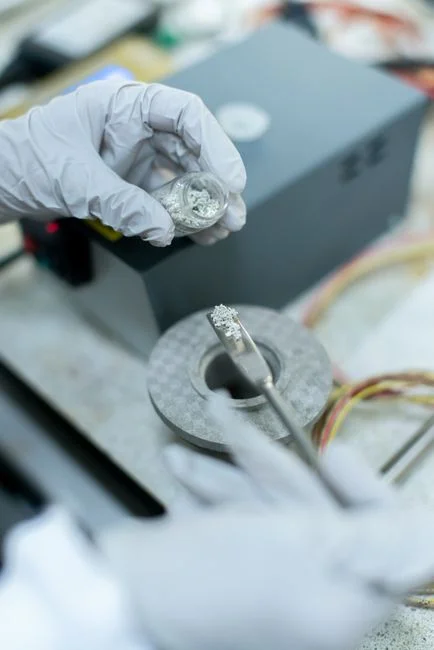
Separation is the workhorse of any 2026 PFAS retrofit. Granular activated carbon (GAC) is a highly porous adsorbent with internal surface area typically 800–1,200 m²/g, and the same McGraw-Hill-cited study found "advanced treatment processes using ozonation and granular activated carbon proved most effective (>95 percent removal)" for trace organics in tertiary use. The limitation is chain length: short-chain species (PFBA, PFBS) break through 2–4× faster than PFOA/PFOS, and spent GAC becomes a hazardous concentrate requiring thermal reactivation or destruction. If you specify an industrial RO system for PFAS rejection, plan the spent-media stream at the same time as the column sizing.
Anion-exchange (AIX) resins address the kinetics gap. Single-pass removal of long-chain PFAS typically exceeds 90%, and pilot data from WaterRF and WateReuse show empty-bed contact times of 1.5–3 minutes versus 10–15 minutes for GAC. Resins are brine-regenerable, so the back end of an AIX train is a 2–5% NaCl reject with concentrated PFAS — easier to feed to an oxidizer than spent carbon but still a liability under the destruction push. Reverse osmosis and nanofiltration deliver the highest single-step rejection, with documented removals above 99% across C4–C12 chain lengths because the PFAS molecule is larger than the membrane's free volume. The trade-off is volumetric: RO reject is typically 15–25% of feed at 70–80% recovery, and the concentrate cannot be discharged without downstream handling. The same S1 evidence warns about oxidation limits — "bupropion and primidone were not affected by ozonation" — and short-chain PFAS share that recalcitrance; ozone alone is not a reliable PFAS barrier, a finding that extends to many textile and paper-mill waste streams where ozone is already installed for color.
| Technology | Long-chain removal (PFOA/PFOS, C8–C12) | Short-chain removal (PFBA/PFBS, C4–C6) | Output stream requiring handling | 2026 maturity | Indicative CapEx class |
|---|---|---|---|---|---|
| Granular activated carbon (GAC) | >95% | 40–70% (early breakthrough) | Spent carbon media | Full-scale, commercial | Low |
| Anion exchange resin (AIX) | >90–95% | 60–85% | Regenerant brine (2–5% NaCl) | Full-scale, commercial | Low–Medium |
| Reverse osmosis (RO) | >99% | >99% | Concentrate (15–25% of feed) | Full-scale, commercial | Medium–High |
| Nanofiltration (NF) | >95–99% | 80–95% | Concentrate (10–20% of feed) | Full-scale, commercial | Medium |
| UV/sulfite (advanced reduction) | >90% in lab | Variable, chain-length dependent | F⁻ ion, sulfate | Full-scale, commercial | Medium |
| Electrochemical oxidation (EO) | >90–99% | >90% with longer residence | F⁻ ion, sludge at anode | Pilot, growing commercial | High |
| Supercritical water oxidation (SCWO) | >99% | >99% | F⁻ ion, treated effluent | Commercial, niche | High |
| Photocatalyst + PIM-1 | ~3× catalyst-only rate (lab) | Untested on short chain | F⁻ ion | Lab-scale, 20 mL | Unknown (R&D) |
PFAS Removal Technology Comparison
The table above is the procurement reference. A few engineering judgments to read from it: long-chain removal above 90–95% is achievable with three different commercial technologies, so the discriminator for long-chain-dominated streams is concentrate handling, not headline removal. Short-chain removal is where trains fail, and it is also where the highest cost-per-log-reduction lives. The "Output stream" column is the regulatory driver behind the destruction push — no separation technology eliminates PFAS mass, it relocates it. Photocatalyst + PIM-1 is flagged as lab-scale because the underlying study (Marken et al., reported in RSC Advances and summarized by EOS, 2024) used 20 mL of surrogate-spiked water under a blue LED, not a full-scale reactor; the 3× degradation enhancement is a research result, not a 2026 procurement decision.
Destruction Technologies: Breaking the C–F Bond
Destruction technologies aim to defluorinate the molecule — convert C–F bonds to fluoride ion and short-chain fragments — rather than transfer PFAS into a solid or liquid waste. UV/sulfite advanced reduction uses hydrated electrons from sulfite photolysis to attack the head group, and full-scale installations now report >90% defluorination of PFOA at residence times of 10–30 minutes, though short-chain species need longer. Electrochemical oxidation (EO) applies an anode potential above 2.5 V to generate hydroxyl radicals; boron-doped diamond and mixed-metal-oxide anodes achieve >90% removal of long-chain PFAS at current densities of 20–50 mA/cm², with fluoride recovery as a sellable byproduct. Supercritical water oxidation (SCWO) operates above 374 °C and 221 bar, achieving >99% destruction of even GenX and short-chain species, but is capital-intensive and usually scoped to a sidestream concentrate rather than full flow.
The most novel 2026 entry is a photocatalyst immobilized on a polymer of intrinsic microporosity (PIM-1), reported in 2024 by Marken's group at the University of Bath. PIM-1 has a standard surface area of 700–1,000 m²/g, and unlike softer porous polymers its rigid backbone does not wrap around embedded particles, so the catalyst stays photoactive. When the team spread PIM-1 plus photocatalyst on filter paper and exposed it to a blue LED in a 20 mL HDFN solution, they measured fluoride release at nearly 3× the rate of catalyst alone (per EOS, citing RSC Advances 2024). The honest caveat: HDFN is a chemically analogous surrogate, not a regulated PFAS; the work is at 20 mL scale; and the team has not yet reported a continuous flow reactor. For 2026 capital planning, treat PIM-1 + photocatalysis as a 2027–2028 watchlist item rather than a bid line. A pragmatic back-end destruction train today pairs UV/sulfite or electrochemical oxidation with reagent control from an automated chemical dosing system for oxidant feed and pH hold.
Building a 2026 PFAS Treatment Train for Industrial Plants
A practical train for a plating, textile, paper, or landfill leachate site in 2026 looks like this. Source control comes first: segregate firefighting foam wastewater, metal-finishing rinsewater, and landfill leachate from any stream that does not contain PFAS, because dilution is not treatment. Equalization smooths shock loads to the biological stage. A lamella clarifier for upstream solids reduction strips settleable solids and oil before they coat downstream adsorbent media, which would otherwise reduce GAC capacity by 30–50% in field experience. An MBR biological stage ahead of PFAS adsorption reduces BOD/COD to <20 mg/L, which the S1 evidence shows protects tertiary media from biological fouling and preserves the 10–15 minute EBCT that GAC needs for >95% trace-organic removal.
From the MBR effluent, route to either GAC or AIX for the long-chain cut, then to RO for a >99% polish and the reuse-quality TDS target. For short-chain or precursor-dominated streams, place an oxidative destruction step (UV/sulfite or EO) upstream of the RO, which both mitigates the Precursor Paradox by mineralizing precursors before they can be transformed on the membrane, and reduces the PFAS mass that the concentrate stream carries. Reject from RO and brine from AIX regeneration both feed the same destruction skid, sized for 5–25% of the main flow. Automated chemical dosing for pH and reagent control keeps the oxidation reactor inside its operating window. Monitor with the TOP assay and LC-MS/MS at sub-ppt detection limits, and report against the EPA 4–10 ppt benchmark for PFOA/PFOS. The full MBR engineering selection guide covers sizing for the biological step, and the parallel wastewater reuse and irrigation compliance briefing covers the indirect-discharge limits a procurement engineer will need for the capex justification.
Frequently Asked Questions
What is the most effective single technology for PFOA and PFOS removal in 2026?
Reverse osmosis delivers >99% rejection of long-chain PFAS at full scale, but it generates a 15–25% concentrate stream that still requires destruction. For a plant that needs mass destruction rather than mass transfer, electrochemical oxidation paired with an MBR/RO front end is the most defensible 2026 choice (per WaterRF AIX/EO pilot data, 2024).
Why does my effluent PFOA rise even after I add a GAC polish?
You are almost certainly seeing the Precursor Paradox. Short-chain precursors in the upstream stream are passing GAC and then oxidizing to terminal PFAAs in the receiving environment or in a downstream chlorination step, so a TOP assay is the diagnostic test to confirm transformation (per Duong et al., Sci. Total Environ., 2023).
Are short-chain PFAS like PFBA and PFBS treatable with the same train as PFOA?
Not reliably. GAC breakthrough for short-chain species can occur at 40–70% of long-chain capacity, and ozone alone is ineffective (the same S1 study showed bupropion and primidone "not affected by ozonation"). Short-chain-dominated streams need either a high-rejection membrane (RO) or a destruction step such as UV/sulfite with extended residence time.
Is the photocatalyst + PIM-1 system ready for industrial procurement?
No — the published work used a 20 mL surrogate solution under a blue LED, and the 3× degradation enhancement versus catalyst alone is a lab result (per EOS, 2024, summarizing Marken et al., RSC Advances). For 2026 capital planning, monitor the research trajectory but do not include it in the bid package.
Related Equipment
- automated chemical dosing for pH and reagent control — specifications, capacity range, and technical data