
Why Wastewater Reuse for Irrigation Is a 2026 Engineering Reality, Not a Pilot
At least 20 million hectares in 50 countries — roughly 10% of total irrigated land and 17% of arable land — are already irrigated with treated, partially treated, or diluted wastewater (Sustainability, 2020, DOI 10.3390/su12219055). That figure is the answer to the literal question: yes, treated wastewater can be reused for irrigation at continental scale today, and the engineering question for 2026 is no longer whether to do it, but how to design for the right effluent envelope and the right payback.
The European benchmark frames the upside clearly. In the EU, 52% of recycled water already goes to irrigation — 32% agricultural, 20% landscape — and 100% reuse of treated wastewater would cover 44% of agricultural irrigation demand while cutting freshwater withdrawals by 13% (S2). On the U.S. side, the EPA counts more than 500 recycling facilities and 70+ potable reuse projects serving over 8 million people daily, with state primacy under the Clean Water Act and Safe Drinking Water Act governing how reuse is permitted (epa.gov/waterreuse/basic-information-about-water-reuse). Chile, Mexico, Israel, Egypt, Cyprus, Italy, and Argentina lead global reuse intensity; globally, 200 million farmers in 44 countries reuse roughly 15 million m³/day for food and energy crops (S2).
The 2026 case is arithmetic, not advocacy. Only 1% of global agricultural water consumption currently comes from reclaimed water (S2). The remaining 99% is the addressable headroom. Reclaimed water can also replace fertilizer: studies in Brazil, Poland, and Saudi Arabia show that treated municipal wastewater covers 100% of phosphorus and potassium requirements for maize (S2). For an engineer evaluating a 2026 project, the design question is therefore constrained to effluent targets, treatment train, irrigation hardware compatibility, and CapEx/OpEx — everything else is already settled by hydrology and regulation.
What 'Reuse-Quality' Water Actually Means: Effluent Targets by Irrigation Use
Effluent that meets a discharge permit is not automatically safe to spray on a golf course or feed to a drip line. The EPA framework distinguishes four use classes — landscape (golf, parks, roadside), restricted agricultural (food crops eaten raw), unrestricted agricultural (processed food, fodder, fibre), and industrial (cooling, dust control) — and each has a different microbial and chemical envelope (epa.gov/waterreuse/basic-information-about-water-reuse; epa.gov/waterreuse/reusing-water-landscaping-resources). 2026 design targets for landscape and unrestricted agricultural reuse converge on BOD <10 mg/L, TSS <10 mg/L, turbidity <1–2 NTU, and E. coli <100 CFU/100 mL, with several states requiring non-detect in 100 mL for unrestricted reuse.
Restricted agricultural reuse — salad crops, raw-eaten produce — is the tightest envelope. WHO 2006/2026 guidelines, as cited in the EPA REUSExplorer, push E. coli to <10 CFU/100 mL or require a 1-log virus inactivation (S2). The hidden parameters that discharge-only designers miss are residual chlorine (<1 mg/L for sprinkler systems; >5 mg/L damages foliage), sodium adsorption ratio (SAR) for soil structure, and chloride / boron / total salinity for crop toxicity. The starting point for design is the composition: treated wastewater is ~99% water and 1% suspended, colloidal, and dissolved solids (S2) — that 1% is the entire problem the treatment train has to solve.
| Parameter | Landscape (golf, parks) | Unrestricted ag (fodder, processed food) | Restricted ag (raw-eaten crops) | Industrial (cooling, dust) |
|---|---|---|---|---|
| BOD₅ | <10 mg/L | <10 mg/L | <10 mg/L | <30 mg/L typical |
| TSS | <10 mg/L | <10 mg/L | <5 mg/L (drip) | <30 mg/L |
| Turbidity | <2 NTU | <1–2 NTU | <1 NTU | <5 NTU |
| E. coli | <100 CFU/100 mL | <100 CFU/100 mL (some states ND/100 mL) | <10 CFU/100 mL or 1-log virus inactivation | Site-specific |
| Residual Cl (sprinkler) | <1 mg/L | <1 mg/L | <1 mg/L | — |
| SAR | <6 (sensitive turf) | <8 | <6 for sensitive crops | — |
| Cl⁻ / salinity | <140 mg/L Cl (sensitive) | <350 mg/L TDS typical | <250 mg/L TDS for sensitive | Cooling tower cycles dictate |
The 2026 Treatment Train: From Raw Sewage to Irrigation-Quality Effluent
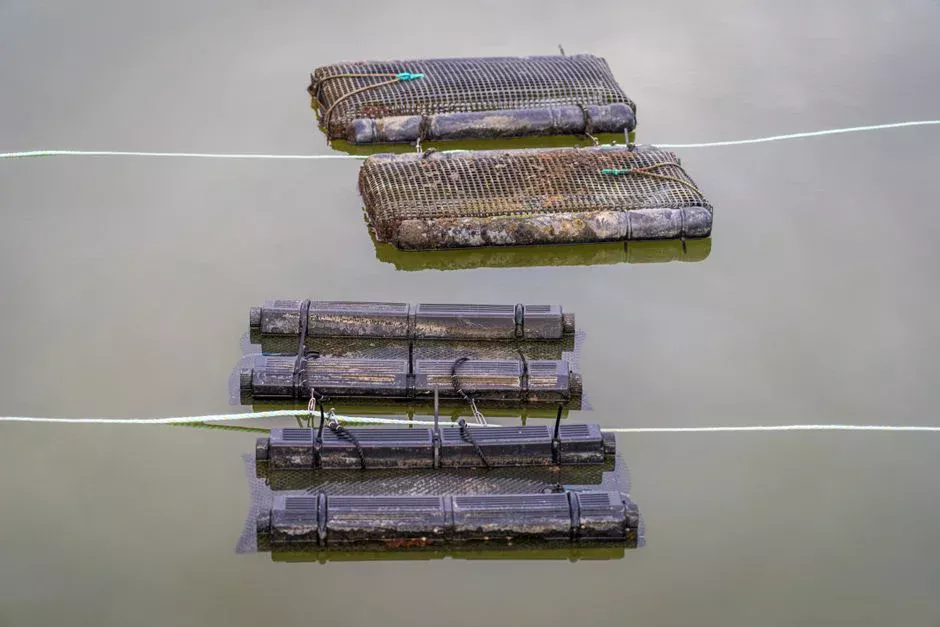
A 2026 reuse train is four stages, each with a defined effluent target that the next stage depends on. Skipping a stage is how projects end up with clogged drippers and out-of-spec E. coli counts.
Stage 1 — Preliminary. Rotary bar screens remove rags, plastics, and large solids that would shred downstream membranes and pumps. Equipment like the rotary bar screen (GX series) is the cheap insurance that protects everything downstream (S2). Stage 2 — Primary. A DAF pre-treatment unit or lamella clarifier takes out FOG and colloidal solids; this is the minimum needed to prevent soil-pore and drip-emitter clogging (S2). Stage 3 — Secondary biological. Activated sludge (A/O, A²/O, SBR) or, more commonly in 2026, an MBR membrane bioreactor system. Submerged PVDF membranes at <1 μm deliver TSS <5 mg/L and turbidity <1 NTU without a separate clarifier — which is why MBR has become the default for reuse applications (S2, MBR product spec). Stage 4 — Tertiary + disinfection. Multi-media filtration, optional RO polishing for high-salinity or chloride-sensitive crops, then UV or ClO₂ disinfection rated 50–20,000 g/h. The standard disinfection options per current literature are ClO₂, O₃, UV, and TiO₂; ClO₂ is preferred where residual control and biofilm control both matter (S2). Sludge handling is sized in parallel — a plate-and-frame press or screw press dropping cake to 15–22% TS before disposal or co-composting.
| Stage | Equipment | Function | 2026 target effluent |
|---|---|---|---|
| 1 — Preliminary | Rotary bar screen (e.g. 6 mm aperture) | Rags, plastics, large solids removal | — |
| 2 — Primary | DAF or lamella clarifier | FOG, colloidal solids, settleables | TSS 100–150 mg/L |
| 3 — Secondary | MBR (submerged PVDF, <1 μm) | BOD/COD, total nitrogen, TSS polishing | BOD <10 mg/L, TSS <5 mg/L, turbidity <1 NTU |
| 4a — Tertiary | Multi-media filter + optional RO | Residual TSS, salinity, Cl⁻ | TDS <500 mg/L (crop-dependent) |
| 4b — Disinfection | UV (40 mJ/cm²) or ClO₂ (1–3 g/m³) | Pathogen kill | E. coli <100 (or <10) CFU/100 mL, residual Cl <1 mg/L |
| Sludge | Plate-and-frame or screw press | Cake dewatering | 15–22% TS |
The Shakopee Mdewakanton Sioux Community water reclamation facility is a useful sizing anchor: it treats municipal wastewater and sends roughly 10% of its capacity — about 35 million gallons (132 million litres) per year — to a local golf course and landscape areas (epa.gov/waterreuse/reusing-water-landscaping-resources). That is a real-world data point an engineer can put in front of a regulator.
Industrial vs Municipal Source: Why Your Train Cannot Be Copy-Pasted
Domestic and municipal wastewater is ~99% water with a balanced N/P/K nutrient profile and low heavy-metal load — for landscape irrigation, an MBR followed by UV or ClO₂ is typically sufficient (S2; S3). The dominant design risk is microbial, not chemical. Industrial wastewater tells a different story. Textile effluent carries colour, high salinity, and non-biodegradable COD; food and beverage effluent is nutrient-rich but variable; chemical and refinery effluent can contain heavy metals, boron, or chloride at levels toxic to turf and crops.
The implication is that for industrial sources the priority shifts from pathogen kill to salinity control. Sodium adsorption ratio, chloride, and boron become the binding constraints, and a RO polishing system delivering 95% recovery permeate is often required to bring salinity below crop thresholds (RO product spec). The municipal-versus-industrial split is also a fertilizer story: nutrient-rich food and beverage effluent can offset 100% of P and K requirements in maize in Brazil, Poland, and Saudi Arabia, but only if the irrigation system can take the nitrogen load without leaching to groundwater (S2). The shorthand decision rule: municipal projects can stop at MBR + UV; industrial projects usually need RO and tighter ion-specific monitoring.
Sprinkler, Drip, or Surface: How Irrigation Method Changes the Treatment Spec
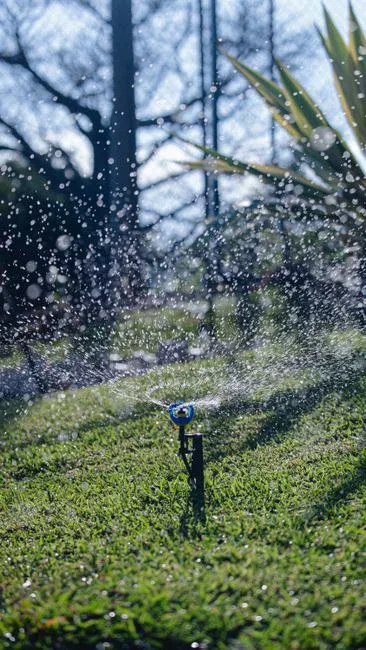
The irrigation hardware dictates the effluent spec — not the other way around. Top SERP sources treat this as an afterthought, but in practice it determines whether the project runs for a decade or clogs up in month three.
Drip irrigation is the most sensitive. Four mechanisms cause clogging: suspended solids, organic matter, mineral precipitation at high pH, and algal growth; chlorination of reclaimed water controls the last of these (S2). The minimum train for drip is therefore MBR + cartridge filter + chlorination, with residual Cl controlled to <1 mg/L at the emitter to protect foliage. Sprinkler irrigation adds an aerosol constraint. Residual chlorine must be held below 1 mg/L; values above 5 mg/L cause severe foliage damage (S2). The implication is that sprinkler systems should use MBR + UV (no Cl residual) or include dechlorination before the sprinkler pump. Surface and furrow irrigation is the most forgiving on TSS but the most exposed to soil salinization, so sodium and chloride limits dominate. The decision rule: drip → MBR + cartridge + chlorination; sprinkler → MBR + UV (no Cl) or dechlorination; surface → activated sludge + settling + chlorination.
Costs, ROI, and What a 2026 Reuse Project Actually Looks Like
The economics turn on three avoided costs: freshwater purchase, fertilizer purchase, and discharge fees. Reclaimed water can replace 100% of phosphorus and 100% of potassium fertilizer in maize (S2); for a golf course, the offset is the cost of nitrogen and potassium applied as fertigation, plus the avoided potable water tariff.
Order-of-magnitude 2026 CapEx for a 100 m³/day reuse package (MBR + UV + ClO₂, civil works excluded) sits in the low six figures USD; adding an RO polishing stage typically adds 30–50% to the equipment CapEx (HydropureWater field data, 2026). OpEx is dominated by electricity: MBR plants run at 0.5–1.5 kWh/m³ depending on aeration intensity and membrane flux; ClO₂ chemical cost is minor at 1–3 g/m³ dosing. By way of scale, the East Bay Municipal Utility District supplies roughly 7.5 million gallons per day of recycled water to Chevron's Richmond refinery for cooling towers and boilers, conserving enough drinking water for over 83,000 residents and operating through California drought restrictions without interruption (epa.gov/waterreuse/basic-information-about-water-reuse). For most arid-zone and water-stressed industrial sites, simple payback against the alternative — discharge + freshwater + fertilizer — falls in the 3–6 year range.
| Item | Municipal, 100 m³/d, MBR + UV | Industrial, 100 m³/d, MBR + RO + ClO₂ |
|---|---|---|
| Equipment CapEx (2026) | Low six figures USD | +30–50% vs municipal |
| Power | 0.5–1.5 kWh/m³ | 1.0–2.5 kWh/m³ (RO high-pressure pump) |
| ClO₂ chemical | 1–3 g/m³ | 1–3 g/m³ |
| Effluent BOD / TSS | <10 / <5 mg/L | <10 / <5 mg/L; TDS <500 mg/L |
| Best-fit irrigation | Sprinkler / surface golf, landscape | Drip, chloride-sensitive crops |
| Payback vs discharge + freshwater | 3–6 years (arid zone) | 4–7 years |
For a closer look at how reuse economics play out on a high-TDS industrial site, the textile wastewater OpEx benchmark for 2026 is a useful reality check on chemical and energy costs. For sites where the reuse end-use is cooling rather than irrigation, the data center cooling water reuse design article walks through the parallel spec for hyperscale cooling loops.
Frequently Asked Questions
Can treated wastewater be used to irrigate food crops eaten raw?
Yes, but the envelope is the tightest in the EPA framework. Restricted agricultural reuse typically requires E. coli <10 CFU/100 mL or a 1-log virus inactivation, per WHO 2006/2026 guidelines cited in the EPA REUSExplorer. Achieving this in 2026 means MBR + UV (or ClO₂) plus residual Cl control <1 mg/L, with crop-specific restrictions on irrigation timing before harvest (S2).
What is the minimum treatment for using reclaimed water on a golf course?
Landscape irrigation of golf courses is the lowest-risk reuse class and is usually served by secondary biological treatment plus disinfection. Typical 2026 targets are BOD <10 mg/L, TSS <10 mg/L, turbidity <1–2 NTU, and E. coli <100 CFU/100 mL. The SMSC water reclamation facility supplies roughly 35 million gallons per year of treated effluent to a local golf course at about 10% of its treatment capacity (epa.gov/waterreuse/reusing-water-landscaping-resources).
Why is residual chlorine limited to less than 1 mg/L in sprinkler irrigation?
Residual chlorine above 5 mg/L causes severe damage to foliage, and the working ceiling for sprinkler systems is <1 mg/L to avoid phytotoxicity (S2). UV disinfection without a residual is the common alternative for sprinkler projects, or chlorination followed by dechlorination before the sprinkler pump.
Does industrial wastewater need RO before it can be reused for irrigation?
Often yes. High-TDS industrial sources — textile, food processing with brine streams, refinery — frequently exceed the SAR, chloride, or boron limits for the target crop, and RO polishing at 95% recovery permeate is the standard 2026 answer. Municipal projects with a balanced nutrient profile usually stop at MBR + UV without RO (RO product spec).