Why PFAS treatment is now a board-level issue for industrial plants
Per- and polyfluoroalkyl substances (PFAS) are persistent, mobile, and bioaccumulative, and industrial wastewater is a recognized source pathway for both long- and short-chain compounds (Xylem, 2024). In April 2024, the US EPA finalized the first-ever national, enforceable drinking-water standard for PFAS to reduce exposure for approximately 100 million Americans; the rule is driving industrial pretreatment upgrades as emitters upstream of affected utilities receive new local limits (Xylem, 2024). In the European Union, revised drinking-water rules require Member-State compliance by 2026, and the European Environment Agency's Zero Pollution dashboard tracks how Member States are removing PFAS from drinking water—a metric that shapes industrial-discharge negotiations (Xylem, 2024).
For an industrial EHS or compliance manager, the binding obligations are not the headline drinking-water standards themselves. The real levers are sewer-pretreatment limits imposed by the receiving utility, direct-discharge permits with PFAS-specific conditions, the Stockholm Convention listing of PFOA, PFOS, PFHxS and related compounds, and the EU PFAS Restriction under REACH, which creates supply-chain and discharge pressure distinct from the drinking-water directive. The capex case inside the plant must be made against these concrete industrial obligations, not against public-health framing alone.
The four proven PFAS removal technology families
Four technology families dominate proven PFAS removal in 2026: granular activated carbon (GAC), ion exchange resins, advanced liquid-phase adsorption systems, and reverse osmosis. Coagulation and chlorination do not work on PFAS (Xylem, 2024). Interpreting vendor comparisons requires understanding how each family separates PFAS from water.
Granular activated carbon, typically coconut-shell or bituminous, adsorbs long-chain PFAS onto the carbon surface. The Kennebunk, Kennebunkport & Wells Water District (KKWWD) in Maine installed a coconut-based GAC system from Xylem on a contaminated supply well; the system has cumulatively treated more than 200 million gallons at non-detect PFAS levels, with the supplier citing extended bed life and lower life-cycle cost than alternatives (Xylem, 2024). Ion exchange resins exchange PFAS ions for benign counter-ions; at Colorado's Stratmoor Hills Water & Sanitation District near Colorado Springs, a selective single-use ion exchange resin dropped PFOA and PFOS to below detection limits and was scaled to a permanent 1.1 MGD facility (Xylem, 2024). Advanced liquid-phase adsorption systems use tailored media—ion-exchange resins, synthetic polymers, or engineered carbons—chosen for the specific PFAS or water-chemistry challenge; the Orange County Water District pilot installed 30 such multi-use vessels at up to 86 MGD, described as the largest PFAS pilot in the US (Xylem, 2024). Reverse osmosis uses a semipermeable membrane under high pressure to physically block PFAS molecules, making it highly effective across chain lengths—but it produces a concentrate that must be managed, a constraint with no analogue in drinking-water-only discussions.
Industrial-specific failure modes the municipal guides ignore
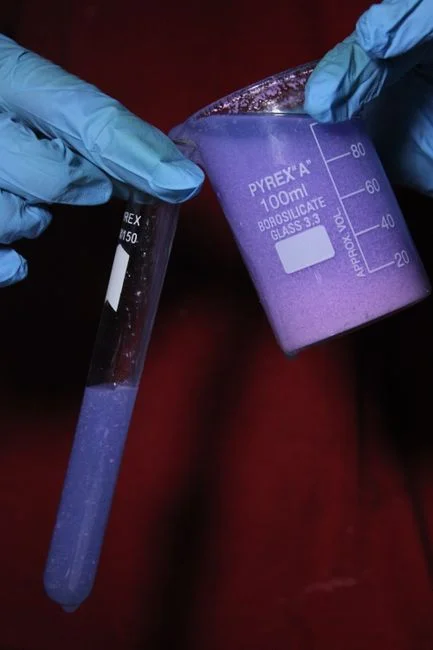
Industrial wastewater rarely contains only PFAS. Fats, oils and grease (FOG), total suspended solids, hardness, dissolved metals, and process solvents are typical co-contaminants that foul GAC beds and ion-exchange resins, so upstream screening and DAF pretreatment are usually required before the PFAS-selective stage. Plants that skip this step typically see GAC bed life collapse and ion-exchange throughput fall, both of which are visible as a step-change in OPEX rather than a slow drift.
RO produces a PFAS-rich concentrate—typically 15–25% of the feed volume in standard two-stage designs—that must be sent to secure disposal, evaporation, crystallization, or destruction. Concentrate management is often the single largest OPEX line for an industrial RO-based PFAS train, and it is the line item most often missing from a vendor's headline price. A related failure mode is short-chain breakthrough: PFBS and PFBA were developed as PFOA/PFOS replacements and still pose environmental and health concerns, but they break through standard GAC and ion-exchange media faster than long-chain compounds, which pushes the design toward RO or hybrid trains (Xylem, 2024). Footprint and integration are the final industrial constraints: most plants are retrofitting into existing structures, so a rotary bar screen headworks feeding compact skid trains is operationally more attractive than large open basins built for a greenfield municipal site.
Decision matrix: matching technology to industrial scenario
Industrial buyers must choose a technology train that fits their specific influent chemistry, footprint, and concentrate-disposal route. The matrix below maps the four proven families to four realistic industrial scenarios; it is a shortlisting tool, not a procurement decision.
| Scenario | Typical influent | Recommended primary train | Reference scale |
|---|---|---|---|
| A — Electronics, plating, paper, textile effluent | Long-chain PFAS (PFOA/PFOS), moderate TSS, FOG, metals | GAC with upstream DAF and bar screening | Maine KKWWD: 200 MGD cumulative, non-detect (Xylem, 2024) |
| B — Landfill leachate, AFFF-impacted groundwater | Mixed long- and short-chain PFAS at low µg/L | Single-use ion exchange resin; consider UF pretreatment for turbidity | Colorado Stratmoor Hills: scaled to 1.1 MGD (Xylem, 2024) |
| C — Semiconductor, food packaging, pharmaceutical | Broad-spectrum PFAS, secure concentrate disposal available | Reverse osmosis as polishing barrier, with GAC or ion exchange upstream to extend membrane life | RO rejection effective across chain lengths (Xylem, 2024) |
| D — Large industrial park, variable influent | Mixed PFAS profile, high flow, shifting chemistry | Advanced liquid-phase adsorption on multi-use vessels | Orange County WD: 30 vessels, up to 86 MGD (Xylem, 2024) |
Six decision criteria overlay the matrix: target PFAS chain length, target effluent concentration, co-contaminant load, available footprint, concentrate- or spent-media-disposal route, and OPEX tolerance. A plant with a secure liquid-waste hauler and a tight footprint has a different answer than a park with on-site evaporation and room for media vessels. A useful industrial reverse osmosis system in Scenario C only makes economic sense if the concentrate route is already permitted.
Pilot, procurement, and concentrate handling: the 12-month roadmap
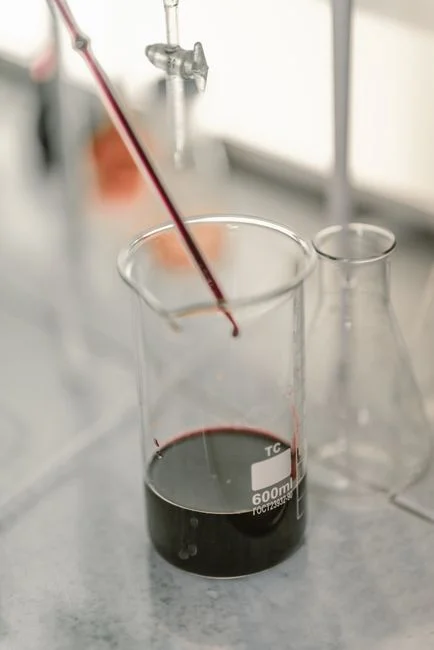
The first action is a representative sampling campaign that includes two PFAS species and at least one short-chain compound such as PFBS or PFBA, because the technology choice changes if the short-chain fraction is dominant (Xylem, 2024). With that data in hand, run a side-by-side pilot of GAC, ion exchange, and (if concentrate disposal is feasible) RO on the same feed; the public-domain Xylem narrative treats a side-by-side pilot as a prerequisite to system design (Xylem, 2024). PLC-controlled chemical dosing for pretreatment coagulation or pH adjustment is typically specified at the pilot stage so that OPEX is realistic.
Before signing any technology contract, lock in the concentrate or spent-media handling route. For RO this means a licensed liquid-waste hauler, an on-site evaporator, or a crystallizer tie-in. For single-use ion exchange this means a resin destruction pathway compliant with the waste classification in the plant's jurisdiction—the Stockholm Convention / EU REACH PFAS Restriction obligations kick in here, and they are not the vendor's problem. Use the US EPA April 2024 national standard and the EU 2026 Member-State compliance milestone as the schedule anchors for commissioning and permitting (Xylem, 2024). Two emerging research directions are worth monitoring but not yet buying: nanofiltration and adsorbent hybrids (ACS, 2025), and PFAS transformation insights from activated-sludge systems (ACS ES&T Water, 2026)—treat all three as monitoring items until commercial reference lists exist.
Frequently Asked Questions
What is the cheapest PFAS removal technology for an industrial site with limited capex?
For long-chain PFAS (PFOA/PFOS) with moderate TSS, GAC is typically the lowest-capex entry point, with the Maine KKWWD coconut-based GAC system cited as treating more than 200 million gallons cumulatively at non-detect levels (Xylem, 2024). Buyers should request a bed-life projection under their specific influent, because FOG, oils and hardness can shorten GAC life significantly.
Which PFAS technology works best for short-chain PFAS like PFBS and PFBA?
Short-chain PFAS such as PFBS and PFBA break through GAC and standard ion-exchange media faster than long-chain compounds, which pushes the design toward reverse osmosis or a hybrid train (Xylem, 2024). A buyer should request short-chain-specific pilot data, not just PFOA/PFOS breakthrough curves, before committing.
How should an industrial plant handle the concentrate from a reverse-osmosis PFAS system?
Concentrate disposal is typically the largest OPEX line in an RO-based PFAS train and must be solved before the technology is selected. Request a concentrate-volume projection and a written quote from a licensed liquid-waste hauler or an on-site evaporation/crystallization option as part of any vendor proposal.
Is EU 2026 compliance only about drinking water, or does it also affect industrial wastewater?
The headline 2026 milestone is the EU drinking-water directive's Member-State compliance deadline (Xylem, 2024). For industrial emitters the binding obligations are separate: sewer-pretreatment limits from the receiving utility, direct-discharge permit conditions, the Stockholm Convention listings for PFOA, PFOS and PFHxS, and the EU REACH PFAS Restriction. A plant should treat each as an independent compliance track when building its internal capex case.