Why POP Compliance Is the Real Test of a PFAS Service
Removing PFAS from a discharge stream is only half of the obligation that falls on an industrial wastewater operator. Under the EU Persistent Organic Pollutants (POPs) Regulation, the fate of the loaded adsorbent determines compliance: once the PFAS content on spent activated carbon exceeds any of the three threshold tiers (I, II, and III) defined in the regulation, reactivation is prohibited and the material must be sent for high-temperature incineration (DESOTEC, 2026). When measured PFAS loading sits below the relevant limit and no other local restrictions apply, reactivation is permitted — but only if PFAS is destroyed in the thermal step.
That is the lens regulators apply when they audit a PFAS service. The water-side numbers matter, but the spent-media pathway determines whether a project stays inside the law. A vendor that can document destruction or safe reactivation is more defensible than one that quotes an impressive inlet-to-outlet delta without explaining the carbon's post-service handling. Procurement specifications should be written around the POPs compliance chain, not around treated-water quality alone.
For compliance managers, this reframes the RFQ. The evaluation criterion is no longer "can you polish my effluent," but "can you take ownership of the loaded media, quantify the loading with an accepted method, and either reactivate it cleanly or destroy it legally." That shift changes which vendors qualify and which technical questions belong in the bid.
EU POPs Thresholds in Plain Language
The POPs Regulation sets separate limits for individual PFAS compounds, for the sum-of-PFAS parameter, and for total organic fluorine (TOF) and precursor-related parameters. These three trigger tiers are commonly referred to as thresholds I, II, and III; the exact numerical values are amended over time, so a buyer should treat them as a moving target and request the current revision from each vendor in writing. Exceeding any one tier blocks reactivation of the spent carbon regardless of which PFAS species caused the exceedance (DESOTEC, 2026). That "any one tier" rule is the most important behavioural fact to memorise: a single compound over its individual limit, even if the sum is low, can force destruction.
For non-EU operators, the same logic appears under different instruments: the US EPA's PFAS Strategic Roadmap and emerging RCRA hazardous-waste listings, state-level PFAS guidance, Japan's Act on the Evaluation of Chemical Substances, and Australia's industrial waste frameworks. None of these are exact copies of POPs, but each puts a duty on the generator to document the disposal pathway for PFAS-loaded media. Buyers outside Europe should request the equivalent national citation in writing from any vendor proposing to handle their loaded carbon.
| Tier (POPs) | What it measures | Operational consequence on spent carbon | What the buyer must obtain |
|---|---|---|---|
| I — Individual PFAS | Concentration of a single named PFAS compound on the loaded media | Exceedance blocks reactivation; destruction required | The current per-compound value, source version of the regulation, and vendor's last update date |
| II — Sum-of-PFAS | Aggregate concentration across the regulated PFAS list | Exceedance blocks reactivation; destruction required | The current sum limit and how the vendor sums congeners |
| III — TOF / precursors | Total organic fluorine and precursor-related parameters | Exceedance blocks reactivation; destruction required | Whether the vendor screens for TOF and the analytical method used |
Service Architectures: Mobile Carbon, GAC + Resin, NF + Adsorbent, and Full-Service EPC
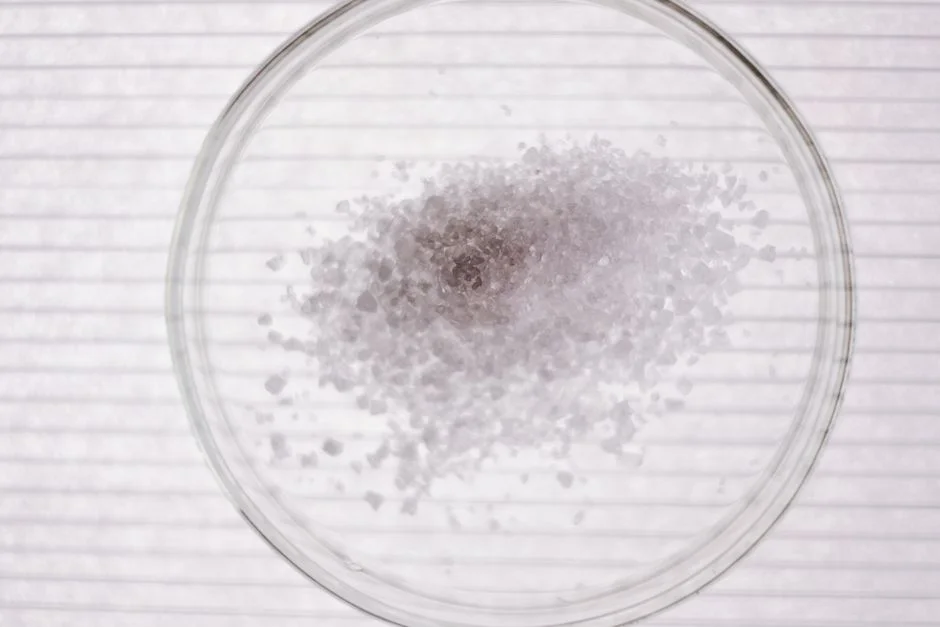
Four service models dominate the B2B PFAS market, and they differ in who owns the media, who carries the waste liability, and how much capex the customer absorbs. Mobile activated-carbon filters — the MOBICON format used by DESOTEC — are deployed on the customer's site, returned to the vendor when saturated, and emptied at a controlled facility where the loaded carbon is measured and either reactivated or incinerated. The customer pays an operating rental; the vendor retains ownership of the media and the destruction permit. That transfer of liability is the model's main procurement advantage (DESOTEC, 2026).
Fixed GAC plus advanced resin trains, as offered by Clear Creek Systems in the US, extend media life by placing a resin polishing step downstream of the carbon. Resins preferentially capture PFAS, and carbon removes the compounds that would otherwise foul the resin, so both media last longer. The trade-off is that the customer owns the vessels, the resin, and the eventual waste; the vendor sells engineering hours rather than service outcomes (Clear Creek Systems, 2026).
Coupling nanofiltration with selective adsorbents is a research-validated route for high-rejection polishing on wastewater effluents with very low target levels, as discussed in the ACS Environmental Science & Technology literature on combined NF/adsorbent PFAS removal (ACS, 2025). This approach belongs in a full-service EPC contract rather than a rental model. Full-service EPC differs from the mobile service in three ways: the customer usually owns the media, the customer files the waste documentation, and the customer's permit — not the vendor's — is the one regulators inspect.
| Architecture | Media ownership | Waste liability | Typical fit |
|---|---|---|---|
| Mobile carbon (MOBICON-type) | Vendor | Vendor (destruction permit held by vendor) | Mid-flow sites needing fast deployment and no capex |
| Fixed GAC + resin | Customer | Customer (vendor provides changeout service) | Long-term sites with predictable PFAS profiles |
| NF + selective adsorbent | Customer | Customer (often paired with RO concentrate handling) | Effluents targeting sub-100 ng/l with concentrate management already in place |
| Full-service EPC | Customer (turnover at handover) | Customer post-handover | Greenfield plants or major revamps integrating PFAS into the broader wastewater train |
These architectures dictate how integration components perform within the wider system. A multi-media pre-filter ahead of a PFAS service train protects downstream carbon from suspended solids and extends media life; for sites already running RO, a polishing step using RO and UF membrane elements is sometimes specified for the concentrate stream. Spare bulk filter media and valves used in PFAS polishing skids should be on the critical-spares list once a service is live.
A Two-Stage Mobile Carbon Train at 60 m³/h: What the Numbers Show
DESOTEC's documented French case study installed two MOBICON filters in series at a combined flow of 60 m³/h. The first filter was loaded with a carbon grade suited to bulk organics — COD and longer-chain PFAS — while the second held a higher-grade B-PURE carbon targeted at the short-chain species PFBA, PFBS, and TFA (DESOTEC, 2026). The influent PFAS concentration was 732 µg/l, which sat inside current French discharge limits but was forecast to exceed forthcoming thresholds. The client adopted the drinking-water benchmark of 100 ng/l per individual PFAS molecule as the project target.
Post-treatment, measurements consistently came in below 100 ng/l per individual molecule, and the French environmental authorities confirmed the result during independent sampling. Reserving the more expensive carbon for the short-chain fraction reduced overall media cost — a pattern any vendor proposal can be required to follow. For buyers, the relevant lessons are the flow rate (60 m³/h per two-filter train), the inlet concentration (732 µg/l total PFAS), the per-molecule target (under 100 ng/l), and the staged media logic. These are the four numbers to anchor a request for a comparable trial.
How Vendors Prove POP Compliance After Treatment

Defensible POP compliance starts with an accepted quantification method applied to the loaded carbon before any decision between reactivation and destruction. DESOTEC developed DSTM37 in collaboration with the Flemish Institute for Technological Research (VITO); the method covers 24 PFAS representatives using an improved extraction step, and the relevant authority accepted it (DESOTEC, 2026). Without a method that the local authority has accepted, the destruction decision itself is contestable.
The thermal fate of the loaded carbon is the second proof point. Under standard operating conditions, three different PFAS-loaded activated carbons were reactivated with flue-gas cleaning; Eurofins measured no PFAS on the reactivated carbon and no PFAS in the stack, corresponding to 100% removal efficiency (DESOTEC, 2026). That 100% figure, paired with a third-party lab name and a batch ID, is the documentation that turns a vendor claim into a regulator-acceptable record.
Buyers should request four artefacts from every vendor before signing: (a) the quantification method and its analytical scope, (b) independent lab certificates per batch, (c) the reactivation or incineration permit reference, and (d) the chain-of-custody record for the saturated media from the customer's site to the destruction facility. The 2026 chemical-plant pretreatment compliance guide for sewer discharge covers the upstream side of the same documentation chain.
Vendor Evaluation Framework and RFQ Checklist
Score vendors on six axes: the documented PFAS scope (number of species quantified and whether the method is authority-accepted), independent verification by a named third-party lab, a POPs-compliant destruction pathway with named permits, media ownership and waste-liability allocation, emergency response time for changeouts, and total demonstrable destruction efficiency from prior campaigns. The 2026 buyer's guide to PFAS treatment technology evaluation firms gives a separate treatment-evaluation perspective that complements this framework.
Require in the RFQ the list of 24-plus PFAS species the vendor measures, the extraction method, the lab used, and the limit of reporting for each species. Require proof of 100% PFAS destruction from a prior campaign, with the lab name, batch IDs, and stack test report — not a theoretical statement. Require written clarity on who owns the spent media, who files the waste documentation, and what happens if a batch exceeds POPs thresholds after the fact. Watch for early breakthrough on GAC vessels, which forces a full carbon changeout and large disposal volumes — a known limitation of carbon-only designs that GAC+resin trains mitigate (Clear Creek Systems, 2026).
| Evaluation axis | What to require in the RFQ | Pass / fail signal |
|---|---|---|
| PFAS scope | 24+ species quantified, method named, authority-accepted | Method not accepted by any regulator = automatic fail |
| Independent verification | Third-party lab name, batch IDs, certificates | Self-reported only = fail |
| Destruction pathway | Permit reference, stack test report, 100% removal record | No prior campaign data = fail |
| Media ownership | Written allocation of ownership and waste liability | Vague or shifting = flag for negotiation |
| Changeout response | Maximum time from saturation detection to swap-out | No SLA offered = fail |
| Resilience | Resin or staged carbon for short-chain PFAS (PFBA, PFBS, TFA) | Single carbon for full PFAS range = flag for review |
Frequently Asked Questions
What does POP compliance actually require of a PFAS service vendor?
POP compliance is governed by the spent-media thresholds, not the treated water. The POPs Regulation sets three tiers — individual PFAS, sum-of-PFAS, and total organic fluorine / precursors — and exceeding any one of them blocks reactivation and forces high-temperature incineration. A compliant vendor must quantify loading on the loaded carbon with an accepted method, decide between reactivation and destruction against the current tier values, and document the decision with a third-party lab certificate (DESOTEC, 2026).
How much does a POP-compliant PFAS service typically cost, and what drives the price?
Public price lists for PFAS service contracts are not in the research, so a buyer should request a written quote tied to a defined scope. The variables that change vendor pricing are flow rate, inlet PFAS concentration, target outlet per individual molecule, the number of PFAS species the vendor quantifies, whether short-chain species (PFBA, PFBS, TFA) require a polishing stage, the destruction-versus-reactivation mix, and whether media is rented or customer-owned. The documented French case used a two-stage 60 m³/h mobile train to take 732 µg/l feed below 10
Frequently Asked Questions
What makes a PFAS removal service POP-compliant under the EU regulation?
To be POP-compliant under the EU Persistent Organic Pollutants (POP) Regulation, PFAS-laden waste must be managed in a way that ensures the total destruction or irreversible transformation of the pollutant content. For spent media, this requires either high-temperature incineration at a minimum of 1,100 degrees Celsius for at least two seconds or chemical treatment processes that achieve a destruction and removal efficiency (DRE) of 99.9999%.
Compliance further dictates that the waste hierarchy must be strictly followed, prioritizing non-combustion thermal technologies or advanced oxidation processes that prevent the formation of byproduct precursors. All facilities must provide a complete mass balance report confirming that the PFOA and PFOS concentrations in the final emission streams remain below the regulatory threshold of 0.05 mg/kg.
How much does a POP-compliant PFAS removal service cost per cubic metre in 2026?
In 2026, the average cost for POP-compliant PFAS removal services ranges between 450 EUR and 850 EUR per cubic metre of treated water. This price variance is primarily driven by the initial influent concentration of PFAS, the total organic carbon (TOC) load, and the specific media replacement frequency required to maintain effluent levels below the EU Drinking Water Directive limit of 0.1 µg/L for the sum of 20 PFAS substances.
Capital expenditure for system installation is typically separate, but operational expenditures for high-compliance services include the mandatory certified chain-of-custody documentation, hazardous waste transport licensing, and the premium cost of high-temperature thermal destruction for spent carbon, which currently commands a 15-20% surcharge over conventional industrial waste incineration.
Should I choose mobile carbon filters or a fixed GAC plus resin system for PFAS?
Mobile carbon filters are recommended for short-term remediation projects or sites with low-to-moderate flow rates under 50 cubic metres per hour. They provide a "plug-and-play" solution that shifts the liability of media management and POP-compliant disposal to the service provider, though they are less cost-effective for high-volume, long-term continuous processing.
A fixed system utilizing Granular Activated Carbon (GAC) followed by an ion-exchange resin (IX) is superior for high-flow industrial applications. While the initial investment is higher, this configuration allows for the selective removal of short-chain PFAS that GAC alone often fails to capture, resulting in significantly longer bed life and lower long-term operational costs due to the reduced frequency of expensive media disposal cycles.
What should a vendor's RFQ response include to prove POP-compliant PFAS destruction?
An RFQ response must include a copy of the vendor’s hazardous waste processing permit specifically authorizing the destruction of PFAS compounds. It must also provide a third-party audit report verifying their thermal oxidizer’s residence time, temperature stability, and the DRE achieved during the most recent stack emission testing for fluorinated compounds.
Additionally, the vendor must supply a template of their waste tracking documentation, specifically the 'Annex VII' shipment document under the Waste Shipment Regulation. This must be accompanied by a 'Certificate of Destruction' that explicitly references the specific batch of media, the exact temperature parameters maintained during the process, and the chemical analysis of the residual ash or scrubber water to confirm the absence of PFAS.
How do I verify that a PFAS service vendor is legally allowed to reactivate or incinerate my spent carbon?
You must request the facility’s Environmental Permit, which must explicitly list the EWC (European Waste Catalogue) codes associated with hazardous waste containing PFAS. Verify the permit against the national registry of the country where the destruction facility is located to ensure it has not been suspended or restricted regarding the handling of Persistent Organic Pollutants.
For reactivation services, you must demand proof that the vendor operates a closed-loop system with off-gas treatment capabilities that meet Best Available Techniques (BAT) reference documents. If the vendor claims to incinerate the carbon, ensure they provide an active contract or sub-contract with a facility that is permitted for hazardous waste incineration (R1 or D10 codes), as many water service providers act as intermediaries but lack the permitted infrastructure to perform the final destruction themselves.