
What a PFAS Treatment Technology Evaluation Actually Decides
Selecting an engineering firm to evaluate PFAS treatment is a consequential decision for a utility, landfill operator, or industrial site, as the resulting design commits the buyer to decades of operating costs. The Water & Wastewater trade guide notes that design through construction typically takes three to five years, and the assets built during that window are long-lived; once media vessels, pumping, and residuals handling are specified, those decisions determine operating costs for the life of the asset (waterandwastewater.com, 2025-08). Under-scoping at this stage is a structural error that no later vendor negotiation can fix.
Three pieces of scope must be present in any defensible evaluation. First, sampling and interpretation across the full PFAS profile, not only the regulated compounds, so treatment targets are not under-defined. Second, an honest evaluation of alternatives to treatment — source management, blending, alternative supply, interconnection, and point-of-use systems — because a firm that moves straight to treatment design skips the step with the greatest potential savings (waterandwastewater.com, 2025-08). Third, residuals and lifecycle cost analysis, since media replacement and concentrate disposal dominate long-term cost and capital expenditure alone does not predict the 30-year picture.
The deliverable from a qualified firm is a defensible alternatives analysis with lifecycle cost, pilot or rapid small-scale column test (RSSCT) breakthrough data per PFAS of concern, and a residuals management plan naming disposal pathways and cost sensitivity. Industrial buyers who sit outside the Brooks Act qualifications-based procurement model used by public agencies still need each of these elements; the difference is only in how the firm is selected, not in what the firm owes them.
The Three Proven Technologies Any Qualified Firm Must Compare
Granular activated carbon (GAC), PFAS-selective anion exchange resin, and high-pressure membranes including nanofiltration and reverse osmosis are proven at full scale for PFAS removal. A competent firm will explain the trade-offs candidly rather than advocate one option by default (waterandwastewater.com, 2025-08). For buyers specifying industrial reverse osmosis systems, the technology choice and concentrate pathway must be defined before equipment selection.
GAC carries lower media cost and is widely installed in municipal drinking water, but it performs more weakly on short-chain PFAS — a trade-off the firm must name explicitly. PFAS-selective anion exchange resin delivers longer run times and smaller vessels, which reduces footprint and media change-out frequency, but media cost is higher and the resin is single-use disposal rather than reactivation. High-pressure membranes produce the most consistent removal across chain lengths, but they require meaningful energy input and generate a concentrate stream that must itself be managed; the Water & Wastewater trade guide is explicit that concentrate management is a treatment problem, not a disposal problem (waterandwastewater.com, 2025-08).
Emerging destruction technologies — electrochemical oxidation and supercritical water oxidation — apply to concentrated residual streams, not to full treatment flows, and full-scale operating experience remains limited. A firm recommending either for whole-plant PFAS removal is misapplying the technology, which is a signal of weak evaluation competence (waterandwastewater.com, 2025-08). The matrix below illustrates the side-by-side comparison a buyer should expect before any technology is selected.
| Technology | Primary advantage | Primary trade-off | Residuals character | Best-fit industrial context |
|---|---|---|---|---|
| Granular activated carbon (GAC) | Lower media cost; widely installed | Weaker performance on short-chain PFAS | Spent carbon, reactivation or disposal | High-flow sites with longer-chain PFAS dominance |
| PFAS-selective anion exchange resin | Longer run times; smaller vessels | Higher media cost; single-use disposal | Spent resin, single-use disposal | Space-constrained sites; variable influent |
| High-pressure membranes (NF/RO) | Consistent removal across chain lengths | Energy use; concentrate management required | Concentrate stream requiring treatment or destruction | Sites needing broad-spectrum removal and reuse-quality effluent |
| Emerging destruction (EC, SCWO) | Mineralizes concentrated PFAS | Limited full-scale operating experience | Treated residual only | Concentrate polishing, not full-flow treatment |
A Phased Engagement Model That Protects the Buyer
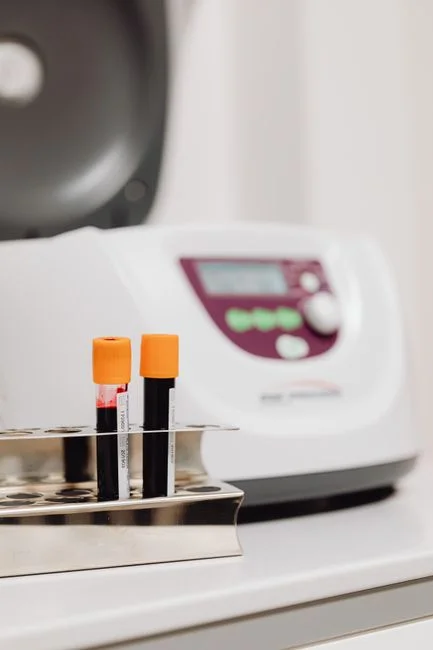
Phasing the engagement allows the buyer to stop the project between stages if the data does not support treatment. The Water & Wastewater trade guide describes four sequential stages; buyers should treat them as contract gates, not billable milestones that flow automatically into one another (waterandwastewater.com, 2025-08).
- Phase 1 — Characterization and alternatives analysis. Build the PFAS profile across the full analyte list, not only regulated compounds, and run an alternatives analysis that includes source management, blending, alternative supply, interconnection, and point-of-use. Each option should carry a lifecycle cost including residuals management, not capital cost alone.
- Phase 2 — Pilot or rapid small-scale column testing (RSSCT) on the actual source water. The output must be breakthrough curves per PFAS of concern, not a summary removal percentage. These curves determine media replacement frequency, which in turn determines 30-year operating cost.
- Phase 3 — Process and facility design. Cover vessels, pretreatment, hydraulics, pumping, electrical and instrumentation, media handling access, and residuals management. Design decisions made here determine operating cost for the life of the asset.
- Reassessment gate. Between phases, the buyer decides whether treatment is the right answer. A firm that resists phasing is signaling it wants commitment before the data supports it.
Specifying pilot scale parameters, RSSCT design ratios, and breakthrough-curve interpretation criteria inside the contract turns this phased model from a written procedure into an enforceable structure.
Residuals and Lifecycle Cost: Where Optimistic Assumptions Do the Most Damage
Media replacement and residuals disposal dominate long-term PFAS treatment cost, while capital cost is a small share of 30-year lifecycle expenditure. The Water & Wastewater trade guide is explicit: optimistic assumptions in these two line items do more damage than any other error in a PFAS program (waterandwastewater.com, 2025-08). For sites where concentrate volume is large — manufacturing sites, landfill leachate, AFFF-impacted facilities — the concentrate stream is a separate treatment problem with its own energy, media, and disposal line items.
Buyers should require two sensitivity analyses before signing a design contract. First, what happens to 30-year cost if media life is half the pilot-derived estimate. Second, what happens if disposal cost doubles. If the firm cannot run these sensitivities, or produces results where the answer does not change, the underlying cost model is too coarse for a 30-year decision. A pilot report that presents only a summary removal percentage, rather than breakthrough curves per PFAS of concern, cannot support a defensible media replacement frequency and should be returned for revision.
Financial disclosure is part of the residuals conversation. Ask directly whether the firm has financial relationships with equipment or media suppliers. Such relationships are not necessarily disqualifying, but a firm that will benefit from a particular technology selection cannot provide an entirely independent alternatives analysis (waterandwastewater.com, 2025-08). The buyer is entitled to know who is on the other side of the recommendation, particularly for compatible RO and UF membrane elements where vendor influence is most concentrated.
Red Flags and a Buyer's Checklist for Industrial Sites

Industrial buyers — manufacturing discharge, landfill leachate, AFFF-impacted facilities — select firms on commercial terms, which raises the cost of a poor selection. The four essential criteria remain: PFAS-specific experience, technology neutrality, willingness to evaluate alternatives to treatment honestly, and competence in residuals and lifecycle costing (waterandwastewater.com, 2025-08).
Three warning signs should trigger a hard second look. First, advanced oxidation (AOP) proposed for full-flow PFAS removal; AOP has a defined role on concentrated residuals, not on raw influent. Second, guaranteed removal percentages offered without pilot or RSSCT breakthrough data on the actual source water; a guarantee without site data is marketing, not engineering. Third, silence on residuals management in the proposal; a firm that does not name concentrate or spent-media disposal pathways has not finished its design. For an industrial site, this is the point to ask for a cross-reference to an industrial wastewater compliance and cost guide so the firm is being measured against the same lifecycle framework the buyer is using.
The checklist below is the minimum a buyer should carry into a vendor meeting. It is built from the Water & Wastewater trade guide selection criteria, translated for sites that do not procure under the Brooks Act (waterandwastewater.com, 2025-08).
| Checklist item | What to ask or require | What a weak answer looks like |
|---|---|---|
| PFAS-specific experience | Named projects, influent profile, technology used, outcome | Generic water-treatment references with no PFAS detail |
| Technology neutrality | Disclosed financial relationships with media or membrane suppliers | Refusal to discuss supplier relationships |
| Alternatives evaluation | Written analysis of source control, blending, POU, interconnection | Treatment-only scope with no alternatives section |
| Residuals competence | Named disposal pathways, cost sensitivity at 2x disposal cost | Vague reference to "offsite disposal" with no cost |
| Pilot or RSSCT rigor | Breakthrough curves per PFAS of concern, design ratios documented | Single summary removal percentage |
| Phased contract structure | Defined reassessment gates between phases | Single lump-sum contract spanning characterization through design |
| Regulatory currency | Written statement on April 2024 MCLs and May 2026 proposal status | References to "forthcoming" EPA limits without dates |
Frequently Asked Questions
How much does a PFAS treatment technology evaluation typically cost for an industrial site?
The Water & Wastewater trade guide does not publish a price list, and evaluation cost varies with influent complexity, source water variability, and whether piloting is included (waterandwastewater.com, 2025-08). Industrial buyers should request a fee schedule broken out by phase, a not-to-exceed ceiling for Phase 1, and a separate price for the pilot or RSSCT once the alternatives analysis is complete. Cross-check the proposed scope against an industrial wastewater cost breakdown to confirm the per-gallon assumptions are consistent with site data.
What qualifications should I require from a PFAS engineering firm if my site is outside Brooks Act procurement?
The four selection criteria in the Water & Wastewater trade guide apply to both municipal and industrial buyers: PFAS-specific experience, technology neutrality, willingness to evaluate alternatives to treatment honestly, and competence in residuals and lifecycle costing (waterandwastewater.com, 2025-08). Industrial buyers should add two procurement-specific requirements: written disclosure of any supplier financial relationships, and a contract structured in phases with reassessment gates. Fees should be negotiated after the most qualified firm is selected, because the cheapest engineering proposal frequently produces the most expensive project.
Which EPA PFAS deadlines are live in 2026 and which are still proposals?
EPA finalized enforceable drinking water limits in April 2024: 4.0 parts per trillion for PFOA and PFOS, with limits for four other PFAS and compliance required by 2029. In May 2026, EPA proposed retaining the PFOA and PFOS limits with an optional extension to 2031 and rescinding the others; as of September 2026, those May 2026 changes remain proposals (waterandwastewater.com, 2025-08). Any firm that tells a buyer the 2029 compliance date has been formally extended without distinguishing it as a proposal is misrepresenting regulatory status.
What pilot or RSSCT data should a defensible evaluation report contain?
Breakthrough curves for each PFAS of concern on the actual source water, not a summary removal percentage, are required. These curves determine media replacement frequency, which drives 30-year operating cost, so a pilot report that aggregates results across analytes cannot support a defensible design recommendation (waterandwastewater.com, 2025-08). Buyers should also require the RSSCT design ratios used to scale the data to full size. For an