Start with the wastewater and the required water quality
An industrial effluent treatment plant in Ashgabat should be selected from the wastewater characteristics, required discharge or reuse quality, available footprint and project logistics—not from a generic technology list. A practical train may combine screening, DAF for suspended solids and oil-bearing streams, biological treatment, membrane filtration and disinfection, with RO added when high-quality reuse is required. University of Twente research supports nanofiltration as a polishing option, while a published 360 m³/day dairy-plant model demonstrates the use of screening, coagulation, DAF, SBR, RO and disinfection. Final design requires local permit criteria, flow and pollutant data, climate-adjusted operating limits, utility availability and commissioning boundaries.
Start the industrial ETP design by requesting average and peak flow, operating hours, batch-discharge patterns and expansion forecasts. Size the treatment train against the expected hydraulic and pollutant loads, not the laboratory average alone. For wastewater characterization, request pH, temperature and turbidity first, then COD, BOD, TSS, oils and grease, nutrients and contaminants specific to the industrial sector. The characterization program should also establish whether samples represent routine production, cleaning events or the most difficult discharge conditions.
Separate discharge compliance from industrial effluent reuse objectives. University of Twente’s thesis, Direct nanofiltration of wastewater treatment plant effluent, identifies nanofiltration as a way to polish wastewater-treatment-plant effluent and produce water suitable for agricultural or direct and indirect potable-use applications; it does not establish that every industrial ETP requires nanofiltration or reverse osmosis treatment. A project may instead require a lower treatment standard for a permitted discharge, or a higher standard for non-potable process reuse, irrigation or another specified application.
The receiving environment, sewer or discharge point, applicable permit conditions, intended reuse and pretreatment obligations are mandatory design inputs. No site-specific flow, effluent limit, soil condition or Ashgabat climate dataset is supplied in the research, so these items must be verified during due diligence. The industrial ETP design guide for Hanoi provides a useful comparative structure, but its local requirements cannot be transferred to Ashgabat without verification.
| Design-basis input | Information to obtain | Decision affected |
|---|---|---|
| Hydraulic profile | Average and peak flow, operating hours, batch discharges and expansion forecast | Pretreatment, biological and polishing capacity |
| Wastewater characterization | pH, temperature, turbidity, COD, BOD, TSS, oils and grease, nutrients and sector-specific contaminants | Unit selection and chemical demand |
| Water destination | Discharge point, permit conditions and permitted reuse application | Effluent targets, disinfection and monitoring |
| Local verification | Ashgabat climate, soil, power, drainage, logistics and regulatory requirements | Installation, operating limits, price and schedule |
Map the treatment train from headworks to final effluent
The treatment train should remove contaminants in sequence so that advanced membranes are not asked to handle solids, oil or incompatible chemistry that belongs to an upstream process. A published case submitted by Heriot-Watt University Dubai Campus to the American Society of Mechanical Engineers describes a modeled dairy plant for 360 m³/day: screening, chemical coagulation, dissolved air flotation and sequential batch reactor, followed by split MED and RO branches and disinfection. This is an industrial process model, not an Ashgabat performance guarantee.
- Headworks: screening and mechanical pretreatment protect downstream pumps, valves and biological processes from rags, debris and oversized material.
- DAF pretreatment: use dissolved air flotation when characterization shows suspended solids, FOG, oil and grease or colloidal material that could impair biological or membrane stages. A rotary mechanical bar screen addresses the headworks stage; an industrial DAF pretreatment system addresses floatable and suspended material.
- Biological treatment: apply biological treatment to biodegradable organic loading. The dairy model identifies SBR as its biological step; that is a process selection for that modeled case, not a universal choice for every factory in Ashgabat.
- Advanced polishing: add membrane filtration or disinfection only when the reuse target or permit requires it. The ASME dairy model uses RO and disinfection on the RO branch, while University of Twente research supports nanofiltration for polishing WWTP effluent.
- Residual management: route sludge, float and other process residues to defined capture and disposal arrangements rather than treating them as an afterthought.
For micropollutant removal, Wageningen University’s 2022 PhD thesis, Removal of micropollutants from wastewater treatment plant effluent by constructed wetlands, identifies constructed wetlands as a research route. It should not be presented as a default Ashgabat treatment stage; feasibility depends on the target contaminants, climate, land availability and receiving conditions, none of which are established by the supplied research.
| Stage | Primary role | Evidence boundary |
|---|---|---|
| Screening and mechanical pretreatment | Remove large material and protect downstream equipment | Process-role principle; project selection still requires site data |
| Coagulation and DAF | Remove suspended solids, oil, FOG and floatable material | DAF appears in the 360 m³/day modeled dairy sequence |
| SBR biological treatment | Remove biodegradable organic loading | Specific to the published dairy model |
| NF or RO | Polish effluent for defined reuse or discharge requirements | Supported by University of Twente research for NF polishing; not required for every ETP |
| Disinfection | Reduce microbiological risk for the intended destination | Included in the dairy model; permit and reuse criteria remain project-specific |
Compare pretreatment, biological treatment and advanced polishing
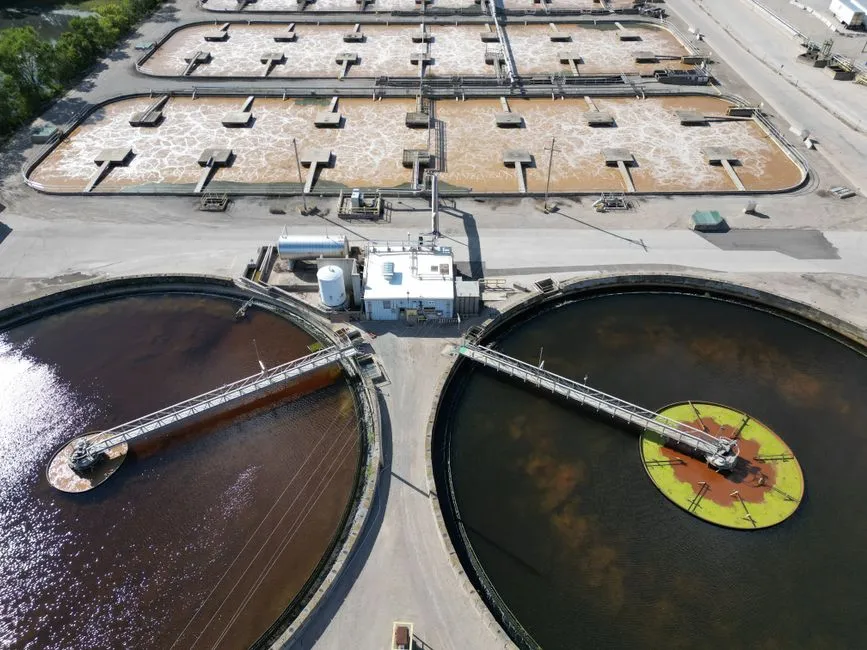
DAF, lamella clarification and MBR solve different problems, so their suitability must be tied to the contaminant, footprint and reuse priorities. DAF is the upstream choice when floatable material, FOG and suspended solids must be removed before biological or membrane treatment. Lamella clarification is positioned as a solids-separation option where compact clarification is appropriate. An integrated MBR wastewater treatment system combines biological treatment and membrane separation where compact, reuse-oriented treatment is required.
The available DAF catalog covers 4–300 m³/h across 13 standard models. Use those values to identify which candidate units are within the required hydraulic range, then ask the supplier to confirm actual wastewater duty, flotation loading and chemical consumption. The available MBR catalog covers 10–2,000 m³/day, sub-1 μm filtration and a stated 60% footprint reduction. Those catalog values are useful screening data, but they do not establish that an MBR will outperform conventional biological treatment for a particular industrial effluent.
For ultrafiltration, the catalog range is 2,000–40,000 L/h, with 0.03 μm PVDF membranes, automatic backwash, air scour and acceptance of up to 300 ppm turbidity. A UF water-treatment system can therefore be evaluated as a polishing or RO-pretreatment stage, subject to feed-water compatibility and confirmation of the stated turbidity limit.
The WSZ package range is 1–80 m³/h for a configured system combining anoxic and aerobic treatment, sedimentation and disinfection. It is relevant to sewage or a comparable biological load, not a default substitute for every industrial ETP. The underground integrated sewage-treatment unit should be matched to wastewater characteristics, land conditions and local installation requirements.
Nanofiltration remains a qualified polishing option because University of Twente research supports its use for WWTP effluent reclamation. Before selection, require feed-water characterization, membrane compatibility review, recovery analysis and an assessment of concentration management; the thesis does not provide an Ashgabat-specific guarantee.
| Option | Removal target | Train position and project fit | Catalog or research scope |
|---|---|---|---|
| DAF | Suspended solids, floatable material, oil and FOG | Before biological or membrane stages | 4–300 m³/h; 13 standard models |
| Lamella clarification | Suspended solids | Solids-separation stage where footprint and clarify-water requirements align | High-efficiency sedimentation tank; quoted performance requires project-specific confirmation |
| MBR | Biodegradable organics plus membrane-separated solids | Compact biological stage for reuse-oriented projects | 10–2,000 m³/day; sub-1 μm filtration; stated 60% footprint reduction |
| UF | Suspended solids and particles | Polishing or RO pretreatment | 2,000–40,000 L/h; 0.03 μm PVDF; automatic backwash and air scour; up to 300 ppm turbidity |
| WSZ package | Biodegradable organic load, solids and disinfection | Package option for sewage or comparable biological load | 1–80 m³/h; anoxic/aerobic, sedimentation and disinfection configuration |
| Nanofiltration | Polishing constituents not removed by the biological stage | Advanced stage only where the reuse target requires it | University of Twente thesis supports polishing WWTP effluent; feed and recovery analysis required |
Design for reuse, compliance and operating resilience in Ashgabat
Define the reuse application before specifying polishing: non-potable process water, irrigation or another permitted use each requires a different water-quality and disinfection basis. A discharge permit and a reuse specification should be maintained as separate compliance documents because neither can be inferred from equipment brochures. The selected train should connect each monitoring parameter to an operating response and a defined sampling or reporting point.
Include pH, temperature and turbidity in commissioning and operation. The supplied research from Water and Wastewater, Designing an Efficient Effluent Treatment Plant: Best Practices Guide, describes real-time monitoring of these parameters as a control and compliance tool. For an Ashgabat project, specify sensor range, calibration method, data display, local alarms, backup power and the manual sampling procedure required for acceptance testing. The wastewater treatment automation and controls guide provides the relevant control-system framework.
Residual management must be inside the project scope. Include sludge or float capture, thickening, stabilization, storage, transport and an identified disposal route. A plant can meet water limits while still failing operationally if residuals obstruct equipment, create odour or cannot be lawfully removed.
Site planning should address footprint, buried versus above-grade installation, maintenance access, drainage, power, odour control and spare-parts availability. Confirm chemical storage and supply, membrane replacement arrangements and local-service capability. For disinfection, evaluate a chlorine-dioxide generator only against the specified process duty, safety requirements and applicable local approvals; residual handling and occupational controls still have to be engineered.
Do not transfer the ASME dairy study’s renewable-energy assumptions to Ashgabat. Its 3,568 sunlight hours per year and 6.3 kWh/m² per day are explicitly Dubai, UAE values, not Ashgabat data. Assess solar, recovered heat or other renewable concepts only after local resource, power and thermal-demand verification. Sludge dewatering can be addressed with a plate-frame filter press, subject to the selected sludge properties and disposal route.
Build a quotation-ready ETP specification
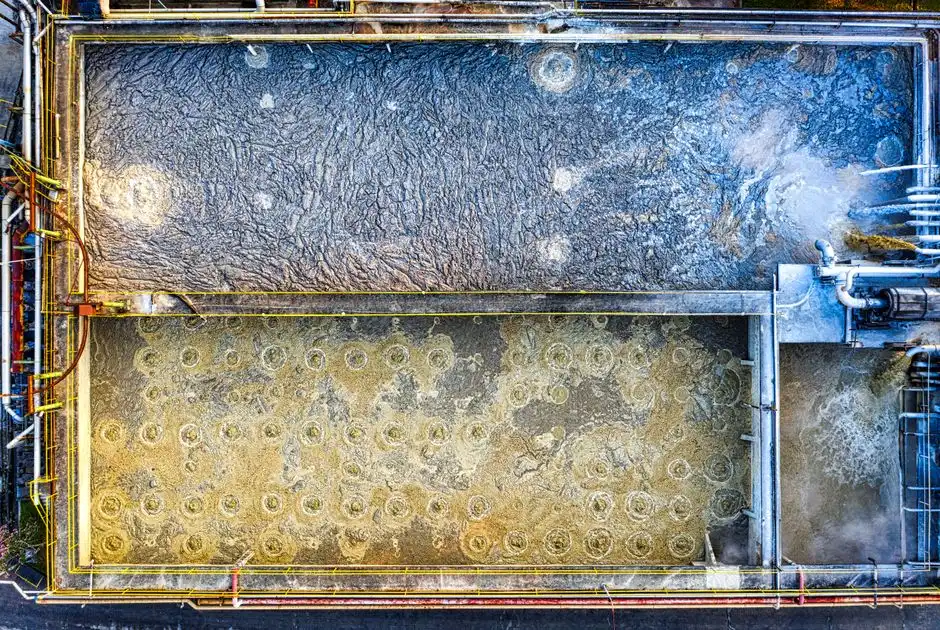
A comparable quotation requires a defined influent, effluent duty and project boundary. Issue the wastewater analysis, flow-duration information, discharge or reuse targets, site drawings, utility requirements and applicable permit references to each bidder. If some inputs remain unavailable, require the bidder to identify the assumption, design margin and price impact rather than conceal the gap.
Define every unit’s duty, construction materials, instrumentation, controls, local display, alarms, duty and standby philosophy, utilities and performance-test method. Require bidders to disclose pretreatment assumptions, chemical consumption, sludge yield, membrane-cleaning requirements, expected service intervals and exclusions. The automatic chemical-dosing system is one equipment scope that must be linked to the process duty rather than quoted in isolation.
| Quotation package | Required bidder response |
|---|---|
| Design basis | Influent and effluent data, flow assumptions, operating hours and future expansion basis |
| Process documentation | Complete process flow diagram, P&ID, equipment schedule and mass balance |
| Equipment and controls | Materials, instrumentation, control philosophy, local alarms, utilities, duty/standby arrangement and spares |
| Operating commitments | Chemical consumption, sludge yield, cleaning frequency, service intervals and maintenance assumptions |
| Commissioning and acceptance | Commissioning plan, operator training, test methods, acceptance parameters and performance-test conditions |
| Commercial exclusions | Civil works, installation, freight, import duties, permits, utilities, chemicals, sludge disposal and local support |
Do not accept a generic guarantee such as “high-quality effluent.” State each parameter, test method, sampling point, operating condition and acceptance procedure. The industrial ETP and DAF selection guide can help frame the technical questions, while the DAF-versus-clarifier selection guide supports technology-specific questioning; neither establishes local Ashgabat conditions.
Complete the local site survey, logistics review and regulatory confirmation before fixing the delivery timetable or final price. A defensible package separates equipment price, engineering, civil and installation work, freight and import requirements, utilities, commissioning, training, consumables and long-term service support.
Frequently Asked Questions
What capacity should an industrial effluent treatment plant in Ashgabat have?
Capacity should be selected from average and peak flow, operating hours, batch-discharge behavior and expected expansion. Ask bidders to state the design flow for every unit, the treatment train’s hydraulic duty and the operating conditions behind each selected model. Do not choose a catalog capacity from the daily laboratory average alone.
When is DAF more appropriate than clarification in an industrial ETP?
DAF is more appropriate when wastewater characterization identifies floatable material, FOG, oil and grease, or suspended solids that should be removed before biological or membrane treatment. Require a comparison using the actual wastewater properties, chemical demand, recovered sludge or float characteristics and downstream loading. See the DAF-versus-clarifier selection guide for a structured comparison method.
Should an Ashgabat factory choose MBR or conventional biological treatment for water reuse?
Choose MBR when the reuse target justifies membrane separation and the available footprint supports an integrated biological and membrane system; consider conventional biological treatment when the required quality can be met with less complexity. Compare the complete polishing and disinfection train, operator requirements, membrane replacement, cleaning, energy use and site constraints. The integrated MBR wastewater treatment system can be assessed against those project requirements rather than selected by catalog capacity alone.
How should suppliers compare ETP quotations for wastewater equipment?
First ask each supplier to confirm price scope, exclusions, delivery terms, commissioning boundaries, operator training, chemical requirements, membrane replacement strategy and local-service support. Then compare the technical offer against the same design basis and acceptance criteria. Request an industrial DAF pretreatment system quotation only after the pretreatment duty and feed characteristics have been fixed.
What information is required to verify compliance and delivery feasibility in Ashgabat?
Request the applicable discharge and reuse criteria, receiving point, pretreatment obligations, site survey, utility information, logistics constraints, climate data and confirmation of import, installation and commissioning responsibilities. Use the wastewater treatment automation and controls guide to check monitoring, alarms and local-control requirements. Compliance and delivery remain unverified until the responsible authorities and site team confirm them.
Related Equipment
- industrial DAF pretreatment system — specifications, capacity range, and technical data