Determine Whether the Factory Needs DAF, an ETP, or Both
Neither a dissolved air flotation unit nor a complete industrial effluent treatment plant can be selected from flow alone. A Dammam factory generally needs DAF when wastewater contains removable oil, grease, suspended solids or colloidal material, while a complete ETP is required when biological COD/BOD removal, regulated discharge or water reuse is required. Selection must follow measured influent characteristics, flow variability and the final receiving or reuse specification. DAF is normally primary physicochemical pretreatment ahead of biological treatment, not a substitute for the complete biological, polishing and sludge-handling train.
A standalone DAF can be justified where the objective is oil-and-solids interception or recovery before another treatment or discharge route. A complete industrial ETP is needed where the factory must reduce soluble organics, stabilize the effluent, meet discharge conditions or produce reusable water. Emvees lists DAF, anaerobic and aerobic processes, MBBR, extended aeration, MBR and SAFF among the technologies used for industrial wastewater in Saudi Arabia, confirming that an ETP is a configured treatment train rather than one tank or machine.
The factory’s sector provides an initial direction, not a final specification. Food and beverage effluent commonly contains high organics and FOG; textile effluent can contain colour and salts; metal-finishing effluent can contain heavy metals; and paper-mill effluent is often hot, coloured and high in suspended solids (HydropureWater, 2026). Those distinctions determine which pretreatment, biological and polishing duties must be included.
HydropureWater’s DAF catalogue covers 4–300 m³/h across 13 standard models, but that catalogue range is not a universal sizing rule. Check it against measured peak flow, hydraulic retention requirements, wastewater characteristics and operating envelope using the best DAF unit engineering selection framework. The DAF oil-water separator specifications provide a second reference for duty and equipment requirements.
Build a Dammam Wastewater Profile Before Selecting Equipment
A defensible DAF or ETP selection requires representative wastewater results, production-event data and a defined receiving or reuse target. Daily average flow and an industry description cannot support equipment sizing or a defensible price.
Request measured COD, BOD, TSS, FOG, pH, salinity, average flow, peak flow and flow variation. Include temperature where biological treatment or membranes are being considered, because it affects process performance and equipment selection. Sampling should cover normal production and identified events such as cleaning-in-place discharges, batch dumps and shift changes.
The magnitude of food-sector loads is illustrated by Spans, which reports BOD of 500–5,000 mg/L and FOG of 50–500 mg/L for dairy, meat, poultry and confectionery wastewater in Saudi Arabia. The same source states that these streams need physicochemical primary treatment before biological stages; relying on biology to handle the full primary load is therefore not a defensible default.
| Design input | What the bidder needs to know | Why it affects selection |
|---|---|---|
| COD and BOD | Representative concentrations and loading pattern | Determines biological capacity and whether pretreatment is required |
| TSS and FOG | Solids and oil/grease characteristics | Defines DAF duty, coagulant needs and sludge production |
| pH and salinity | Normal range, excursions and discharge frequency | Determines equalisation, pH correction and biological compatibility |
| Flow | Average, peak, duration and discharge schedule | Sets hydraulic and contaminant-loading duties |
| Temperature | Influent range, including hot process streams | Influences biological activity, aeration, ammonia stripping and membrane fouling |
| Target quality | Current permit, estate conditions or reuse specification | Defines the final treatment and polishing scope |
Spans reports that Saudi influent temperatures of 35–45°C can accelerate microbial metabolism while increasing MBR membrane fouling and ammonia-stripping requirements. Temperature must therefore appear in both the vendor’s design checks and any pilot work. Production events may require equalisation and pH correction ahead of biology so that shock loads do not destabilise the biological stage.
Where historical data are incomplete, require a sampling plan rather than allowing each bidder to use a different assumed influent. The DAF selection framework should be issued with the same wastewater dataset to every bidder so that their proposals remain comparable.
Match the Treatment Train to the Factory's Wastewater
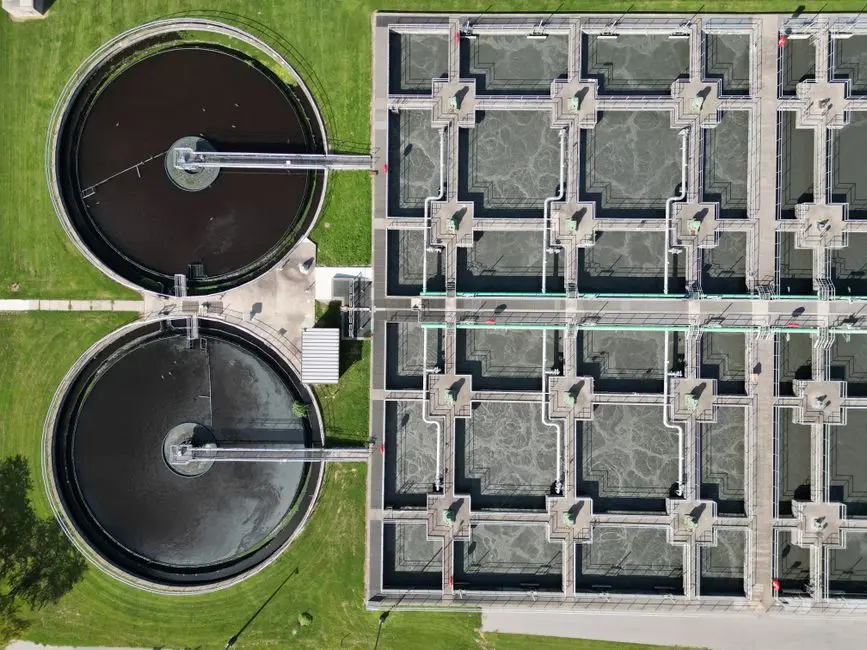
The appropriate train begins with the measured wastewater profile and ends with the required effluent quality; intermediate technologies should be justified by process duty rather than product preference.
For food, beverage and paper streams with high organics and suspended solids, HydropureWater’s 2026 Dammam guide identifies DAF as the typical primary step for FOG and TSS removal, followed by biological treatment. The same guide reports DAF performance of up to 90% TSS removal and up to 95% FOG removal when properly coagulated. These are design references, not guaranteed plant outcomes; the bid guarantee and test method must define what the supplier accepts responsibility for.
Chemical and metal-finishing streams require equalisation and physicochemical treatment before biology to control pH, shock loads and heavy metals. For other industrial duties, MBBR or SAFF is appropriate where a compact biological stage and robustness against load variation are priorities. Extended aeration can suit variable or dilute loading when operational simplicity takes priority over footprint. An integrated MBR wastewater treatment system becomes relevant where high COD/BOD reduction, automation, compact installation and reuse-grade effluent justify membrane cleaning and replacement obligations.
| Wastewater condition | Primary or pretreatment duty | Secondary and polishing duty | Decision point |
|---|---|---|---|
| High organics, TSS and FOG | Equalisation, pH control, coagulation and DAF | Biological treatment, clarification and optional polishing | Protect biology from the primary load |
| Colour and salts | Equalisation and application-specific physicochemical control | Biological treatment followed by membrane or other polishing if required | Confirm salinity and colour effects during design or pilot testing |
| Heavy metals or toxic/inhibitory compounds | Equalisation, pH control and metals removal before biology | Biological treatment and required polishing | Verify residual toxicity before selecting the biological stage |
| Variable or dilute load | Equalisation and flow/load smoothing | Extended aeration or another load-appropriate biological stage | Balance operational simplicity against footprint |
| Reuse-grade effluent with compact installation | DAF where required by solids and FOG | MBR, then UF/RO where the end-use specification requires it | Define guaranteed reuse parameters and membrane-CIP obligations |
A complete train may include screening and equalisation; pH and chemical dosing; DAF; biological treatment; clarification or MBR solids separation; UF/RO polishing; sludge dewatering; and disinfection. The industrial DAF system and plate-and-frame filter press may be separate units within that train. Any automatic chemical dosing system must be sized for the actual wastewater chemistry rather than treated as a minor accessory.
Apply the Correct Saudi Discharge and Reuse Requirements
The applicable specification depends on where the treated water goes: SASO 1465 sewer limits, current industrial-estate conditions and end-use reuse quality are separate compliance layers.
Spans states that SASO 1465 establishes the industrial-effluent standard for sewer discharge, with BOD not exceeding 30 mg/L, TSS not exceeding 100 mg/L, COD not exceeding 250 mg/L and oil and grease not exceeding 10 mg/L. These are sewer-discharge values, not a universal reuse specification. Spans also states that MODON estate conditions may be stricter; the factory must obtain its current permit and governing industrial-estate conditions rather than assume the sewer values are sufficient.
| Receiving pathway | Specification to apply | Procurement action |
|---|---|---|
| Sanitary sewer discharge | Current SASO 1465 sewer limits and any additional authority conditions | Obtain the permitted discharge route and issue the controlling limits to bidders |
| MODON or industrial-estate discharge | Current estate conditions, which Spans says may be stricter | Request a copy of the industrial licence and site conditions |
| Cooling, cleaning or process reuse | Application-specific quality brief | Define the intended use and request guaranteed parameters relevant to that use |
| Zero-liquid-discharge objective | Explicit site-specific ZLD brief | Scope membrane concentration and evaporation separately; do not infer it from sewer compliance |
For reuse, request guaranteed parameters relevant to the intended application, including conductivity and turbidity, together with other contaminants identified by the process engineer. HydropureWater’s 2026 guide also highlights hardness, silica and biological-growth potential as reuse considerations. Emvees states that properly treated ETP water can often be reused for non-potable cooling and cleaning, reducing freshwater demand, but feasibility must be confirmed for the specific stream.
Do not accept a general statement that effluent is “suitable for reuse.” Require the bidder to state the end use, test protocol, acceptance conditions and effects of seasonal temperature and influent variation. The Dammam ETP buyer’s guide provides the broader selection context, while RO equipment should be specified only where the reuse brief justifies it.
Compare Standalone DAF, Packaged ETP and Civil-Built ETP
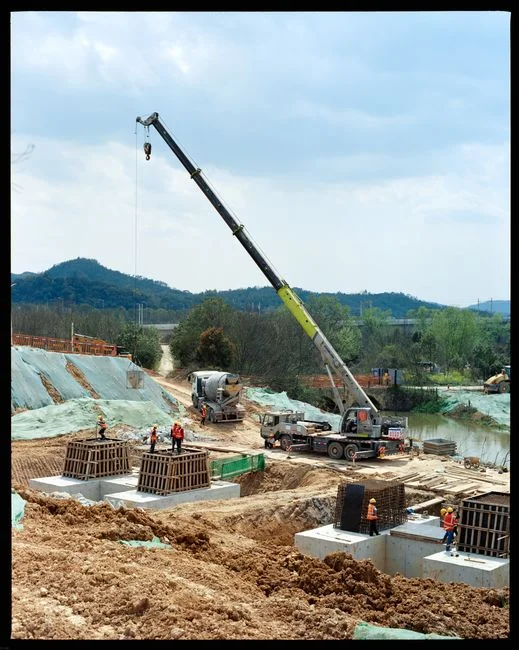
DAF is a treatment technology, while a packaged or civil-built ETP is a delivery format; conflating them makes supplier quotations difficult to compare.
A standalone DAF has the narrowest process scope and can suit oil-and-solids interception. A packaged ETP may integrate a wider sequence under one supply contract. A civil-built ETP allows more site-specific civil and process integration but requires clearer interfaces between the civil contractor and equipment supplier.
Spans describes containerised ETPs covering 10–500 m³/day, with screening, physicochemical treatment, DAF, MBBR biological treatment, clarification, sand filtration and disinfection. That example shows how much more than a DAF may be included in a packaged ETP; capacity, treatment target and included ancillaries must be checked rather than inferred from the delivery format.
| Buyer issue | Standalone DAF | Packaged ETP | Civil-built ETP |
|---|---|---|---|
| Process scope | Primary solids, FOG, oil and grease removal | May integrate pretreatment, biology, clarification, filtration and disinfection | Application-specific train with site civils and installed equipment |
| Civil interface | Requires tank, pump and drainage foundations | Requires agreed foundations, connections and local services | Civil package forms a major interface and risk allocation |
| Delivery programme | Subject to equipment manufacture, transport and installation | May reduce site assembly but still requires local civil and utility interfaces | More site construction and coordination |
| Operator requirement | Chemical dosing, pumps, DAF controls and sludge handling | Broader operating and maintenance duties | Broader operating duties plus site civil-system interfaces |
| Expansion | Additional modules may require hydraulic recheck | Depends on the packaged architecture and reserved capacity | Can be planned around site footprint and future phases |
Factory-built delivery is not automatically lower risk. Request confirmation of the civil interface, utilities, transport access, installation sequence, commissioning responsibility and operator training. Use measured peak flow, available footprint, reuse objective and local operating capability to choose the delivery format. Keep the technology decision separate: a civil-built plant can use DAF, MBR and UF/RO, while a packaged train still needs application-specific process selection.
Specify the Full Plant Instead of Comparing Tank Prices
A comparable ETP bid must price and guarantee the complete treatment scope; comparing only tanks or flotation equipment hides downstream operating and disposal costs.
Require the proposal to cover screening, equalisation, pH and chemical dosing, DAF, biological treatment, solids separation, polishing, disinfection, sludge dewatering, pumps, blowers, instrumentation, controls, utilities and odour control where relevant. The proposal should also identify access, lifting, containment, electrical requirements and the disposal route for solid residues.
Ask bidders to name coagulants, flocculants, pH adjusters, membrane-cleaning chemicals and anti-scalant requirements. Chemical consumption, replacement frequency and storage must be included in operating-cost review. The best DAF unit engineering selection framework and energy-efficiency guide provide useful bases for checking equipment scope and operating assumptions.
| Cost or scope item | Information to require from each bidder | Reason for the check |
|---|---|---|
| Capital equipment | Itemised equipment list, capacities, materials and exclusions | Prevents like-for-like scope omissions |
| Civil and installation | Foundations, tanks, roads, drainage, wiring, piping, erection and local approvals | Separates plant price from site construction |
| Commissioning and training | Protocol, acceptance tests, documentation and operator competency checks | Defines handover responsibility |
| Consumables | Chemical type, expected consumption basis and replacement items | Connects process design to operating cost |
| Energy | Connected load, operating assumptions and metering included | Supports comparison of biological and pumping systems |
| Sludge and waste | Generation basis, dewatering route, cake handling and disposal assumptions | Prevents untreated or recurring disposal costs |
| O&M | Staffing, preventive maintenance, spare parts and remote support | Defines long-term operating capability |
HydropureWater’s 2026 guide identifies pumps, blowers, chemical dosing, filtration, tanks, sludge handling, HSE and chemical handling as core operator competencies in Dammam. Neither Emvees nor Almasa publishes a general ETP price list, so request transparent pricing for capex, installation, consumables, energy and O&M rather than accepting a single equipment price.
Ask each bidder for two case histories in the relevant sector with named references that can be contacted. Also require the proposed process engineers, commissioning lead and O&M personnel, including their relevant experience with the selected process train.
Issue a Tender-Ready Information Request
A tender becomes technically comparable when every bidder receives the same wastewater, regulatory, operating and commercial information.
- Attach representative COD, BOD, TSS, FOG, pH, salinity and temperature results, including the sampling dates and production conditions.
- State average and peak flow, production and discharge schedules, batch discharges, future production plans and available footprint.
- Provide the current permit, MODON or industrial-estate conditions, sewer-discharge route and the intended reuse application.
- Require each bidder to identify the proposed process train, design flow, equipment duty, guarantee parameters, footprint, utilities, civil interface, sludge route and commissioning schedule.
- Request separate pricing for equipment, civil and installation works, commissioning, training, chemicals, consumables, energy assumptions, maintenance and O&M support.
- State which guarantees apply to the complete plant versus individual units, including test procedures, sampling points and acceptance criteria.
- Make pilot testing conditional where historical data cannot establish wastewater variability, membrane fouling, toxicity, salinity effects or reuse performance.
Use the Dammam ETP buyer’s guide to check that the request covers design, supply, installation, commissioning, O&M, odour control, chemicals and consumables. Require clarifications before comparing bids, especially where a bidder has omitted sludge handling, utilities, guarantees or site works from its base offer.
Frequently Asked Questions
How should a DAF unit be sized for a factory in Dammam?
Size DAF against measured peak flow and representative solids and FOG data, not catalogue capacity or daily average flow alone. The selected unit must handle hydraulic peak, required flotation duty, dosing and sludge removal under the actual operating schedule. Hydraulic retention and surface-loading checks should follow from the measured wastewater and operating temperature.
Which supplier should a factory select for an industrial wastewater Dammam project?
Require a relevant industrial case history, a defined process scope, named delivery personnel and demonstrated O&M competence. The DAF selection framework supports checking these capabilities. Also request two sector-specific references, the proposed process engineer, commissioning lead and O&M team, plus the site interfaces each supplier expects the factory to provide.
What will a complete industrial ETP cost?
The available research publishes no general ETP price list. A defensible quotation requires the wastewater profile, average and peak flow, treatment target, selected processes, reuse scope, site utilities, civil works, sludge route and commissioning requirements. Ask each bidder to separate capital equipment, installation and civils, commissioning and training, consumables, energy assumptions, maintenance and O&M rather than comparing tank prices.
Can the ETP design account for Dammam’s high wastewater temperature?
Yes, but the design check must be explicit. Spans reports that influent temperatures of 35–45°C can accelerate microbial metabolism while increasing MBR membrane fouling and ammonia-stripping requirements. Require the bidder to account for temperature in aeration, biological loading, membrane performance, odour and evaporation from open units, and include it in pilot testing where the operating range is uncertain.