Hanoi Wastewater Treatment Starts with the Factory, Not the City Average
An industrial effluent treatment plant in Hanoi must be designed around the factory’s measured flow, pollutant profile, receiving-water route and applicable discharge conditions—not city averages. The 2024 ARCOWA/PEMSEA report estimates Hanoi industrial estates generate 75,000 m³/day and that industrial wastewater contributes 10% of local surface-water pollution. A practical design combines industrial pretreatment, biological treatment where organic loading requires it, solids separation, polishing where justified and sludge management. Final equipment selection depends on current influent testing, peak-flow records and confirmation of Vietnamese discharge or sewer requirements.
The regional figures establish scale, not plant capacity. The ARCOWA/PEMSEA report, Wastewater Management and Resource Recovery in Vietnam, estimates 75,000 m³/day across Hanoi’s 14 industrial zones. It lists 99,782 industrial sites, estimates 63,375 m³/day from processing industries and attributes 10–35% of Vietnam’s surface-water pollution to industrial wastewater, with Hanoi at 10%.
Those totals conceal the operating problem that matters to an equipment buyer: wastewater generation is concentrated in large sites, while Hanoi’s processing-industry flows are distributed across many smaller operations. An estate-wide figure therefore cannot size one factory’s ETP. Before selection, obtain current influent and effluent laboratory results, production-hour flow data, peak-flow records, storm-water exclusions and the intended discharge route. The Vietnam DAF selection guide explains why local pretreatment and compliance decisions must follow characterization rather than a generic equipment list.
| Design input | Evidence needed | Engineering use |
|---|---|---|
| Regional wastewater estimate | 75,000 m³/day across Hanoi’s 14 industrial zones, ARCOWA/PEMSEA, 2024 | Context only; not a factory design flow |
| Industrial sites | 99,782 sites in Hanoi, including 99,149 processing-industry sites, ARCOWA/PEMSEA, 2024 | Confirms that estate averages conceal site variability |
| Processing-industry flow | 63,375 m³/day estimated across Hanoi processing industries, ARCOWA/PEMSEA, 2024 | Requires site-specific measurement |
| Surface-water contribution | Industrial wastewater responsible for 10–35% nationally; Hanoi identified at 10%, ARCOWA/PEMSEA, 2024 | Supports rigorous source control and pretreatment |
Characterize the Wastewater Before Choosing a Treatment Train
Industrial wastewater characterization must cover stream-to-stream variability because a single grab sample can hide the load that determines pretreatment, equalization and biological capacity. Sample production, cleaning, batch discharge and upset conditions, then reconcile laboratory results with metered flow and the production calendar.
For each relevant stream, request flow, pH, COD, BOD, TSS, oil and grease, total nitrogen, total phosphorus, salinity and sector-specific contaminants. ARCOWA/PEMSEA identifies textile and dyeing, leather, food processing, pulp and paper, mining, metalworking, chemical, steel and petrochemical operations as important wastewater sources in Vietnam. Those categories should guide additional testing rather than replace it: a leather stream and a food-processing stream cannot share a sampling list merely because both appear in the same industrial park.
Metal-bearing streams require dedicated assessment. A 2025 study in Human and Ecological Risk Assessment: An International Journal measured total chromium in sewage-treatment-plant influent co-treating tannery effluent at 2.49–14.95 mg/L. It evaluated an IPC membrane and a modified constructed wetland as mitigation measures. The study does not establish a universal tannery treatment design, but it demonstrates why chromium fate and worker exposure must be considered before applying a generic biological plant.
Also confirm the receiving route before selecting a process: a centralized industrial treatment plant, sewer, permitted outfall or reuse destination imposes different acceptance criteria. This decision affects pretreatment, monitoring and whether biological treatment belongs in the factory scope. The Fenton oxidation guide provides relevant background when oxidizable contaminants emerge from the sampling programme, but chemical treatment should follow—not precede—contaminant identification.
| Parameter group | Minimum request | Decision affected |
|---|---|---|
| Hydraulic profile | Stream flow, production-hour flow, peak and minimum flow | Equalization, peak treatment, bypass and redundancy |
| Organic and solids load | COD, BOD, TSS, oil and grease | DAF, biological treatment and clarification |
| Nutrients and salinity | Total nitrogen, total phosphorus, pH, salinity | Biologicability, chemical dosing and reuse treatment |
| Site-specific contaminants | Tests selected for the factory’s industrial sector | Source control, pretreatment and permit targets |
Build the Effluent Treatment Process Around the Contaminant
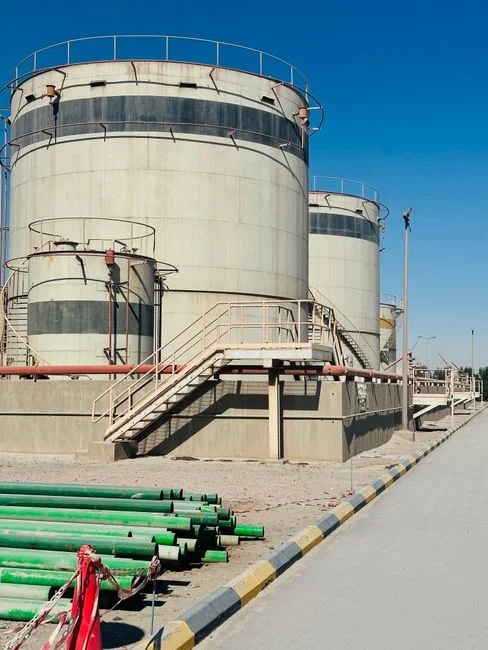
A defensible industrial ETP process design follows a defined sequence: segregate incompatible streams, equalize variable flow, remove industry-specific contaminants, apply the required core treatment, separate solids, polish if necessary, disinfect where justified, and manage the resulting sludge.
Use DAF where oil, grease, FOG, suspended solids or colloidal matter are present. A DAF system for Hanoi industrial pretreatment covers 4–300 m³/h across 13 models and is suited to food processing, textile, pulp and paper, metalworking, petrochemical and municipal pretreatment duties. Confirm skimming performance, sludge withdrawal and the downstream route for recovered float.
Use MBR where compact biological treatment and fine solids separation are required. The integrated MBR wastewater treatment system covers 10–2,000 m³/day, combines activated sludge with submerged PVDF filtration and provides filtration below 1 μm. It is relevant to reuse-oriented designs, but the biological load, membrane flux, cleaning regime and final reuse specification still require project-specific verification.
Use a packaged WSZ plant only after confirming that its A/O biological contact oxidation, sedimentation and disinfection configuration suits the wastewater and that its 1–80 m³/h operating range matches the design basis. A WSZ sewage-treatment package is not automatically an ETP for high-strength or toxic industrial streams.
Use UF as pretreatment or a polishing barrier where bacteria, colloids and suspended solids must be removed before a sensitive downstream process. The available UF systems operate from 2,000 to 40,000 L/h, use 0.03 μm PVDF membranes and accept turbidity up to 300 ppm; automatic backwash and air scour require attention in the operating narrative.
Advanced polishing remains conditional. A University of Twente thesis identifies nanofiltration as a potential technology for polishing wastewater-treatment-plant effluent to EU Water Framework Directive standards for agricultural or indirect and potable reuse. It also calls for assessment of direct nanofiltration as a reclamation technique, so a full pilot and water-balance review are prerequisites for specification. Wageningen University’s 2022 thesis investigated constructed wetlands for micropollutant removal from treatment-plant effluent; land availability, hydraulic loading and receiving-water context must determine whether that option is suitable.
| Process | Primary role | Decision trigger |
|---|---|---|
| DAF | Remove oil, grease, FOG, solids and colloids | Characterization confirms floatable or settleable contaminant load |
| WSZ | Packaged A/O biological treatment, sedimentation and disinfection | Wastewater is compatible with the packaged sewage process |
| MBR | Biological treatment plus submerged PVDF separation below 1 μm | Compact biological duty and fine solids separation are required |
| UF | Remove bacteria, colloids and suspended solids | Downstream process needs a defined membrane barrier |
| Nanofiltration | Potential advanced polishing | Verified pilot and water-balance review support the reuse objective |
| Constructed wetlands | Investigated micropollutant-removal option | Site hydraulics, land and pollutant behaviour support a pilot |
Check Capacity, Compliance and Operating Reality Before Purchasing
Comparable bids require one hydraulic basis: average, peak and minimum design flow, operating hours, redundancy philosophy, future expansion and available footprint. A supplier should state which flow is treated mechanically, how equalization handles batch discharges, what remains operational during equipment outages and how future capacity can be installed without rebuilding the plant.
Performance guarantees must define the influent and effluent parameters, test methods, sampling points and acceptance duration. An unqualified statement such as “fully compliant” does not establish a testable obligation. Use the Vietnam industrial wastewater compliance review to structure permit and operating due diligence rather than relying on a supplier’s general compliance statement.
Monitoring ownership requires clarification. The 2024 ARCOWA/PEMSEA report states that the Vietnamese Government requested wastewater treatment plants at industrial parks and outside industrial parks with flows above 1,000 m³/day to install automatic monitoring stations that transmit effluent-quality data to the responsible government agency in real time. Confirm whether the requirement applies to the proposed facility, who owns and maintains the station, what analytes it records and how data is validated.
Confirm the current Vietnamese discharge standard, any sewer or centralized-treatment acceptance criteria, permit conditions, sludge-disposal route and commissioning tests with the relevant authorities and receiving utility. For sludge, a plate-and-frame filter press can be evaluated as a dewatering option, but the equipment scope must follow the selected solids-handling route rather than precede it.
Lifecycle information should cover membrane replacement, chemicals, sludge volume, operator hours, cleaning frequency and spare-part support. These inputs determine operating cost and compliance exposure. Request site-specific pricing where available, but do not replace missing project data with generic budget figures.
| Procurement check | Required response | Why it matters |
|---|---|---|
| Hydraulic basis | Average, peak, minimum, hours and expansion conditions | Prevents equipment selection on an ambiguous flow basis |
| Performance guarantee | Defined parameters, methods, points and acceptance duration | Creates a measurable acceptance test |
| Monitoring | Applicability, ownership, maintenance and data validation | Clarifies regulatory and operating responsibility |
| Sludge | Route, dewatering method, destination and handling duty | Links residuals to compliant disposal |
| Lifecycle | Consumables, membrane replacement, labour, cleaning and spares | Exposes costs omitted from capital quotes |
Compare the Main Equipment Choices for a Hanoi ETP
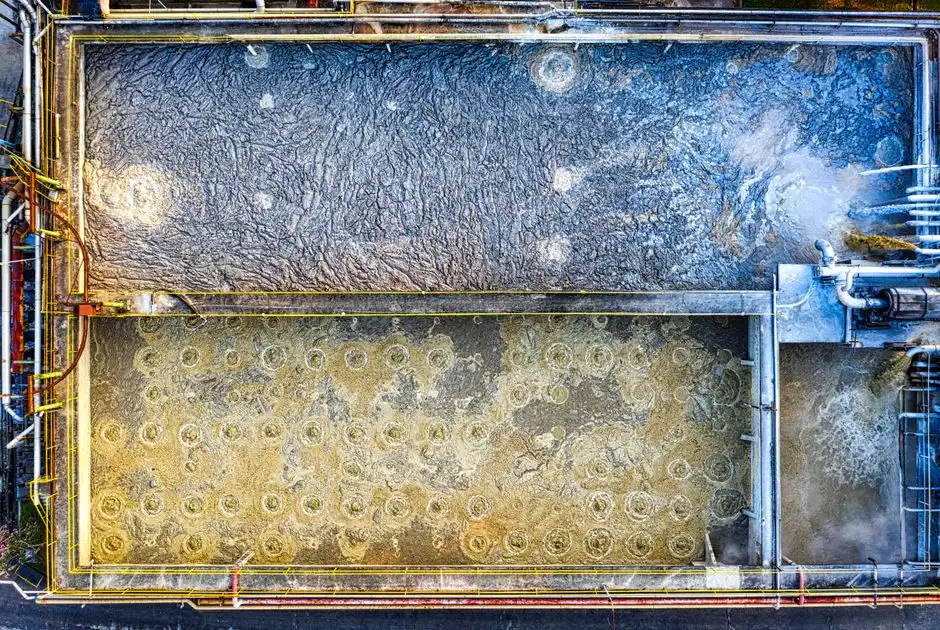
WSZ, DAF, MBR, UF and lamella clarification perform different roles; their capacities are not interchangeable. Compare each option against the confirmed wastewater duty, then request the missing design inputs before evaluating commercial terms.
| Option | Treatment role and supplied range | Operational emphasis | Information still required |
|---|---|---|---|
| WSZ | Buried A/O biological contact oxidation, sedimentation and disinfection; 1–80 m³/h | Package suitability screening for industrial-strength streams | Biodegradability, loading, footprint, odor control and discharge route |
| DAF | Oil, grease, FOG and solids separation; 4–300 m³/h across 13 models | Automatic skimming and pretreatment or clarification duty | Feed characteristics, float handling, chemicals and sludge route |
| MBR | Activated sludge with submerged PVDF filtration below 1 μm; 10–2,000 m³/day | Compact biological treatment and fine separation for reuse-oriented applications | Influent COD, nutrients, membrane flux, fouling and cleaning |
| UF | 0.03 μm PVDF membrane separation; 2,000–40,000 L/h | Bacteria, colloid and suspended-solids barrier with automatic backwash and air scour | Feed turbidity, flow profile, recovery and downstream target |
| Lamella clarification | High-rate clarification; surface loading rates of 20–40 m/h | Sludge recirculation and lower chemical consumption where clarification is confirmed | Settleable solids, hydraulic loading, flocculation and sludge consistency |
The underground WSZ sewage treatment package, PVDF ultrafiltration system and high-efficiency sedimentation tank should therefore be compared by treatment function, not by quoted price. Use the same flow basis, duty, effluent targets, civil works, sludge handling, monitoring, commissioning and warranty scope in every request.
Do not compare quotations until omissions are visible. A low equipment price that excludes civil works, membrane replacement, chemicals, utilities, sludge disposal, automatic monitoring or performance testing is not a comparable offer.
Issue a Supplier Brief That Produces Comparable Quotes
A supplier brief should contain current wastewater analysis, the production schedule, measured peak flow, discharge destination, reuse objective, available land or footprint, power constraints, operator availability and target commissioning date. Include production-hour data rather than only a daily average, and state which future production changes are included in the design basis.
Request a process flow and mass balance, equipment data sheets, civil and utility drawings, controls narrative, alarm list, maintenance plan, commissioning protocol, performance-test method, warranty and spare-parts pricing. For a new Vietnam facility, require written confirmation of local project scope, commissioning responsibilities, operator training, remote support and delivery to the Hanoi site rather than assuming these are included.
The ARCOWA/PEMSEA report states that some industrial wastewater treatment plants are under-capacitated and some cannot meet required effluent quality. That finding is a reason to verify sizing, redundancy and performance acceptance independently. The Vietnam wastewater due diligence guide provides a useful structure for checking whether treatment capacity is supported by actual operations rather than assumed compliance.
- Issue one common technical and commercial data pack.
- Require each supplier to identify exclusions, assumptions and performance tests.
- Normalize quotations by flow basis and complete scope.
- Evaluate lifecycle inputs, compliance ownership and commissioning evidence before award.
Frequently Asked Questions
What flow capacity should an effluent treatment plant in Hanoi be designed for?
Use measured current and peak factory flows, production-hour variation, minimum flow, confirmed future plans and equalization requirements. The 75,000 m³/day Hanoi industrial-estate estimate in the 2024 ARCOWA/PEMSEA report is regional context, not a plant design flow.
Is DAF or MBR the better choice for a Hanoi factory?
DAF is primarily suited to oil, grease, FOG, suspended-solids and colloidal loads; MBR combines activated-sludge treatment with fine membrane separation. Choose from characterization: DAF addresses floatable and solids loads, while MBR addresses biological treatment and compact solids separation.
How should buyers compare ETP suppliers in Vietnam?
Require every proposal to use the same influent data, hydraulic basis, effluent targets, utility needs, civil scope, automation, sludge handling, monitoring, commissioning tests, warranty and lifecycle inputs. This supports a supplier-selection check that exposes missing scope rather than comparing headline prices.
What information is needed to estimate an ETP budget without inventing a generic price?
Provide wastewater characteristics, average and peak flow, treatment objectives, footprint, utilities, sludge route, installation scope and monitoring requirements. Those inputs support a site-specific quotation; a generic ETP price would conceal the hydraulic, civil, compliance and lifecycle differences that drive cost.
Does nanofiltration automatically make Hanoi effluent compliant?
No. The University of Twente thesis identifies nanofiltration as a potential polishing technology, but compliance depends on the applicable permit, final effluent characteristics and verified project performance. Pilot testing, water-balance review and acceptance testing remain necessary before specification.