What governs a Kaukauna sewer discharge
Mining and metals plants near Kaukauna meet pretreatment obligations by treating wastewater to the most stringent applicable requirement and demonstrating compliance where the industrial user connects to the Heart of the Valley Metropolitan Sewerage District collection system. EPA states that POTW local limits are site-specific and are imposed at the industrial user’s end-of-pipe discharge, or point of connection. The supplied Heart of Valley permit establishes a historical permit framework, but it expired in 2014; it cannot establish a current site’s authorization. NPDES coverage and categorical mining standards must also be reviewed where point-source discharges are involved.
Begin with the Heart of the Valley’s current permit, rules and regulations, written local limits, and the project-specific industrial user permit. EPA explains that local limits address the needs of the POTW, its sludge, and receiving waters. Determine whether the facility discharges indirectly to the POTW, directly to another permitted outfall, or faces both pathways. A categorical pretreatment standard, NPDES permit, and POTW local limit are separate requirements, not substitutes.
EPA states that all point-source discharges from mining operations, including discharges from associated impoundments, require NPDES authorization. That statement should trigger a review of direct discharges; it does not establish that an indirect sewer connection is itself subject to an NPDES permit. For a broader view of permit layering, see this mining wastewater regulatory comparison.
| Compliance-basis item | Evidence required | Engineering consequence |
|---|---|---|
| Mineral category and federal standard | Facility process description and applicable 40 CFR Part 436 subpart, if relevant | Identify regulated pollutants and applicable categorical conditions |
| Direct discharge | Current NPDES permit, authorized outfall, monitoring conditions, and revision date | Determine whether separate point-source controls and monitoring apply |
| Indirect discharge | Current Heart of Valley permit, local limits, rules, industrial user permit, and discharge point | Set final discharge targets at the point of connection |
| State authorization | Current state permit or approval applicable to the discharge | Apply state requirements where more stringent than federal or local requirements |
| Operations and reuse | Flow records, process changes, stream descriptions, and any reuse rights | Define the design basis and treatment objectives |
Build a compliance-basis register and record each document’s effective and revision dates. The supplied Heart of Valley permit requires wastewater treatment facilities necessary to comply with its limitations and all national categorical pretreatment standards, and it permits reopening when standards, local limits, or sludge-management requirements change. Where state, federal, or District requirements differ, use the more stringent applicable condition and have the control authority confirm the controlling basis.
The Kaukauna limits that drive the treatment train
The supplied Heart of Valley permit sets the following daily maximum local limits at the point of sewer discharge: cadmium, 0.30 mg/L; chromium, 4.00 mg/L; copper, 4.00 mg/L; lead, 0.69 mg/L; mercury, 0.40 mg/L; nickel, 4.10 mg/L; zinc, 4.20 mg/L; and total cyanide, 1.90 mg/L. It also requires wastewater pH between 5.0 and 10.5 and caps petroleum oil, nonbiodegradable cutting oils, and products of mineral oil origin at 100 mg/L. These values come from the Heart of Valley Wastewater Discharge Permit published in 2022, whose face states that it expired in 2014; they are useful design examples, not proof of the current limits for a particular user.
| Parameter in supplied permit | Stated limit | Specification treatment |
|---|---|---|
| pH | Not less than 5.0 nor greater than 10.5 | Set controlled pH adjustment and verify at the required monitoring point |
| Cadmium | 0.30 mg/L daily maximum | Include in representative analysis and final acceptance criteria |
| Chromium | 4.00 mg/L daily maximum | Confirm analytical speciation requirements and treatment response |
| Copper | 4.00 mg/L daily maximum | Test dissolved and total fractions as specified by the control authority |
| Lead | 0.69 mg/L daily maximum | Evaluate precipitation and solids separation performance |
| Mercury | 0.40 mg/L daily maximum | Use the control authority’s required analytical method |
| Nickel | 4.10 mg/L daily maximum | Base chemical dose on representative metal loading |
| Zinc | 4.20 mg/L daily maximum | Assess hydroxide precipitation with jar or pilot testing |
| Total cyanide | 1.90 mg/L daily maximum | Confirm analytical method, sample handling, and applicable cyanide definition |
| Petroleum oil and specified oils | 100 mg/L | Assess floatable contaminants and the required separation method |
Do not import numeric limits for suspended solids or other metals from another jurisdiction. Request the current local limit schedule and industrial user permit for the actual point of connection. This mining plant pretreatment compliance guide explains why equipment should not be specified from a permit example copied to another site.
The historical permit also prohibits toxic pollutants, poisonous materials, incompatible substances, combustible materials, and discharges that interfere with POTW treatment, sludge use, or disposal. Those narrative prohibitions can control even where a numeric concentration is absent. For cyanide, resolve whether “total cyanide” means the unmodified grab sample used by the District or another defined reporting basis, and obtain the required method and preservation instructions.
Characterize each wastewater stream before sizing equipment
Mine drainage, mineral-processing water, tailings-pond effluent, and dewatering discharge should be characterized separately because their flow patterns, contaminant profiles, and treatment objectives differ. AMPAC USA, 2025-09, reports that acid mine drainage can carry dissolved iron, manganese, copper, zinc, arsenic, and cadmium, while mineral-processing water may contain cyanide, ammonia, or chloramines depending on the process. Combining these streams before characterization can dilute the highest-concentration stream and hide the chemical demand and mass loading that control equipment design.
- Establish a metered flow record for each stream and identify where streams are permitted to combine.
- Collect representative samples for flow, pH, metals, TSS, oil and grease, relevant process-reagent residuals, and conductivity or TDS.
- Cover normal production, peak discharge, startup, shutdown, rainfall, and other material operating conditions.
- Measure both hydraulic load and contaminant mass load at the controlling condition rather than relying on average daily flow.
- Confirm whether the project targets basic sewer compliance or internal reuse.
The sampling program should establish the chemical load, hydraulic load, and operating envelope. For example, a drainage stream may control pH and dissolved-metal loading, while process water may control reagent residuals and oil. Tailings-pond effluent may introduce fine solids, while dewatering discharge may vary with local geology. A single blended sample can conceal the condition that determines tank volume, dosing capacity, solids capture, and sludge production.
Use this DAF and clarifier comparison for mining wastewater to frame the selection questions after the water is characterized. The required operating scenarios and reuse objectives must be fixed before treatment capacity is selected; otherwise, a proposal may be correctly engineered for the wrong duty.
Build a treatment train with a measurable purpose
A defensible mining and metals treatment train uses each unit to control a defined characteristic or mass load. Equalization buffers hydraulic and chemical variation and should be based on the highest anticipated discharge. Controlled pH adjustment then supports hydroxide precipitation of dissolved metals, with chemical type and dose established from representative chemistry and jar or pilot testing. Coagulation and flocculation can aggregate suspended solids and fine metal particles before clarification.
DAF is appropriate when buoyant floc, oils, floatable fines, or suitable colloidal material must be removed. The supplied HydropureWater DAF catalog covers 4–300 m³/h across 13 standard models; this is a catalog range, not a guaranteed project duty. Lamella clarification is an alternative where sludge volume and footprint constrain the installation. The supplied lamella catalog lists 20–40 m/h surface loading and up to 30% chemical-consumption reduction, which are selection values rather than guaranteed project performance.
| Treatment function | Use when | Required evidence |
|---|---|---|
| Chemical equalization | Peak flow or chemical strength varies enough to destabilize downstream treatment | Peak-flow record, equalization model, pH and chemical profile |
| pH adjustment and metal precipitation | Dissolved metals can be removed as hydroxide precipitates | Representative analysis plus jar or pilot dose and solids results |
| Coagulation and flocculation | Fine particles or precipitated metals require aggregation | Mixer operation, dose response, and floc characteristics |
| DAF or lamella clarification | Oil-bearing material, buoyant floc, or compact solids separation is required | Peak solids loading, flotation or settling performance, and sludge data |
| Multimedia filtration | Residual suspended solids and colloids must be removed | Turbidity, solids removal, run time, and differential pressure |
| UF | A fine-particle barrier or membrane protection is required | Feed turbidity, backwash performance, and validated permeate quality |
| RO | Dissolved metals or salts remain above the sewer requirement or reuse target | Recovery, permeate quality, and concentrate-management plan |
| Sludge dewatering | Chemical-precipitation residues require a managed solids route | Measured cake volume, target dryness, cycle time, and receiving-site acceptance |
Multimedia filtration can remove residual solids and colloids before downstream membranes. The supplied UF specification uses 0.03-micron PVDF membranes, accepts feed turbidity up to 300 ppm, and provides capacities from 2,000 to 40,000 L/h. Reserve RO for dissolved constituents that remain above the sewer limit or an approved reuse target, and address recovery and concentrate disposal explicitly.
Chemical-precipitation residues require a disposal route. The supplied plate-and-frame press catalog lists filtration areas from 1 m² to 500 m², but final selection requires measured cake volume, target dryness, cycle time, and receiving-site acceptance. This mining wastewater equipment comparison provides additional context for matching separation equipment to the separation objective.
Select DAF, clarification, and polishing by site constraints
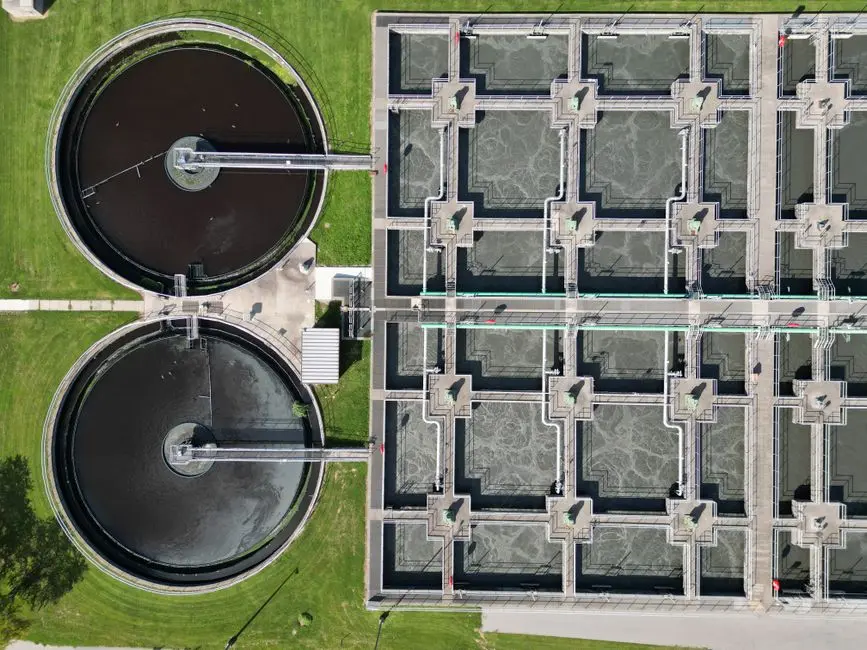
The correct separator follows the contaminant and the physical separation objective, not a generic mining package. Choose DAF when the measured feed contains buoyant floc, oil and grease, or other floatable material that the feed supports for flotation. Choose lamella clarification when compact sludge separation is the priority and measured solids loading, chemical demand, and underflow performance support the design.
| Selection question | Preferred response | Proof required before award |
|---|---|---|
| Are buoyant floc or floatable contaminants present? | Evaluate DAF | Feed characteristics, flotation performance, and resulting sludge volume |
| Is footprint or sludge volume the controlling constraint? | Evaluate lamella clarification | Peak solids loading, chemical demand, settling performance, and underflow data |
| Must residual solids, colloids, or turbidity be controlled? | Evaluate multimedia filtration or UF | Defined control point, feed turbidity, solids removal, and run-time or backwash data |
| Do dissolved constituents remain above the applicable limit? | Evaluate RO | Recovery, concentrate disposal, membrane compatibility, and permeate quality |
Use multimedia filtration or UF when final suspended solids, turbidity, colloids, or downstream membrane protection must be verified at a defined point. Use RO only where a dissolved constituent cannot be brought below the applicable limit through precipitation and conventional solids separation, or where reuse requires it.
Ask bidders to model average and peak flow, chemical consumption, sludge generation, membrane recovery, concentrate management, and redundancy. A quotation that states only nameplate capacity does not establish performance because the hydraulic duty, influent chemistry, operating condition, and treatment objective remain undefined. This mining and metals wastewater equipment comparison can be used as a mechanical check during technical evaluation.
Design monitoring, reporting, and upset protection
The supplied Heart of Valley permit requires continuous flow monitoring, quarterly grab pH in the first, second, and fourth quarters, composite monitoring for listed metals in those quarters, and quarterly grab total cyanide. Other listed parameters use quarterly composite samples. These requirements provide a useful monitoring framework, but the current industrial user permit and District instructions must establish the binding frequency and sample type.
The same permit requires automatic resampling after a detected violation, notification to the District within 24 hours, and written submission of the second analysis within 30 days of the first violation. It also requires immediate notification of an operating upset, slug, or accidental discharge and a detailed written report within five days. Include these responsibilities in the operating procedure and identify who can authorize isolation, sampling, notification, and restart.
- Sample untreated streams, equalization, chemical treatment, clarification, filtrate, and final discharge so a failure can be traced to its source.
- Record pH setpoints, chemical dosing trends, solids-removal performance, filter or membrane differential pressure, RO recovery where used, and sludge generation.
- Retain pretreatment records for at least three years, as required in the supplied Heart of Valley permit.
- Define alarms, bypasses, high-flow responses, isolation points, permitted storage, sampling, notification, and restart criteria.
- Take numerical upset triggers and monitoring frequencies from the current permit rather than copying historical examples.
This industrial pretreatment monitoring framework illustrates how operating records can be tied to permit conditions. The bid package should define the record owner, data format, alarm response, and retained evidence rather than merely listing instruments.
Turn the permit basis into a bid-ready specification

A bid-ready specification starts with the permit basis, not the equipment list. Require peak and average flow in m³/h, representative influent pH and metal results, applicable POTW limits, the desired recovery percentage if reuse is in scope, and the selected operating scenario. Identify the point of connection, monitoring location, analytical methods, discharge restrictions, and current permit dates so bidders optimize the same requirement.
- Require a process flow diagram and stream-by-stream mass balance.
- Require a control narrative, sampling plan, and chemical-storage and handling details.
- Request expected chemical consumption, estimated sludge generation, electrical load, footprint, and redundancy.
- Require the sludge destination and a method for managing membrane concentrate where RO is proposed.
- Require a guarantee or acceptance criterion tied to the applicable permit condition.
- Require evidence at the controlling flow and contaminant-loading condition.
Equipment nameplate capacity is not a performance guarantee. The proposal must state its influent assumptions, controlling operating condition, treatment objective, and expected performance. If reuse is included, require a water balance that accounts for water lost with sludge, membrane concentrate, and other discharge streams; do not accept a recovery percentage without its basis.
Before award, have the responsible engineer and pretreatment coordinator review the current Heart of Valley permit and project-specific limits. This permit-to-equipment specification example for metals plants provides a useful drafting reference. Optional reuse goals should remain separate from mandatory sewer-compliance evidence so a bid is not rejected for assuming an unauthorized discharge route.
Frequently Asked Questions
What sewer limits apply to a mining or metals plant near Kaukauna?
Use the current Heart of Valley permit and the project-specific industrial user permit, not the supplied historical example. EPA explains that POTW local limits are imposed at the industrial user’s point of connection. The supplied Heart of Valley permit published in 2022 states a pH range of 5.0–10.5 and daily maximum limits for cadmium, chromium, copper, lead, mercury, nickel, zinc, and total cyanide, but its face states that it expired in 2014. Obtain the current limits in writing and confirm any NPDES or categorical requirements separately.
Is DAF or a lamella clarifier the better fit for mining wastewater?
Use DAF when buoyant floc, oil and grease, or other floatable contaminants are present and representative feed testing supports flotation. Use lamella clarification when compact solids separation is the priority and measured solids loading, chemical demand, and underflow performance support it. Require bidders to identify the controlling contaminant, peak loading, expected sludge characteristics, and the evidence supporting their selected separation mechanism.
How should a treatment system be sized for peak mining wastewater loads?
Size hydraulic equipment from the highest anticipated flow and size chemical and solids treatment from the maximum relevant contaminant loading across representative operating conditions. Do not use average daily flow alone. The bid package should state peak and average flow, the controlling production or storm scenario, representative analyses, and how the proposed train remains compliant during that event.
How much does an industrial pretreatment system cost near Kaukauna?
Do not rely on a generic local price. Request a site-specific quotation based on influent chemistry, peak flow, required treatment train, controls, chemical consumption, sludge handling, and the current permit. A defensible cost comparison uses the same process scope and acceptance criteria for every bidder. This mining and metals wastewater equipment guide provides useful procurement context without substituting a fabricated Kaukauna estimate.
What should a wastewater-equipment supplier guarantee?
Require a permit-linked acceptance basis, process flow diagram, mass balance, peak-condition performance evidence, chemical and sludge assumptions, monitoring scope, and a contingency or redundancy plan. The supplier should identify the controlling influent condition, guaranteed operating point, final discharge objective, and method of proving performance. For added separation detail, compare the mechanical differences in this mining and metals wastewater equipment comparison.
Related Equipment
- DAF system for mining wastewater solids separation — specifications, capacity range, and technical data
- PLC-controlled chemical dosing system — specifications, capacity range, and technical data