Which Treatment Is the Better Fit for Springville Mining Wastewater?
For mining and metals wastewater in Springville, MBR is generally the stronger choice when the site needs compact equipment, solids-free effluent and reliable reuse, while conventional activated sludge may be simpler when flows are stable, land is available and the discharge target does not require membrane-level solids separation. Neither technology removes every contaminant by itself. Metals, acidity, suspended solids and toxicity may require equalization, precipitation, DAF or another pretreatment step before biology. The final choice should be based on a site water characterization, Utah discharge and reuse requirements, pilot results and lifecycle comparisons—not on membrane pore size alone.
The decision starts with the required effluent and reuse specification. If the treated water must contain very little suspended solids, MBR can combine biological treatment with membrane separation in one package, reducing dependence on a gravity clarifier. If the wastewater is stable, adequately characterized and can meet its objectives after conventional settling, conventional activated sludge may be less mechanically complex.
Neither platform substitutes for upstream metals removal, pH control or solids management. A hybrid train is usually the responsible answer when acidity, dissolved metals, oil, colloids or toxic compounds would impair biological treatment or foul a membrane. The EPA’s Membrane Bioreactors Wastewater Management Fact Sheet identifies advantages, applicability and design considerations, but its case studies do not replace project-specific testing or permit review.
For a Springville evaluation, request a wastewater characterization, define the discharge or reuse objective, identify pretreatment requirements, and then compare equipment, operating labor, energy, cleaning, replacement and residual handling. The 2026 MBR cost-per-m3 guide can frame the commercial questions, but a defensible selection still depends on site data.
How MBR and Conventional Activated Sludge Differ
Conventional activated sludge separates biomass from treated water in a gravity settler, while an MBR performs biological treatment and membrane filtration in an integrated process. The difference is therefore not simply “better biology”; it is the solids-separation method, equipment arrangement and operating burden attached to that method.
| Decision factor | Conventional activated sludge | MBR |
|---|---|---|
| Primary treatment mechanism | Aerated biological reactor followed by gravity clarification | Biological reactor coupled with membrane separation |
| Suspended-solids separation | Depends on clarifier performance and upstream settling | Biomass and suspended solids are separated by the membrane |
| Physical arrangement | Requires a separate clarifier and associated hydraulic capacity | Can replace separate secondary clarification within an integrated package |
| Added operating considerations | Clarifier sludge withdrawal, settling control and solids handling | Membrane scouring, monitoring, cleaning and eventual replacement |
| Primary selection driver | Stable loading, available land and sufficient clarification | Solids separation, compact installation and reuse readiness |
The integrated submerged-PVDF MBR system combines activated-sludge treatment with submerged PVDF membrane filtration and specifies filtration below 1 μm in the HydropureWater product catalog. That figure describes the product’s filtration configuration; it is not evidence of universal dissolved-solids, metals or contaminant removal. A more detailed technical MBR versus activated-sludge comparison explains why the separator changes the operating model.
MBR can reduce the plant footprint because membrane modules perform the solids-separation function, but that compactness comes with mechanical controls and maintenance obligations. The biological reactor still needs an appropriate microbial population, aeration, nutrients where required, pH control and sludge handling. Conversely, a conventional system has fewer membrane-specific failure modes, but it depends on achieving reliable settling under the actual flow and solids conditions.
Mining and Metals Wastewater Changes the Decision
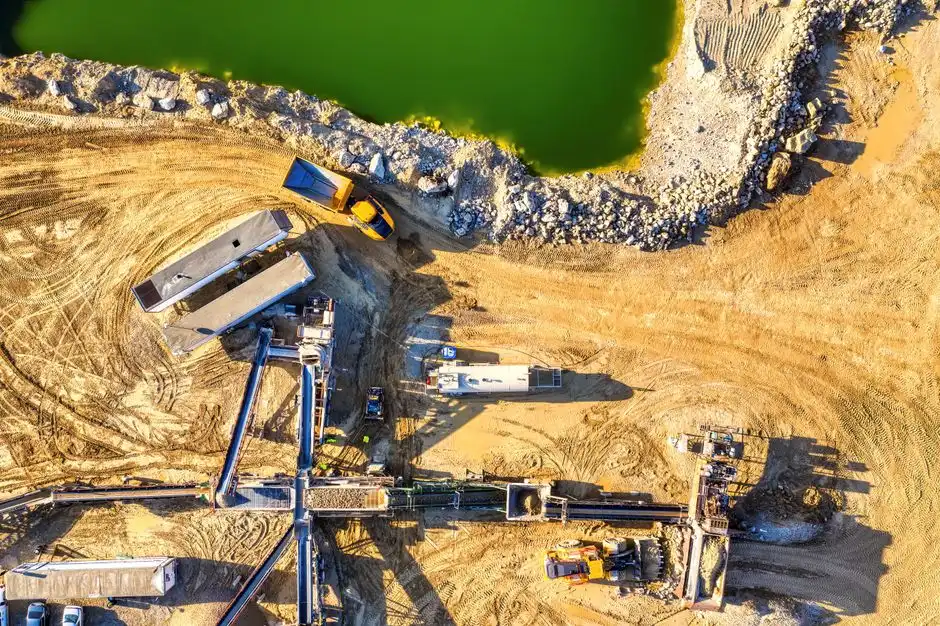
Mining and metals wastewater can reverse a generic MBR-versus-CAS conclusion because the contaminants that drive biological loading are not necessarily the contaminants that determine discharge or reuse compliance. A complete characterization should cover flow variability, pH, hardness, alkalinity, metals, suspended solids, dissolved salts, toxicity and changes in production, washdown, rainfall and shutdown conditions.
Dissolved metals and acidity may require chemical precipitation or pH control before either biological platform. An MBR membrane does not remove dissolved metals merely because it removes solids, and activated sludge does not replace a metals-removal step. Similarly, high suspended solids, oil, grease or colloidal material can overload biology or accelerate membrane fouling.
DAF is one pretreatment option where floatable or colloidal material must be removed before the biological process. The HydropureWater product catalog specifies its industrial DAF pretreatment system for 4–300 m³/h across 13 standard models. That range describes the offered equipment family; it does not establish that a DAF unit is required or adequately sized for a specific Springville wastewater stream.
| Influent issue to characterize | Why it affects platform selection | Information needed before sizing |
|---|---|---|
| Acidity and alkalinity | Can inhibit biology and affect metal precipitation and chemical dosing | Representative pH, alkalinity, hardness and acid-generation profile |
| Dissolved metals | May require precipitation or other treatment independently of biological action | Metal species, concentrations and permit or reuse targets |
| Suspended and colloidal solids | Can overload biology and foul membranes | Solids concentration, particle characteristics and settleability |
| Toxicity and dissolved salts | Can affect biological viability and process stability | Site-specific toxicity testing and salinity across operating conditions |
| Flow and composition variability | Average flow may conceal peak hydraulic or contaminant loads | Production, washdown, storm and shutdown event records |
The supplied academic research examines activated-sludge viability and MBR treatment, but its excerpt provides no universal tolerance thresholds. A Springville project therefore needs site-specific evidence rather than an assumed toxicity or salinity limit. The related 2026 mining and metals pretreatment analysis is useful for identifying pretreatment questions, but it is not a Utah permit determination.
Document variability before selecting equipment. Equalization can moderate short-term hydraulic and compositional peaks, but it does not make an undersized membrane or biological reactor safe. The process basis should reflect the loads that must be treated when the operation is most demanding, together with the treatment train needed to protect biology and membranes.
Head-to-Head Performance and Operating Comparison
MBR usually wins the solids-separation and footprint comparison, while conventional activated sludge usually presents the simpler mechanical configuration. Neither result establishes broader contaminant removal or lower lifecycle cost. The operating burden shifts from clarifier performance to membrane maintenance, and the correct choice depends on the reuse specification and chemistry entering the biological stage.
| Evaluation issue | Conventional activated sludge | MBR |
|---|---|---|
| Solids separation | Relies on gravity settling; performance depends on hydraulics and sludge handling | Uses membrane separation; produces a solids-separated effluent stream |
| Footprint | Requires reactor, clarifier and supporting hydraulic infrastructure | HydropureWater’s integrated system is specified at 60% less footprint than conventional systems |
| Filtration specification | No membrane filtration in the conventional process | HydropureWater’s integrated system specifies filtration below 1 μm |
| Reuse readiness | May require additional solids-removal or polishing steps | More directly supports reuse applications requiring low suspended solids, subject to other contaminant limits |
| Fouling sensitivity | Clarifier performance can be affected by sludge properties and hydraulic conditions | Suspended solids, colloids, scaling constituents and biological fouling require control |
| Mechanical complexity | Lower membrane-specific complexity | Adds membrane modules, scouring, monitoring and cleaning systems |
| Sludge handling | Requires removal and management of settled biological solids | Retains more biomass in the reactor, but membrane cleaning and replacement create additional residual-management requirements |
For the flat-sheet option, the catalog specifies 0.1 μm pores, 10–20× lower energy use than external cross-flow systems, 80–225 m² modules and capacity of 32–135 m³/day. Those values apply only to that specified product configuration and should not be transferred to another membrane design or a Springville duty without engineering review.
Lifecycle evaluation must include membrane replacement, routine cleaning, chemical cleaning, aeration or scouring energy, labor, downtime, biological sludge handling and residual disposal. The flat-sheet MBR module is therefore evaluated as a maintained system, not as a purchase-price line item. A defensible cost comparison requires site flow, load, membrane area, water chemistry, labor, energy rates, chemical use, downtime and residual-disposal costs. The supplied research does not support a universal ranking of MBR and CAS costs.
Pretreatment and Hybrid Treatment Trains
A membrane bioreactor is a biological process with a membrane separator; it is not a complete metals-recovery or industrial pretreatment system. A defensible treatment train places hydraulic and contaminant controls upstream of the selected biological platform.
- Stabilize flow and remove coarse material. Use equalization, screening and coarse solids removal where flow or solids are unstable before either biological option.
- Control chemistry that could inhibit biology. Add pH control and chemical dosing where acidity, alkalinity or metals require it. HydropureWater offers automatic dosing for coagulants, flocculants, pH adjusters and specialty chemicals.
- Remove foulants before membrane separation. Consider DAF when floatable solids, oil, grease or colloids create a high membrane-fouling risk.
- Apply final treatment only to match reuse quality. Add UF or RO only when the reuse objective requires that additional barrier.
The ESWP 2025 conference archive lists an industrial wastewater paper on lime or soda ash softening coupled with cross-flow ultrafiltration as pretreatment for reverse osmosis. That program supports a staged approach: remove constituents that impair downstream membranes before applying the final polishing process. It does not establish that either UF or RO is required for a Springville mining discharge or reuse application.
For solids-prone flows, a DAF-MBR train is often more defensible than sending untreated solids directly to the membranes. For stable, low-solids wastewater with land available, a conventional clarifier may be sufficient. The decision should be tested with the proposed upstream chemistry rather than selected from the final equipment category alone.
How to Select and Verify the Right System
The buyer should begin with a complete design basis and end with a verifiable performance and maintenance package. The mining-wastewater MBR comparison is useful for structuring the technical review, but Springville’s wastewater, permit and reuse requirements still have to be established independently.
- Define the objective. Specify the intended reuse application, solids requirement, applicable Utah discharge or pretreatment authorization, and any process-water quality constraints.
- Characterize representative wastewater. Sample across production, washdown, storm and shutdown conditions, then use the results to size equalization, biological loading, clarification, membrane area and pretreatment.
- Evaluate membrane compatibility. Review anticipated fouling constituents, cleaning strategy, spare-module approach, controls, access and maintenance before accepting a performance guarantee.
- Require a complete proposal. State design flow, influent design basis, membrane type, product duty, cleaning assumptions, control philosophy, maintainability, service scope and expected replacement intervals.
- Pilot when variability matters. Use pilot or side-stream testing if industrial wastewater variability or fouling risk is material. EPA case studies are design references, not direct guarantees for a mining site.
| Proposal item | Information the buyer should require | Acceptance check |
|---|---|---|
| Design basis | Measured flow and load, including relevant variability | Capacity and biological loading are traceable to site data |
| Treatment train | Equalization, pH control, metals removal, DAF or other pretreatment as applicable | No biological or membrane step is assigned a contaminant it cannot remove |
| Membrane system | Material, configuration, area, duty, controls and cleaning method | Proposed arrangement addresses the characterized fouling constituents |
| Performance basis | Effluent and reuse criteria, test methods and operating conditions | Guarantee states its assumptions and permit relevance |
| Operations | Cleaning frequency assumptions, spares, access, service scope and training | Downtime and maintenance responsibilities are defined |
Springville permitting should be treated as a project workstream, not a line item. Confirm the discharge route, receiving-water classification, industrial pretreatment requirements and reuse application with the responsible authorities. The supplied research does not contain a Springville- or Utah-specific MBR-versus-CAS comparison or site-specific limits, so an engineer must obtain the applicable requirements rather than infer them from generic MBR literature.
Frequently Asked Questions
Is MBR always more expensive than conventional activated sludge for mining wastewater?
No. The supplied research does not support a universal cost ranking. Request a site-specific lifecycle comparison covering equipment, installation, aeration or scouring energy, chemicals, membrane cleaning and replacement, labor, downtime, biological sludge and residual disposal. A proposal without a defined flow, load, water chemistry and reuse target is not a defensible price comparison.
How should an equipment supplier be evaluated for a Springville project?
Require the supplier to demonstrate that it has understood the wastewater characterization, complete treatment train, design flow, membrane specification, controls, cleaning method, maintainability, service scope and permit-relevant performance criteria. As a separate check, ask how the proposed system handles the specific fouling constituents identified in site sampling and what operating data the supplier needs before making a performance commitment.
Does MBR remove dissolved metals that have not been treated upstream?
The supplied research does not support treating MBR as a substitute for dissolved-metals removal. Characterize metal species and concentrations, define the discharge and reuse targets, and use precipitation, pH control or another treatment method where required. MBR and activated sludge should be evaluated for their actual roles in the train.
How should the MBR be sized for changing mining wastewater?
Size it from measured flow and load, temperature, water chemistry and fouling conditions across representative operating events—not from membrane pore size alone. The integrated HydropureWater product spans 10–2,000 m³/day, while the specified flat-sheet modules span 32–135 m³/day and 80–225 m². Those catalog ranges identify available configurations; final selection still requires the site design basis and applicable pilot results.