Why Catlettsburg Mining and Metals Plants Are Re-Evaluating Primary Clarification in 2026
Catlettsburg sits at the downstream end of a 19-mile industrial corridor that hugs the Big Sandy River from Ashland to Kenova, and that corridor drives the wastewater design problem. The mix includes petroleum refining at the Ashland/Catlettsburg complex, coal-handling and prep plants, fabricated metals job shops, galvanizing lines, and aggregate washing operations. Effluent from these facilities carries a recurring signature: high total suspended solids (TSS) in the 400–2,000 mg/L range, episodic fats/oils/grease (FOG) from coolant blowdown and refinery desalter wash water, and trace dissolved metals — iron, lead, zinc, nickel, and occasionally hexavalent chromium — that determine whether the plant passes its NPDES renewal. The Kentucky Department for Environmental Protection (KYDEP) reissues those permits on five-year cycles, and the 2026 cycle is forcing primary clarification upgrades across the district.
The binding federal rule is 40 CFR Part 437 — the Metal Finishing and Ore Mining and Dressing effluent guidelines — which caps TSS at roughly 26–74 mg/L (monthly average) depending on subcategory, and limits total recoverable metals such as lead at 0.10–0.69 mg/L and zinc at 0.68–1.48 mg/L (per EPA 40 CFR Part 437). Neither dissolved air flotation nor a lamella clarifier meets those numbers on its own; both are physical pre-treatment steps that buy chemistry enough suspended-solids removal that pH adjustment, coagulant feed, and hydroxide or sulfide precipitation can finish the job downstream. The question for a 2026 capital approval is therefore not "which technology is better" but "which pre-treatment gets the downstream train across the line inside the Catlettsburg footprint and capex envelope."
EPA-450/3-79-019 documented that Dissolved Air Flotation Skimmings carry roughly 75% of the total hydrocarbon content in refinery solid waste streams — a finding that, while decades old, still informs why DAF dominates FOG-laden service in the Catlettsburg refinery corridor (per EPA-450/3-79-019, 1979). That single statistic is why most fabricated-metals and refinery bidders in the district lead with a DAF proposal, while aggregate and coal-handling bidders lead with lamella. The rest of this article builds the case for choosing between them.
How DAF and Lamella Clarifiers Actually Work in a Mining/Metals Train
DAF and lamella clarifiers both accept flocculated water and produce a clarified overflow, but they exploit opposite physics. A DAF saturates a pressurized side stream (typically 15–25% of the main flow) with air at 4–6 bar, then releases it through needle valves or nozzles at atmospheric pressure. The pressure drop nucleates 30–50 µm microbubbles that attach to floc particles and lift them to the surface, where a paddle skimmer sweeps the float layer into a sludge trough (per SigmaDAF / Clearwater Industries, 2026). The clarified subnatant exits below the float blanket; heavier settleables drop to a bottom collection zone and are augured out separately. The contact zone typically runs 5–15 minutes hydraulic retention time, and the air-to-solids ratio (A/S) sits around 0.02–0.05 kg air per kg solids for metallurgical sludges.
A lamella clarifier uses gravity and geometry. Coagulated water flows upward between inclined plates (typically 55° from horizontal) at a surface loading of 20–40 m/h. Solids settle the short distance to the plate face, slide down the underside into a hopper, and are pumped out as thickened sludge. Clarified effluent collects in collection troughs and exits over V-notch weirs. The mechanism is purely settling-based — there is no bubble attachment and no float layer — which is why a lamella cannot capture emulsified oils or low-density fines the way a DAF can.
For Catlettsburg chemistry, material selection matters. 316 stainless or fiber-reinforced polypropylene is the right call wherever the influent carries chlorides above 200 mg/L, sulfates that push low-pH metal-bearing streams past 1,000 mg/L, or any chromium-reducing service. 304 stainless is acceptable for neutral, low-TDS streams such as aggregate wash water or mine dewatering (per SigmaDAF material guidance, 2026). Both units in this comparison are pre-treatment — neither removes dissolved metals on its own. Each must be paired with pH adjustment to 8.5–9.5, coagulant/polymer feed via a HydropureWater automatic chemical dosing skid, and downstream multimedia or sand filtration for the polishing step that actually meets Part 437 daily-maximum values.
| Parameter | DAF (HydropureWater / FPAC / FPBC) | Lamella Clarifier |
|---|---|---|
| Driving force | Air microbubble attachment (30–50 µm) | Gravity settling on inclined plates (55°) |
| Hydraulic retention | 5–15 min contact zone | 15–30 min between plates |
| Surface loading | 5–25 m/h effective | 20–40 m/h |
| Best for | TSS >500 mg/L, FOG, emulsions, floatables | Settleable inorganics, lower TSS, no oils |
| Standard material | 304SS; 316SS / PP for chloride or low-pH service | 304SS / FRP; 316SS upgrade for metal-bearing streams |
Head-to-Head: DAF vs Lamella Clarifier on the Metrics That Matter
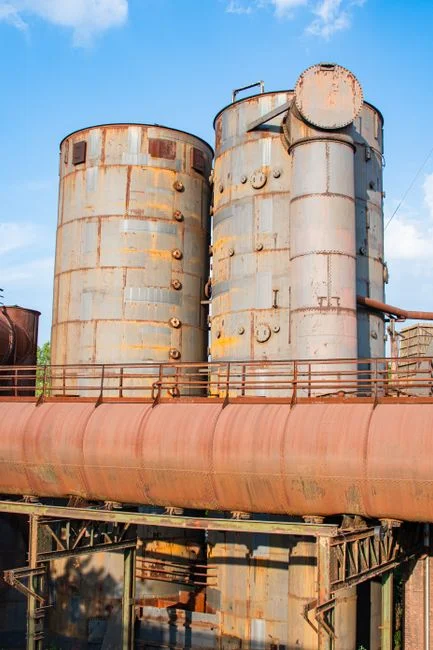
The buyer-shortlist question reduces to six operating metrics: TSS removal, FOG capture, support for dissolved-metals chemistry, footprint, chemical/energy demand, and operator skill. The numbers below come from packaged-unit vendor data, EPA-450/3-79-019, and standard texts on industrial primary clarification (per SigmaDAF, 2026; EPA-450/3-79-019, 1979).
A well-tuned DAF with polymer reaches 85–95% TSS removal and above 90% FOG capture; a lamella clarifier with polymer reaches 70–90% TSS removal but captures essentially no free or emulsified oil. That gap is decisive for any Catlettsburg service that includes coolant, lube oil, or refinery desalter water. On footprint, a DAF delivers the same hydraulic throughput in roughly 50–70% of the floor area of an equivalent lamella clarifier, because the plates in a DAF/lamella hybrid (e.g., FPBC) are shorter and the float blanket gives vertical separation in a shallow tank. On chemistry, both technologies support hydroxide or sulfide precipitation equally well downstream — neither helps or hurts dissolved-metals removal on its own.
Where the lamella wins is operating simplicity. No air-saturation pump, no recycle loop, no pressure-vessel inspection. A lamella clarifier is a passive gravity device, so OPEX is dominated by polymer dose and intermittent sludge-pump runtime. A DAF's air-saturation pump typically draws 5–8 kW on a 50 m³/h unit, and nozzle inspection is a recurring maintenance line. The industry split reflects those trade-offs: DAF dominates iron/steel, metal processing, galvanizing, and electroplating (per SigmaDAF, 2026), while lamella dominates aggregate wash water, mine dewatering, and coal-handling clarification where oils are not a concern.
| Metric | DAF | Lamella Clarifier |
|---|---|---|
| TSS removal (with polymer) | 85–95% | 70–90% |
| FOG / floatables capture | 90%+ | Poor (use as pre-thickener or post-DAF polish) |
| Dissolved metals support | Equal — both rely on downstream pH/precipitation | Equal |
| Hydraulic footprint (50 m³/h reference) | ~4–6 m² effective; 30–50% smaller than lamella | ~8–10 m² effective |
| Chemical demand | Polymer 2–10 mg/L; coagulant as needed | Polymer 2–10 mg/L; coagulant as needed |
| Energy draw | 5–8 kW air-saturation pump on 50 m³/h unit | Sludge pump only (intermittent) |
| Operator skill | Moderate — pressure, A/S ratio, nozzle care | Low — gravity device, plate inspection |
For packaged skid delivery, the HydropureWater DAF system covers the FOG/coolant/refinery case, while the HydropureWater lamella clarifier covers the settleable-inorganics case. A side-by-side mechanical walkthrough is in our 2026 DAF engineering and selection guide.
Catlettsburg-Specific Selection Scenarios
Generic matrices are useful, but the Catlettsburg buyer needs to see the matrix applied to local plant types. Three profiles cover most of the district.
Scenario A — Fabricated metals job shop (Ashland / Catlettsburg industrial park). Influent is roughly 200–800 mg/L TSS, 50–300 mg/L FOG from cutting fluids and lubricants, and trace hexavalent chromium from passivation lines. The 40 CFR Part 437 subcategory is Metal Finishing (Subpart A). Lamella is not viable because it cannot remove FOG or capture the floatable metal-bearing fines. Recommendation: DAF as primary, with sodium metabisulfite or ferrous sulfate reducing-agent feed upstream to convert Cr(VI) to Cr(III) before pH adjustment, then a multi-media filter as the polishing step.
Scenario B — Aggregate washing and coal-handling facility (Boyd County / Big Sandy corridor). Influent runs 1,500–5,000 mg/L TSS of settleable sand, silt, and coal fines, with seasonal flow swings of 2–4× and essentially no FOG. The 40 CFR Part 437 subcategory is Ore Mining and Dressing (Subpart B). DAF CAPEX is unjustified here — the solids are dense and already settle rapidly. Recommendation: lamella clarifier with polymer dosing, paired with a HydropureWater automatic chemical dosing skid for any metals-precipitation needs; downstream multimedia filter for TSS polish.
Scenario C — Petroleum terminal or lube-oil blending (Catlettsburg refinery corridor). Influent is moderate TSS (300–700 mg/L) with a heavy hydrocarbon load from terminal wash water, API separator upsets, and slop-oil emulsion solids. The 40 CFR Part 437 subcategory is Petroleum Refining (Subpart D) where state-applied. DAF is preferred — EPA-450/3-79-019 documents that DAF skimmings concentrate roughly 75% of the total hydrocarbon content in refinery solid waste streams (per EPA-450/3-79-019, 1979). Recommendation: DAF primary, followed by chemical precipitation for any residual metals and a sand or multimedia filter polish. For a parallel decision context, see the sibling 2026 guide for Hamilton mining and metals plants.
2026 CAPEX, OPEX, and Footprint Ranges for a 50 m³/h Catlettsburg Plant
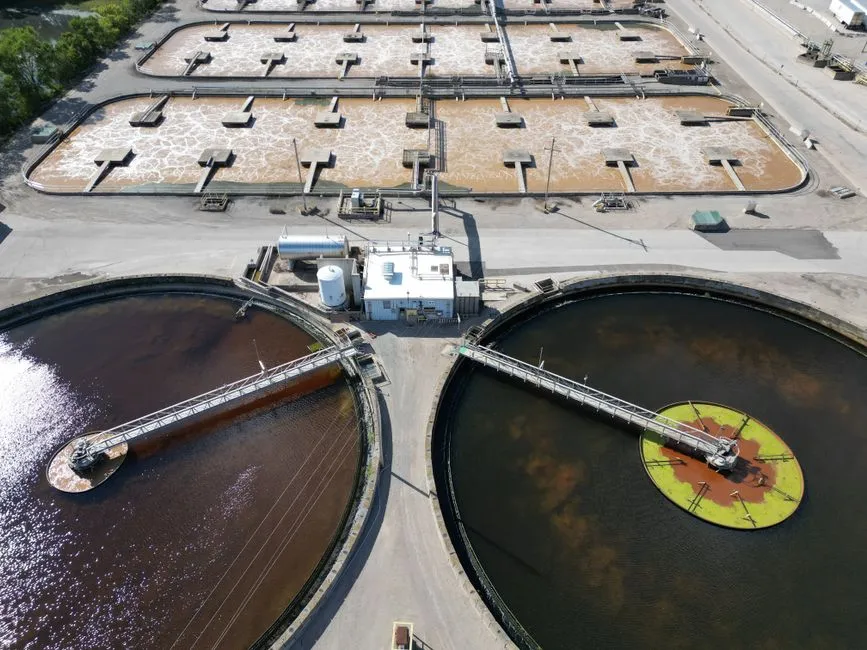
The numbers below are 2026 planning estimates for a packaged 50 m³/h unit, materials and controls included but excluding site civil works, chemical feed systems, and installation labor. They are intended for capex defense in a Q1 2026 board review, not as vendor quotes.
| Cost Element | DAF (50 m³/h, 316SS, packaged) | Lamella Clarifier (50 m³/h, 304SS/FRP, packaged) |
|---|---|---|
| Equipment CAPEX (planning band) | USD 90,000–160,000 | USD 45,000–85,000 |
| Major OPEX drivers | 5–8 kW air-saturation pump, polymer, nozzle inspection | Polymer, intermittent sludge-pump operation |
| Estimated annual OPEX | USD 18,000–32,000 (energy + polymer + maintenance) | USD 8,000–16,000 (polymer + sludge pumping) |
| Footprint (effective separation area) | ~4–6 m² | ~8–10 m² |
| Sludge yield (dry solids, % of removed TSS) | ~95–98% capture to float; 2–5% to bottom | ~100% capture to hopper |
| Typical lead time (2026) | 10–16 weeks | 6–10 weeks |
Brownfield Catlettsburg sites typically have limited clear height and existing tankage that cannot be moved, so the footprint differential is not academic — a 30–50% smaller DAF can mean the difference between a permit-ready retrofit and a civil-works scope that triggers additional KYDEP review.
Decision Framework: How to Choose in Five Steps
Run the selection as a structured defense to management, not as a vendor preference. The five steps below are the minimum reproducible method.
- Characterize the influent. Pull a 30-day composite for TSS, FOG, total recoverable metals, and pH variability. Rank which parameter first threatens the 40 CFR Part 437 limit. If FOG is non-zero and metals are present, DAF is already favored.
- Filter by site constraints. Confirm available footprint, existing tankage re-use, hydraulic profile (gravity vs pumped), and operator skill level. A plant with no instrument tech on shift will struggle with a DAF air-saturation system.
- Shortlist with the matrix. Eliminate any option that cannot enable downstream chemistry to meet effluent limits. If lamella cannot achieve 80% TSS removal on the actual influent, it does not survive this step.
- Run a 20-year life-cycle cost. Include polymer, energy, sludge hauling, membrane/replacement-part risk, and operator labor. First-cost alone will favor lamella every time; total ownership rarely does for FOG service.
- Pilot when in doubt. A 1–2 m³/h DAF pilot or a single lamella plate pack can validate removal on real Catlettsburg wastewater in 4–8 weeks and removes ambiguity from the capex committee meeting.
Used together, those five steps produce a recommendation that survives both internal capex review and KYDEP technical scrutiny on the next permit cycle.
Frequently Asked Questions
Does a DAF or a lamella clarifier remove dissolved metals on its own?
No. Both technologies are physical pre-treatment steps that remove suspended solids and (for DAF) floatable oils. Dissolved metals removal requires pH adjustment to 8.5–9.5 followed by coagulant feed and hydroxide or sulfide precipitation, then a multimedia or sand filter polish to meet the 40 CFR Part 437 daily-maximum values.
What influent TSS level typically justifies a DAF over a lamella clarifier in Catlettsburg?
As a planning rule, DAF earns its CAPEX premium when influent TSS is consistently above 500 mg/L or when FOG exceeds roughly 50 mg/L. Below those thresholds and in the absence of oils, a lamella clarifier typically delivers adequate pre-treatment at roughly half the equipment cost.
Which 40 CFR Part 437 subcategory applies to a fabricated metals job shop in Catlettsburg?
Fabricated metals operations generally fall under 40 CFR Part 437 Subpart A (Metal Finishing), which sets the TSS, total metals, and pH limits the downstream train must meet after primary clarification. The exact applicability and limits depend on the regulated process flows identified in the facility's NPDES permit.
How long does a DAF pilot take to validate performance on real Catlettsburg wastewater?
A mobile 1–2 m³/h DAF pilot typically needs 4–8 weeks of operation to capture variability across production shifts, flow swings, and any rain-event dilution, which is enough to generate defensible removal data for capex committee and KYDEP pre-permit review.