What Changes the DAF versus Clarifier Decision at a Lancer Plant
For a mining or metals factory in Lancer, choose DAF when the wastewater contains floatable oils, low-specific-gravity solids, or flocculated material that benefits from microbubble flotation; choose a lamella or conventional clarifier when the primary objective is settling mineral solids in a chemically conditioned stream. DAF uses 30–50 micron microbubbles to lift solids for skimming, while a lamella clarifier uses inclined plates to accelerate sedimentation. In practice, many plants need both: clarification before flotation, or flotation followed by solids polishing. The right 2026 choice should be based on flow, solids loading, particle buoyancy, pH, chemical demand, sludge volume, footprint, and pilot or jar-test results—not on a universal winner.
The distinction is not simply equipment type. It is the separation objective. A HydropureWater DAF system is a clarification process in which microbubbles attach to impurities and flocculated particles, which float to the surface and are removed with a skimmer. A lamella clarifier for mining wastewater combines sludge recirculation, flocculation, and inclined-plate separation.
DAF generally merits priority when floatable oils, low-specific-gravity solids, or conditioned floc are significant. A clarifier generally merits priority when the target is predominantly settleable mineral solids. Both can treat chemically conditioned floc, so wastewater characterization—not the equipment label—should drive the decision.
The supplied research does not establish a universal DAF-to-clarifier performance ratio or a Lancer-specific permit limit. Before purchasing, document average and peak flow, TSS and particle-size distribution, settleable versus floatable solids, oils, metals, pH and variability, sludge characteristics, available footprint, and discharge or reuse requirements. A site-specific wastewater characterization and permit review remain necessary.
How DAF and Lamella Clarifiers Separate Different Wastewater Fractions
DAF separates material by flotation: water is pressurized, mixed with pressurized air, and released at atmospheric pressure to form microbubbles. Clearwater Industries specifies microbubbles of 30–50 microns in its DAF systems (Clearwater Industries, April 27, 2026). The bubbles attach to suspended material and flocculated particles, carrying them to the surface for skimming into a collection trough. Heavier material settles into a bottom collection zone and is removed with an auger, as described by Clearwater Industries (April 27, 2026).
Chemical conditioning materially changes the DAF process. Clearwater Industries states that DAF should be paired with coagulation and flocculation for optimal performance because conditioning increases particle size and improves contact with microbubbles. Coagulants and flocculants also affect sludge properties, so the chemical decision cannot be separated from the sludge-handling decision. A PLC-controlled chemical dosing system should therefore be evaluated as part of the treatment train, not as an accessory added after the clarification decision.
A lamella clarifier separates primarily by sedimentation. Inclined plates increase effective settling area within a compact structure, while sludge recirculation and flocculation support aggregation of the settleable fraction. Clearwater Industries also describes an FPBC flotation configuration using lamella pack technology with a high-profile separator for low-to-medium contaminant loads, including low-buoyancy particles (April 27, 2026). That configuration demonstrates why equipment families can combine mechanisms; the descriptive name alone does not establish the right duty.
Metals-related streams can contain several contaminant classes. Kemco Systems lists sand, lint, oils and greases, heavy metals, and volatile organic compounds among contaminants that may occur in industrial processing wastewater (Kemco Systems, accessed July 2026). Coarse sand and grit may require removal before either clarification step, while oils may favor flotation. However, neither flotation nor sedimentation automatically establishes dissolved-metals compliance. Dissolved metals and permit-specific analytical requirements must be addressed by the complete treatment train, including chemical conditioning and any required downstream polishing.
DAF or Clarifier: Head-to-Head for Mining and Metals Wastewater
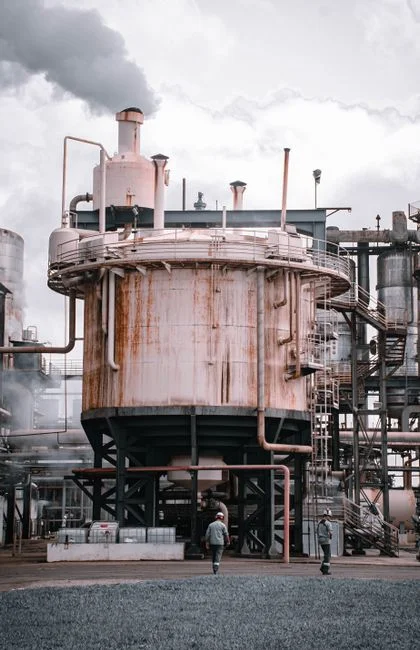
DAF and lamella clarification separate different fractions, but their equipment scope overlaps once chemical conditioning, sludge removal, and controls are included. The comparison below uses the same procurement criteria rather than treating the systems as interchangeable products.
| Criterion | DAF | Lamella clarifier | Procurement implication |
|---|---|---|---|
| Primary mechanism | Microbubble flotation and surface skimming | Flocculation, sludge recirculation, and inclined-plate settling | Confirm which contaminant fraction dominates. |
| Contaminant emphasis | Floatable oils, low-specific-gravity solids, and conditioned floc | Settleable mineral solids and conditioned floc | Use jar or pilot results to identify recoverable fractions. |
| Pretreatment | Coarse solids removal, pH control, coagulation, and flocculation may be required | Coarse solids removal, pH control, coagulation, and flocculation may be required | Price pretreatment and chemical handling in both cases. |
| Equipment scope | Saturation and recirculation system, flotation tank, skimmer, and sludge handling | Compact separation structure, flocculation, recirculation, and sludge removal | Compare installed scope, utilities, and maintenance access. |
| Operating dependencies | Chemical dosing, clean startup water, air saturation, recirculation, controls, and sludge withdrawal | Flocculation, sludge recirculation, plate maintenance, and sludge removal | Evaluate staffing, consumables, and reliability-critical components. |
| Potential treatment role | Clarified water for reuse or discharge when the design meets the relevant limit | Solids-removal core before downstream biological or polishing treatment | Define the final effluent objective before selecting equipment. |
| Available catalog evidence | HydropureWater lists 4–300 m³/h across 13 standard models | HydropureWater states surface loading rates of 20–40 m/h | Ask vendors to map the selected duty to the proposed model. |
Where both dense tailings and floatable oils must be removed, test a hybrid train. Lamella clarification before DAF can remove the dense, settleable fraction before flotation. Alternatively, coarse-solids removal followed by DAF may be adequate when testing shows that DAF can recover the remaining material. Include the resulting sludge route in the comparison; a sludge dewatering filter press may become necessary after either clarification process.
Match the DAF Configuration to Flow and Solids Loading
DAF configuration should follow contaminant load and hydraulic behavior, not simply the largest available vessel. Clearwater Industries defines three useful product-family scopes: FPAC for small-to-medium flow rates with very high contaminant loads; FPBC for low-to-medium contaminant loads, including low-buoyancy particles; and FPHF for high wastewater flows with low-to-large solids loads (Clearwater Industries, April 27, 2026).
| Configuration or benchmark | Published scope | Selection question for a Lancer plant |
|---|---|---|
| FPAC | Low-profile cross-flow separator with a large free surface area for floated-solids accumulation; small-to-medium flow rates and very high solids loads | Does the wastewater generate a high-volume floating blanket that needs dedicated collection area? |
| FPBC | High-profile separator with lamella pack; low-to-medium contaminant loads, including low-buoyancy particles | Will conditioned floc dominate, and does the flow pattern suit this separator arrangement? |
| FPHF | Combines cross-flow and counter-current flow; high wastewater flows with low-to-large solids loads | Does the required flow and solids range justify a higher-flow configuration? |
| COMPACT DAF | Single-skid design at 66 GPM or less; modular two-skid design above 66 GPM | Is the project within the modular arrangement’s stated flow boundary, and what utilities and access are needed? |
| HydropureWater standard range | 4–300 m³/h across 13 standard models | Which standard model matches average and peak duty, and what site-specific modifications are required? |
These are product-family descriptions, not a Lancer site guarantee. Actual selection requires representative wastewater, peak-flow analysis, hydraulic loading, required separation area, and chemical-conditioning results. The HydropureWater DAF system catalog range can structure a vendor request, but it cannot establish the required model without wastewater data and operating variability.
Price the Complete Treatment Train, Not Just the Clarifier
The supplied sources provide no current purchase price for either DAF or a lamella clarifier, so a defensible 2026 comparison requires quotations based on the same wastewater, duty, discharge objective, and installation boundary. Comparing vessel prices alone can conceal the larger cost differences in chemicals, sludge handling, utilities, controls, and maintenance.
| Cost scope | DAF-specific inputs | Clarifier-specific inputs | Quote as a separate line |
|---|---|---|---|
| Chemicals and controls | Coagulant, flocculant, pH adjustment, dosing pumps, sensors, and controls | Flocculant, recirculation, chemical feed, and controls | Chemical consumption assumptions and operating labor |
| Utilities | Recirculation, compressed air, clean startup water, and skimming | Recirculation, pumping, and plate maintenance access | Connected loads and utility rates |
| Solids handling | Floated sludge collection, bottom solids withdrawal, and dewatering | Sludge removal, collection, and dewatering | Expected sludge volume and moisture basis |
| Installation | Saturation equipment, tanks, pumping, piping, skimmer, and local controls | Clarifier structure, flocculation zone, recirculation, piping, and local controls | Civil work, installation, commissioning, and training |
Kemco Systems describes a treatment sequence that can include coarse filtration, physical-chemical treatment, DAF, and sludge dewatering before discharge or reuse (Kemco Systems, accessed July 2026). It also identifies pH adjustment as common in industrial wastewater and lists the treatment tank, mixer, pH sensor, level control, metering pumps, and control panel needed for automatic acid or caustic addition.
Assess sludge before choosing the dewatering method. HydropureWater states that its plate and frame filter presses cover filtration areas from 1 m² to 500 m², but no sludge volume, moisture content, or disposal cost is established for a Lancer plant. Ask each bidder to separate equipment, chemical storage and dosing, pretreatment, tanks, pumping, controls, installation, commissioning, sludge handling, and operating costs so that alternatives can be compared on the same basis.
Build a Site-Specific Selection and Compliance Checklist
A defensible equipment selection depends on representative testing and verified project objectives. Start with wastewater samples collected across operating shifts and production conditions; one clean-water grab sample will not establish the design duty or chemical demand.
- Measure average and peak flow, including startup, shutdown, storm-driven inflow, and production upsets where relevant.
- Test TSS, particle-size distribution, settleable solids, floatable solids, oils and greases, pH, relevant metals, and every constituent named in the applicable permit.
- Use jar testing to establish chemical type, dose, mixing conditions, settling or flotation behavior, and expected sludge characteristics. Clearwater Industries states that chemical and mixing requirements should be established through testing (Clearwater Industries, accessed July 2026).
- Use onsite visits, wastewater testing, and pilot studies to define the plant’s requirements, following the process-development approach described by Kemco Systems (Kemco Systems, accessed July 2026).
- Confirm available footprint, utilities, access for maintenance, sludge-disposal route, reuse requirements, and expected future production changes.
Compliance cannot be closed with generic equipment language. The supplied US EPA wastewater-management source provides official context, but the available excerpt contains no quantitative Lancer-specific limit. The plant’s current permit and local pretreatment requirements must be checked directly with the authority having jurisdiction.
Make the final award conditional on pilot results or enforceable vendor performance guarantees tied to defined project objectives and permit criteria. A PLC-controlled chemical dosing system should be reviewed for control logic, alarms, chemical interlocks, operator access, and maintenance provisions rather than accepted as an off-the-shelf line item.
Choose with a Five-Step Decision Framework
A five-step review keeps the decision anchored to wastewater behavior and separates validated requirements from catalog claims:
- Characterize: Establish flow, solids, oil, pH, metals, variability, and reuse or discharge objectives using representative wastewater.
- Fractionate: Determine whether the pollutants are predominantly floatable, settleable, dissolved, or mixed. If one mechanism cannot address the required fraction, plan for a hybrid train.
- Condition: Use jar testing to establish pH control, coagulation, flocculation, mixing, and expected sludge characteristics. Chemical demand is a process result, not a generic equipment assumption.
- Select: Choose DAF, lamella clarification, or a hybrid train based on the validated separation objective. Compare the DAF and clarifier alternatives using the same wastewater and complete-system boundaries.
- Validate: Before award, review pilot results, controls, maintenance access, sludge handling, utility requirements, installation constraints, and permit-relevant performance.
For a plant near Lancer, the recommendation should state which wastewater fraction each stage removes, what evidence demonstrates that removal, and where residual contaminants go next. If the available data do not establish dissolved-metals performance, the recommendation must say so rather than imply that clarification alone guarantees compliance.
Frequently Asked Questions
Which system is cheaper for a mining plant: DAF or a clarifier?
Neither system can be identified as cheaper from the supplied research because it provides no current purchase price for either option. Ask for quotations using the same representative wastewater, flow, solids loading, effluent objective, installation boundary, and sludge-disposal route. Require separate pricing for equipment, chemicals, dosing, pretreatment, controls, utilities, commissioning, and sludge handling.
What flow rate should a DAF system handle in Lancer?
Select for measured average flow, peak flow, hydraulic loading, contaminant load, and future operating conditions—not a catalog maximum. HydropureWater lists 4–300 m³/h across 13 standard DAF models, while Clearwater Industries states that its COMPACT DAF uses one skid at 66 GPM or less and a modular two-skid arrangement above 66 GPM (Clearwater Industries, April 27, 2026). The vendor must map site data to the proposed configuration.
Do we need jar testing before choosing DAF or a lamella clarifier?
Yes. Jar testing should establish chemical type, dose, mixing conditions, floc or settling behavior, and expected sludge characteristics before equipment selection. Clearwater Industries specifically recommends testing to establish chemical and mixing requirements (Clearwater Industries, accessed July 2026). Pilot testing is warranted when representativeness, scale, or compliance risk remains unresolved.
Can DAF remove dissolved metals from mining wastewater?
DAF does not automatically remove dissolved metals. It is principally a clarification process for suspended solids, oils, and conditioned floc; Kemco Systems lists heavy metals among possible industrial contaminants but describes coagulants and flocculants as a means of clumping suspended and colloidal particles (Kemco Systems, accessed July 2026). Any dissolved-metals treatment requirement needs a separately defined and validated process step.
Should a metals plant use DAF, a lamella clarifier, or both?
Use DAF when testing shows that floatable oils, low-specific-gravity solids, or conditioned floc are principal targets. Use lamella clarification when the objective is to remove predominantly settleable mineral solids in a compact structure. Use both when dense solids and floatable contaminants must be removed and testing supports a lamella-then-DAF train. The final choice should follow representative wastewater testing, pilot validation, and current permit criteria.