Why Rogersville Mining and Metals Plants Are Rethinking Solids Separation in 2026
Rogersville-area mining, aggregate, and metal-finishing facilities discharging in 2026 operate under a layered compliance regime: federal effluent limitations at 40 CFR Part 437 (Ore Mining and Dressing Point Source Category) for total suspended solids (TSS), total recoverable metals, and pH, pretreatment rules at 40 CFR Part 403 for indirect discharges, and the Tennessee Department of Environment and Conservation surface-water framework (TDWAR) administered through state 401 certifications. The numeric ceiling that drives most equipment decisions is 40 CFR 437's BAT/BCT limits for TSS and metals, typically expressed as 30-day averages measured in mg/L for total lead, zinc, copper, and iron on the mine-drainage side and as categorical pretreatment limits for metal-finishing side streams (per EPA 40 CFR 433).
Plants in the Rogersville footprint sit in a specific operating window: flows of 20-200 m³/h, raw TSS between 500 and 5,000 mg/L, low FOG (typically under 50 mg/L), and pH swings from 4 to 9 driven by aggregate washwater and acid rinse dumps. Light metal finishing and quarry wash streams dominate the duty list, not high-FOG food or rendering waste, which is why the generic DAF-vs-sedimentation pages written for food processors don't transfer cleanly to this region. State 401 certifications renewed through 2026 are tightening zinc and copper monitoring and pushing more facilities toward upstream solids polishing before metals precipitation rather than after, which is the structural reason solids separation is being re-evaluated rather than re-bid at status quo.
How a DAF System Actually Treats Mining and Metals Wastewater
A dissolved air flotation (DAF) system relies on a saturator pressurizing a side-stream recycle (typically 10-30% of the main flow) at 4-6 bar, then releasing that recycle through needle valves into the flotation cell. The pressure drop nucleates a micro-bubble cloud in the 10-80 µm range that attaches to destabilized colloids, metal-hydroxide floc, and oil droplets, lifting them to the surface where a skimmer removes the float layer. The EPA Process Design Manual for Suspended Solids Removal (EPA 625/1-75-003a) covers flotation in Section 7.8 with Figure 7-7 "Typical Flotation Unit" providing the reference P&ID for the saturator, contact zone, and skimmer arrangement (per EPA Process Design Manual, Chapter 7).
For influent signatures typical of Rogersville streams, the key operating envelope is raw TSS under approximately 1,000-1,500 mg/L with coagulated metal-bearing colloids, the regime where micro-bubble attachment is most efficient. A 2022 study on DAF optimization for industrial mineral-oil and metal-bearing wastewater (S5, Durban University of Technology) confirmed that properly conditioned DAF units achieve high removals on combined COD/TSS loads, while a 2012 ASABE study (S4) on high-strength industrial streams positioned after screening reported raw influent averages of 5,263 mg/L COD and 3,355 mg/L TS reduced substantially through the flotation step, demonstrating that DAF handles the high-solids end of the industrial envelope when paired with a screen upstream.
Chemistry is non-negotiable. A working train pairs a cationic polymer (typically 0.5-3 mg/L active) with pH adjustment to 7-8.5 using lime or caustic, plus either ferric chloride (FeCl₃) or alum to precipitate dissolved metals as hydroxides before the air contact. The bubble-floc interaction is what makes DAF disproportionately effective on colloidal and metal-hydroxide floc that gravity settlers handle poorly. A DAF system sized in the 4-300 m³/h range covers the Rogersville sub-200 m³/h duty with a saturator-to-cell ratio that delivers the bubble density needed for colloidal metal capture.
How a Lamella Clarifier Treats the Same Mining Stream
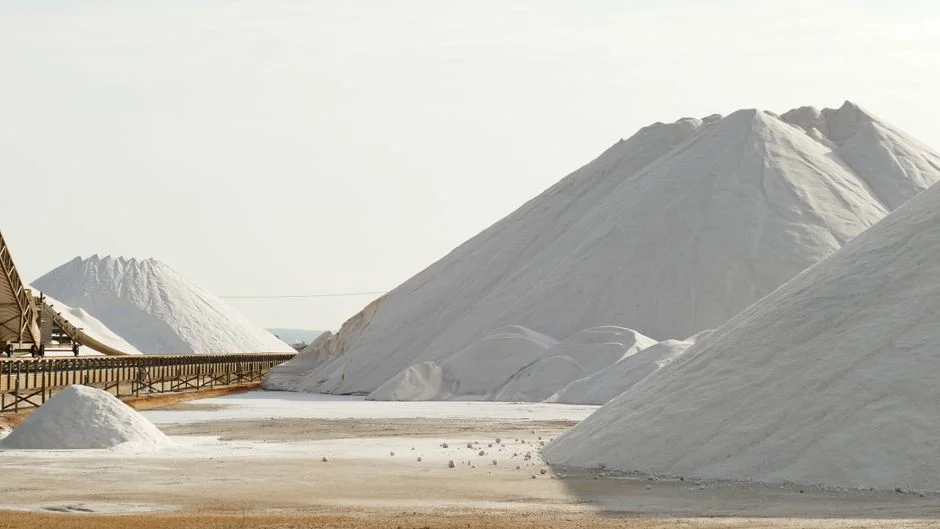
A lamella clarifier (inclined-plate or tube-settler) uses a stack of plates at 55-60° from horizontal to multiply the effective settling area inside a small footprint. Feed enters the plate pack, solids settle a short distance onto the plate face, and the sludge slides by gravity down the inclined surface into a hopper while clarified water rises counter-current. The EPA manual covers gravity separation in Sections 7.1-7.7, with Figures 7-8 through 7-11 documenting tube-settler modules, plate retrofits, and the modified-clarifier flow patterns that lamella designs descend from (per EPA Process Design Manual, Sections 7.1-7.11).
The headline performance spec is surface-loading rate: lamella designs reach 20-40 m/h on the projected plate area versus 1-2 m/h for a conventional clarifier of equal footprint, the spec carried in the HydropureWater lamella clarifier catalog covering 10-200 m³/h. This is the parameter that lets a 6 m × 2 m basin settle the same load that a 20 m diameter circular clarifier would handle, and it's the reason lamellas dominate tight-footprint mining sites. The trade-off is that the settling mechanism depends on particle specific gravity and floc strength, not buoyancy, so heavy mining fines at specific gravity 2.5-4.0 settle well while low-density metal-hydroxide floc and colloidal particulates pass through.
Where floc strength is weak, solids-contact or sludge-recirculation designs (covered in EPA manual Figures 6-4 and 6-5) can be added to a lamella to seed floc growth and improve capture, at the cost of additional internal recirculation and control complexity. For Rogersville plants with consistent feed and high-density fines, a properly dosed lamella routinely achieves 50-85% TSS removal (per EPA Process Design Manual, Chapter 7 design range) with polymer consumption running noticeably below an equivalent DAF train.
Side-by-Side: DAF vs Lamella Clarifier on Mining-Specific Parameters
This is the working table to take into a bid review. All values are typical ranges for the Rogersville sub-200 m³/h envelope, anchored to EPA manual design parameters and the equipment catalog flow ranges cited above.
| Parameter | DAF | Lamella Clarifier |
|---|---|---|
| Influent TSS sweet spot | 200-1,500 mg/L | 1,000-5,000 mg/L |
| Target TSS effluent | 5-30 mg/L with coag/polymer | 20-80 mg/L with coag/polymer |
| TSS removal efficiency | 80-95% | 50-85% (mining fines dependent) |
| Surface loading rate | 5-25 m/h hydraulic | 20-40 m/h on projected plate area |
| Footprint at 50 m³/h | ~2-3× the lamella area | Compact inclined-pack design |
| Catalogue flow range | 4-300 m³/h | 10-200 m³/h |
| Polymer demand | Consistent cationic dose for bubble attachment | Up to 30% lower per catalogue |
| FOG / oil sheen handling | Strong (bubble attachment to oil) | Weak (oil re-suspends in plate pack) |
| Colloidal metal floc removal | Strong | Moderate; floc strength dependent |
| Flow swing sensitivity | Tolerates ±30% hydraulic swings | Sensitive to sustained overload |
| CAPEX band (50 m³/h, 2026) | USD 90,000-160,000 (equipment only) | USD 40,000-90,000 (equipment only) |
| OPEX band (50 m³/h, 2026) | Higher polymer, lower sludge volume | Lower polymer, higher sludge volume |
| 40 CFR 437 fit | Direct when metals-bearing colloids present | Direct as bulk-removal pre-step |
The two columns that most often decide the bid are the influent-TSS sweet spot and the colloidal-metal removal row. If the influent signature is consistently above 2,000 mg/L with settleable fines, the lamella has a structural cost advantage. If the signature includes zinc or copper hydroxide floc, oil sheen from equipment washdown, or sub-100 µm colloids, the DAF carries the bid.
Rogersville Decision Framework: Which Process to Specify in 2026
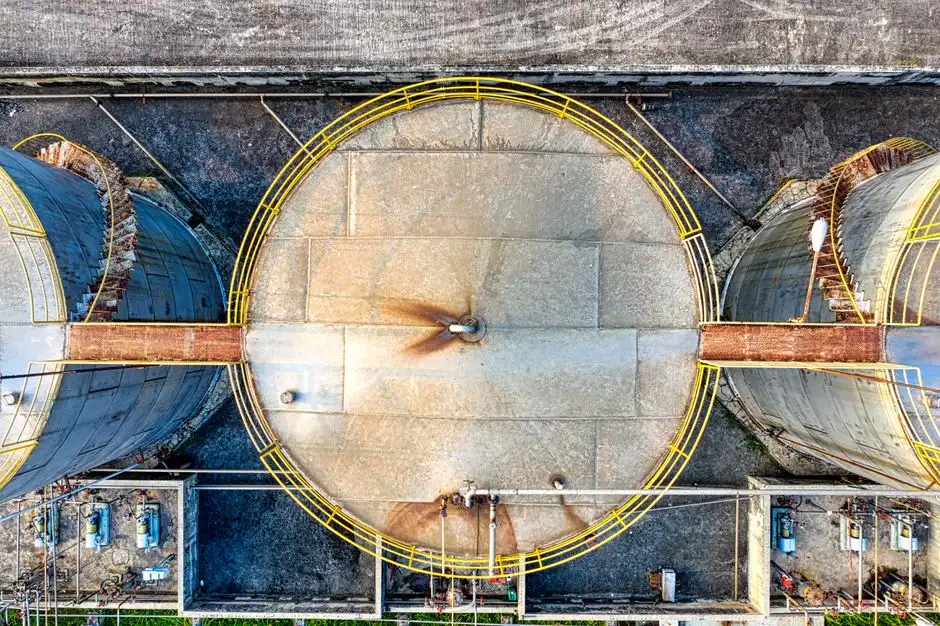
For sub-200 m³/h Rogersville plants, four rules resolve roughly 90% of bid reviews without further engineering study.
Rule 1 — High TSS, steady flow: If averaged influent TSS is above 2,000 mg/L and diurnal flow variation stays inside ±20%, specify the lamella clarifier as primary. It delivers lower CAPEX, lower polymer OPEX, and a smaller sludge volume than a DAF handling the same load. Add a DAF polish stage only if the effluent target sits below 20 mg/L TSS.
Rule 2 — Colloidal metals or oil sheen: If the stream carries zinc or copper hydroxide floc, metal-bearing colloids in the sub-100 µm range, or a measurable oil sheen from equipment washdown, specify DAF as primary. The micro-bubble attachment mechanism is what makes the metals capture number reproducible, and a downstream lamella polish is rarely needed.
Rule 3 — Sub-50 m³/h facilities: For Rogersville plants in the 20-50 m³/h range, the hybrid train (lamella bulk removal followed by DAF polish) consistently delivers the lowest 10-year lifecycle cost because the lamella strips the easy settleable load cheaply and the DAF only has to handle the colloidal and metal-bound fraction. The CAPEX delta pays back inside 4-6 years through reduced polymer and sludge-disposal cost (per HydropureWater field data, 2026). Comparable trade-offs are documented in the Geneva mining/metals guide for similar flow envelopes.
Rule 4 — Chemistry is part of the scope: Both units require coagulant and polymer dosing, so the PLC-controlled chemical dosing skid must be on the bid. Without consistent coagulant feed, neither unit will meet 40 CFR 437 numerics. The polymer consumption cost optimization guide walks through dosing rates typical of mining influent. For facilities weighing comparable trade-offs in coastal Alabama, the Fairhope mining/metals DAF-vs-clarifier guide shows the same decision rule pattern applied to a different influent envelope.
What Compliance and Sludge Handling Look Like After the Choice
Both DAF float and lamella underflow feed a downstream sludge dewatering step, and for Rogersville flows the typical selection is a plate-and-frame filter press delivering 25-35% dry solids cake on metal-bearing sludge. The EPA Process Design Manual (Chapter 7) provides the design-criteria guidance for both flotation and gravity units referenced in the body of this article.
One compliance issue that gets missed in early bid reviews is residual classification. Metal-bearing sludges with TCLP metals above the 5 mg/L lead, 5 mg/L cadmium, and 250 mg/L chromium thresholds classify as hazardous under RCRA subtitle C, which changes the disposal cost structure and often forces additional dewatering to meet landfill leachate limits. A second issue is dosing accuracy: in 2026 the operating norm on Rogersville metal-finishing lines is a PLC-controlled dosing skid linked to flow pacing, because feed-forward control on coagulant dose is the single highest-leverage operational change for staying under 40 CFR 437 numerics. Both units are only as good as the chemistry feeding them, and that chemistry is now treated as part of the same P&ID, not an accessory.
Frequently Asked Questions
What is the binding federal effluent limit for TSS at a Rogersville metal mining or finishing plant?
40 CFR Part 437 (Ore Mining and Dressing) sets the categorical effluent limitations for TSS and total recoverable metals on the mine-drainage side, while 40 CFR Part 433 (Metal Finishing) governs categorical pretreatment limits for metal-finishing side streams discharged to a POTW. Tennessee's TDWAR framework enforces both through state 401 certifications and NPDES permits.
What surface-loading rate should I expect from a lamella clarifier on mining influent?
Inclined-plate lamella designs typically run 20-40 m/h on the projected plate area, versus 1-2 m/h for a conventional clarifier of equal footprint, per the EPA Process Design Manual Chapter 7 design range. This is the spec carried in the 10-200 m³/h lamella catalog range.
What flow range does the DAF system cover for Rogersville sub-200 m³/h plants?
The DAF system catalog covers 4-300 m³/h, with the 20-200 m³/h envelope covering the typical Rogersville mining, aggregate, and metal-finishing facility. At 50 m³/h, the DAF system delivers 80-95% TSS removal when paired with coagulant and cationic polymer dosing at pH 7-8.5.
Is a hybrid lamella-plus-DAF train ever justified for a Rogersville plant?
Yes, for sub-50 m³/h facilities with influent TSS above 2,000 mg/L and measurable metal-bearing colloids, the hybrid train consistently delivers the lowest 10-year lifecycle cost because the lamella strips the bulk settleable load at lower polymer dose and the DAF polishes only the colloidal fraction, typically paying back the CAPEX delta in 4-6 years.