Determine Which Limits Actually Control the Scyrene Discharge
Mining and metals plants near Scyrene meet sewer pretreatment limits through an industrial discharge permit issued by the receiving POTW, not through an NPDES permit for their indirect discharge. The defensible treatment train begins with source characterization, equalization, pH control, metals precipitation, solids removal, required polishing, and metals-bearing sludge dewatering. Federal categorical standards provide a baseline, while POTW local limits may be stricter. Because the supplied research contains no verified Scyrene-specific ordinance, permit, fees, or sampling rules, equipment should not be final-sized until the responsible POTW confirms the controlling requirements.
Indirect sewer discharges are governed through the Clean Water Act section 307(b) national pretreatment program and 40 CFR Part 403. The US EPA identifies the POTW as the control authority where it has an approved pretreatment program and directs it to apply the most stringent applicable requirements (EPA, Pretreatment Standards and Requirements—Applicability, current at 2026).
A categorical industrial user is subject to the applicable national categorical standards. Significant industrial user status can arise from categorical coverage, discharge of at least 25,000 gallons per day of process wastewater, contribution of at least 5% of the POTW’s average dry-weather hydraulic or organic capacity, or POTW designation based on reasonable potential to affect POTW operations or violate pretreatment requirements (EPA, Pretreatment Standards and Requirements—Applicability, current at 2026).
The supplied 2026 research identifies 40 CFR Part 437 for ore mining and dressing and 40 CFR Part 433 for metal finishing (HydropureWater, 2026, regional mining wastewater pretreatment guide). Another supplied commercial source instead cites Part 430 for metal mining. That conflict is not resolved here: verify the facility’s process, applicable subcategory, current EPA rule text, and any state requirements with the control authority.
Before selecting equipment, request the current sewer-use ordinance, industrial discharge permit, local limits, prohibited discharges, monitoring frequency, fee schedule, slug-control rules, and enforcement history. These documents define the actual compliance basis.
Build a Permit-Compliance Matrix from Actual Wastewater
Characterization determines which unit operation earns its place in the treatment train. The supplied 2026 pretreatment research identifies pit dewatering, concentrator slurry water, contact stormwater, acid mine drainage, and finishing-shop rinsate as distinct streams with different pollutant fingerprints (HydropureWater, 2026).
Raw acid mine drainage may have a pH of 2–4 and sulfate of 1,000–5,000 mg/L with elevated TDS. Mining and metals streams may contain TSS in the hundreds to several thousand mg/L. Dissolved metals of concern include Pb, Cu, Zn, Cd, Ni, and As; permit requirements may also cover cyanide, fluoride, COD, oil and grease, and flotation reagents (HydropureWater, 2026, mining wastewater characteristics and treatment guide).
Use a 24-hour composite sampler with online pH and conductivity at the headworks as the minimum characterization basis identified in the supplied research. Equalization, precipitation, clarification, and filtration must be sized against peak flow and worst-case composite concentrations rather than average daily flow.
| Wastewater source | Potential pollutants | Required design basis | Permit verification |
|---|---|---|---|
| Pit dewatering | Metals, acidity, TDS, TSS | Flow and composite variability | Industrial discharge permit parameter and monitoring point |
| Concentrator slurry water | Suspended solids, flotation reagents, metals | Peak slurry flow and worst-case solids load | TSS and constituent limits with averaging period |
| Contact stormwater | TSS and site-derived metals | Storm contribution and segregated drainage basis | Permit treatment or prohibition for segregated flows |
| Acid mine drainage | Low pH, sulfate, dissolved metals, TDS | Low-pH load and neutralizing requirement | pH and metals compliance points |
| Metal-finishing rinsate | Cu, Cr, Ni, Zn, cyanide, oil and grease | Batch discharge and constituent load | Part 433 applicability and local limits, if relevant |
Each row in the design matrix should identify the permit limit, averaging period, monitoring point, analytical method, operational target, and contingency response. Direct surface-water discharges follow a separate NPDES pathway; the sewer route instead protects the POTW’s biological process, sludge handling, and worker safety (HydropureWater, 2026).
Stabilize Flow and pH Before the Metals Treatment Stage
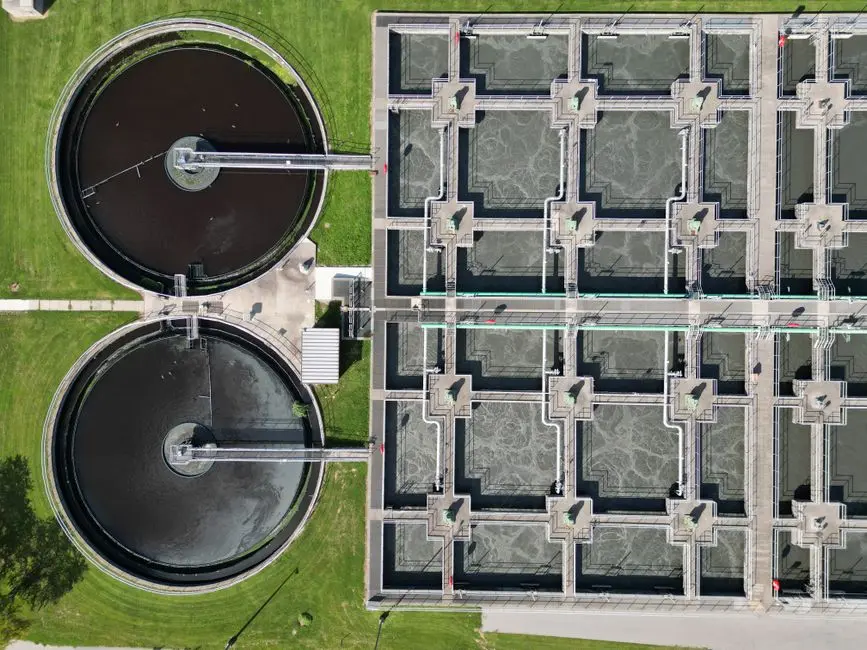
Equalization must accommodate batch and storm-driven variability before chemical treatment. The supplied 2026 commercial guide presents 8–24 hours of average daily flow as the screening range for an equalization basin, while requiring confirmation against actual batch durations, storm contributions, and peak plant flows (HydropureWater, 2026).
Mixing within the automatic pH and precipitation chemical dosing skid service boundary gives operators time to identify a slug before it reaches clarification. Basin volume, transfer capacity, agitation, and standby provisions should be checked together: a nominally adequate basin with an undersized pump does not control the peak.
The supplied guide identifies lime as cheaper per ton than NaOH but associates lime with 3–5 times more sludge. NaOH may be economically attractive for high-TDS streams because it does not add as much calcium-based solids, although site-specific reagent and disposal pricing must control the choice (HydropureWater, 2026).
A pH range of 6.5–9.0 is presented as a general screening target, not a substitute for the permit or jar testing. When influent pH changes by more than 2 pH units, the guide recommends staged dosing. It also reports that a one-pH-unit error from the precipitation optimum can reduce removal efficiency by an order of magnitude (HydropureWater, 2026).
Treat chemical storage, metering, mixing, and automatic controls as production-critical equipment. Specify interlocks, high/low-pH alarms, reagent-out-of-service response, and the operational response to a failed feed. Chemical equipment should not remain an ancillary line item after the permit matrix identifies pH as a compliance parameter.
Choose Hydroxide Precipitation, Sulfide Polishing or a Combined Train
Hydroxide precipitation is the default chemistry because its operating chemistry is established and cost-effective for broad metals removal. The supplied 2026 research reports 85–95% total-metals removal for properly controlled systems, but that is a planning reference rather than a guaranteed design value; representative jar and pilot testing must establish the required dose and residual (HydropureWater, 2026).
Sulfide polishing becomes relevant when hydroxide cannot reliably meet a tighter constituent limit. The supplied research reports sulfide residuals of 0.01–0.05 mg/L for Cu, Zn, Cd, and Ni compared with 0.5–2.0 mg/L for hydroxide precipitation. It also reports that sulfide reagents can cost 2–4 times more and require sealed reactors and hydrogen sulfide off-gas control. Hydroxide primary treatment with sulfide polishing on a slipstream is therefore a practical compromise for many flows (HydropureWater, 2026).
| Decision point | Hydroxide precipitation | Sulfide polishing |
|---|---|---|
| Typical role | Primary bulk-metals removal | Targeted polishing for stringent limits |
| Reported residual comparison | 0.5–2.0 mg/L | 0.01–0.05 mg/L |
| Reported reagent cost | Lower | 2–4 times higher |
| Principal operating burden | pH control and sludge volume | Sealed handling and H₂S off-gas control |
| Selection test | Representative composite jar test | Parameter-specific polishing test and off-gas review |
Do not use one pH target for every metal. The supplied research states that copper precipitation begins near pH 6.5 and is described as fully removed by pH 8.5; zinc precipitation is described between pH 7 and 9. A pH 9.0–10.0 operating window captures Cu, Zn, Ni, and most divalent metals, while Cr(III) and Al may resolubilize above approximately pH 10.5 (HydropureWater, 2026).
Parameter-specific jar testing is mandatory because each metal has a different optimum and amphoteric behavior can invalidate a single-pH treatment claim. The equipment proposal should state the tested pH, reagent dose, residual, resulting sludge characteristics, and operating control sequence.
Select DAF or Lamella Clarification for the Actual Solids Load
DAF is the stronger choice when oil, grease, floatable reagents, or fine colloidal metals dominate the solids load. The supplied 2026 DAF guide reports 90–98% TSS removal and 85–95% oil-and-grease removal in mining and metal-finishing service. Lamella clarification is generally more suitable for high flows carrying primarily metal-hydroxide sludge when footprint is constrained (HydropureWater, 2026).
The same source gives DAF hydraulic loading of 5–25 m/h and lamella surface loading of 20–40 m/h as comparison points. It also reports a DAF product range of 4–300 m³/h across 13 models. These values can narrow the initial selection, but the final clarifier must be sized for peak flow and worst-case solids—not the plant average (HydropureWater, 2026).
| Selection criterion | DAF | Lamella clarifier |
|---|---|---|
| Best fit | Oil, floatable reagents, colloidal metals | Predominantly metal-hydroxide sludge |
| Reported loading | 5–25 m/h hydraulic loading | 20–40 m/h surface loading |
| Footprint consideration | More surface-area demand | Compact plate arrangement |
| Downstream requirement | Sludge collection and dewatering | Dense sludge blanket and collection |
| Required verification | Jar test, polymer dose, carryover test | Floc settleability and peak-load test |
Polymer coagulant aid at 0.5–3 mg/L is presented in the supplied guide as an operating range, not a design guarantee. Establish the dose and solids carryover through jar testing. Additional DAF system for mining wastewater solids removal and high-efficiency sedimentation options should be compared using DAF and clarifier decision guidance for mining wastewater.
Underflow design cannot be separated from sludge dewatering. Confirm that clarifier sludge, chemical conditioning, and filtrate return remain hydraulically compatible with the selected filter press.
Add Filtration, Biological Polishing and Disinfection Only as Required
Final polishing should answer a demonstrated permit or reuse requirement rather than add equipment by default. The supplied 2026 treatment guide gives multimedia filtration rates of 1–2 m/h and states that residual TSS can be reduced below 10 mg/L. A multimedia filter is therefore appropriate as a polishing barrier when the permit includes a stringent TSS condition or clarifier carryover needs a secondary barrier (HydropureWater, 2026).
Introduce MBR or another biological stage when biodegradable pollutants, ammonia, or organic limits make it necessary. The supplied research reports MBR effluent with TSS below 5 mg/L and COD removal above 95%, but those values do not establish that biological treatment is required for a given POTW permit.
Add UV or chlorine dioxide when the POTW requires disinfection or the collection system creates a documented control need. The supplied guide presents chlorine-dioxide generator dosing of 1–5 mg/L and residual of 0.1–0.5 mg/L as design-screening values; the permit and applicable distribution-system constraints must control the final specification (HydropureWater, 2026).
An MBR can also serve as pretreatment for RO-based reuse. That makes biological polishing a strategic decision point when reuse is credible, but it does not justify installing an MBR in every sewer-discharge train. Compare multimedia filtration equipment, integrated MBR treatment, and chlorine dioxide generation against the confirmed permit schedule and reuse decision.
Plan for Metals Sludge Before the Equipment Purchase Is Finalized
Precipitation converts dissolved metals into a separate waste stream, so sludge characterization and disposal are outside the sewer permit but remain part of the project’s compliance liability. The supplied 2026 research describes metals-bearing precipitation sludge as potentially hazardous under TCLP for regulated metals including Pb, Cd, Hg, and As (HydropureWater, 2026).
The supplied sources disagree on a useful planning band: one gives filter-press cake at 25–35% dry solids, while another gives 30–45%. The equipment proposal must therefore state the guaranteed target for the actual sludge rather than adopt a generic range. Require representative feed characterization and cake testing before finalizing platen area, cycle time, polymer demand, or truck-loading assumptions.
Use a thickener followed by a plate-and-frame filter press for metals-bearing sludge, with filtrate returned to the headworks for retreatment. Automatic polymer dosing tied to feed solids should be included in the base scope because conditioning materially affects cake dryness and dewatering performance.
Require TCLP characterization and a review of the receiving facility’s paint-filter criteria before assuming the cake is acceptable. The supplied research identifies disposal cost as a major long-term operating item and notes that discharge-solution economics cannot be separated from cake moisture and haul quantity (HydropureWater, 2026). Include disposal, transport, polymer, filter cloth, wash water, and filtrate-return costs in the lifecycle comparison.
Compare Sewer Discharge with Partial Reuse or Zero Liquid Discharge
The sewer-versus-reuse decision depends on site economics and permit trajectory, not on a generic assumption that one route is more sustainable. The supplied 2026 research says to compare long-run POTW fees, incoming-water cost, and the expected tightening of local limits against the operating and lifecycle implications of reuse or ZLD.
Pretreatment to sewer remains the lower-complexity route where POTW fees and freshwater costs are low and reuse requirements are limited. Partial reuse can reduce sewer volume and purchased water, but RO introduces energy, antiscalant, membrane-fouling, and pretreatment requirements. ZLD reduces liquid-discharge exposure but adds evaporation or crystallization equipment, high energy demand, air-permit considerations, and more complex maintenance (HydropureWater, 2026).
| Decision factor | Pretreatment to sewer | Partial reuse with RO | Zero liquid discharge |
|---|---|---|---|
| Primary objective | Meet POTW discharge conditions | Reduce sewer volume and purchased water | Minimize liquid discharge |
| Main recurring burden | Chemicals, sludge disposal, POTW fees | Energy, antiscalant, membranes, pretreatment | Energy and brine or solids handling |
| Permit exposure | SIU permit and local-limit trajectory | Reduced sewer volume; reuse permit may apply | Air and energy requirements remain |
| Required business inputs | Current POTW fees and limits | Freshwater cost, recovery target, membrane design basis | Residue route, energy availability, site water balance |
Do not substitute invented project costs for a business case. The supplied research explicitly describes cost ranges as project-specific and requiring confirmation through case studies. Obtain current POTW fees, freshwater costs, expected limit changes, water-balance data, and residue-disposal quotations. These inputs determine whether reverse osmosis for water recovery is justified.
Use a Permit-to-Commissioning Checklist
Procurement should follow the permit-to-equipment sequence, not the other way around. First obtain the POTW ordinance, industrial discharge permit, local limits, prohibited discharges, monitoring frequency, fee structure, slug requirements, and enforcement history. Then complete source-by-source characterization and a representative worst-case mass balance before fixing capacity.
| Project stage | Required evidence | Release or acceptance criterion |
|---|---|---|
| Permit review | Current ordinance, permit, local limits, sampling and slug rules | Compliance matrix approved by responsible parties |
| Design | Representative composites, peak flows, batch and storm basis | Each unit mapped to a permit parameter and failure response |
| Factory review | Equipment guarantees, controls, materials, utility and maintenance requirements | Proposal demonstrates complete installed scope |
| Commissioning | Hydraulic surge, pH control, jar-derived chemistry, carryover, cake tests | Acceptance tied to agreed test methods and criteria |
| Operations | Calibration, logs, sludge records, chain of custody, contingency procedures | Compliance file demonstrates ongoing control |
Commissioning should test hydraulic surges, pH control, metals-removal chemistry, solids carryover, and filter-press cake production. Define operational contingencies for failed chemical feed, clarifier carryover, slug discharge, and instrument failure, including isolation, notification, sampling, restart, and reporting duties.
Retain operating records, calibration evidence, sludge characterization, disposal documentation, and chain-of-custody records as part of the compliance file. These records also provide the operating history needed for future permit renewal and reuse decisions.
Frequently Asked Questions
How should equalization and treatment capacity be sized near Scyrene?
Use representative source data, peak flows, batch durations, storm contributions, and worst-case composite concentrations—not average daily flow alone. The supplied 2026 guide presents 8–24 hours of average daily flow as an equalization screening range, but the responsible POTW’s requirements and verified site hydraulics control the final basis (HydropureWater, 2026).
Is DAF or lamella clarification the better purchase for mining wastewater?
Choose DAF where oil, floatable reagents, or fine colloidal metals are important; choose lamella clarification where the stream is primarily metal-hydroxide sludge, flow is high, and footprint is constrained. Confirm the selection with representative jar and settleability tests and use the mining wastewater clarifier comparison to structure the technical evaluation.
How should supplier quotations be compared for cost and compliance risk?
Request installed-price breakdowns for equipment, chemical storage and dosing, controls, monitoring, utilities, foundations, sludge handling, testing, training, maintenance, and disposal support. Require performance guarantees tied to the confirmed permit matrix, including reagent consumption, clarified-water solids carryover, and guaranteed cake characteristics—not only equipment throughput.
Should the project discharge to sewer or install reuse or ZLD?
Compare current POTW fees, freshwater cost, permit trajectory, site water balance, recovery target, energy demand, and residue disposal. A no verified Scyrene-specific limit or price was supplied, so obtain the POTW’s current requirements and written vendor guarantees before making the final purchase.
Related Equipment
- DAF system for mining wastewater solids removal — specifications, capacity range, and technical data