Start With the Effluent and Its Final Destination
An effluent treatment plant in Abidjan should be selected by matching industrial wastewater characteristics, required flow and reuse or discharge objectives to a verified process train—not by choosing a generic package. DAF suits oil, grease, FOG and solids-heavy streams; MBR combines biological treatment with membrane filtration; UF provides chemical-free barrier filtration; and RO can polish pretreated water for higher-quality reuse. The final design should be confirmed through source sampling, site survey, applicable Côte d'Ivoire approvals and supplier-specific performance guarantees.
Begin with a representative source characterization covering average and peak flow, COD, BOD, TSS, pH, oil and grease, metals, toxicity, temperature and relevant concentrations of production chemicals. Include the operating schedule and identify whether batches, cleaning cycles or production changes produce intermittent discharges. A single laboratory sample may not represent the plant’s operating envelope.
List every constituent handled by the facility, including process concentrations that may inhibit biological treatment or damage membranes. A commercial Abidjan supplier page identifies organic wastes, suspended solids, bacteria, oil and grease, chemicals, metals and resins as common industrial effluent concerns; that list is a screening reference, not a substitute for site analysis (Vaquacare India, source accessed for this guide). Read industrial ETP and DAF selection for factories alongside your own characterization.
Define the receiving point separately: direct discharge, sewer connection, irrigation, process reuse, cooling reuse or a potable-related application. Each destination changes the required polishing, monitoring and evidence package. A 2026 study of sewage collectors from Abobo to Vridi examined environmental microorganisms and antimicrobial-resistance concerns in the District of Abidjan; it supports attention to receiving environments but does not establish a factory’s applicable discharge limits (GSC Advanced Research and Reviews, 2026).
Request the current discharge or reuse conditions from the responsible authority. Put them into the equipment specification, sampling plan and acceptance criteria before comparing commercial offers. Supplier catalog capacities describe available equipment, not the performance or compliance of a proposed Abidjan installation.
Build the Treatment Train Around the Main Pollutant
Every unit operation should have a defined contaminant duty before equipment is selected. The process decision flow is source characterization, equalization and screening, contaminant-specific pretreatment, biological treatment where required, solids separation, polishing or disinfection, and monitoring.
- Equalize and screen: Control batch variation and remove material that could damage pumps, membranes or dosing equipment.
- Remove the dominant contaminant: Use DAF for suspended solids, oil and grease, FOG and colloidal matter; use biological treatment where biodegradable organics require COD and BOD removal.
- Separate solids: Clarify biologically treated water or use an MBR to combine biological treatment with membrane separation.
- Polish and disinfect: Apply UF, nanofiltration, RO or disinfection only where the destination and water-quality target justify them.
HydropureWater’s DAF range covers 4–300 m³/h across 13 models. Its specified role is high-efficiency removal of suspended solids, FOG, oil and grease, and colloidal matter. That makes it a candidate for solids-heavy pretreatment, but DAF should not be presented as a complete biological treatment train.
The specified integrated MBR system covers 10–2,000 m³/day and uses submerged PVDF filtration below 1 μm. It combines activated-sludge treatment with membrane filtration for a compact treatment route. UF provides a different duty: the specified hollow-fiber system handles 2,000–40,000 L/h, removes bacteria, colloids and suspended solids without chemicals, accepts turbidity up to 300 ppm, and includes automatic backwash and air scour. UF is not a substitute for biological treatment of high-strength organic wastewater.
Reserve RO or nanofiltration for polishing where reuse quality justifies the additional pretreatment and energy requirements. HydropureWater specifies industrial RO recovery rates up to 95%; that is a catalog limit, not a guaranteed project recovery. Where on-site microbial control is required, the specified chlorine-dioxide generator range is 50–20,000 g/h and includes hospital-effluent, cooling-loop and process-wastewater applications.
| Process unit | Primary treatment duty | Catalog capacity | Key dependency |
|---|---|---|---|
| DAF | Suspended solids, FOG, oil and grease, colloidal matter | 4–300 m³/h; 13 models | Complete removal and sludge handling still require definition |
| MBR | Biological treatment with fine solids separation | 10–2,000 m³/day | Bioreactor and membrane pretreatment |
| UF | Chemical-free removal of bacteria, colloids and suspended solids | 2,000–40,000 L/h | Feed turbidity no greater than the stated 300 ppm condition, subject to project verification |
| RO | Polishing for purified permeate | Recovery up to 95% | Suitable upstream treatment and project-specific energy review |
| Chlorine dioxide | On-site microbial control | 50–20,000 g/h | Application-specific dose and safety controls |
Include mechanical bar screening and an automatic chemical-dosing system where the source survey or process calculations justify them.
Compare the Main Equipment Options Before Asking for a Quote
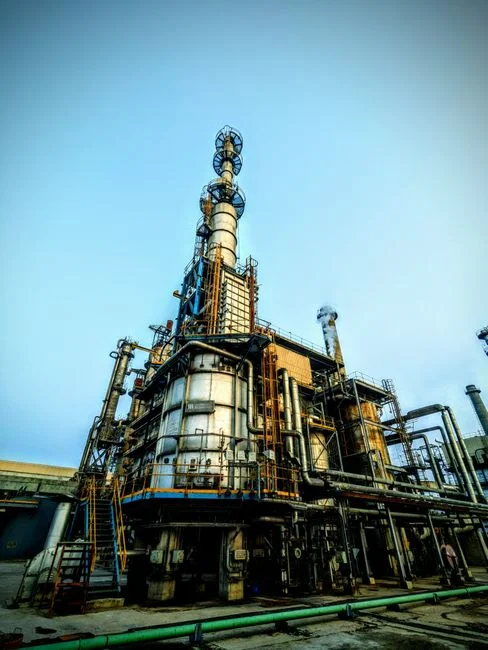
DAF, MBR, UF and RO perform different functions, so the technically comparable comparison is by treatment objective, contaminant, footprint, automation, pretreatment dependency and reuse potential—not simply by purchase price or nameplate capacity.
| Option | Treatment objective | Principal risk | Reuse role |
|---|---|---|---|
| DAF system for industrial wastewater | Remove suspended solids, FOG, oil and grease and colloidal matter | Inadequate treatment of dissolved biodegradable contaminants if used alone | Usually a pretreatment or solids-removal stage |
| Integrated MBR wastewater treatment system | Combine activated sludge with membrane separation | Complex biological and membrane operation; fouling and pretreatment sensitivity | Can form part of municipal sewage, industrial process-water and reuse trains |
| Ultrafiltration system | Remove bacteria, colloids and suspended solids without chemicals | Not designed here as a stand-alone biological treatment stage | Physical barrier before RO or another polishing step |
| Reverse-osmosis system | Produce purified permeate | Requires suitable upstream treatment; project recovery may differ from the catalog maximum | High-quality reuse where pretreatment and energy demand are justified |
Package construction can shorten the procurement path for a suitably characterized application. Custom construction may be necessary where flow, contaminants, layout or reuse requirements depart from a standard package. Neither route removes the need for site inspection and a project-specific design.
Require each supplier to state what its offer excludes. A DAF quotation without sludge dewatering, biological treatment or final disinfection may be incomplete. An MBR offer without membrane-cleaning provision, controls or replacement strategy transfers hidden lifecycle risk to the buyer. A UF package that receives unsuitable feed cannot be rescued by its stated backwash cycle, and an RO package should include the required pretreatment rather than relying on a nominal recovery rate.
Compare packages and custom plants on the same basis: process scope, guarantees, utilities, controls, civil works, installation, commissioning, operator time, consumables, membranes or media, sludge handling, monitoring and warranty support.
Size the Plant from Real Operating Data
A plant should be sized from measured flow and load data, not from a nominal average or a catalog midpoint. Give each shortlisted supplier the measured average flow, peak flow, operating schedule, expansion factor and minimum flow, together with the wastewater analysis, sampling dates and operating conditions.
| Equipment | Supplier catalog range | Buyer sizing check |
|---|---|---|
| DAF | 4–300 m³/h across 13 models | Map the selected model to the required design and peak hydraulic duty; verify recycle and equalization requirements |
| MBR | 10–2,000 m³/day | Check design flow, peak-flow strategy, downtime allowance, redundancy and future expansion |
| UF | 2,000–40,000 L/h | Convert the required hourly flow, verify the 300 ppm turbidity acceptance condition and define required pretreatment |
| WSZ packaged treatment | 1–80 m³/h | Confirm whether the unit’s anoxic, aerobic, sedimentation and disinfection stages match the wastewater and destination |
Ask each supplier to identify its design flow, treatment train, redundancy, hydraulic losses, backwash or membrane-cleaning provisions and expected operating envelope. These are supplier catalog limits—not site-specific guarantees. Require a signed performance guarantee for the actual wastewater, including the sampling method and acceptance threshold.
For the WSZ underground integrated sewage-treatment system, confirm the installation constraints and whether a packaged unit is appropriate for the actual wastewater. Catalog capacity cannot replace biological loading, peak-flow, effluent-quality and site-fit calculations.
Wastewater variability matters as much as flow. Include production cycles, cleaning discharges, minimum operating flow and planned expansion in the basis. If the analysis does not represent normal production, request another campaign before accepting a final equipment selection.
Make the Supplier Submission Technically Comparable
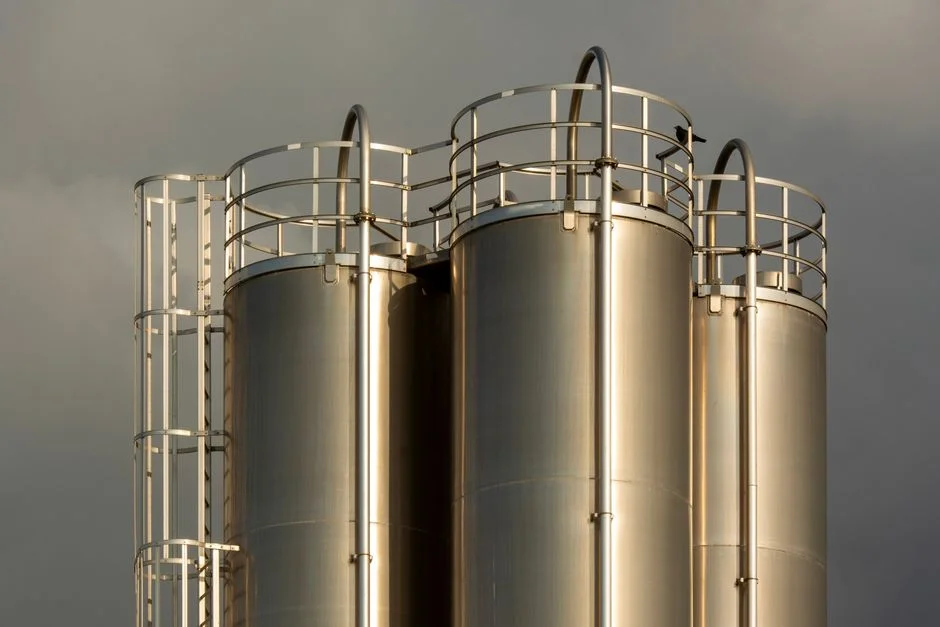
A comparable supplier submission should contain enough engineering information for the buyer to verify process fit, installation scope and acceptance obligations. Require a site survey, process description, P&ID, equipment list, duty tables, utilities demand, control philosophy, O&M plan, foundation requirements and installation schedule.
Ask for a contaminant-by-contaminant treatment table. Every constituent identified during source sampling should have an assigned unit operation, expected removal mechanism, monitored parameter and relationship to the intended final-use quality. The table should also disclose constituents with no removal step rather than silently omitting them.
FAT and SAT protocols should define the test medium or actual wastewater, sampling points, instruments, operating period, laboratory methods, acceptance criteria and remedies for failed tests. A supplier’s generic statement that “the system will meet specification” is not an acceptance criterion.
For operating risk, request membrane or media replacement intervals, spare-parts availability, remote-support boundaries, operator-training scope, maintenance intervals and consumables pricing. Also ask how the supplier will handle sludge from DAF, clarifiers or biological treatment. HydropureWater’s plate-and-frame filter presses provide filtration areas from 1 m² to 500 m² for solid–liquid separation, but the selected arrangement must match the solids volume and dewatering objective.
Compare lifecycle cost rather than equipment price alone. Request separate figures for equipment, installation, power, chemicals, membranes or media, sludge handling, operator time, maintenance and monitoring. Support and spare-parts terms should also be tied to treatment parts, valves and filter media availability.
Where quotations remain on different bases, ask each supplier to state exclusions, assumptions and customer responsibilities in the same schedule. That creates a fairer comparison and exposes risks that may otherwise appear later as change orders.
Plan for Commissioning, Operation and Compliance Evidence
Acceptance should test whether the installed train works on the actual wastewater, not merely whether the equipment starts. Define pre-start inspections, flushing, instrument calibration, leak testing, membrane or media conditioning, control-logic validation and operator familiarization before acceptance.
Agree sampling frequencies, laboratory methods, responsible parties, reporting format and non-compliance response protocols before contract signature. The same protocol should apply during FAT, SAT and stable operation so results can be compared. The Abobo-to-Vridi collector study by GSC Advanced Research and Reviews (2026) reinforces the need for explicit receiving-environment evidence, but its results must not be converted into project-specific limits.
Specify safeguards for bypass, power failure, high-level conditions, chemical dosing and alarms, particularly where the plant supports continuous production. Ask how a bypass is prevented, how loss of power affects membrane and chemical systems, and which events require immediate shutdown. High-level and dosing interlocks should be shown in the control philosophy and tested during commissioning.
For streams with organisms of concern, assess whether UV is appropriate alongside or instead of chemical disinfection. The specified UV sterilizer is chemical-free and configured for pipeline, open-channel and outdoor installation. Its suitability still depends on UV transmittance, flow, installation conditions and the required microbial outcome.
Where a small site needs a compact buried route, the WSZ system integrates anoxic and aerobic contact oxidation, sedimentation and disinfection. Its catalog description gives a capacity of 1–80 m³/h and states that no operator is required, but the buyer should verify the site conditions, routine maintenance access, utilities and disposal arrangements.
Schedule preventive maintenance and operator training before handover. Assign routine tasks, spare parts, reporting responsibilities and performance-review dates clearly. This turns commissioning into the start of an evidence-based operating regime rather than a one-time handover event.
Frequently Asked Questions
How much should an effluent treatment plant in Abidjan cost?
The supplied research does not establish a defensible universal price for an effluent treatment plant in Abidjan. Request a quote after defining design flow, wastewater analysis, treatment process, installation conditions, utilities, controls, sludge handling and FAT/SAT scope. Compare quotations on the same lifecycle-cost template so purchase price, installation, power, chemicals, membranes or media, operator time, maintenance and monitoring remain visible.
What is the best ETP technology for an Abidjan factory?
There is no universal best technology. DAF fits streams dominated by FOG, oil, grease and suspended solids; MBR combines biological treatment with fine solids separation; UF provides chemical-free physical membrane filtration; and RO supports purified permeate where the reuse objective justifies additional pretreatment and energy use. The decision must follow source characterization and the intended discharge or reuse point. The ETP procurement guide provides a useful structure for that comparison.
How do I size an ETP in Abidjan?
Give suppliers measured average and peak flows, batch and discharge patterns, wastewater characteristics, operating hours, minimum flow, future expansion and the final-use target. Ask each bidder to state the design flow and operating envelope, then check the proposed equipment against its catalog range and the project’s hydraulic and load calculations. A signed guarantee on the actual wastewater remains necessary. Further process context is available in the industrial ETP and DAF guide for factories.
Which documents should I request from an ETP supplier?
Request the wastewater analysis, process basis, P&ID, equipment and utility schedules, FAT/SAT protocol, performance guarantees, warranty, O&M manual, training plan, spare-parts list and lifecycle-cost breakdown. Also request the sludge-handling proposal, membrane or media replacement strategy, utilities estimate, control philosophy and installation schedule. If the quotation omits any of these, ask the supplier to state the exclusion and its operational consequence.
Can an Abidjan ETP be designed for water reuse instead of discharge?
Yes, when the intended use and source contaminants support the selected reuse train. MBR can provide biological treatment with membrane separation, while UF can remove bacteria, colloids and suspended solids without chemicals and serve as pretreatment for RO. Nanofiltration can polish suitable wastewater-treatment-plant effluent for agricultural or indirect potable-use objectives, as assessed in the University of Twente thesis Direct nanofiltration of wastewater treatment plant effluent. The final reuse specification and regulatory pathway must be obtained before selecting membranes.