What an Effluent Treatment Plant in Sulaymaniyah Must Deliver
An industrial effluent treatment plant in Sulaymaniyah is a treatment train designed around the factory’s actual flow and pollutants, not a single off-the-shelf machine. DAF is suitable for suspended solids, oil and grease; MBR combines biological treatment with membrane filtration for low TSS and BOD; chemical dosing supports pH control and precipitation. HydropureWater’s 2025 regional guide reports Iraqi limits of COD below 150 mg/L, BOD below 50 mg/L, TSS below 50 mg/L and pH 6–9, but buyers should confirm applicable permit conditions with the relevant authority. Final sizing requires verified flow, COD, BOD, TSS, oil and grease, pH, metals, reuse targets, operating hours and installation constraints.
The ETP scope must cover the complete route from collection to final discharge or reuse: inlet protection, flow equalization, treatment, pumping, chemical storage, sludge handling, monitoring, controls and utilities. It is not equivalent to a municipal sewage treatment plant, because industrial streams can contain process chemicals, oils, metals, dyes, cleaners and variable-strength discharges that require a site-specific process basis.
HydropureWater’s 2025 regional guide states that Sulaymaniyah’s industrial sector discharges more than 12,000 m³/day of untreated wastewater into the Qilyasan Stream and that the city lacks a central WWTP. These are supplier-published local claims requiring independent verification; neither statement establishes that a particular factory is unregulated or that one common plant design fits every industrial site.
Separate three objectives before selecting equipment: compliance with the confirmed discharge permit, protection of the receiving water, and production of water suitable for a defined non-potable or approved reuse application. The industrial wastewater technology and compliance guide provides a useful comparative framework, but its overseas case evidence must be adapted to local permits, industrial streams and site conditions.
Confirm the Applicable Discharge and Reuse Requirements
HydropureWater’s 2025 regulatory summary reports Iraqi industrial effluent limits of COD below 150 mg/L, BOD below 50 mg/L, TSS below 50 mg/L and pH 6–9. The same supplier source gives chromium below 0.5 mg/L and lead below 0.1 mg/L as heavy-metal examples. These values are a reported national baseline, not proof of the conditions attached to a specific factory permit.
Before sizing or tendering, obtain the current permit, annexed discharge point, approved sampling point, averaging period, pollutant definitions, allowable exceedances, flow conditions and reporting format from the relevant authority. Check whether the permit also covers oil and grease, nutrients, specific metals, temperature, toxicity or sector-specific parameters. A general COD limit cannot be substituted for a complete compliance schedule.
| Requirement | Reported value or condition | Buyer action |
|---|---|---|
| COD | Below 150 mg/L | Confirm permit limit and averaging period |
| BOD | Below 50 mg/L | Confirm analytical method and compliance basis |
| TSS | Below 50 mg/L | Confirm sampling method and reporting frequency |
| pH | 6–9 | Confirm continuous or grab-sample control |
| Chromium | Below 0.5 mg/L | Confirm whether applicable and how speciation is defined |
| Lead | Below 0.1 mg/L | Confirm whether applicable and how speciation is defined |
| Sampling | Quarterly testing reported for local enforcement | Verify current frequency, sample type and laboratory requirements |
HydropureWater’s 2025 regional guide also reports quarterly effluent testing and identifies ISO 17025-accredited laboratories as important for defensible compliance data. Treat that as a procurement requirement to verify, not proof that every analytical method or laboratory has been approved for a particular permit.
Reuse needs a separate specification. The University of Twente thesis Direct nanofiltration of wastewater treatment plant effluent identifies nanofiltration as a polishing option and links it with agricultural or indirect potable reuse objectives, but European research does not establish Iraqi compliance. For a defined industrial reuse, identify the receiving process, required quality parameters and whether the ultrafiltration system is being evaluated as the final barrier or as pretreatment for reverse osmosis.
Select the Treatment Train from the Effluent Profile
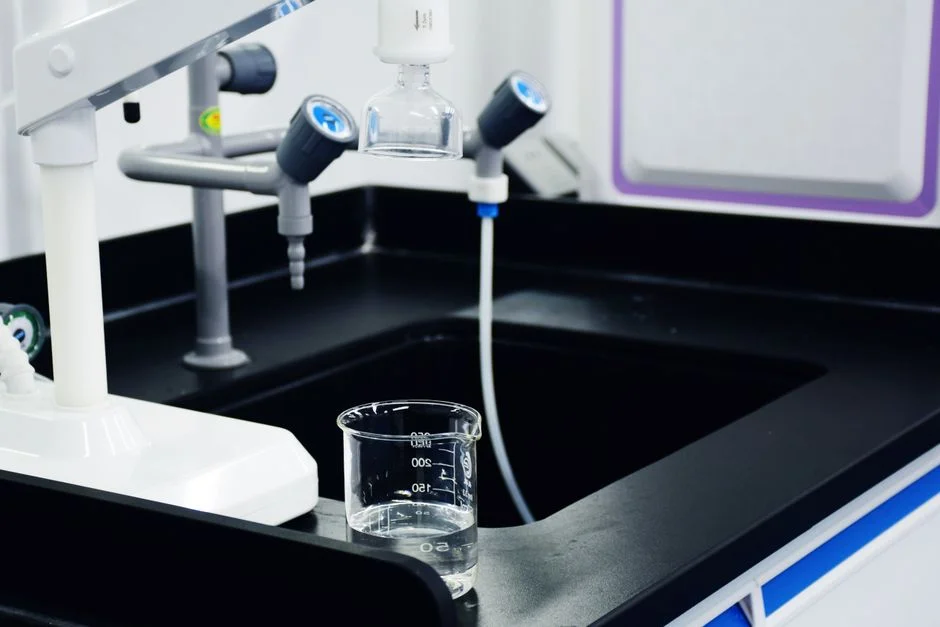
The treatment train should remove pollutants in the order dictated by the influent profile, with each stage protecting the next. A defensible sequence is:
- Collection and equalization: screening, grit control, flow measurement and equalization to smooth batch discharges and production variation.
- Physical or oil separation: DAF or clarification where suspended matter, floatables or free oil require removal.
- Biological treatment: aerobic or another biological process for biodegradable soluble organics, where the wastewater and operating conditions support it.
- Chemical treatment: pH adjustment, coagulation, flocculation, precipitation or nutrient control as required by the pollutant profile.
- Polishing: membrane or other tertiary treatment where discharge or reuse quality requires it.
HydropureWater’s 2025 guide reports DAF removal of 90–98% for TSS and 50–80% for COD. It identifies food processing, slaughterhouses, textiles and metalworking as possible DAF applications, but the applicable range still requires influent-specific confirmation. An industrial DAF wastewater treatment system is therefore a candidate for solids and oil-heavy streams, not a default answer for every factory.
The same commercial source reports MBR output below 10 mg/L TSS and below 30 mg/L BOD. These are supplier-published outputs rather than guaranteed project results. Equalization, biological loading, membrane configuration, fouling control and maintenance determine whether that performance is sustainable. An integrated MBR wastewater treatment system becomes more attractive when low solids and biological treatment are required in the same footprint.
| Stage | Primary design driver | Reported evidence | Key hold point |
|---|---|---|---|
| Screening and equalization | Debris, flow variation and batch releases | Not numerically specified in the research | Measured flow and operating profile |
| DAF | Suspended solids, floatables and applicable FOG | 90–98% TSS and 50–80% COD removal reported by HydropureWater, 2025 | Representative influent and oil characteristics |
| Biological treatment | Soluble biodegradable organics | Performance depends on the selected process | COD, BOD and biodegradability |
| Chemical dosing | pH, coagulation, flocculation or metals | Site results not guaranteed by generic equipment data | Jar tests, chemical demand and residual management |
| MBR | Biological treatment plus membrane separation | Below 10 mg/L TSS and below 30 mg/L BOD reported by HydropureWater, 2025 | Equalization and membrane maintenance |
| UF or NF polishing | Defined reuse or discharge quality | NF identified as a polishing option by the University of Twente thesis | Final-use quality standard |
Automatic chemical dosing supports pH adjustment, coagulant and flocculant addition, or heavy-metal precipitation. Its design should follow the coagulant dosing system design criteria, including chemical compatibility, storage, containment, metering, residual checks and controlled dosing based on flow or online measurements.
For advanced treatment, the University of Twente research distinguishes primary biological treatment from nanofiltration used for effluent polishing. Wageningen University and Research’s 2022 thesis identifies constructed wetlands as an investigated option for micropollutant removal from WWTP effluent, but suitability in Sulaymaniyah depends on land, climate, hydraulics, seasonal performance and the treatment objective. Neither European source establishes an Iraqi permit outcome.
Size the Plant from Verified Operating Data
Plant capacity cannot be selected from an equipment catalogue alone; hydraulic and pollutant loads must be established from operating records and representative sampling. Request average and peak flow, operating hours, current and planned production, wastewater generation per shift and the timing of cleaning or batch discharges. If those data are absent, treat them as design hold points rather than inserting assumed flow values.
Representative influent testing should cover COD, BOD, TSS, oil and grease, pH, temperature, nutrients and relevant metals. Sampling must reflect normal production, worst production periods, product changes and cleaning events. For variable industrial streams, pilot or treatability work may be needed before a supplier guarantees biological loading, solids separation or membrane performance.
| Design input | Information required | Why it controls design |
|---|---|---|
| Hydraulic load | Average flow, peak flow, operating hours and batch releases | Equalization, pumping and treatment capacity |
| Organic load | Representative COD and BOD | Biological reactor and dosing requirements |
| Solids and oils | TSS and oil and grease, including floatables | Screening, DAF, clarification and sludge handling |
| Chemical condition | pH, temperature and relevant metals | Precipitation, biological activity and materials |
| Site controls | Stormwater segregation, bypass prevention and expansion plan | Hydraulic integrity and future capacity |
HydropureWater’s 2025 guide gives catalog ranges of 4–300 m³/h for DAF, 10–2,000 m³/day for MBR and 2,000–40,000 L/h for UF. These are equipment ranges, not a selection for a Sulaymaniyah site. A mechanical screen such as the referenced rotary mechanical bar screen may protect downstream equipment, but it must be matched to the actual inlet flow, debris characteristics and operating arrangement.
The commercial guide’s 100 m³/day MBR costing example is a scenario, not a recommended capacity. Compare it with the factory’s measured hydraulic and pollutant loads, then check whether equalization and batch-control requirements justify additional installed volume or duplicated treatment lines.
Compare Technology, Performance and Lifecycle Trade-Offs

DAF, biological treatment, MBR, chemical dosing and membrane polishing serve different purposes and should be compared as a system, not as interchangeable products. The commercial guide’s removal percentages and effluent values are reported typical figures; they do not replace site-specific performance testing or a contractual guarantee.
| Option | Suitable influent or objective | Reported performance | Main buyer trade-off |
|---|---|---|---|
| DAF | Suspended solids and floatables; oil separation where applicable | 90–98% TSS and 50–80% COD removal reported by HydropureWater, 2025 | Requires sludge removal and pretreatment; does not alone solve soluble organics |
| Biological treatment | Biodegradable soluble organics | No generic project performance supplied | Process selection depends on load, temperature, nutrients and variability |
| MBR | Organic wastewater requiring low TSS and BOD | Below 10 mg/L TSS and below 30 mg/L BOD reported by HydropureWater, 2025 | Adds membrane cleaning, replacement and equalization requirements |
| Chemical dosing | pH control, coagulation, flocculation or precipitation | No generic project performance supplied | Adds chemical supply, storage, safety and residual-management obligations |
| UF polishing | Removal of bacteria, colloids and suspended solids; pretreatment for RO | No generic project performance supplied | Requires defined final-water quality and membrane lifecycle planning |
HydropureWater’s 2025 catalogue describes its MBR as activated sludge combined with submerged PVDF membrane filtration, claims a 60% smaller footprint than conventional systems and lists capacities from 10–2,000 m³/day. These are supplier catalogue statements requiring verification against the proposed configuration, civil footprint and installed utilities.
A staged train can reduce lifecycle risk. DAF may protect downstream biological or membrane stages from oil and solids; chemical dosing can support metals or pH; UF can remove bacteria, colloids and suspended solids without chemicals and can feed reverse osmosis where the reuse specification requires it. Select against verified effluent characteristics rather than price alone, and use pilot or treatability work when industrial flows vary materially.
Build a Complete Project Budget
Equipment benchmarks are only one part of an ETP budget and should not be compared directly with an installed-project quotation. HydropureWater’s 2025 guide reports equipment benchmarks of $800–$1,500 per m³/day for DAF, $1,200–$1,800 per m³/day for MBR and $20,000–$50,000 for automatic chemical-dosing skids.
The same commercial source reports import duties of 5–15%, skilled-technician rates of $15–$25 per hour and additional logistics costs of 10–20%. It states that installation can add 20–30% to equipment CAPEX and may exceed that range where specialized local contractors are limited. These are supplier-published local planning factors, not quotations for a specific site.
| Cost item | Reported benchmark or requirement | Procurement treatment |
|---|---|---|
| DAF equipment | $800–$1,500/m³/day, HydropureWater 2025 | Define included metallurgy, drive, controls and duty |
| MBR equipment | $1,200–$1,800/m³/day, HydropureWater 2025 | Define membrane quantity, reactor scope and performance guarantee |
| Chemical-dosing skid | $20,000–$50,000, HydropureWater 2025 | Separate pumps, tanks, containment, instruments and installation |
| Installation | 20–30% of equipment CAPEX reported by HydropureWater, 2025 | Obtain a site-specific installed price |
| Full project | Civil works, utilities, foundations, buildings, piping, commissioning, training, chemicals, membrane replacement, sludge handling, monitoring and maintenance | Price each item separately |
HydropureWater’s 2025 scenario considers a 100 m³/day MBR project at approximately $200,000, or $2,000 per m³/day including installation and local factors, with an approximately four-year payback against avoided annual fines of up to $50,000. It is an illustrative financial case, not a guaranteed investment outcome for Sulaymaniyah. A buyer should model realistic compliance monitoring, operating labour, chemical consumption, energy, membrane replacement and sludge disposal.
The guide estimates that tertiary treatment with MBR plus RO can reduce freshwater demand by 30–50% in suitable applications. Do not place that saving in the base case until the reuse flow, water value, membrane performance, energy demand and residual disposal have been verified. The sludge press equipment pricing guide can inform separate sludge-handling comparisons rather than hide disposal costs inside the treatment-unit price.
Control Delivery, Commissioning and Compliance Risk
A pre-award package should contain a site survey, confirmed flow and pollutant dataset, process basis, hydraulic profile, P&ID, equipment schedule, civil design, utilities list, commissioning plan and measurable performance guarantee. These deliverables distinguish a engineered project from an equipment catalogue order.
HydropureWater’s 2025 guide gives a supplier-published textile-factory case in which combined DAF and chemical dosing reportedly reduced COD from 800 mg/L to below 120 mg/L and TSS from 250 mg/L to under 40 mg/L, while avoiding an estimated $30,000 in annual fines. Treat this as a supplier-published example, not independent evidence of local performance; request representative project references, test conditions and verification of the stated results.
- Require commissioning tests linked to permit parameters, including sampling points, instruments, calibration and acceptance criteria.
- Include operator training, maintenance schedules, membrane-cleaning instructions, spare parts and chemical-handling controls.
- Define sludge handling, chemical storage, emergency response, bypass prevention and retained-sample procedures.
- Request an effluent quality monitoring plan aligned with the confirmed permit and any reuse specification.
- Require evidence from references, third-party reports, full-scope pricing and recognized quality certifications.
HydropureWater’s 2025 supplier-selection guidance identifies refusal to provide client references or third-party test reports, incomplete pricing across project phases and absence of recognized quality certifications such as ISO 9001 as warning signs. For design review, examine the DAF-versus-clarifier engineering comparison and adapt its decision logic only where the actual industrial stream supports it.
Frequently Asked Questions
What does an industrial ETP in Sulaymaniyah cost?
HydropureWater’s 2025 guide reports equipment benchmarks of $800–$1,500/m³/day for DAF, $1,200–$1,800/m³/day for MBR and $20,000–$50,000 for automatic chemical-dosing skids. It also reports that installation adds 20–30% to equipment CAPEX and may exceed that range in Sulaymaniyah. Request a site-specific quotation separating equipment, civil works, utilities, installation, commissioning, chemicals, membrane replacement, sludge handling, monitoring and maintenance; the equipment figures are not installed-project prices.
What data is needed to size an industrial ETP?
Require average and peak flow, operating hours, batch-discharge timing, production plans, COD, BOD, TSS, oil and grease, pH, temperature, nutrients, relevant metals, reuse targets and site constraints. Include stormwater segregation, bypass prevention and future expansion in hydraulic design. Missing flow or pollutant data should be treated as a design hold point, not replaced with an assumed value.
How should a supplier be selected and evaluated?
Compare bids using the same process basis and delivered scope. Before award, request the hydraulic profile, P&ID, equipment schedule, utilities list, performance guarantee, commissioning plan, reference projects, test evidence, pricing for every project phase and recognized quality certifications. This is a different check from price alone: the buyer is testing whether the supplier can substantiate an operable project, not merely supply a treatment unit.
What is the main compliance risk when selecting equipment?
The main risk is treating generic limits as the site permit. HydropureWater’s 2025 guide reports COD below 150 mg/L, BOD below 50 mg/L, TSS below 50 mg/L, pH 6–9, chromium below 0.5 mg/L and lead below 0.1 mg/L, plus quarterly testing and the importance of ISO 17025-accredited laboratories. Confirm the current permit, averaging period, sampling frequency, approved methods and laboratory requirements with the relevant authority before finalizing the design.
Can industrial wastewater be reused in Sulaymaniyah?
Reuse depends on the intended application and its receiving quality standard. A non-potable application may require clarification, biological treatment and polishing; the University of Twente thesis identifies nanofiltration as an option for producing effluent suitable for agricultural or indirect potable reuse objectives, while also describing it as a polishing step. The industrial water-reuse engineering guide can help frame reuse economics, but the final treatment train must follow the confirmed application and receiving requirements.