Why Regional Analysis Now Matters for Industrial Water Reuse in 2026
Global wastewater generation reached 359.4 billion m³ per year against intentional reuse of only 40.7 billion m³, leaving a structural addressable gap of roughly 319 billion m³ that is now redirecting capital into reuse infrastructure (source: Strategic Market Research, 2025). The same analyst cohort values the water recycle and reuse market at USD 24.5B in 2025, scaling to USD 54.6B by 2032 at a 12.3% CAGR, with the industrial segment leading capex allocation because industrial users can underwrite reuse with a single off-take contract. In 2022, 42% of household wastewater (about 113 billion m³) was not safely treated, and that unsafely treated volume defines the upgrade pipeline that feeds higher-value reuse projects once primary treatment is in place.
For B2B procurement teams, the implication is that global headlines under-specify the problem. Two plants in the same industry — a textile mill in Tirupur and a refinery in Jubail — face different regulatory drivers, different feed-water qualities, and different dominant treatment trains, so equipment selection cannot be templated from a single global number. Industrial reuse is defined here as the treatment of process-derived wastewater (cooling tower blowdown, RO reject, rinse water, dye bath effluent, semiconductor backgrind wash, etc.) to a fit-for-purpose quality for the same site, a sister facility, or a non-potable off-taker, and it is distinct from municipal reuse, which moves sewage plant effluent to irrigation, groundwater recharge, or indirect potable use.
North America: EPA Water Reuse Action Plan 2.0 Anchors Industrial Demand
EPA released the Water Reuse Action Plan 2.0 on April 16, 2026, codifying federal priorities on fit-for-purpose treatment, integrated water resource management, and accelerated industrial reuse funding (per EPA Water Reuse program page, 2026-04). State-level regulators layer a patchwork of fit-for-purpose standards on top of WRAP 2.0: Vermont DEC's graywater rules, Oklahoma DEQ's 2012 groundwater recharge regulations, and Florida DEP's tiered reclaimed-water treatment requirements each set different log-removal targets depending on end use. The combined federal-plus-state push is the single largest industrial reuse driver in the Western Hemisphere, and it channels capex into a recognizable treatment train.
Industrial end uses in the region center on cooling tower make-up (typically 50–200 mg/L TDS target), boiler feed (sub-10 μS/cm), data center cooling, semiconductor process water, and indirect potable reuse via groundwater recharge. The dominant treatment train is DAF pre-treatment → MBR → RO polishing → UV or ClO2 disinfection, with a growing sidestream ZLD loop for concentrate management where discharge TDS caps are tight. Operators increasingly specify a DAF pre-treatment system for reuse feed to drop oil and TSS before MBR, and a reverse osmosis system for reuse polishing as the workhorse for conductivity reduction. The 2026 WateReuse Industrial Water Solutions conference, scheduled for June 8–10 in Chicago, signals continued capex momentum across this stack. Regional sub-markets vary in compliance intensity: Ohio's industrial discharge rules and Connecticut's strict industrial pretreatment program both push plants toward MBR + RO rather than conventional clarification, as detailed in the Ohio industrial wastewater compliance guide and the Connecticut industrial compliance guide.
| Parameter | Typical North America Industrial Reuse Spec (2026) |
|---|---|
| Pre-treatment | DAF, 10–30 mg/L residual oil & TSS target |
| Biological stage | MBR membrane bioreactor, MLSS 8,000–12,000 mg/L, flux 15–25 LMH |
| Membrane polishing | RO, 75–85% recovery, permeate TDS <50 mg/L for cooling |
| Disinfection | UV (40 mJ/cm²) or ClO2 generator at 0.5–1.0 mg/L residual |
| Concentrate handling | Sidestream brine concentrator or ZLD when discharge TDS <500 mg/L |
Middle East & North Africa: ZLD Mandates and the RO + Crystallizer Stack
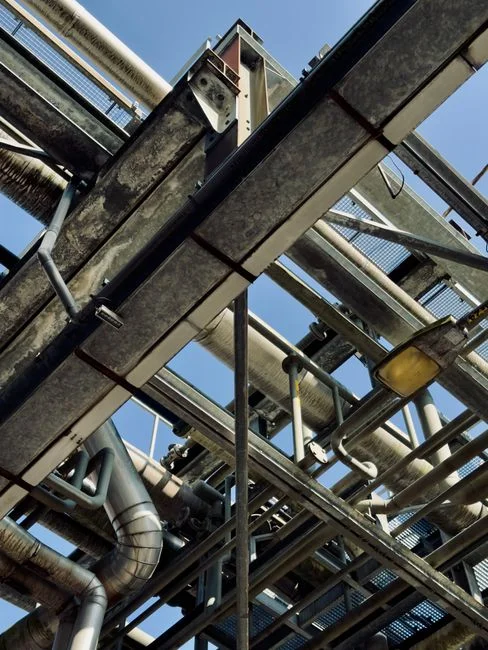
Industrial reuse in MENA is fundamentally a Zero Liquid Discharge story, anchored by UAE Federal Authority for Identity & Citizenship industrial discharge frameworks and parallel Saudi, Omani, and Egyptian regulations that prohibit liquid brine release from oil & gas, power, and desalination co-located sites. The dominant end uses are cooling tower make-up in power and desalination complexes (which can run 5,000–50,000 m³/day per site), boiler feed in oil & gas, district cooling loops, and construction/dust suppression water. Sharjah's industrial estate and Egypt's petrochemical clusters are representative sub-markets for the regional equipment demand (see the Sharjah wastewater treatment manufacturer guide) and the broader UAE industrial discharge compliance guide.
The standard treatment train is DAF → UF → RO → brine concentrator → crystallizer, with thermal or mechanical vapor recompression (MVR) driving the brine concentrator duty. Capex intensity runs 30–50% higher than comparable non-ZLD flows because the crystallizer is the train's bottleneck and dictates hydraulic and thermal sizing. Brine disposal cost in the region typically exceeds USD 5–15 per m³, which is the underlying ROI case for water recovery before concentration. A pre-treatment multi-media filter for RO feed protection is standard to keep silt density index below 3, and an industrial RO system for reuse polishing typically runs at 70–80% recovery before the brine concentrator raises TDS to 200,000–250,000 mg/L for crystallization.
| Parameter | Typical MENA ZLD Reuse Spec (2026) |
|---|---|
| Pre-treatment | DAF + MMF, SDI <3 to RO |
| UF stage | Hollow-fiber UF, 0.01–0.05 μm nominal, flux 40–60 LMH |
| RO | 2-pass brackish or single-pass high-pressure SWRO, recovery 70–80% |
| Brine concentrator | MVR or TVR, distillate 95–99% water recovery on liquid side |
| Crystallizer | Forced-circulation, 99.9% total dissolved solids removal from liquid effluent |
India & South Asia: Closing the 40,527 MLD Treatment-Capacity Gap
India's urban sewage generation reached 72,368 MLD against installed treatment capacity of only 31,841 MLD, leaving a 40,527 MLD structural gap that is the single largest reuse driver in the region (per Strategic Market Research, 2025). Industrial reuse end uses cluster around textile dyeing process water (where reuse reduces freshwater draw by 40–60%), pharmaceutical effluent recovery, food and beverage cleaning loops, and township-level reuse for cooling and gardening. The dominant treatment train is screening → equalization → MBBR or MBR → UF → optional RO → ClO2 or ozone disinfection, with frequent upgrades from MBBR to MBR where plants need reuse-ready effluent within a constrained footprint. An MBR achieves a roughly 60% smaller footprint than conventional activated sludge at comparable BOD load, which is the key procurement argument in dense industrial estates.
CPCB and state Pollution Control Board consents drive fit-for-purpose standards, with consent conditions typically requiring tertiary treatment and reuse for any discharge above 100 KLD. Karnataka is a representative industrial sub-market, with Bengaluru's electronics and pharma clusters pushing plants toward packaged MBR + UF skids, as detailed in the Karnataka industrial wastewater engineering guide. Procurement teams should specify a flat-sheet MBR membrane module where shock loads are common, since flat-sheet geometry tolerates higher TSS excursions than hollow-fiber MBR. A ClO2 disinfection generator for reuse water is typically specified for reuse loops because ClO2 maintains residual across long distribution piping without forming trihalomethanes.
| Parameter | Typical India / South Asia Reuse Spec (2026) |
|---|---|
| Pre-treatment | Screening + equalization, HRT 6–8 h |
| Biological stage | MBBR (carrier fill 30–40%) or flat-sheet MBR module |
| Tertiary | UF, 0.01–0.05 μm, designed for TSS <1 mg/L |
| Optional RO | When TDS target <500 mg/L for boiler or process reuse |
| Disinfection | ClO2 0.5–1.0 mg/L or ozone 2–5 mg/L with 5–10 min contact |
Greater China & East Asia: Semiconductor and Battery-Fab Reuse Demand
Greater China's industrial reuse is anchored to fab water demand: semiconductor process water targeting 18.2 MΩ·cm ultrapure water (UPW) reuse, display panel rinsing at 1–10 MΩ·cm, lithium-battery cathode washing, and printed circuit board rinsing with copper-bearing concentrate that must be recovered. The dominant treatment train is MBR → UF → two-pass RO → EDI → mixed-bed polishing, with ZLD loops for high-conductivity concentrates from display panel and PCB lines. China's watershed-level Zero Liquid Discharge policies (notably in the Yellow River and Taihu basins) force brine recovery rather than surface discharge, making crystallizer and crystallizer-RO hybrid systems a 2026 procurement priority. The canonical engineering case studies for the region are the PCB wastewater ZLD engineering blueprint and the display panel ZLD engineering blueprint, both of which document 99.9% water and copper recovery with crystallizer finishing.
Energy recovery is now standard at greater than 70% RO recovery to meet dual carbon and water goals: RO turbochargers and isobaric energy recovery devices (ERDs) are specified on every concentrate line above 1,000 m³/day. A MBR membrane bioreactor for industrial water reuse handles the organic load in fab backgrind and CMP wastewater, while the industrial RO system for reuse polishing does the bulk conductivity reduction before EDI. Conductivity targets typically drop below 0.1 μS/cm at the mixed-bed outlet, which forces two-pass RO plus EDI as the default 2026 specification rather than the single-pass RO common in 2018–2022 designs.
| Parameter | Typical Greater China UPW / Display Reuse Spec (2026) |
|---|---|
| Biological stage | MBR, MLSS 10,000–14,000 mg/L, designed for COD <50 mg/L effluent |
| UF | 0.02 μm, designed for SDI <2 to RO |
| RO | Two-pass, recovery 70–80%, permeate TDS <5 mg/L |
| Polishing | EDI + mixed-bed, conductivity <0.1 μS/cm, resistivity >15 MΩ·cm |
| ZLD | Crystallizer on fab concentrate, 99.9% water recovery, Cu/Ni salt recovery upstream |
Matching Treatment Trains to Regional Drivers: A 2026 Decision Matrix
Translating the regional analysis into a concrete equipment-selection decision requires four axes: regulatory driver (reuse mandate versus discharge limit), feed-water quality (BOD, COD, TDS, SS), required end-use water quality, and footprint or power constraints. Industrial cooling and boiler feed in the US and EU map to MBR + RO polishing at 75–85% recovery. ZLD-mandated Middle East sites map to UF + RO + crystallizer, with ≥95% liquid-side recovery. Textile and pharmaceutical reuse in India and South Asia maps to MBBR or MBR + UF at 90–95% recovery, with optional RO for high-purity off-takers. Semiconductor and battery fab reuse in China and East Asia maps to MBR + UF + two-pass RO + EDI or UPW polishing, at 70–80% recovery with strict conductivity targets.
| Region | Driver | Dominant Train | Recovery | Capex Intensity (Index, NA = 1.0) |
|---|---|---|---|---|
| North America | WRAP 2.0 + state fit-for-purpose | DAF → MBR → RO → UV/ClO2 | 75–85% | 1.0 (baseline) |
| MENA | ZLD mandate | DAF → UF → RO → brine concentrator → crystallizer | ≥95% liquid | 1.3–1.5 |
| India / South Asia | 40,527 MLD treatment gap | MBBR/MBR → UF → (optional RO) → ClO2 | 90–95% | 0.7–0.9 |
| Greater China / East Asia | UPW reuse + watershed ZLD | MBR → UF → 2-pass RO → EDI → ZLD on concentrate | 70–80% on RO, 99.9% on ZLD loop | 1.2–1.4 |
2026–2028 Regional Outlook and Engineering Implications
North America is on a stable 8–10% annual growth trajectory for industrial reuse capex, driven by WRAP 2.0 implementation grants and state-level fit-for-purpose rule-making. MENA shows double-digit growth concentrated in ZLD retrofits at existing power and desalination plants rather than greenfield builds, with EPC scope weighted toward crystallizer and brine concentrator packages. India posts the highest absolute capex growth (above 15% CAGR) but at a lower per-project intensity, which favors modular packaged plants that can be containerized and commissioned inside 8–12 weeks. Greater China is technology-led, with 12% CAGR through 2028 concentrated in UPW reuse and high-recovery RO + EDR systems.
Each growth pattern maps to a distinct equipment portfolio: packaged MBR and MBBR skids for India, RO + UF + ZLD skids for MENA, RO polishing and ClO2 disinfection packages for North America, and full UPW trains including two-pass RO, EDI, and crystallizer finishing for Greater China fabs. Procurement timing should match each region's grant and consent cycles — Q3/Q4 2026 for North American WRAP-funded projects, Q1 2027 for MENA retrofit tenders, and continuous rolling bid cycles for Indian packaged plants.
Frequently Asked Questions
Which four regions dominate industrial water reuse capex in 2026?
North America, MENA, India / South Asia, and Greater China / East Asia, each with a distinct regulatory driver: EPA WRAP 2.0 (released April 16, 2026), MENA ZLD mandates, India's 40,527 MLD treatment-capacity gap, and China's watershed-level ZLD plus semiconductor fab demand. The global market is growing at a 12.3% CAGR through 2032 (per Strategic Market Research, 2025).
What is the dominant treatment train for US industrial reuse in 2026?
DAF pre-treatment followed by MBR, RO polishing at 75–85% recovery, and UV or ClO2 disinfection, with sidestream ZLD added where concentrate disposal is constrained. This stack handles cooling tower make-up, boiler feed, and data center cooling use cases.
Why is MENA industrial reuse a ZLD story rather than a reuse-permit story?
Because UAE, Saudi, Omani, and Egyptian regulators prohibit liquid brine release from oil & gas, power, and desalination co-located sites. The standard train is DAF → UF → RO → brine concentrator → crystallizer, with liquid-side recovery ≥95% and total capex 30–50% higher than non-ZLD flows.
What feed-water profile matches the India / South Asia treatment train?
Municipal + industrial hybrid feed with BOD 200–500 mg/L, COD 400–1,000 mg/L, and TDS 800–2,500 mg/L, typically addressed with MBBR or MBR for organics removal, UF for TSS polishing, and optional RO when the off-taker requires TDS below 500 mg/L. MBR achieves a 60% smaller footprint than conventional activated sludge at comparable load.
Which 2026 conference is the main North American industrial reuse meeting?
The WateReuse Industrial Water Solutions conference, scheduled for June 8–10, 2026 in Chicago, co-hosted with the Water Environment Federation. It is the principal venue for capex planning around WRAP 2.0 implementation.