Connecticut's 2026 Regulatory Landscape for Industrial Wastewater
Connecticut DEEP's Industrial Wastewater Program regulates wastewater from commercial and industrial activity to protect state waters, administering both individual permits and general permits for facilities that generate, treat, or discharge industrial wastewater (per CT DEEP Industrial Wastewater page). A 2026 facility in CT must first pick one of three legally distinct discharge paths, because the permit, the engineering review, and the CAPEX profile all change with that decision.
The three destinations are: sanitary sewer to a publicly owned treatment works (POTW), which requires a local pretreatment permit; surface water, which falls under an EPA-delegated NPDES program that CT DEEP administers; and land application or groundwater discharge, handled through separate CT DEEP general permits such as the D2R General Permit for Dewatering and Remediation Wastewaters and the National Pollutant Discharge Elimination System & State General Permit for the Discharge of Swimming Pool Wastewater to Surface and Ground Waters (per CT DEEP Industrial Wastewater page). The D2R permit in particular is a common 2026 pathway for construction dewatering and remediation flows that don't fit a categorical industrial permit.
CT holds EPA-delegated NPDES authority, so federal effluent guidelines under 40 CFR and CT-specific limits both apply in 2026, and applicants file through the DEEP Permits and Licenses page (per CT DEEP Industrial Wastewater page). General permits carry 30–60 day coverage timelines; individual permits typically run 90–180 days for review. The same 2026 permit framework that governs paper mills (see the 2026 paper mill wastewater discharge standard guide for a parameter-by-parameter walkthrough) applies to metal finishing, food and beverage, and pharma sites — only the sector-specific effluent limitation guideline (ELG) under 40 CFR changes.
| Discharge Path | CT DEEP Mechanism | Typical 2026 Review Window | Who Sets Limits |
|---|---|---|---|
| POTW (sanitary sewer) | Local pretreatment permit / WPCA permit | 30–90 days | Receiving Water Pollution Control Authority |
| Surface water | Individual or General NPDES (CT DEEP) | 90–180 days individual; 30–60 days general | CT DEEP + federal ELG (40 CFR) |
| Groundwater / land | CT DEEP D2R or sector-specific general permit | 30–60 days | CT DEEP site-specific limits |
Matching Your Influent to a 2026 Process Train
Process selection in 2026 starts with the parameters CT DEEP and EPA actually enforce: flow (m³/day), pH, TSS, BOD5, COD, oil & grease, total metals (Cu, Ni, Cr, Zn, Pb), total nitrogen, and total phosphorus. The dominant CT sectors map to distinct load profiles that drive equipment choice: metal finishing produces high metals with low BOD, food and beverage generates high BOD/COD and FOG, chemical and pharma sites show high COD with variable pH and solvent traces, electronics and PCB operations release complexed metals and fluoride, and printing brings inks and dyes. Treat the load profile as the input to a parameter-driven decision — the same logic the ESOWT expert system applies when choosing a suitable industrial wastewater technological process (per Youdao dictionary entry for industrial_wastewater_treatment_system).
The typical 2026 CT process train runs equalization → screening → DAF → biological (aerobic/MBR or anaerobic) → tertiary (filtration/RO if reuse) → disinfection (ClO2 or UV). Equalization buffers the slug loads that knock out biological units; screening protects downstream pumps and membranes; DAF strips FOG, oil, and colloidal solids before they foul the biology; the biological stage does the carbon and ammonia reduction; tertiary polishing hits metals and residual TSS; disinfection delivers the final CT DEEP effluent target. For high-strength food and beverage streams in CT, anaerobic systems remain a defensible option, with reported organic loading rates of 54–3,000 lb BOD5/acre-day documented in the Industrial Waste Treatment Handbook (per doc88.com excerpt).
Pair the train to the load: a metal-finishing shop in Hartford with copper and nickel at 50–200 mg/L and BOD5 under 500 mg/L typically needs DAF + precipitation + MBR + ClO2, while a Bristol dairy with BOD5 above 5,000 mg/L and FOG above 1,000 mg/L runs DAF + anaerobic + MBR + ClO2. A New Haven PCB facility sending complexed copper and fluoride to the METRO district sewer needs pH adjustment, precipitation, and a sand/carbon filter before the local WPCA limit, with no MBR required if reuse water isn't a goal. The 2026 design question is not "which technology is best" but "which combination of unit operations hits the enforceable limit at the lowest 20-year lifecycle cost."
DAF, MBR, and ClO2: The Core Equipment Stack for 2026
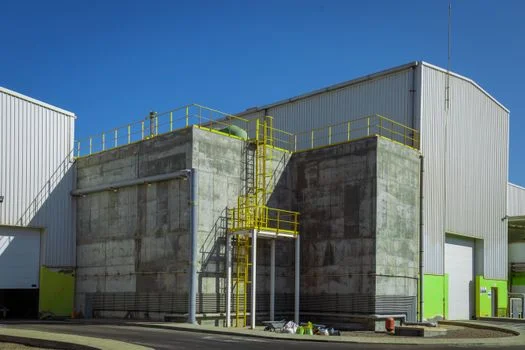
Three equipment families anchor most 2026 CT industrial wastewater treatment plants: a DAF system for FOG and TSS removal, a membrane bioreactor for biological treatment, and a ClO2 generator for terminal disinfection. Selecting them correctly is the difference between a passing DMR and a Notice of Violation.
DAF uses micro-bubble flotation to lift oil, grease, and suspended solids, with 13 standard models covering 4–300 m³/h, making it a fit for both small CT job shops and large food plants (per HydropureWater DAF product page). The MBR uses submerged PVDF membranes at sub-1 μm filtration to deliver near-reuse-quality effluent, with 10–2,000 m³/day capacity and roughly 60% smaller footprint than conventional activated sludge (per MBR membrane bioreactor for biological treatment). The chlorine dioxide generator produces 50–20,000 g/h on-site and meets both EPA and EU Drinking Water Directive 98/83/EC compliance points, which matters where CT DEEP requires disinfection before surface-water discharge (per on-site chlorine dioxide generator for terminal disinfection).
For sites that don't need MBR-grade reuse water, a high-rate lamella clarifier with sludge recirculation at 20–40 m/h surface loading cuts chemical demand by up to 30% versus conventional settling and trims civil costs (per high-efficiency sedimentation tank). Ancillary equipment closes the train: rotary mechanical bar screens (GX series) protect headworks from rags and plastics, and plate-and-frame filter presses dewater the DAF and biological sludge to a 25–35% dry cake for landfill disposal. If you're weighing DAF against a simpler oil-water separator for a small machine shop, the DAF vs. oil-water separator comparison is a useful 2026 reference.
| Unit Operation | 2026 Use Case in CT | Operating Window | Footprint / Footprint Reduction |
|---|---|---|---|
| DAF | FOG, oil, colloidal TSS removal upstream of biology | 4–300 m³/h; surface loading 5–20 m/h | Compact skid; common pre-MBR stage |
| MBR (PVDF) | BOD/TSS/NH3-N reduction; near-reuse effluent | 10–2,000 m³/day; MLSS 8,000–12,000 mg/L | ~60% smaller than CAS |
| Lamella Clarifier | Low-strength sites not requiring MBR reuse | 20–40 m/h surface loading | Up to 30% lower chemical use |
| ClO2 Generator | Terminal disinfection; CT DEEP residual targets | 50–20,000 g/h | Containerized; on-site generation |
2026 CT DEEP and NPDES Effluent Limits by Parameter
The 2026 effluent ceilings a CT industrial facility has to hit depend on discharge path and SIC code, but a defensible engineering target covers BOD5, TSS, COD, oil and grease, total residual chlorine, pH, and — for POTW discharges — fecal coliform or E. coli. Surface-water NPDES permits for CT industrial sites typically enforce BOD5 at 30 mg/L monthly average / 45 mg/L daily max, TSS at 30/45 mg/L, oil and grease at 10–15 mg/L, total residual chlorine at 0.01–0.1 mg/L (depending on receiving water), and pH 6.0–9.0 standard units. POTW pretreatment limits are set locally by the receiving Water Pollution Control Authority and are frequently tighter than state or NPDES limits, especially for metals and pH.
Metal-finishing and electronics sites face the heavy-metal ceiling: copper, nickel, total chromium, zinc, lead, and silver limits are framed as daily-max and monthly-avg pairs under 40 CFR 413 (metal finishing) and 40 CFR 430 (pulp, paper, and paperboard) and other sector ELGs. NPDES Whole Effluent Toxicity (WET) testing applies to many direct discharges, and stormwater-associated industrial requirements trigger separately under the Multi-Sector General Permit for Industrial Activities, depending on SIC code and exposure. The kind of parameter-by-parameter compliance walkthrough an EHS manager needs is illustrated in the 2026 paper mill wastewater discharge standard guide linked above; the structure is identical for a CT plating shop, only the ELG citation changes.
| Parameter | Typical 2026 Surface-Water NPDES Limit | Typical POTW Pretreatment Limit | Common CT Driver |
|---|---|---|---|
| BOD5 | 30 mg/L mo. avg / 45 mg/L daily max | 250–500 mg/L (site-specific) | Food/beverage, chemical, pharma |
| TSS | 30 mg/L mo. avg / 45 mg/L daily max | 200–400 mg/L | All sectors |
| Oil & Grease | 10–15 mg/L | 50–100 mg/L | Metal finishing, food/beverage |
| Total Cu | 0.5–1.0 mg/L (40 CFR 430 family) | 1.0–3.0 mg/L | Electronics, PCB, metal finishing |
| Total Ni | 0.5–1.0 mg/L | 1.0–2.0 mg/L | Metal finishing, battery |
| TRC | 0.01–0.1 mg/L | 0.5–1.0 mg/L | Any chlorinated disinfection |
| pH | 6.0–9.0 SU | 5.0–10.0 SU (often tighter) | All sectors |
Sizing, Footprint, and CAPEX Reality for 2026 CT Projects
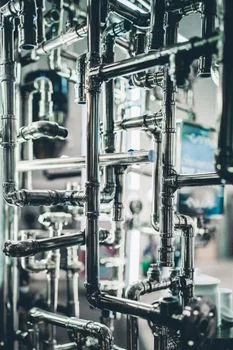
Sizing logic in 2026 starts with flow. Small CT facilities at 1–50 m³/day typically deploy a WSZ underground integrated package plant at 1–80 m³/h, with A/O, sedimentation, and disinfection in a single buried unit that keeps the site footprint usable for production. Mid-size plants at 50–500 m³/day shift to skid-mounted DAF plus MBR; large plants above 500 m³/day use containerized MBR trains. The 60% footprint reduction of MBR versus CAS is the headline justification for space-constrained CT sites, especially older Northeast urban industrial parks where the building envelope already exists and civil expansion is the CAPEX killer (per HydropureWater MBR product page). For OPEX modeling on the DAF stage, the 2026 DAF plant OPEX breakdown walks through chemical, power, and sludge-handling costs that drive the 20-year NPV.
2026 CAPEX for a CT industrial wastewater project typically lands in these bands: process equipment 55–70% of total installed cost, installation and civils 15–25%, instrumentation and automation 8–12%, with CT DEEP permitting and commissioning 5–10%. A PLC-controlled automatic chemical dosing skid is now standard for CT installations needing precise coagulant, flocculant, and pH adjustment tied to PLC-controlled batch treatment. Sludge dewatering closes the mass balance — a plate-and-frame filter press for sludge dewatering at 1–500 m² filtration area lifts cake solids to 25–35% DS, which materially reduces CT landfill disposal tonnage and the per-ton tipping fees that have climbed steadily through 2025.
Permit Timeline, Retrofit vs. Greenfield, and 2026 Procurement Steps
A realistic 2026 CT DEEP permit timeline runs as follows: pre-application meeting at 30–45 days, individual permit review at 90–180 days, general permit coverage at 30–60 days, with construction approval and IPDES-equivalent transfers completing during commissioning. Retrofit and greenfield projects carry different cost and permit implications in CT: a retrofit ties into existing headworks and reuses equalization basins, typically avoiding stormwater separation work; a greenfield needs full civil design, stormwater separation, and a new outfall if the project is a direct-discharge NPDES. For a Connecticut site already on a general permit, the upgrade to MBR often qualifies as a modification with shorter review, while a brand-new direct-discharge line typically requires an individual permit and full antidegradation review.
The 2026 procurement workflow a CT buyer should run: influent characterization (sampling plan + 40 CFR method) → bench or pilot test → P&ID development → CT DEEP pre-application meeting → equipment RFQ with at least three bidders → factory acceptance test at the OEM shop → installation → CT DEEP commissioning sign-off with Discharge Monitoring Report baseline. Request 2026-vintage PLC/SCADA with EPA Method 1694-compatible sampling and remote monitoring, because CT DEEP inspections increasingly look at continuous data, not just grab samples, and a control system without a data historian is a 2026 audit risk.
Frequently Asked Questions
What is the 2026 CT DEEP permit process for industrial wastewater discharge? File through the DEEP Permits and Licenses page; individual NPDES review takes 90–180 days, general permit coverage takes 30–60 days, and a pre-application meeting at 30–45 days is recommended for direct-discharge projects (per CT DEEP Industrial Wastewater page).
What are typical 2026 discharge limits for a CT industrial facility? Surface-water NPDES typically enforces BOD5 30 mg/L monthly average, TSS 30 mg/L monthly average, oil and grease 10–15 mg/L, TRC 0.01–0.1 mg/L, and pH 6.0–9.0 SU, with sector-specific metals limits under 40 CFR 413/430.
Which equipment handles CT metal-finishing or food-and-beverage wastewater in 2026? A DAF + MBR + ClO2 train is the standard 2026 stack; DAF strips FOG and TSS, MBR reduces BOD and ammonia in a 60% smaller footprint than CAS, and on-site ClO2 delivers terminal disinfection compliant with EPA and EU 98/83/EC.
What does 2026 CAPEX look like for a CT industrial wastewater project? Process equipment 55–70%, installation and civils 15–25%, instrumentation 8–12%, and CT DEEP permitting plus commissioning 5–10% of total installed cost, with MBR footprint savings often offsetting the membrane premium on space-constrained Northeast sites.
Can an existing CT system be retrofitted rather than replaced? Yes — most 2026 retrofits reuse equalization basins and headworks, add a DAF skid upstream of the existing aeration basin, and convert to MBR by dropping in a membrane cassette; this typically avoids the full 180-day individual-permit review and shortens the install window to 6–10 weeks.