
What Wastewater and Cooling Blowdown Treatment Does a Data Center in Duque de Caxias Need?
A data center in Duque de Caxias generally needs two separate treatment decisions: one for sanitary sewage and one for cooling-tower blowdown. Blowdown is the controlled release of recirculating cooling water to prevent dissolved solids, scale, corrosion and biological growth from accumulating. Its flow and quality must be established from the cooling design, makeup-water analysis and representative samples—not a generic flow rule. The preferred route depends on what the local sewer utility and environmental authority will accept, whether the discharge can be reused as cooling makeup, and whether onsite pretreatment is needed. UF, NF and RO can serve different roles, but no equipment should be selected before utility acceptance, water characterization and pilot testing are complete.
No supplied source establishes a universal treatment answer for a Duque de Caxias site. The governing constraints must be confirmed with the municipal sewage utility, the competent Brazilian environmental and water authorities, and the parties responsible for sewer capacity and discharge authorization. A cooling-blowdown treatment decision framework and the Brazilian data center wastewater treatment guide provide useful comparison points, but they do not replace site-specific acceptance in Duque de Caxias.
- Keep sanitary sewage and cooling-system wastewater as separate design streams.
- Build the water balance and collect representative samples.
- Obtain written acceptance of the proposed discharge or reuse route.
- Compare sewer discharge, onsite treatment and cooling-makeup recovery.
- Pilot-test the selected train before fixing equipment size and guarantees.
Separate Sanitary Sewage from Cooling-System Wastewater
Sanitary sewage comes from restrooms, kitchens and employee facilities. It normally follows the conventional sanitary-sewer route and should not be mixed with process-water sampling or treatment assumptions. Cooling blowdown is different: it is water deliberately discharged from a recirculating cooling system to limit the accumulation of dissolved materials as water evaporates, according to Black Forged Data Centers in Data Center Wastewater and Cooling Water Discharge.
Cooling-blowdown quality follows the circulating-water chemistry. It can contain dissolved salts, scaling minerals, residual biocides, corrosion and scale-control chemicals, corrosion products and biofilm fragments. Genesis Water Technologies in Advanced Blowdown Treatment Technologies for Data Center Water Recovery gives a screening range of 10–50 mg/L for suspended solids and 1,200–6,000 mg/L for TDS, depending on cycles of concentration and source-water quality. These are source benchmarks for characterizing blowdown—not enforceable limits for Duque de Caxias.
The water-balance survey should also identify RO reject, softening reject, maintenance drain-down and other equipment or laboratory washes. If these streams cannot lawfully enter the selected sewer route, give them separate flow, quality and disposal decisions. An integrated wastewater treatment package may be relevant to the sanitary service, but its capacity should follow the sanitary water balance rather than the combined site discharge.
| Stream | Typical origin | Decision information required |
|---|---|---|
| Sanitary sewage | Restrooms, kitchens and staff facilities | Sanitary sewer capacity, acceptance conditions and separate pretreatment needs |
| Cooling-tower blowdown | Controlled bleed from the recirculating cooling system | Measured flow, cycles of concentration, chemistry, reuse compatibility and discharge acceptance |
| RO or softener reject | Site water-treatment and regeneration systems | Independent flow and quality; route into the discharge or recovery train only if technically suitable |
| Maintenance and equipment washes | Drain-downs, laboratory and equipment cleaning | Intermittent flow, contaminants and authorized receiving route |
Build the Duque de Caxias Water Balance and Characterization Plan

Treatment sizing must begin with the mechanical system rather than a generic blowdown percentage. Obtain the cooling-system design, evaporation rate, cycles of concentration, makeup-water source, baseline water analysis and expected peak operating conditions. Also obtain proposed occupancy, staffing, process changes and operating schedules for the sanitary stream.
Request representative cooling-blowdown samples during normal operation and peak-load conditions. The laboratory scope should include pH, temperature, conductivity or TDS, total hardness, alkalinity, silica, chlorides, suspended solids, residual treatment chemicals and relevant metals. Test the makeup water as well: without that baseline, the effect of cycles of concentration and the feasibility of increasing concentration cannot be evaluated reliably.
Include RO reject, softener regeneration, periodic drain-downs and laboratory or equipment washes if they cannot lawfully enter the selected sewer route. A 24-hour or operating-cycle sampling plan is appropriate where discharge quality changes materially with cooling load, evaporation or chemical dosing. Black & Veatch’s Data center owner overcomes complex water challenges and achieves project report states that wastewater sampling is needed because treatment and discharge routes differ from facility to facility.
| Design input | Information to obtain | Why it controls the decision |
|---|---|---|
| Cooling water balance | Circulation, evaporation, makeup and blowdown by operating condition | Establishes flow and peak-load conditions |
| Source-water chemistry | Makeup-water analysis and cycles of concentration | Defines expected TDS, scaling risk and reuse potential |
| Representative blowdown | Normal and peak-condition samples | Sets pretreatment and membrane objectives |
| Other process streams | RO reject, regeneration waste and drain-down flows | Prevents an incomplete water balance |
| Sanitary demand | Occupancy, fixtures, staff schedule and kitchen flows | Separates sanitary capacity from blowdown treatment |
Use the Genesis Water Technologies suspended-solids and TDS ranges as screening benchmarks only. Confirm the actual design feed through sampling and pilot work. A review of the wastewater and cooling-blowdown commissioning sequence reinforces the need to resolve the route and water quality before procurement.
Confirm the Receiving Route and Local Compliance Conditions
Written utility acceptance is a procurement prerequisite, not a post-award formality. Ask the municipal sewage utility whether it accepts cooling blowdown; identify applicable local limits; sampling and monitoring duties; surcharges; peak-flow restrictions; and any industrial-user or significant-discharger classification. In Brazil, that classification must come from the responsible utility and authorities, not from a US regulatory label.
Confirm the interceptor, lift station and wastewater-treatment-plant capacity for average and peak flows. Treatment-plant headroom alone does not prove that the conveyance route can carry the discharge. Black Forged Data Centers notes that a sewer may have treatment capacity while the gravity sewer or lift station remains constrained. Also establish who owns the connecting pipeline and whether easements or third-party construction are required.
For any discharge to a receiving body or another outfall, coordinate with the competent Brazilian environmental and water authorities. The applicable review path must replace any assumption that US NPDES rules apply. Black & Veatch’s project report evaluated three alternatives: direct discharge to a receiving body, discharge to the local wastewater treatment plant without additional treatment, and onsite water treatment. It also describes a 2½-mile pipeline to a local treatment plant and multi-agency permit coordination, showing that off-site infrastructure can be a major project component.
| Route | Written confirmation required | Design consequence |
|---|---|---|
| Municipal sewer | Accepted quality and flow; local limits; monitoring; surcharge; capacity | Equalization and pretreatment may be needed |
| Receiving-body outfall | Authority acceptance and site-specific environmental conditions | Potential monitoring, conveyance and reporting obligations |
| Onsite treatment and reuse | End-use acceptance, residual-discharge route and handling of concentrate | Treatment train is sized to reuse quality and residual management |
| No accepted route | Alternative conveyance or revised operating strategy | Potential major schedule, easement and capital impacts |
Do not import the US 25,000-gallon-per-day significant-industrial-user threshold described by Black Forged Data Centers into the Duque de Caxias permit determination. The underlying lesson is valid: flow classification and utility designation matter, but the Brazilian authority must determine the applicable route.
Compare Sewer Discharge, Onsite Treatment and Water Reuse
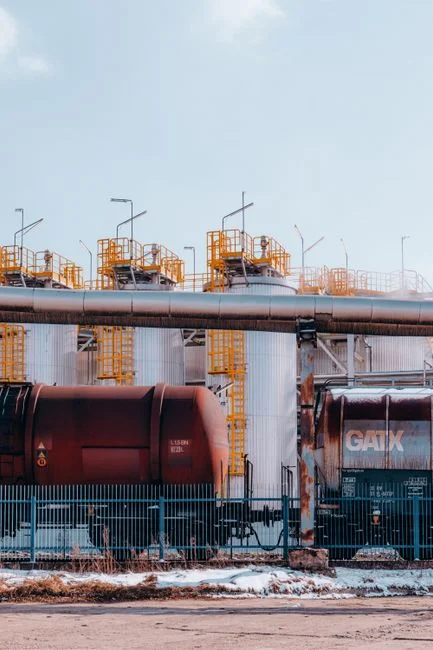
Sewer discharge is generally the simplest option when the utility accepts both the flow and quality. It is not available for design purposes until treatment requirements, local limits, monitoring, surcharges and conveyance capacity are confirmed. If accepted, the project should still provide appropriate equalization and any pretreatment required by the utility or chemistry.
Onsite treatment becomes necessary when utility limits prohibit direct discharge, sewer capacity is unavailable, or recovery creates enough water value to justify treatment. The treatment objective must be explicit: reduce total dissolved solids, remove residual treatment chemicals, control suspended solids, enable reuse, or meet a confirmed discharge condition. A desalination train selected without that objective may remove contaminants that are not limiting while missing the actual constraint.
Cooling-makeup recovery can reduce freshwater demand and discharge volume, but the recovered water must fit the cooling program and the cooling supplier’s quality limits. Genesis Water Technologies reports that side-stream filtration can support higher cycles of concentration and improve blowdown quality before downstream treatment. Higher cycles of concentration also reduce blowdown volume, but they intensify the water-quality challenges that recovery must address.
| Option | Best fit | Main risks | Decision basis |
|---|---|---|---|
| Direct sewer discharge | Utility accepts flow and quality | Capacity restrictions, local limits, surcharges | Written utility acceptance |
| Onsite compliance treatment | Direct discharge is unacceptable | Residual concentrate, energy and chemical demand | Confirmed discharge parameters |
| Cooling-makeup recovery | Recovered water has operational value | Scaling, residual chemicals and biological contamination | Cooling-system compatibility and pilot results |
| Partial or full zero liquid discharge | Discharge is restricted or freshwater is unavailable or costly | High capital cost, energy demand, brine handling and complexity | Whole-life comparison; no site-specific requirement is established |
No supplied source proves that zero liquid discharge is required at a specific Duque de Caxias site. Evaluate it only after confirming discharge restrictions, freshwater economics, available energy, residue handling and alternatives. The evaporative cooling-tower water treatment design provides a useful framework for comparing chemical control, filtration and recovery.
Select a Treatment Train for Blowdown Recovery or Compliance
Multi-media or equivalent solids filtration should normally precede membranes. Genesis Water Technologies states that RO or NF feed water should generally be filtered to less than 10–15 microns, chemically conditioned against scaling and pH-adjusted as required. A multi-media filtration stage protects downstream equipment; automatic chemical dosing should be controlled by the water chemistry and compatible with membrane materials and the receiving utility.
UF, NF and RO solve different problems. Genesis Water Technologies reports that 0.01–0.1-micron UF operates at 10–30 psi and typically achieves 90–95% recovery in blowdown treatment. It removes suspended solids and biological material but leaves dissolved salts in the permeate. A hollow-fiber ultrafiltration system for blowdown pretreatment is therefore most relevant where solids and biological control dominate or UF is protecting RO or NF.
NF typically provides 70–85% recovery, with permeate at 30–50% of feed-water TDS, according to Genesis Water Technologies. It can support partial hardness removal where full demineralization is unnecessary. RO removes 95–99% of dissolved solids and typically produces 10–50 mg/L TDS permeate, but its 50–85% recovery requires scaling control, concentrate management and reliable pretreatment. An industrial RO system for cooling-blowdown recovery becomes relevant when dissolved solids or reuse quality control the decision.
| Technology | Reported performance in Genesis Water Technologies | Primary role | Design caution |
|---|---|---|---|
| UF | 10–30 psi; 90–95% recovery | Remove solids and biological material; pretreat RO or NF | Does not remove dissolved salts |
| NF | 70–85% recovery; permeate at 30–50% of feed TDS | Partial hardness and dissolved-solids removal | Check sulfate, hardness and scaling objectives |
| RO | 95–99% dissolved-solids removal; 10–50 mg/L TDS permeate; 50–85% recovery | High-quality cooling makeup or TDS reduction | Requires pretreatment, scaling control and concentrate management |
| Evaporation and crystallization | 95–99% overall recovery for the reported ZLD train | Concentrate handling and maximum recovery | Energy, equipment and residual-disposal burden |
If maximum recovery is required, combine membrane concentration with an evaporative or zero-liquid-discharge stage. Genesis Water Technologies reports 95–99% overall recovery for a conventional ZLD train. Do not copy that recovery into the project basis without pilot confirmation. Size the train from measured flow and quality, establish peak-flow and fouling allowances through testing, and select compatible membrane elements only after feed characterization and pilot results.
Move from Concept to Commissioned Operation
Freeze the process design only after the water balance, representative characterization, utility acceptance and selected discharge route are complete. A pilot should then validate flux, chemical demand, recovery, cleaning frequency and concentrate handling. For reuse, confirm that recovered water remains compatible with the cooling equipment and chemical program throughout expected operating variations.
Resolve off-site pipeline, equalization, power, drainage, access and monitoring requirements early. Conveyance and multi-agency coordination can drive the schedule even where the treatment equipment itself is straightforward. Define the permit conditions, responsible parties and operating records before equipment purchase.
- Complete source-water, blowdown and sanitary characterization.
- Secure written utility acceptance and the applicable discharge pathway.
- Run a representative pilot using the selected feed and proposed controls.
- Issue performance guarantees only for demonstrated flow and quality conditions.
- Commission treated-water quality, automatic controls, alarms, data logging and operator training against written acceptance tests.
- Track blowdown volume, cycles of concentration, freshwater use, recovered-water quality, concentrate volume, chemical use and disposal cost as operating KPIs.
Retain a contingency for membrane fouling, chemical compatibility and changing cooling operations. The valves, filter media and treatment spares should be selected for the verified design chemistry rather than a generic “treated-water” specification.
Frequently Asked Questions
How much does a data center cooling-blowdown treatment system cost?
There is no defensible site-specific quotation without measured flow, feed chemistry, recovery target, discharge limits and the accepted receiving route. Genesis Water Technologies publishes indicative ranges—$250,000–$500,000 for a 50,000 GPD RO installation and $3–$8 million for typical data-center ZLD systems—but these are commercial benchmarks, not Duque de Caxias prices. Ask each bidder for an installed price broken into pretreatment, membranes, tanks and pumps, chemical dosing, controls, equalization, civil works, commissioning, concentrate handling, power and replacement costs. Request both capital cost and a transparent operating-cost model covering energy, chemicals, membrane replacement, cleaning and residual disposal.
Should the project choose UF, NF or RO for cooling blowdown reuse?
Choose based on the contaminant and reuse target, not on the membrane name. UF is appropriate for solids and biological control or as pretreatment, but it does not remove dissolved salts. NF is relevant where partial hardness removal supports reuse and the confirmed conditions permit it. RO is relevant where TDS, hardness or silica must be reduced to meet the reuse specification. Validate the selection with pilot data and the cooling supplier’s water-quality limits.
How should a data center operator select and size a blowdown treatment supplier?
Give shortlisted suppliers the same characterization package, utility conditions and recovery target, and require a mass-balance and sizing calculation showing how every stream is accounted for. Check proposed membrane area, feed-flow basis, recovery, concentrate destination, redundancy, cleaning method, controls, alarms, spare parts and acceptance tests. References should demonstrate operation of the proposed process on comparable cooling-water chemistry—not merely delivery of membrane equipment. A supplier should not guarantee a fixed recovery until the pilot confirms it.
What could prevent a Duque de Caxias data center from discharging cooling blowdown to the municipal sewer?
Potential blockers include unacceptable flow or quality, unavailable interceptor or lift-station capacity, treatment-plant constraints, local limits, monitoring obligations, surcharges, peak-flow restrictions and incomplete permit or industrial-user classification. Obtain a written determination from the responsible municipality and coordinate any receiving-body discharge with the competent Brazilian authorities. Do not rely on US NPDES terminology or thresholds to decide whether the discharge is acceptable in Brazil.
When is zero-liquid-discharge economically justified for a data center?
Evaluate ZLD when discharge is not permitted, alternative freshwater is unavailable or prohibitively expensive, or recovering nearly all blowdown water has demonstrable value. Compare partial ZLD and conventional treatment over the same analysis period, including capital cost, energy, maintenance, chemicals, downtime, brine or salt disposal and operator requirements. The supplied research does not establish that ZLD is required at a Duque de Caxias site; that conclusion requires the confirmed discharge route, utility conditions and site economics.
Related Equipment
- industrial RO system for cooling-blowdown recovery — specifications, capacity range, and technical data