What Makes Poultry Processing Wastewater Difficult for an SBR?
Poultry slaughterhouse wastewater can present a variable organic load because it combines rapidly biodegradable material with ammonia, suspended solids and oil and grease (FOG). Kan et al. (2021) found that their tested sample contained 84.06% biodegradable components and 15.94% non-biodegradable components; that composition describes only the studied wastewater and is not a universal profile. Readily biodegradable soluble COD can accelerate biological metabolism and oxygen demand, affecting mixing, aeration and settling. A defensible design therefore begins with plant-specific characterization across production, cleaning and shutdown periods rather than transferring published removal results directly to a full-scale SBR.
The relevant distinction is between daily production cycles and short loading events. A plant may experience concentrated discharge from carcass processing, washdown and sanitation activities that differs materially from the average flow used in preliminary sizing. Characterize those events separately and use them to assess equalization, FOG control, biological loading and downstream storage.
| Required characterization input | Engineering question | Why it matters to the SBR |
|---|---|---|
| Flow and production schedule | What are the average, peak and short-duration loading conditions? | Determines equalization and hydraulic treatment requirements. |
| COD and biochemical oxygen demand | How much organic material enters each production period? | Defines biological loading and oxygen demand. |
| Ammonia nitrogen | What nitrogen load must be nitrified or denitrified? | Controls aeration, reaction time and nitrogen-treatment scope. |
| TSS and oil and grease | Which solids and FOG fractions require upstream removal? | Reduces fouling, floating material and sludge-handling risk. |
| pH and temperature | How do these parameters vary through the production cycle? | Affects biological activity, precipitation and chemical pretreatment demand. |
The composition finding requires particular caution. Kan et al. (2021) linked high readily biodegradable soluble COD to rapid bacterial metabolism and changing SBR performance in a laboratory reactor. That mechanism supports careful aeration and solids control, but it does not establish the loading, cycle or removal efficiency of another slaughterhouse. Sampling should cover normal production, peak washing, chemical cleaning and low-flow periods. The data should then support FOG and solids pretreatment decisions, including whether an industrial DAF system for FOG and suspended-solids pretreatment is justified.
Where SBR Fits in the Poultry Wastewater Treatment Train
An SBR is a biological treatment step, not a complete wastewater treatment train. The engineering sequence should run from source control and screening through equalization, FOG and solids reduction, biological treatment, final solids separation, disinfection and sludge handling. Each stage protects the next one and defines the permit or reuse obligations that the package must meet.
At the headworks, a rotary bar screen for poultry wastewater headworks can remove fibrous debris that would otherwise foul pumps, transfer piping and biological equipment. Its selection should be based on the plant’s debris characteristics, available footprint and required solids-retention approach. Screen selection should be coordinated with the DAF unit specifications and wastewater selection guide because upstream equipment, equalization and FOG recovery affect downstream loading.
Full-scale poultry evidence from del Nery et al. (2007) shows what DAF can contribute before anaerobic biological treatment: 51±16% oil and grease removal and 37±16% suspended-solids removal. Those results support FOG and solids reduction as pretreatment objectives, but they do not establish SBR performance. In the same case, the downstream UASB route left nutrient concentrations that pointed to a need for advanced wastewater treatment. An SBR proposal must therefore address residual ammonia, nitrogen, solids and the final discharge or reuse route rather than treating DAF as biological treatment.
- Source control and screening: remove recoverable materials and fibrous debris.
- Equalization: attenuate short-duration flow and biodegradable COD peaks.
- FOG and solids reduction: protect biological and downstream equipment.
- SBR treatment: manage COD, ammonia and, where required, denitrification.
- Final solids separation: use settling or membrane separation appropriate to the effluent specification.
- Disinfection: apply the required process after solids removal.
- Sludge handling: define wasting, storage, stabilization and disposal.
The poultry MBBR installation studied by Rusten et al. (1998) provides a useful scope warning: 90–95% filtered COD removal was reported across two reactors, but the installation did not include solids separation or sludge handling. That result cannot be transferred into an SBR effluent guarantee. It demonstrates why a reactor-only proposal is incomplete.
How the SBR Cycle Controls COD, Nitrogen and Settling

An SBR alternates treatment phases in one reactor, but successful operation depends on verified mixing and reaction times rather than a generic cycle clock. Fill receives the selected wastewater volume; mixed conditions distribute it; anoxic mixing supports denitrification where required; aerobic oxidation processes biodegradable COD and ammonia; settle separates biomass; and the waste phase removes excess sludge. The selected sequence must be calculated against actual mixing behavior, biological rates, feed characteristics and the required effluent quality.
Equalization should precede the SBR when production washing or sanitation creates short, high-strength events. It reduces the magnitude of biodegradable COD and ammonia peaks arriving during fill, while the reactor cycle provides the controlled biological environment for treatment. Equalization does not remove FOG or settleable solids, so it complements rather than replaces pretreatment.
Kan et al. (2021) operated a laboratory SBR through three airflow phases—2.5 L/min, 5.0 L/min and 7.0 L/min—while maintaining a constant 21-day sludge retention time (SRT). Under those study conditions, COD removal ranged from 85.0% to 92.9%, ammonia-nitrogen removal ranged from 69.3% to 81.2%, and total suspended solid removal ranged from 61.8% to 81.7%. These are study-specific results, not full-scale guarantees.
| Control or observation | Kan et al. (2021) evidence | Design interpretation |
|---|---|---|
| Sludge retention time | Constant 21 days across three phases | Compare the proposed SRT with the study basis; do not transfer the operating condition without site testing. |
| COD removal | 85.0%–92.9% in a laboratory SBR | Use as evidence for design review, not as an acceptance guarantee. |
| Ammonia-nitrogen removal | 69.3%–81.2% in the same study | Verify aeration, reaction time and influent nitrogen against the permit. |
| TSS removal | 61.8%–81.7% in the same study | Assess settling performance and final solids capture separately. |
The SBR can also support denitrification. Brown and Caldwell’s 1997 poultry-processing case reports that SBR technology facilitated denitrification while supporting an irrigation route for effluent and biosolids. The accessible source does not provide an anoxic performance value, so it should not be used to claim a quantitative denitrification rate. Instead, require mixed-liquor suspended solids (MLSS), SRT, sludge viscosity, settling time, dissolved oxygen and residual nutrient measurements during design and operation.
Final separation remains a separate design responsibility. If the specification requires low suspended solids or water reuse, evaluate the resulting solids capture, return-sludge effects and downstream filtration demands. Reactor volume alone cannot demonstrate that the effluent will meet those requirements.
Aeration and Solids Controls: The Evidence Behind the Design
Kan et al. (2021) measured a decline in oxygen-transfer efficiency from 3.82% to 0.63% as airflow increased from 2.5 L/min to 7.0 L/min while the biodegradable COD fraction increased. This is the study’s most important warning for equipment selection: more blower capacity did not translate proportionately into better usable oxygen transfer.
Aeration performance depends on the relationship between airflow, mixing, oxygen demand, transfer conditions and biomass condition. Diffuser condition, gas distribution, tank geometry, organic uptake and settling behavior can all change during operation. A supplier should therefore separate the stated design airflow from the actual airflow delivered and from the conditions used to establish oxygen-transfer capacity. Quoting one blower rate without that operating context is not a sufficient aeration basis.
The solids response provides a second warning. In Kan et al. (2021), sludge volume index (SVI) rose from 51.66 mL/g to 66.96 mL/g during the second phase and reached 110.1 mL/g during the third. SVI is an operational indicator of settleability; the rising trend requires investigation rather than adjustment by default. In an SBR, poor settling can reduce usable batch volume, interfere with solids wasting and increase the solids reaching final separation.
| Diagnostic step | Evidence to check | Engineering response |
|---|---|---|
| 1. Confirm the load | Influent COD, ammonia, flow and equalization performance | Determine whether the reactor is receiving a short-duration organic or hydraulic peak. |
| 2. Review aeration | Dissolved oxygen, actual airflow, blower condition and diffuser condition | Separate oxygen-transfer capacity from nominal blower capacity. |
| 3. Inspect settling | Batch settling behavior and solids carryover | Determine whether biomass is separating within the allotted cycle. |
| 4. Measure sludge condition | SVI and MLSS | Assess deterioration of settleability and biomass inventory. |
| 5. Adjust controls | SRT, wasting and cycle timing | Change one operating relationship at a time and verify the response. |
This troubleshooting sequence matters because the study links wastewater biodegradability, oxygen demand and changing sludge behavior. It also explains why airflow should not be the first and only response to poor nitrification or settling.
Commissioning risk is demonstrated by the Brown and Caldwell (1997) poultry SBR case. The installation experienced startup and operating difficulties, and system performance was assessed after a full year of operation. That history supports pilot testing, structured startup planning and operator training before accepting a full-scale package. An integrated membrane bioreactor configuration may change the solids-handling problem, but its selection still requires the same influent characterization, aeration review and pilot basis; a membrane does not remove the need to characterize poultry wastewater.
Sizing and Procurement Inputs for a Reliable Poultry SBR
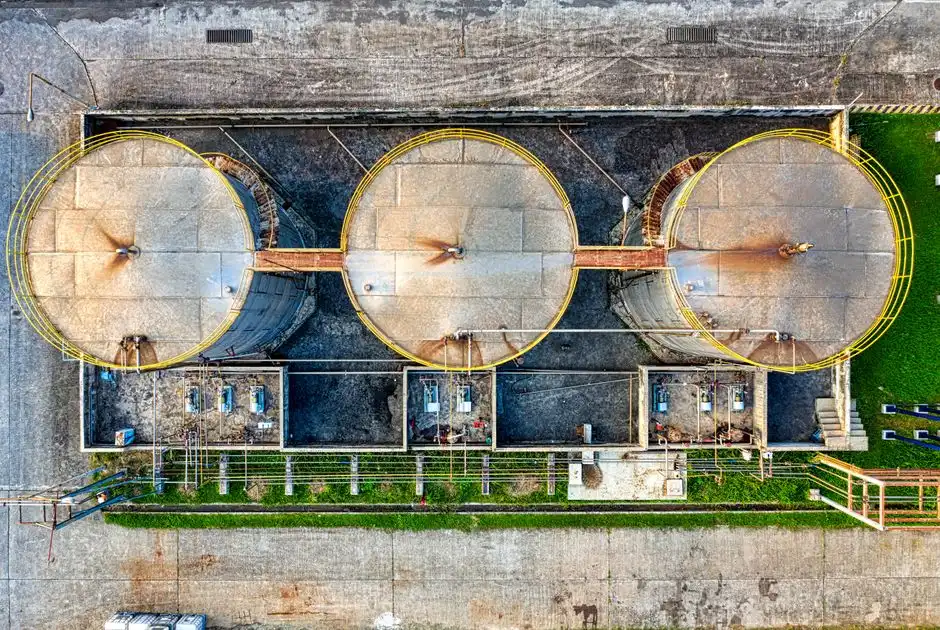
A defensible SBR proposal begins with measured plant data and a defined treatment scope. Without average and peak flow, production schedule, influent characteristics and a discharge or reuse specification, reactor volume and aeration equipment cannot be compared on a common engineering basis.
| Information to request | Minimum detail required for evaluation |
|---|---|
| Wastewater characterization | Average and peak flow; production schedule; COD; biochemical oxygen demand; ammonia; TSS; oil and grease; pH; and temperature. |
| Treatment objectives | Discharge route, reuse requirements, effluent limits and applicable operating-availability requirements. |
| Reactor design basis | Reactor configuration, cycle durations, SRT control, equalization assumptions, mixing calculation and solids-capture method. |
| Aeration and residuals | Design airflow, actual airflow conditions, diffuser basis, blower redundancy and expected operating control. |
| Sludge and final treatment | Sludge production, wasting, storage, handling, final clarification or membrane separation and disinfection. |
| Commissioning | Pilot-test method, startup plan, operator training, site acceptance testing and performance criteria tied to the permit or reuse specification. |
Ask for poultry, slaughterhouse or genuinely comparable high-strength food-processing references. For each reference, obtain the inlet load, process scope and test method. Generic municipal removal percentages do not establish poultry performance. Likewise, scope limits must be explicit: a reference that excludes solids separation, sludge handling or disinfection cannot support a guarantee for those parts of the proposed train.
The supplied research contains no reliable plant-specific SBR cost range. A comparable quotation therefore requires average and peak flow, measured loads, pretreatment, reactor sizing, aeration, final separation, sludge treatment, disinfection, controls, odor control, civil works, installation and commissioning boundaries. Site access, maintenance clearances and automation requirements also belong in the commercial scope. Pretreatment limits should be reviewed against the project’s food and beverage wastewater pretreatment requirements, while any flotation selection should follow the applicable pressure flotation system design criteria.
Make pilot testing part of procurement rather than an optional commissioning activity. The test should use representative wastewater and reproduce the proposed loading and cycle conditions. Acceptance criteria should come from the plant’s permit or reuse specification, with methods for sampling and analysis agreed before testing. This approach converts the Kan et al. (2021) percentages into design-review evidence while avoiding their misuse as guaranteed full-scale outputs.
Frequently Asked Questions
Is an SBR suitable for poultry slaughterhouse wastewater?
An SBR may be suitable when the selected cycle can control biodegradable COD, ammonia, solids and hydraulic peaks, but the reactor must be preceded by appropriate FOG and solids control and followed by final solids separation or membrane filtration plus the required disinfection. Plant-specific characterization remains the basis for that decision.
What removal performance did the poultry-specific SBR study report?
Kan et al. (2021) reported COD removal of 85.0%–92.9%, ammonia-nitrogen removal of 69.3%–81.2% and TSS removal of 61.8%–81.7% in a laboratory SBR at a constant 21-day SRT. These values support design review; they are not full-scale performance guarantees.
How should the supplier be selected and the reactor sized?
Base selection on measured plant wastewater, the discharge route, production-cycle peaks and the required effluent quality. Request the reactor configuration, cycle durations, aeration basis, SRT control, final solids-capture method and sludge-handling scope. A comparable reference should identify its inlet load, process boundaries and test method.
What information is needed for a credible SBR quotation?
The supplied research contains no reliable plant-specific SBR cost range. Obtain a comparable quotation using average and peak flow, measured COD, BOD, ammonia, TSS, FOG, pH and temperature, with clear boundaries for pretreatment, sludge treatment, disinfection, controls, civil works, installation and commissioning.
How should pilot testing and commissioning risk be managed?
Use representative wastewater, agreed sampling methods and acceptance criteria tied to the permit or reuse specification. The Brown and Caldwell (1997) poultry SBR case reported startup and operating difficulties and assessed performance after a full year, illustrating why structured startup planning, operator training and a defined pilot and acceptance program are procurement requirements.
Related Equipment
- industrial DAF system for FOG and suspended-solids pretreatment — specifications, capacity range, and technical data